
When you’re hiring without a dedicated recruiter, it’s easy for strong candidates to slip through the cracks. Conversations get buried, follow-ups get missed, and each new role feels like starting from zero again. A solid recruitment CRM for startups brings order to that process, helping you track outreach, stay consistent, and build a pipeline you can reuse. The right system can even help you jumpstart your hiring, giving you structure and momentum whether you’re making your fifth hire or your fiftieth.
TLDR:
-
Recruitment CRMs give startups pipeline visibility and automation without needing a dedicated HR team.
-
Certain options combine a free ATS with fractional recruiters at $75-$125/hour (up to $250/hour for specialized roles), typically costing $2,000-$7,000 per hire.
-
Most alternatives require quotes, lengthy setup, or pricing that scales poorly for early-stage teams.
-
Tools like Greenhouse and Lever work well for mid-sized companies but add unnecessary complexity for startups.
-
Some models offer on-demand recruiting support and software in one system with full transparency.
What Are Recruitment CRMs for Startups?
A recruitment CRM is software that helps you manage relationships with candidates across every stage of hiring. Where a spreadsheet tracks names and statuses, a recruitment CRM tracks conversations, automates follow-ups, and builds a searchable talent pipeline you can tap the next time a role opens.
For startups, that distinction matters. You’re often hiring in bursts, without a dedicated recruiter, and every week a role stays open costs you momentum. A CRM gives structure to what would otherwise be a chaotic mix of LinkedIn tabs, email threads, and shared Google Docs.
The core value is pipeline visibility. You can see where every candidate stands, who needs a nudge, and which roles are stalling. This investment pays off beyond hiring speed: 69% of employees are more likely to stay three years with great onboarding, which can make higher-quality hiring a factor in long-term retention.
Some tools layer in AI-powered scoring, job board distribution, or sourcing automation on top of that foundation. The best ones do all of this without requiring a full HR team to run them.
Software handles the structural side of hiring: pipeline visibility, applicant tracking, job board distribution, and follow-up reminders. When hiring volume is low or roles are straightforward, that coverage is often enough. When searches get harder (senior roles, competitive markets, or more open requisitions than the team can manage), fractional recruiting support can layer directly onto that foundation, taking on sourcing, outreach, and screening without disrupting what’s already in place.
In 2026, AI-powered recruitment tools have multiplied fast and the market has gotten noisy. The more useful question for lean startup teams is whether the software pairs with real recruiting judgment when a search stalls. 2026 startup hiring data shows founding-level and first-of-function searches running at 2021-level intensity, meaning the roles that matter most are also the hardest to fill with software alone.
How We Ranked Recruitment CRMs for Startups
The criteria weighted most heavily:
-
Ease of setup and daily use for non-HR teams, since most startups lack a dedicated recruiter to manage a complex system
-
Pricing transparency and startup-friendliness, including whether free tiers or low seat counts are genuinely usable
-
Core features covering candidate tracking, job board distribution, and sourcing
-
Integration with tools startups already use, like Slack, Google Workspace, and common HRIS tools
| Tool | Best For | Starting Price | Free Tier | Key Strength |
|---|---|---|---|---|
| Dover | Founders and small teams who want software plus on-demand recruiting support | Free ATS; recruiters at ~$75-$250/hr | Yes | Combines a free ATS with fractional recruiters in one system |
| Bullhorn | Staffing agencies managing high volumes of placements | Starter at $99/user/month; Core at $165/user/month | No | Strong database and client relationship management for agencies |
| Manatal | Small recruiting agencies or HR teams wanting an affordable ATS | Not publicly listed | No | Multi-channel job posting to 2,500+ boards with AI recommendations |
| Greenhouse | Mid-sized companies with dedicated HR teams and complex hiring workflows | ~$26,600/year (median); custom quotes required | No | Structured scorecards, 500+ integrations, and deep analytics |
| Lever | Mid-sized companies with consistent hiring volume and passive candidate nurturing | Not publicly listed; scales with headcount | No | Combined ATS and CRM with visual pipelines and LinkedIn integration |
| Ashby | Well-funded startups with dedicated recruiting teams that need advanced analytics | $400/month for up to 100 employees; custom above that | No | Unified ATS, CRM, sourcing, and scheduling with developer-friendly APIs |
Best Overall Recruitment CRM for Startups: Dover
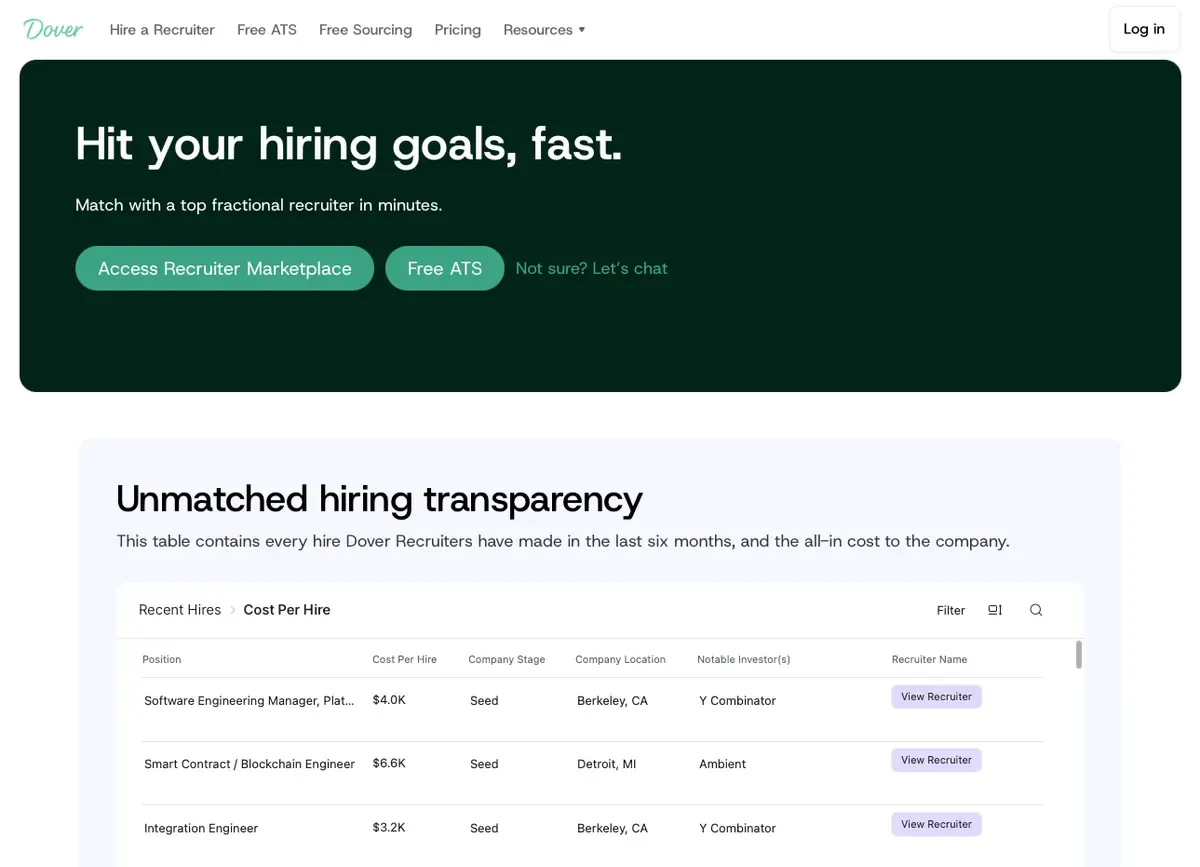
Dover approaches the startup hiring problem from two directions at once: free software and on-demand recruiting support. The ATS can be set up quickly, posts to 100+ job boards including LinkedIn, scores applicants with AI, and includes a Chrome extension for sourcing passive candidates. Learn more about why Dover’s ATS stands out. No bloat, no lengthy onboarding, no dedicated HR team required.
The fractional recruiting layer is where Dover separates itself. Instead of paying a traditional agency 15-25% of first-year salary, startups access experienced fractional recruiters at $75-$125/hour (up to $250/hour for specialized roles). Most companies spend $2,000-$7,000 per hire. Getting started requires an $800 fully refundable deposit, a low-commitment way to try the service before scaling up. Both the recruiter and your internal team work from the same ATS, so nothing falls through the cracks. This approach helps explain how Dover improves candidate experience.
What We Offer
-
Free ATS with unlimited jobs and users (premium plan with additional features also available)
-
Fractional recruiting layer with experienced startup recruiters
-
AI-powered resume screening and applicant scoring
-
Verified reviews for every recruiter in the network, so you know who you’re working with before the first hour
-
One-click job posting to 100+ boards
-
Chrome sourcing extension for LinkedIn outreach
-
$800 fully refundable deposit to start, no contracts
Over 2,000 companies including Stripe, Scale AI, OpenSea, Benchling, and Vanta use Dover.
Bullhorn
Bullhorn combines ATS and CRM functionality with client relationship management, job order tracking, and email integration across Gmail, Outlook, and LinkedIn. Mobile recruiting works well across devices, and the database capabilities are genuinely strong for agencies managing high volumes of placements.
What They Offer
-
Combined ATS and CRM with client relationship management and job order tracking
-
Email integration across Gmail, Outlook, and LinkedIn
-
Mobile recruiting across devices
-
Strong database capabilities for high-volume agency placements
The pricing tells the real story for startups: Starter at $99/user/month and Core at $165/user/month. Add a few hiring managers who need access and costs climb fast. Built for agency workflows, it’s a poor fit for founding teams still making their first hires.
Manatal
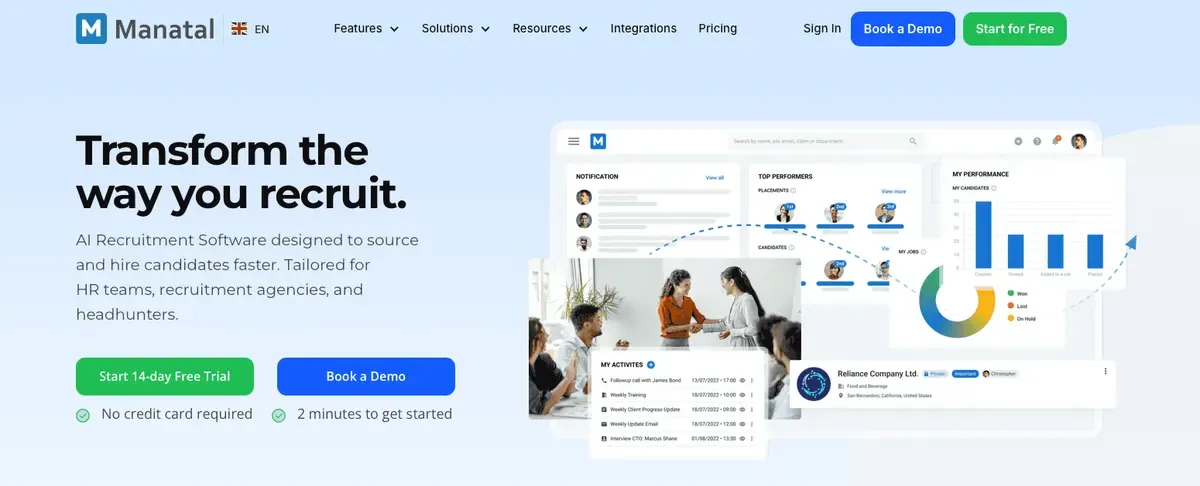
Manatal is a cloud-based ATS built for small to mid-sized businesses and recruiting agencies. It covers the basics well: AI candidate recommendations, resume parsing, social media profile enrichment, and a drag-and-drop pipeline interface. Job postings push to 2,500+ boards, which is a real strength.
What They Offer
-
AI candidate recommendations and scoring that surface relevant candidates without manual filtering
-
Resume parsing and social media profile enrichment to build richer candidate profiles automatically
-
Customizable hiring pipelines with a drag-and-drop interface for managing stages visually
-
Multi-channel job posting to 2,500+ boards for broader reach
Good for small recruiting agencies or HR teams that want an affordable ATS with basic AI features. Where it falls short: no meaningful Microsoft Teams integration, weak recruiter performance reporting, and limited dashboard customization.
Greenhouse
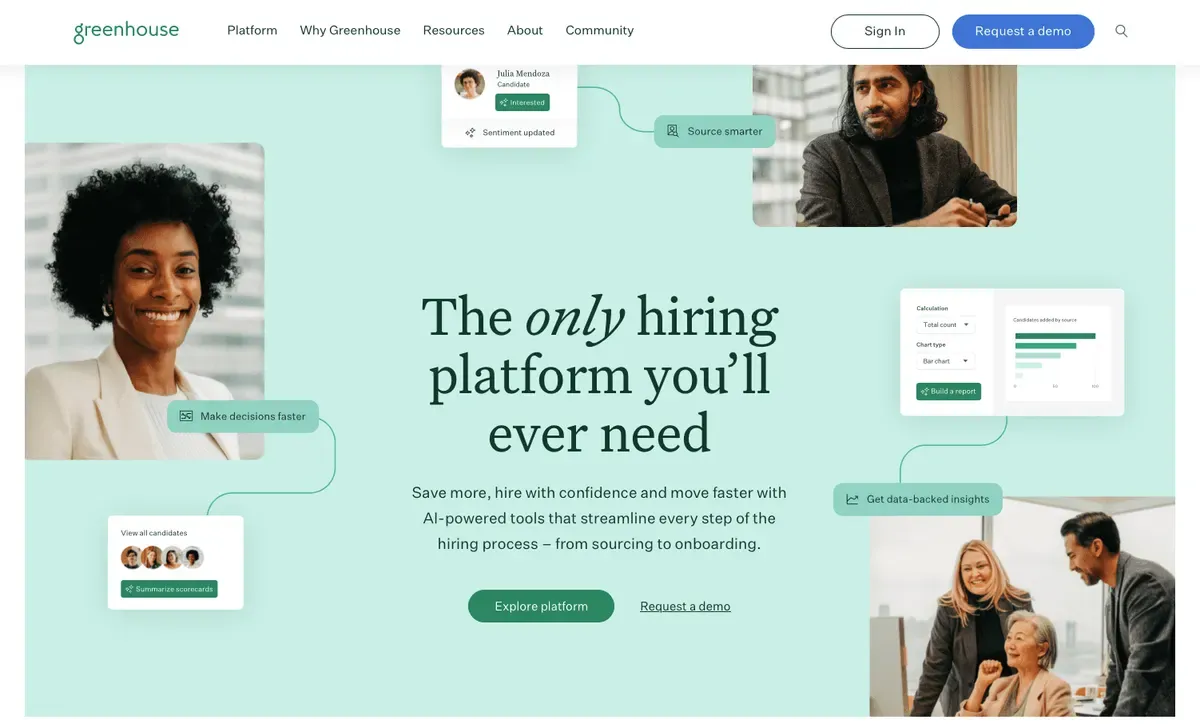
Greenhouse is built for structured hiring at scale. Standardized scorecards, customizable pipelines, 500+ integrations, and deep analytics make it a solid choice for mid-sized companies with dedicated HR teams running complex, high-volume hiring operations. For a detailed comparison, read Greenhouse vs. Dover: What’s the Difference?
What They Offer
-
Standardized interview scorecards for consistent evaluations
-
Customizable candidate pipelines and workflows
-
Integration with 500+ applications and job boards
-
Advanced reporting and analytics
The pricing is where early-stage teams hit a wall. Greenhouse doesn’t publish rates online, so you go through a sales cycle to find out costs. Reported contracts run from about $10,000 to over $75,000 per year, with a median around $26,600, and implementation fees ranging from $10,000 to $30,000 depending on complexity.
For a 10-person startup, that’s a lot of process for a problem that doesn’t need it yet.
Lever
Lever combines ATS and CRM functionality into one talent management system, with visual candidate pipelines, workflow automation, and LinkedIn integration. Compare the details in Lever vs. Dover: What’s the Difference? It’s genuinely well-built for teams that want to track applicants and nurture passive candidates between hiring cycles.
What They Offer
-
Combined ATS and CRM in a single talent management system
-
Visual candidate pipelines with drag-and-drop stages
-
Multi-channel job posting and LinkedIn integration
-
Workflow automation and collaboration tools for hiring teams
The limitations: pricing isn’t transparent upfront, costs scale with employee count, and AI-powered resume screening may not be as advanced as some newer competitors.
Ashby
Ashby combines ATS, CRM, sourcing, scheduling, and analytics into one recruiting suite with heavy AI positioning. See our full breakdown in Ashby vs. Dover: What’s the Difference? It targets startups and scaling teams that want data-driven recruiting and advanced reporting.
What They Offer
-
Unified ATS, CRM, sourcing, and scheduling in a single system
-
Advanced analytics and customizable reporting dashboards
-
AI-powered candidate filtering and interview automation
-
Developer-friendly APIs and extensive workflow customization
Pricing starts at $400/month for up to 100 employees ($4,800/year), then moves to custom tiers above that headcount. Setup complexity is real, making it a poor fit for early-stage founders who need to start hiring this week, not next month.
Why Dover Is the Best Recruitment CRM for Startups
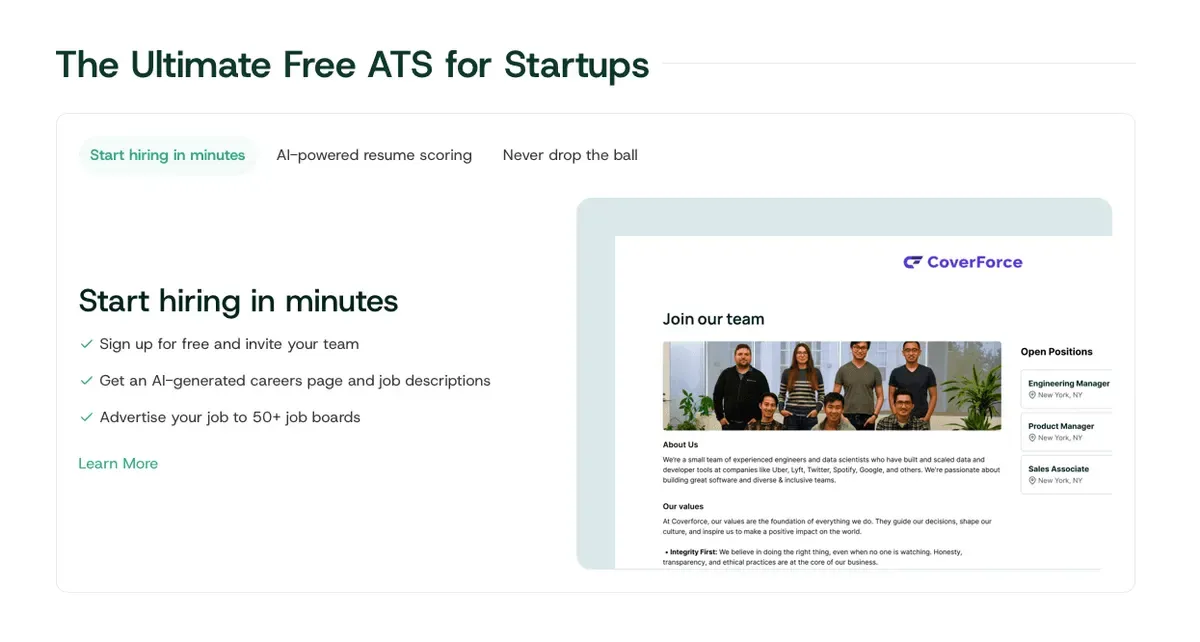
Most tools in this space make you choose: buy software and handle recruiting yourself, or hand it off to an agency and lose visibility into the process. Dover closes that gap. The ATS is free with no limits on jobs or users (a premium plan with additional features is also available), and setup takes minutes. As hiring picks up, you can bring in fractional recruiters who handle sourcing, interviewing, and closing, all inside the same system, with no handoffs or duplicated work.
Recruiting support runs $75-$125/hour (up to $250/hour for specialized roles), typically totaling $2,000 to $7,000 per hire instead of the 20-30% fees charged by traditional agencies. Getting started requires an $800 fully refundable deposit, and there are no contracts. That combination of simple software, experienced recruiters, and transparent pricing makes Dover a strong fit for startups building their first real hiring process without adding unnecessary overhead.
FAQs
Which recruitment CRM works best for founders without a dedicated recruiter?
Look for platforms designed for non-HR users with quick setup times and free or low-cost entry points. Dover and Manatal both offer simpler interfaces, but Dover adds fractional recruiting support when you need it, while Manatal stays software-only.
When should I consider paying for recruiting help instead of using free ATS software alone?
If you’re spending over 15 hours per week on sourcing and outreach, or if critical roles stay open longer than a month, bringing in fractional recruiting support can reclaim founder time without the cost of a full-time hire. Most startups hit this point around 5-10 annual hires.
Can I use a recruitment CRM if I only hire occasionally?
Yes, but pricing models matter more in this scenario: monthly per-user fees add up fast when hiring is sporadic. Free options or pay-as-you-go models like Dover’s hourly recruiting support fit better than subscription-based platforms that assume consistent hiring volume.
Final Thoughts on Recruitment CRMs Built for Startups
Software and recruiting support work better together: an ATS gives your team pipeline visibility and structure, while a fractional recruiter fills the gaps when roles get harder to fill or searches need more hands-on work. Dover is one implementation of that model: a free ATS paired with on-demand fractional recruiters at $75-$125/hour, both operating in a shared system with no contracts required. If you want to jumpstart your hiring without adding overhead, that combination of free software and on-demand support is worth a close look. How much of the process you handle in-house is a function of hiring volume, role complexity, and team bandwidth, not a fixed decision either way.