

Knowing building a talent pipeline with an ATS can change how quickly you fill roles and how rarely you start a search from scratch. Most early-stage teams treat hiring as a reactive process. A role opens, sourcing begins, and weeks pass before a qualified candidate walks through the door. A structured talent pipeline flips that equation. Instead of starting every search cold, you build a reservoir of pre-vetted candidates you can tap immediately. An ATS is the tool that makes this possible, giving your team a single place to tag, track, and re-engage candidates over time. This guide covers what to look for in an ATS built for pipeline work, how to set one up that holds up under hiring pressure, and when bringing in fractional recruiting support makes sense for your stage.
TLDR:
-
An ATS helps startups store pre-vetted candidates you can resurface when roles open up.
-
Tagging candidates by role, skill, and stage lets you search existing contacts before sourcing.
-
Warm pipeline candidates can reduce time-to-fill from 36+ days by skipping initial sourcing.
-
Fractional recruiters make sense when you’re juggling 3+ roles or stuck on senior searches.
-
Some recruiting platforms combine fractional recruiting with ATS integration to build pipelines without full-time overhead.
Why Startups Use an ATS to Build a Talent Pipeline
Startups face a constant tension between moving fast and hiring well. Without a structured way to manage candidates, promising conversations get lost, follow-ups slip, and roles stay open longer than they should.
An ATS helps solve this by giving recruiting teams a single place to track every candidate across every stage of the hiring process. But beyond day-to-day hiring, an ATS becomes especially useful for building a talent pipeline: a pool of pre-vetted, relationship-warmed candidates you can tap when a role opens up.
For startups in particular, this matters more than it might at a large company. You rarely have the luxury of a six-week search when a key hire falls through.
Why Pipeline Building Looks Different at Startups
-
Startups hire in bursts, so having warm candidates already in your ATS means you can move quickly when headcount gets approved.
-
Early-stage teams often rely on the same recruiters or founders to manage multiple roles at once, making organized candidate records worth their weight.
-
Referral networks are smaller, so structured outreach and follow-up tracked inside an ATS can meaningfully expand your reach.
What to Look for in an ATS Before You Build a Talent Pipeline
Not every ATS is built with pipeline-building in mind. Some are designed purely for tracking active applicants through a hiring process, which leaves you without the infrastructure to nurture candidates over time. Before committing to a tool, look for a few specific capabilities.
The ATS should let you tag and segment candidates by role type, seniority, or hiring stage so you can resurface the right people when a position opens. It should also support automated outreach sequences, since manually following up with dozens of passive candidates is unsustainable at startup scale.
Look for integrations with LinkedIn, job boards, and referral tools so candidate data flows in without manual entry.
Questions to Ask Before You Commit
-
Does the ATS support custom pipeline stages beyond just “applied” and “rejected”?
-
Can you send templated follow-up emails directly from the tool?
-
How easy is it to search and filter your historical candidate database?
How to Build a Talent Pipeline Using Your ATS
Building a talent pipeline with an ATS takes more than collecting resumes. It requires a deliberate system for categorizing, nurturing, and re-engaging candidates over time. Here is how to make that work as a startup.
Set Up a Tagging and Segmentation System
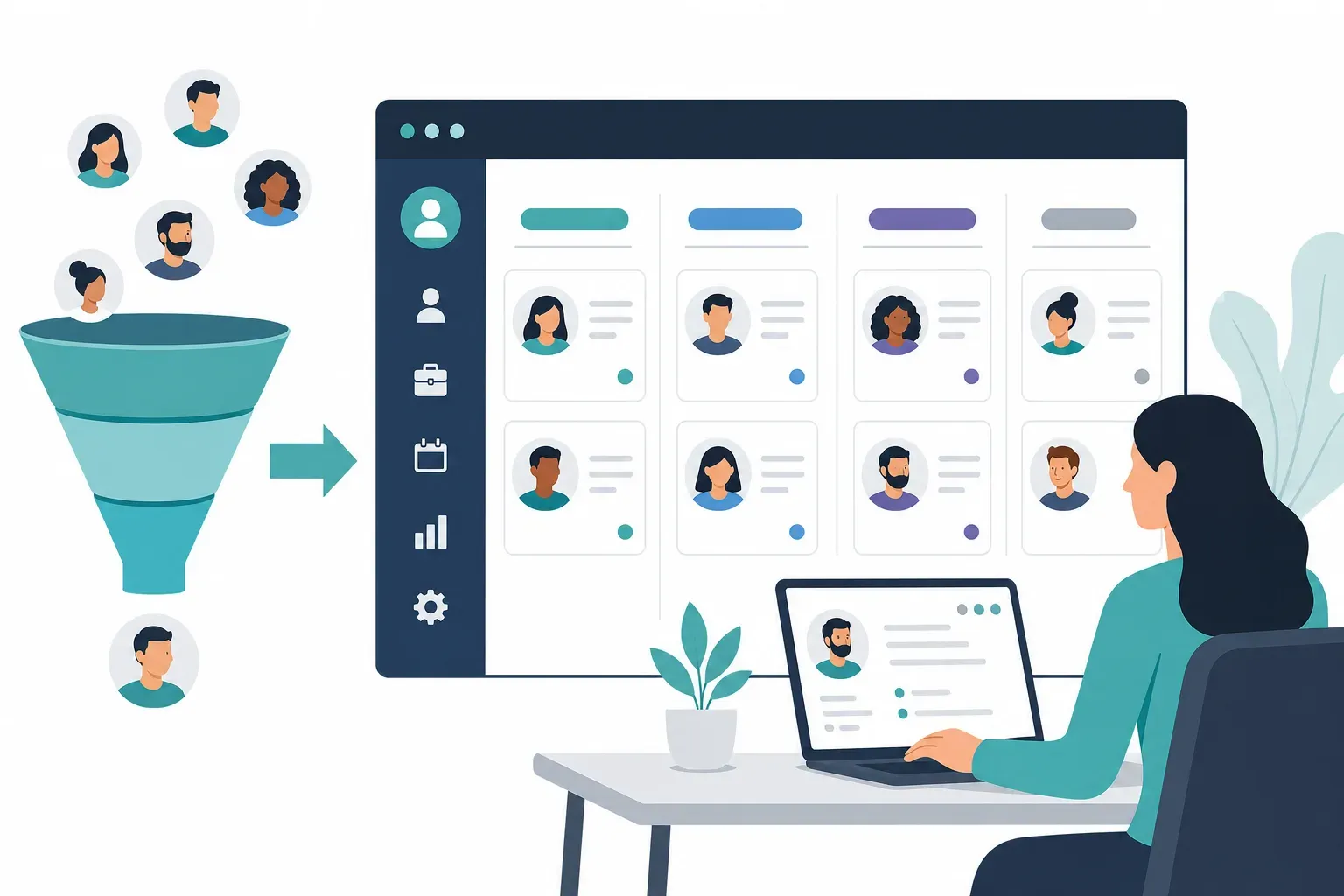
Before sourcing anyone, build a tagging structure inside your ATS. Group candidates by role type, seniority, skill set, and pipeline stage. Consistent tagging means you can search your existing candidate database, which saves sourcing time and surfaces candidates who already know your company.
Automate Touchpoints Without Losing the Personal Feel
Most ATS tools let you schedule follow-up emails or status updates at set intervals. Use this to stay in contact with strong candidates who were not the right fit at the time. A short, personalized note every few months keeps your startup top of mind when a candidate is ready to make a move.
Track Source Quality From the Start
Log where every candidate comes from and how far they progress. Over time, this tells you which sourcing channels produce the strongest pipeline, so you can put your recruiting budget where it actually performs.
How Building a Talent Pipeline Fits Into Your Full Hiring Pipeline
A talent pipeline feeds directly into your broader hiring funnel, but the two serve different purposes. Your hiring pipeline covers active candidates moving through job requisitions right now. Your talent pipeline is the reservoir of warm, pre-vetted contacts you draw from when a role opens.
An ATS bridges both pipelines. It stores passive candidates alongside active applicants, giving recruiters a single place to revisit past finalists, silver medalists, and referrals who weren’t the right fit at the time but could be exactly right six months later.
For startups, this matters more than many teams realize. Every role you fill from your existing pipeline cuts sourcing time considerably. According to SHRM’s 2026 Recruiting Benchmarking data, the median time-to-fill for nonexecutive positions is 39 calendar days.
How AI Is Changing ATS Pipeline Building in 2026
Ashby’s 2026 State of Startup Hiring report, which analyzed over 1,200 venture-backed startups and 11 million applications, found that more than half of startup talent teams are already using AI across multiple hiring workflows, a sharp move from experimentation to practical adoption. That urgency is backed by broader hiring data: according to GoodTime’s 2026 Hiring Insights, 60% of companies reported longer hiring timelines in 2024, making faster pipeline activation a practical necessity.
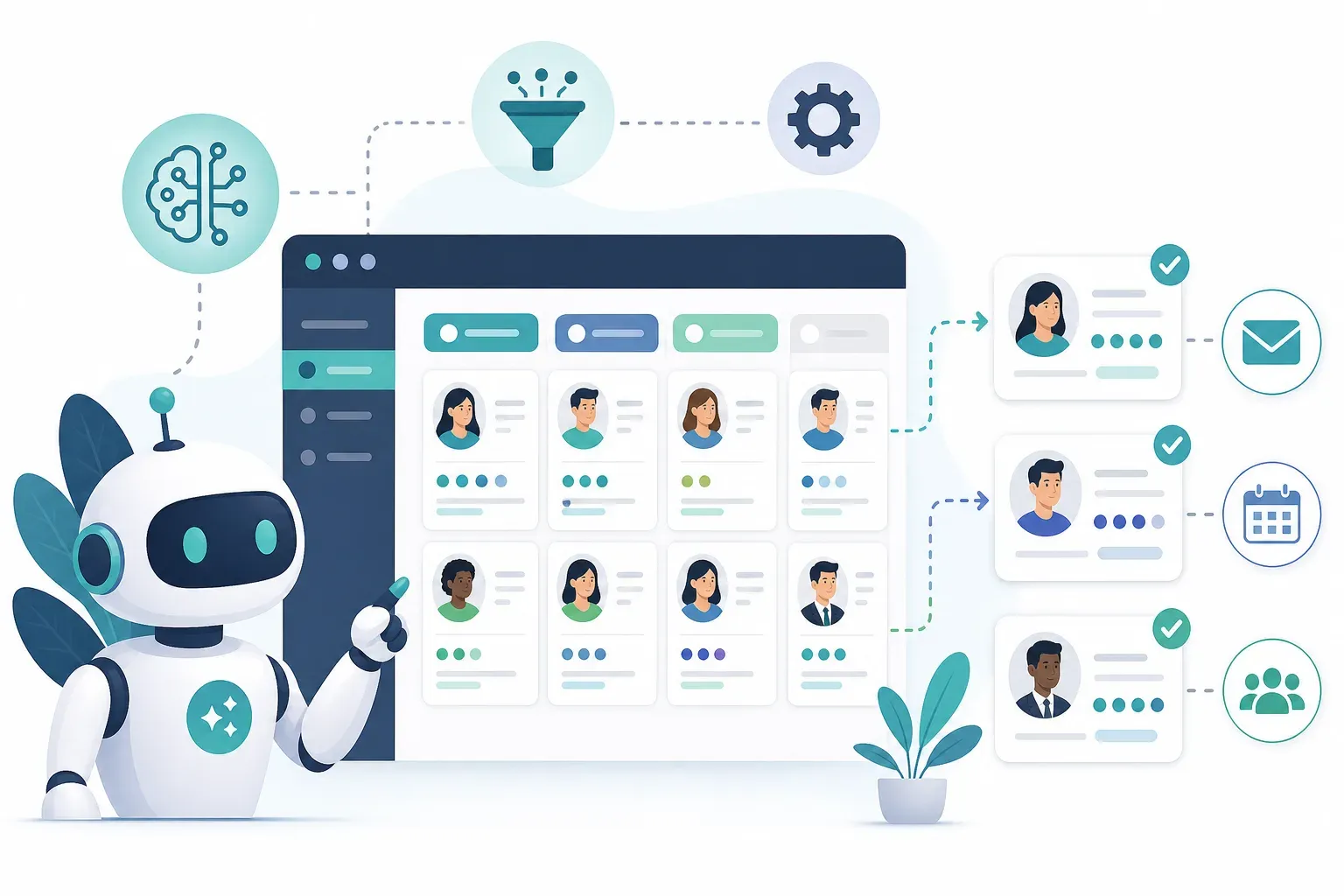
For pipeline-building specifically, the most relevant shift is in outreach and segmentation. AI-generated personalization tools inside an ATS can now help small teams send contextually relevant follow-ups at scale without the messages reading like templates. That matters for passive candidates in a warm pipeline, where a generic check-in often gets ignored. LinkedIn’s Future of Recruiting 2025 report found that TA professionals using generative AI reported a 20% reduction in overall workload, freeing capacity for more personal candidate engagement.
The performance gap between teams using AI-embedded ATS tools and those that aren’t is widening. Bullhorn’s 2026 GRID Industry Trends Report found that 78% of staffing firms growing revenue by more than 25% have AI tools embedded directly in their ATS, compared to 51% of firms whose revenue declined. For startups without dedicated recruiting headcount, that gap is a practical argument for choosing an ATS with AI built in instead of bolted on, so the pipeline you build now doesn’t require a separate tool to keep warm.
When to Bring in a Fractional Recruiter to Support Building a Talent Pipeline
Think of the ATS as the foundation and a fractional recruiter as the capacity layer you add when the foundation is in place but sourcing bandwidth or role complexity exceeds what the tool alone can cover. An ATS handles organization, stage tracking, and candidate nurturing well. What it can’t do is go find people, run judgment-based screens, or build a search process for a function your team has never hired for before. Those are the gaps a fractional recruiter fills.
Fractional recruiters work on a part-time or project basis, plugging in on top of your existing ATS to own sourcing outreach, configure pipeline stages correctly, and run initial screens. Common triggers include roles that have been open more than six weeks, thin inbound volume, or a position in a function the team has never hired for. Once the search wraps, they hand off a warm, organized pipeline and the ATS retains the full history for the next time that role opens.
Signs You’re Ready for Fractional Recruiting Support
-
You’re hiring for three or more roles simultaneously and your ATS is filling up with unreviewed applicants you don’t have time to screen.
-
Your pipeline has stalled on a senior or technical role where generic sourcing isn’t producing qualified candidates.
-
Your team has an ATS set up but no one owns the recruiting process consistently enough to move candidates through stages quickly.
The Cost of Getting Talent Pipeline Building Wrong as a Startup
Hiring mistakes hit startups harder than mature companies. When resources are tight and every role carries outsized responsibility, a bad hire can set a team back by months. Research on bad-hire costs suggests a bad hire can cost up to 30% of that employee’s first-year salary, and that figure climbs fast at senior levels.

Without a structured talent pipeline, startups often default to reactive hiring: opening a role only when the need becomes urgent. This leads to rushed decisions, compressed interview processes, and offers extended to candidates who weren’t properly vetted.
The downstream effects compound quickly:
-
Roles stay open longer, increasing pressure on existing team members and slowing execution.
-
Hiring managers spend time re-screening pools instead of moving strong candidates forward.
-
Competitive candidates accept other offers while a startup is still working through logistics.
Building a pipeline in advance changes the economics of hiring. An ATS gives startups the infrastructure to track candidates over time, so when a role opens, the groundwork is already done.
| Recruiting Approach | Best For | Cost Structure | Pipeline Building Capability |
|---|---|---|---|
| In-House Recruiter | Companies hiring 5+ roles per quarter with predictable ongoing needs | Full salary plus benefits, typically $66,000 to $130,000 annually depending on experience and location | Owns pipeline development full-time but requires dedicated headcount and may lack specialized expertise for technical roles |
| Recruiting Agency | One-off senior hires or urgent fills where speed matters more than cost | 15-25% of first-year salary per placement for most roles (25-30% for senior or specialist positions), paid only on successful hires | Focuses on active searches with limited long-term pipeline investment since agencies get paid per placement |
| Fractional Recruiter | Startups hiring 2-4 roles simultaneously or building pipeline during growth phases | Part-time or project-based fees, typically 30-50% less than full-time recruiter cost | Builds and maintains warm pipeline over time with sourcing expertise but without full-time overhead or commitment |
| DIY with ATS Only | Very early stage teams with 1-2 roles per year and strong networks | ATS subscription only, typically $149 to $600 monthly depending on features and user count | Requires founder or hiring manager to own all sourcing, screening, and nurturing activities manually |
How One Recruiting Platform Helps Startups Build a Talent Pipeline Without the Overhead
Dover was built for startups that need to hire well without dedicating a full-time recruiter to the effort. Instead of forcing founders to choose between expensive agencies and doing everything themselves, Dover offers a fractional recruiting model that fits into how early-stage teams actually work.
The approach starts with sourcing. Recruiters on Dover’s marketplace can surface candidates across multiple channels and run outreach on your behalf, so your pipeline stays active without requiring your attention every day. As candidates respond, recruiters can handle initial screening and keep the process moving so you’re only spending time on people worth talking to.
What makes this useful for pipeline building is the infrastructure behind it. Dover connects to your ATS so every candidate interaction gets logged, tracked, and organized in one place. You’re not piecing together spreadsheets or losing track of silver medalists. When a role opens up, that history is already there.
For startups that want recruiting support without the overhead of a full in-house function, Dover gives you the structure to build a real pipeline from the start.
Frequently Asked Questions
Do I need a recruiter if I’m already using an ATS?
For many early-stage teams, an ATS alone covers the basics: it organizes candidates, tracks stages, and keeps follow-up from slipping. If you have one or two open roles, a healthy inbound flow, and a hiring manager who can own top-of-funnel, the ATS is often enough to manage the process. The calculus changes when hiring volume grows to three or more roles at once, inbound slows, or you’re filling a senior or specialized position. At that point, a fractional recruiter layers in on top of the ATS to own sourcing outreach and initial screening, while the ATS keeps every candidate interaction organized and searchable.
Can I build a talent pipeline without a full-time recruiter?
Yes. An ATS gives you the infrastructure to tag, segment, and nurture candidates over time, so you can maintain a warm pipeline without dedicated recruiting headcount. Most startups supplement their ATS with fractional recruiting support during hiring bursts, then scale back when needs change.
How do I know if my ATS can actually support pipeline building?
Look for three things: custom tagging and segmentation beyond basic “applied” or “rejected” stages, automated follow-up sequences you can trigger from the tool itself, and searchable historical candidate databases. If your ATS only tracks active applicants through a single hiring process, it won’t give you what you need to nurture candidates over time.
What does it actually cost when you get a hire wrong at a startup?
Some widely cited estimates suggest a bad hire can cost up to 30% of that employee’s first-year salary, and that figure climbs at senior levels. For startups especially, the cost goes beyond dollars. Roles stay open longer, existing team members stretch thin, and execution slows while you restart the search.
Final Thoughts on Building a Talent Pipeline as a Startup
Knowing ATS talent pipeline building is one thing; having the right support to act on it is another. Dover combines a free ATS with access to experienced fractional recruiters, so startups can build a warm, organized candidate pipeline without the overhead of a full-time recruiting function. If your hiring has felt reactive, it may be worth reconsidering the infrastructure behind it.