
What is an Applicant Tracking System? A Complete Guide for 2026

Dover
•
3 mins
An applicant tracking system is software that handles the day-to-day work of hiring. Instead of juggling candidate resumes in your inbox, tracking interview notes in Google Docs, and coordinating feedback across Slack threads, an ATS puts everything in one place.
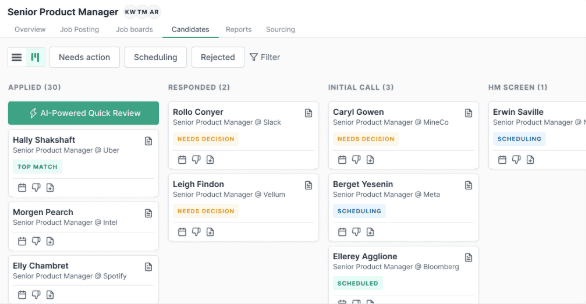
Think of it as a database for your hiring process. When someone applies to a job, their information flows into the system automatically. You can move candidates through interview stages, share feedback with your team, schedule interviews, and send emails all from the same interface.
For startups hiring their first 10, 50, or 100 employees, an ATS replaces the spreadsheet chaos that most founders start with. You're no longer asking "Wait, did we ever respond to that candidate?" or searching through email to find someone's resume. The system tracks every interaction and keeps your entire team on the same page about where each candidate stands in your pipeline.
The process starts when a candidate applies to your job posting. The ATS automatically parses their resume, extracting contact info, work history, education, and skills into a candidate profile without manual data entry.
Next comes screening. Many systems score or rank applicants based on criteria you set. You can filter by years of experience, specific skills, or location. This automated sorting surfaces your most qualified candidates first, so you're not manually reading through hundreds of resumes.
Once you identify promising candidates, you move them through pipeline stages: phone screen, technical interview, final round, offer. The ATS tracks where everyone sits and logs all activity. Your hiring team can leave feedback on candidate profiles, tag colleagues for input, and see full conversation history in one thread. Interview scheduling tools sync with calendars and send automated reminders to candidates.
Startups move fast, and waiting weeks to fill a role means losing ground to competitors. An ATS cuts the time you spend on hiring admin so you can focus on what actually matters: talking to candidates and closing great people.
You stop losing candidates because someone forgot to follow up. You stop asking your team to re-send feedback they already shared in Slack. You stop manually copying job posts to different boards. The system handles these repetitive tasks, and hiring cycles can shrink 60% compared to manual processes.
For early-stage teams, an ATS also protects candidate experience. When you're juggling fundraising, product development, and hiring all at once, candidates can slip through the cracks. An ATS sends automated updates, keeps communication consistent, and makes your three-person company feel organized and professional.
The data piece matters too. You'll see which job boards send quality applicants, how long each hiring stage takes, and where candidates drop off.
Who Uses Applicant Tracking Systems
ATS software has spread across organizations of every size. Nearly 99% of Fortune 500 companies use these systems to manage hiring at scale, but they're no longer limited to corporate HR teams.
Small companies have adopted ATS tools faster than most people realize. 60% of companies with 1-50 employees now run recruiting through an ATS, treating it as basic infrastructure instead of optional software.
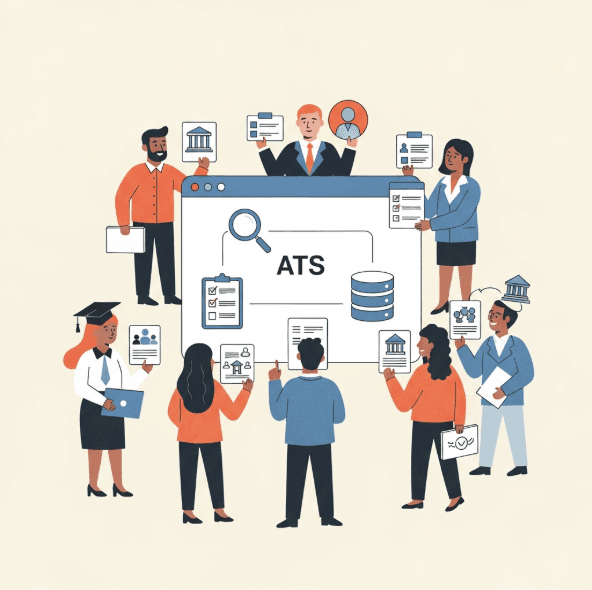
The logic is straightforward: a 10-person startup competes for the same engineers as Google. A three-person founding team reviews 200 applications for one role. Without an ATS, you're slower than every competitor talking to that candidate.
Recruiting agencies, staffing firms, and in-house teams all rely on ATS tools. If you're hiring, you're competing against teams that respond instantly, coordinate feedback across departments in real time, and keep consistent communication going throughout the process.
Features to Look for in an ATS
Not every ATS is built the same, and picking one that's overbuilt or missing core features costs you time and momentum. Here's what matters when assessing options.
Look for a customizable candidate pipeline that matches your interview process, not a rigid structure you have to work around. You should drag candidates between stages, bulk-move people, and see your entire funnel at a glance.
Automated communication tools save hours every week. The best systems let you build email templates for common scenarios and trigger them when candidates hit certain stages. You'll want customization so messages still sound like your company.
Interview scheduling integration with your calendar eliminates back-and-forth emails. Candidates pick from your available times, and the system sends calendar invites and reminders without you touching anything.
Some ATS tools allow one-click distribution to dozens of job boards, funneling applicants back into one system.
Team collaboration features mean your hiring team can @mention each other, leave structured feedback on profiles, and set permissions for who sees what.
Basic reporting shows you source quality, time-to-hire, and pipeline bottlenecks so you can answer "Which job board sent us our best hires?" without building a spreadsheet.
Feature | Dover ATS | Enterprise ATS | Manual Tracking (Email/Spreadsheets) |
|---|---|---|---|
Setup Time | Under 5 minutes | 2-4 weeks with implementation team | Immediate but requires ongoing maintenance |
Cost | Free with unlimited jobs and users | $5,000-$20,000+ per year | Free but high time cost |
Customizable Pipelines | Fully customizable stages that match your interview process | Highly customizable but requires admin configuration | Manual tracking in spreadsheets with custom columns |
AI Candidate Scoring | Automatic scoring and ranking based on job requirements | Limited or requires additional modules | Manual review of every resume |
Job Board Distribution | One-click posting to 100+ job boards | Integration with major job boards, may require separate contracts | Manual posting to each board individually |
Interview Scheduling | Calendar sync with automated candidate booking | Calendar integration with approval workflows | Back-and-forth email coordination |
Team Collaboration | @mentions, structured feedback, and shared candidate profiles | Extensive collaboration features with approval chains | Email threads and scattered Slack messages |
Best For | Startups hiring their first 10-100 employees | Large organizations with 500+ employees and complex compliance needs | Very early stage companies with 1-2 open roles per year |
Common ATS Mistakes Startups Make
The first mistake is picking an ATS built for 500-person HR teams when you're hiring your first 20 people. Systems loaded with workflows, approval chains, and compliance modules slow you down instead of helping. You spend more time configuring software than talking to candidates.
Startups also skip customization and use default settings for everything. Your interview process isn't identical to every other company's, so leaving generic pipeline stages and email templates in place makes your hiring feel robotic. Take 20 minutes to adjust stages, rewrite templates in your voice, and set up the system to match how you actually hire.
Another miss is treating the ATS as a filing cabinet instead of a communication tool. You move candidates through stages but forget to send updates, leaving people waiting weeks without hearing back. Set up automated emails at key moments so candidates know where they stand.
Teams also fail to get everyone onboarded. If half your interviewers don't know how to leave feedback in the system, you're back to chasing people down for their thoughts.
How to Implement an ATS Successfully
Dover's Free ATS Built for Startups
Frequently Asked Questions
Final Thoughts on How Applicant Tracking Systems Work
Table of contents
Kickstart recruiting with Dover's Recruiting Partners
