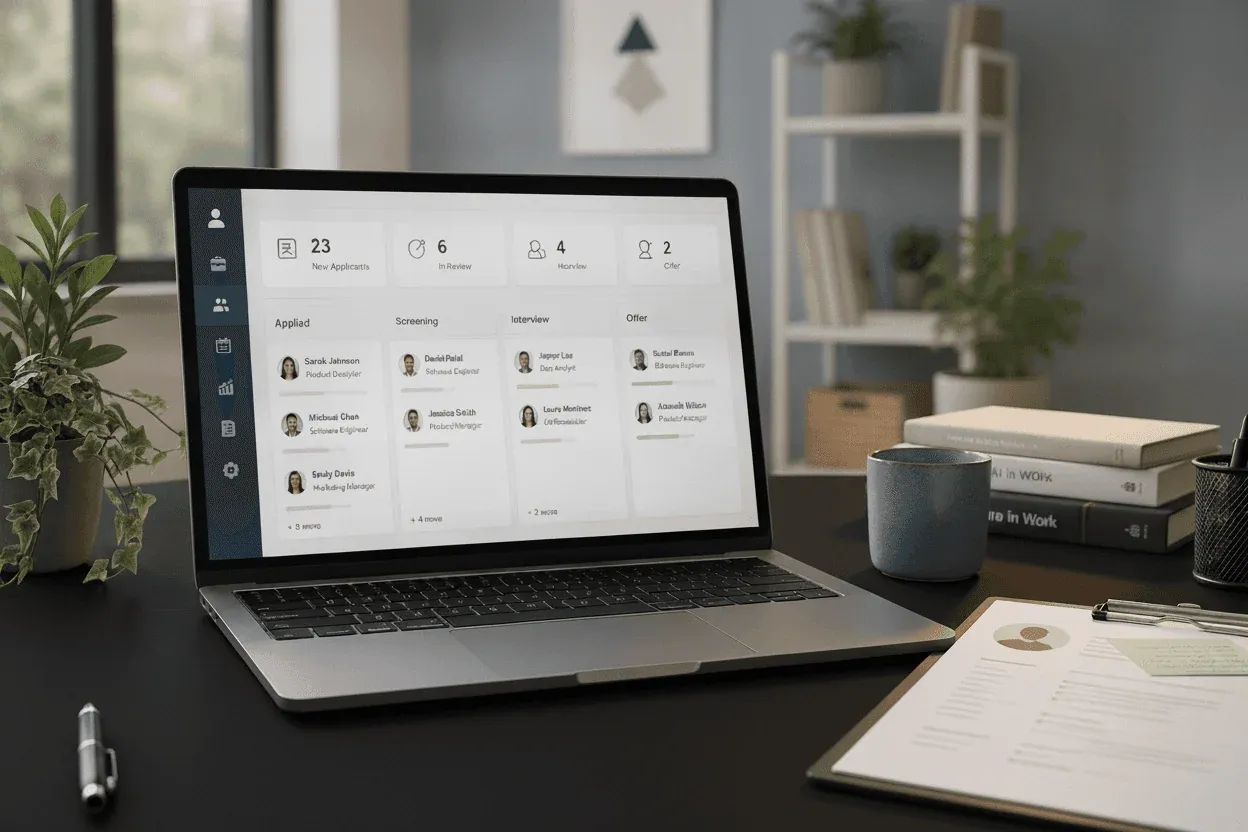

Most startups don’t hire on a steady schedule. A fundraise or a product launch can turn two open roles into ten within a month, and then hiring goes quiet for a quarter. Paying for sourcing, scheduling, and reporting contracts before that volume arrives is hard to justify, but running hiring out of spreadsheets and inboxes costs time once it returns. Dover’s free applicant tracking system comes with a free plan and a Premium plan, and a recruiter marketplace sits alongside both, so a company can start free and add features, tools, and services only when it’s ready for more. The sections below cover why the ATS is free, what each plan includes, and how Dover supports companies as hiring grows.
TLDR:
- Some ATS tools offer a free plan with unlimited jobs and users, because the ATS is the foundation a company needs from its first hire, even when hiring passively.
- Free plans can cover core tracking, a careers page, job board posting, sourcing outreach, interview scheduling links, reporting, and basic AI drafting; paid tiers typically add AI resume review, interview scheduling tools, offer e-signing, bulk actions, and API access.
- One paid ATS tier is priced at $199/month, and many early teams run on the free tier alone.
- Some free ATS tools pair with a marketplace of fractional recruiters who work inside the same ATS, with cost averaging about $4,800 per hire across all roles, varying by role, and no long-term contracts.
- The structure lets companies start free and add features or recruiting services only when hiring volume calls for them.
1. Why Dover’s ATS Is Free
At Dover, we believe that every company should be able to build a great team. Even when they don’t have a ton of money to invest in expensive HR software.
Why Expensive Tools Don’t Fit Irregular Hiring
Most companies don’t have a consistently high volume of hiring needs. Hiring comes in bursts, a few roles open, then things go quiet for months. Per-seat or annual-contract pricing doesn’t fit that pattern well; it charges a company the same amount whether it’s hiring for ten roles or none. Paying for sourcing, scheduling, and reporting tools, or for recruiting services, during the quiet stretches is hard to justify.
The ATS as Day 1 Infrastructure
An ATS is the one recruiting product every company should have. It’s the backbone on top of which recruiting infrastructure gets built. It hosts a careers page and organizes applicants, even when a company is hiring passively. We built Dover’s ATS to cover roughly the first 100 hires a company makes, without the bloat that comes with traditional ATS tools.
Supporting Companies as They Grow
We want every company, whatever its size, to run a well-organized hiring process. That’s why the foundation is free, with unlimited jobs and users, and it isn’t a trial that expires. As a company grows and wants more features, tools, and services, we offer a Premium ATS plan and a recruiter marketplace on top of that foundation, so support scales with the company instead of being required up front.
Dover vs. Traditional Recruiting Marketplaces
| Factor | Dover | Traditional recruiting marketplaces |
|---|---|---|
| Pricing | Free ATS with unlimited jobs and users; fractional recruiters average about $4,800 per hire across all roles | Contingency fees often 15% to 25% of first-year salary, or subscription fees |
| Contracts | No long-term contracts; pause or switch recruiters anytime | Signed agreements, often with exclusivity or tail periods |
| Recruiter quality control | Vetted fractional recruiters, founder reviews, built-in best practices | Quality can vary across independent operators |
| Transparency | Shared ATS with a real-time view of pipeline and candidate status | Sourcing activity often happens outside your systems |
| Incentive alignment | Hourly and retainer options not tied to candidate salary (pay-per-hire also available) | Salary-based commission can reward faster or higher-priced placements over fit |
| Pipeline ownership | Candidate data stays in your ATS after a search ends | Sourcing notes typically leave with the vendor |
Built for the First Hires, Without the Bloat
Running a good recruiting process comes down to getting many small things right, like confirming interviewers have availability within the next week. Many ATS tools add heavy configuration and complexity, the kind of feature bloat in enterprise ATS tools that can slow small teams down, without guiding them toward best practices. We want every company to have an easy-to-use system that helps them get the basics right.
When Premium Makes Sense
Premium is $199/month and fits teams that want more automation, such as AI-assisted resume review when application volume grows, an interview scheduling tool that shows multiple calendars together, and offer e-signing. Many early teams run on the free tier alone, and AI features assist reviewers who still make the decisions.
3. Add Recruiting Support When Hiring Picks Up
Scaling Up Without Switching Systems
When hiring volume outgrows what a founder can handle on their own, often after a fundraise, companies can bring in vetted fractional recruiters from Dover’s recruiter marketplace inside the same ATS, after agreeing on scope, budget, and payment terms. There is no need to move candidates to a new system or spend weeks vetting new vendors. The marketplace is an option for when a company is ready for added services, not a requirement of the free plan.
How Recruiting Marketplaces Work
A recruiting marketplace connects companies with independent recruiters instead of a single agency, and the company agrees on scope, budget, and payment terms with each recruiter. Pay structures vary: some recruiters charge a contingency fee, commonly 15% to 25% of first-year salary and paid only when a candidate is hired, while others bill hourly or on a retainer. Those terms shape how a recruiter works, so the tradeoffs below depend on the pay structure as much as on the marketplace itself.
Pros
- Access to recruiters with different specialties, such as engineering or go-to-market searches, without hiring a full-time recruiter
- The chance to compare several recruiters and their track records before choosing one
- Recruiting capacity that can grow for a burst of roles and shrink when hiring slows, depending on the engagement terms
Cons
- Contingency pay can reward closing a role quickly, or at a higher salary, over finding the right fit
- Sourcing often happens in the recruiter’s own tools, which can leave the company with little visibility into outreach and candidate status
- Candidate notes and outreach history can leave with the recruiter when an engagement ends
- Subscriptions or retainers can keep costing the same when hiring slows
Pairing a free ATS with fractional recruiters billed by the hour speaks to several of those cons directly. Recruiters work inside the company’s own pipeline, so the hiring team can see outreach and candidate status in real time, and candidates, notes, and outreach history stay with the company after a search ends. Fees on hourly engagements aren’t tied to the candidate’s salary, and teams can pause or switch recruiters anytime when hiring slows.
What a Hiring Burst Looks Like in Practice
Picture a seed-stage startup that goes from 2 to 10 open roles in the month after a raise. The founder already has jobs, a careers page, and early applicants in the free ATS. Instead of signing an agency agreement, the team brings in one fractional recruiter to source and screen for the two hardest engineering roles while the founder keeps running the simpler searches. The recruiter works in the same pipeline, so the founder can see outreach and candidate status in real time. When those roles close, the team can scale hours down, and every candidate profile and sourcing note stays in their ATS for the next search.
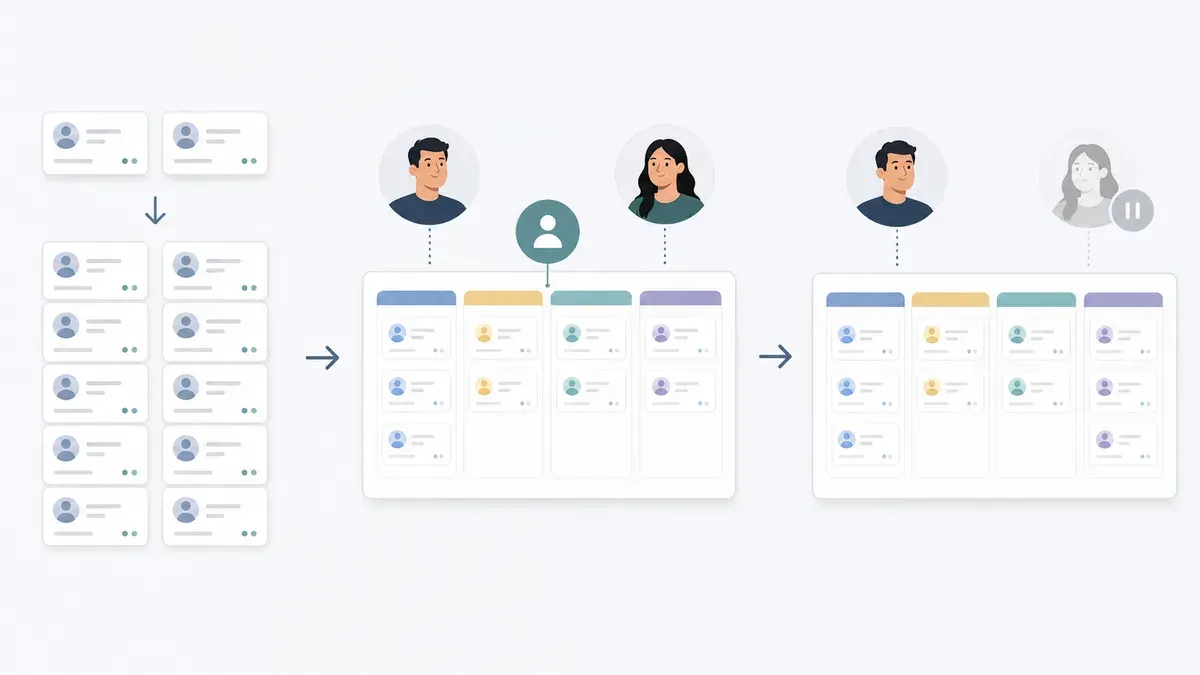
More than 600 companies have hired through Dover’s recruiter marketplace, including for some of the hardest roles startups face. Companies often look for recruiting help once they’re already behind on hiring goals, and the free ATS lets teams get organized before that happens. Falling behind can get expensive: SHRM’s State of Recruiting 2025 puts median time-to-fill at roughly a month and a half, and contingency fees commonly run 15% to 25% of first-year salary according to recruitment agency commission benchmarks. As an industry observation, time spent vetting third-party recruiters of uneven quality can stretch that timeline further.
4. Keep the Candidate Experience Strong on Every Plan
How the ATS Shapes the Candidate Experience
A critical piece of the ATS is the candidate experience. The ATS controls how candidates apply, how quickly they get scheduled, and whether or not they get ghosted, a pattern Indeed’s ghosting in hiring report describes as a symptom of larger problems with the hiring experience.
Where Traditional ATS Tools Fall Short
Many ATS setups make candidates retype information already included in their resume, which adds friction before an application even reaches a recruiter. Applicants often describe the process as frustrating, and some ATS setups can leave candidates waiting with no response from a recruiter or hiring manager. A 2026 candidate survey covered by Fortune found employer ghosting reaching a three-year high, with more than half of job seekers reporting it within the past year. Many ATS tools make candidates’ lives harder instead of easier.
Recruiting Best Practices Built In
The Dover ATS was designed with recruiting best practices built in, and the free plan comes with workflow management tools and AI-assisted features that can cut busywork on both sides of the process, with no Premium upgrade needed. Resume autofill completes application forms from an uploaded resume, AI can draft job descriptions and suggest interview questions for the hiring team to review before they’re used, and a candidate portal lets applicants follow their application status instead of waiting in silence, all on the free tier. These are the same levers behind how an ATS improves candidate experience at startups. Our goal is to get candidates excited to apply when they see a Dover-powered careers page, because they know the company takes candidate experience seriously.
Key Takeaways
- The free plan removes the subscription barrier, with unlimited jobs and users, so any company can run an organized hiring process even when hiring passively.
- Premium at $199/month adds AI resume review, an interview scheduling tool, offer e-signing, and other automation for teams that want more, and many early teams stay on the free tier.
- The recruiter marketplace adds fractional recruiters inside the same ATS when volume outgrows the founder, with control over scope and budget and no long-term contracts.
- The broader mission is helping every company build an amazing team, with tools and services available as hiring needs grow.
Whether a team is hiring passively or scaling after a raise, the setup that holds up best lets a company start with a free foundation and add features or recruiting support only when hiring calls for it. Dover’s structure is one example: a free ATS with a Premium option and on-demand fractional recruiters who work inside it, with total cost averaging about $4,800 across all roles (varying by role) and no long-term contracts.
How Dover’s Free ATS, Premium Plan, and Marketplace Fit Together
Dover’s free ATS is built for the first hires a company makes, with unlimited jobs and users, a careers page, resume autofill, and AI-drafted job descriptions at no cost; Dover offers it free because it wants every company to start with a solid hiring foundation. The Premium plan at $199/month is the next step for teams that want AI resume scoring, an interview scheduling tool, and offer e-signing, though many early teams run on the free tier alone.
When hiring volume outgrows the founder’s calendar, the recruiter marketplace sits inside that same ATS. Companies browse vetted fractional recruiters, take free and unlimited intro calls, and agree on scope and budget directly. Recruiters work in the company’s own pipeline, so candidate data and outreach history stay with the company after a search ends.
Fees are not tied to the candidate’s salary, so recruiters have no pricing reason to favor higher-paid candidates. Cost per hire averages about $4,800 across all roles, varying by role seniority and complexity. There are no long-term contracts, and a 100% refundable deposit is applied to the recruiter’s work. More than 600 companies have hired through the marketplace, and teams can pause or switch recruiters when hiring slows.
FAQs
Do you need a recruiter if you already use an ATS?
Not always. An ATS organizes the hiring process (job posts, applicants, interview stages, and feedback), but it doesn’t find or close candidates on its own. Teams hiring one or two roles at a time, with a founder or hiring manager who has time to source and screen, can often run hiring themselves with the ATS alone. A fractional recruiter typically makes sense when volume jumps after a raise, when a role is senior or hard to source, or when no one internally has recruiting bandwidth. In Dover’s setup, recruiters work inside the same free ATS, so they can be added for a search and paused when it closes without moving candidates to a new system.
What’s the difference between an ATS and full recruiting support?
An ATS is the system of record: it tracks who applied, where each candidate sits in the pipeline, and what the team decided. Full recruiting support adds human capacity on top of that system, such as sourcing passive candidates, running outreach, screening, coordinating interviews, and helping close offers. The two tend to work best together when the recruiter operates inside the company’s own ATS, because the hiring team keeps real-time visibility into the pipeline, outreach isn’t duplicated across separate tools, and candidate data stays with the company after the engagement ends.
How is fractional recruiter pricing typically structured?
Recruiters offer a few engagement structures, including hourly, retainer, and pay-per-hire, agreed directly with the recruiter. Cost per hire averages about $4,800 across all roles and varies with role complexity, and there are no long-term contracts. A 100% refundable deposit is applied to the recruiter’s work. For context, SHRM’s 2025 benchmarking data puts the average cost per hire for nonexecutive roles at $5,475 across its survey respondents.
Final Thoughts on Starting Free and Adding Support as Hiring Grows
The right setup depends on how steady hiring is. A team making one or two hires a year can often run on a free ATS alone, a team with growing volume may want Premium features, and a team scaling after a raise may need more recruiting capacity than its founders can supply. What holds up in each case is keeping the pipeline in the company’s own system and paying for features or recruiting help only when they are needed. Dover’s free applicant tracking system, its Premium plan, and its fractional recruiters are one example of that structure.