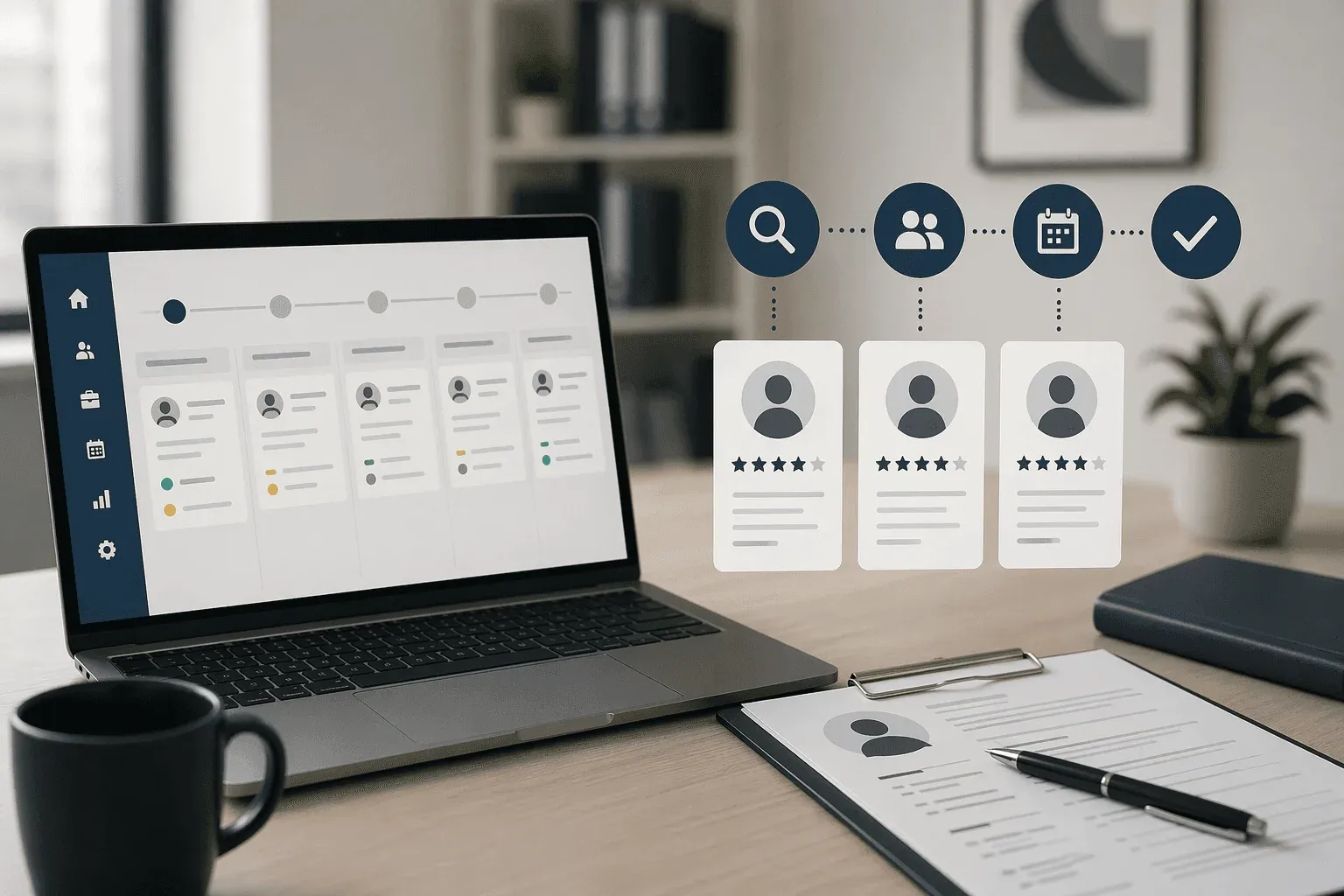

If you’ve started researching the best ATS systems, you’ve likely run into the same tradeoff: enterprise tools that take months to roll out and come with unclear pricing, or lightweight options that break once hiring expands across roles. Most growing teams get stuck in that middle ground. What you need is something you can start using right away, that handles core hiring workflows well, and gives you the option to bring in recruiting help when needed. One newer solution is built around that exact gap, combining quick setup with built-in access to experienced recruiters without long-term commitments.
TLDR:
-
ATS systems automate hiring tasks from job posting to resume screening and candidate tracking.
-
Some modern solutions offer a free ATS with AI screening, 50+ job board posting, and optional recruiter access.
-
Most companies have spent an average of $4,800 per hire with certain options vs. $18,000-$30,000 at traditional agencies.
-
Enterprise ATS options like Workday and Greenhouse require months of setup and high implementation costs.
-
Some newer approaches combine free software with fractional recruiters who bill hourly without contracts or retainers.
What Is an ATS System?
An ATS, or Applicant Tracking System, is recruiting software that manages hiring from job posting through onboarding. At its core, it automates resume screening, tracks candidates through each stage of the process, and keeps all applicant data in one place instead of scattered across inboxes and spreadsheets.
Basic tools stop there. More advanced systems layer in AI-powered candidate matching, automated interview scheduling, multi-channel job board distribution, and recruiting analytics. Some even integrate directly with sourcing tools and recruiter networks. ATS adoption statistics updated for 2026 show 70% of large companies and 20% of small businesses now using these systems. The right ATS depends heavily on your team size, hiring volume, and how much of the process you want to automate. The global ATS market is on track to grow from $3.28 billion in 2025 to nearly $5 billion by 2030 at a CAGR of 8.2%, per MarketsandMarkets research, reflecting how widely these tools are now embedded in hiring operations.
For many teams, a well-configured ATS covers the full hiring workflow: posting jobs, collecting applications, tracking candidates, and scheduling interviews. But software alone has limits. When a search requires active sourcing, when a role is senior or specialized, or when the hiring team doesn’t have bandwidth to run it themselves, the ATS becomes the foundation and a recruiter becomes the layer on top. The question of whether to add human recruiting support is separate from the question of which ATS to use, yet the two work best when they share the same pipeline.
How We Ranked the Best ATS Systems
We assessed each ATS based on publicly available information across five criteria.
-
Ease of use and setup time, especially for teams without dedicated IT support
-
Core functionality: resume parsing, candidate communication, interview scheduling, and reporting
-
Pricing transparency and overall value relative to features offered
-
Integration depth with job boards and existing HR tools
-
Fit across company stages, from early-stage startups to enterprise orgs
No single system wins on every dimension. A tool that works well for a 10-person startup may be completely wrong for a 2,000-person company, and vice versa. That context shaped how we weighed each factor across the list.
| Tool | Starting Price | Free Tier | Best For |
|---|---|---|---|
| Dover | Free | Yes | Startups that need an ATS plus optional on-demand recruiter support |
| Workday | Custom quote | No | Large enterprises (1,000+ employees) already on Workday HCM |
| iCIMS | Custom quote | No | Mid-market to enterprise with dedicated recruiting ops teams |
| Bullhorn | Custom quote | No | Staffing and recruitment agencies placing candidates at client companies |
| Greenhouse | Custom quote | No | Tech companies with structured hiring programs and dedicated recruiting staff |
Best Overall ATS System: Dover
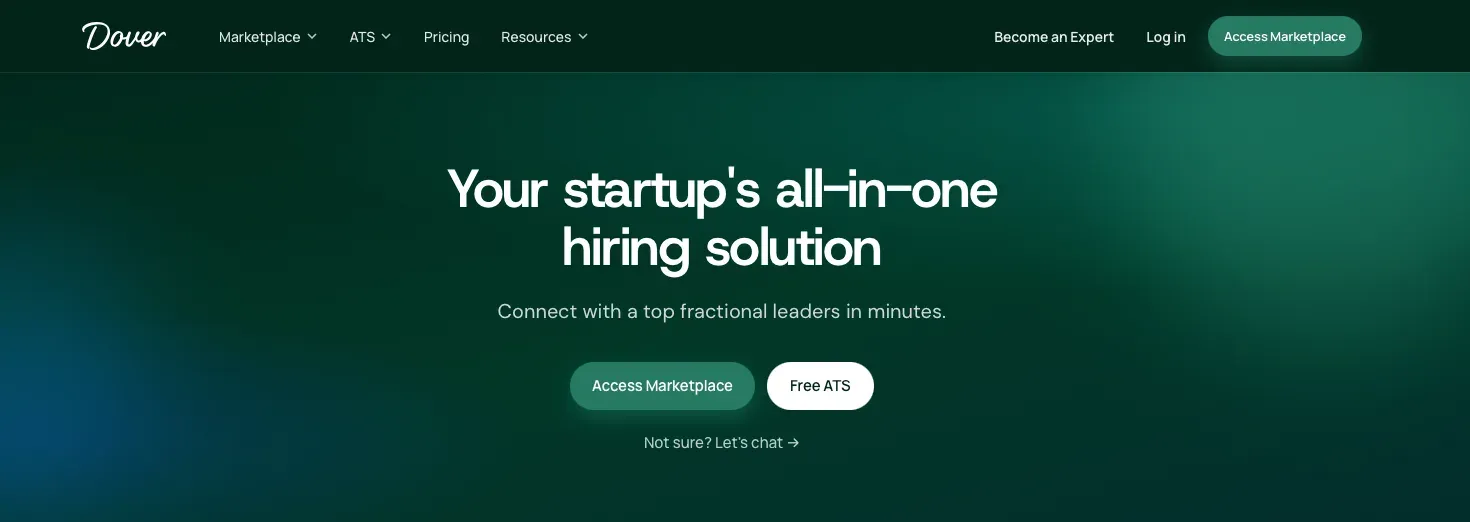
Dover combines a completely free ATS with a shared platform that fractional recruiting agencies and independent recruiters operate on, with real client reviews for each recruiter visible before you engage. Setup takes under 5 minutes, and the interface is as intuitive as a spreadsheet. No lengthy configuration, no IT tickets, no bloat.
The free ATS includes:
-
Candidate tracking, custom interview plans, and email templates so nothing stalls between stages
-
One-click job posting to 50+ boards including LinkedIn and Indeed
-
Chrome extension for proactive outreach to passive candidates on LinkedIn
-
Interview feedback forms, Slack integration, and reporting and analytics
-
No-code careers page builder, referral tracking, and agency management tools
AI applicant scoring and AI note taking sit on the $199/month Premium ATS plan rather than the free tier. The AI interview notetaker, which auto-transcribes calls and fills out feedback forms, is part of that plan too.
Where Dover separates itself is the optional recruiter marketplace. When you need hands-on help, you work with one dedicated recruiter who integrates directly with your team and operates inside the same ATS. That shared visibility matters. There are no duplicated candidate outreach issues, no black-box recruiting, and no surprises.
Most companies have spent an average of $4,800 per hire through Dover, compared to $18,000 to $30,000 at traditional agencies for a $120,000 role. Recruiters set their own rates, and the average hire has run about $4,800, so treat these figures as averages rather than a quote. For the full picture, compare hourly recruiting with agency fees: no contracts, no long-term contract, and no minimum commitments. Scale up during a hiring sprint, scale back when things quiet down.
For startups that need both software and recruiting support without the overhead of a full-time hire or the fees of a traditional agency, Dover fills that gap well.
Workday
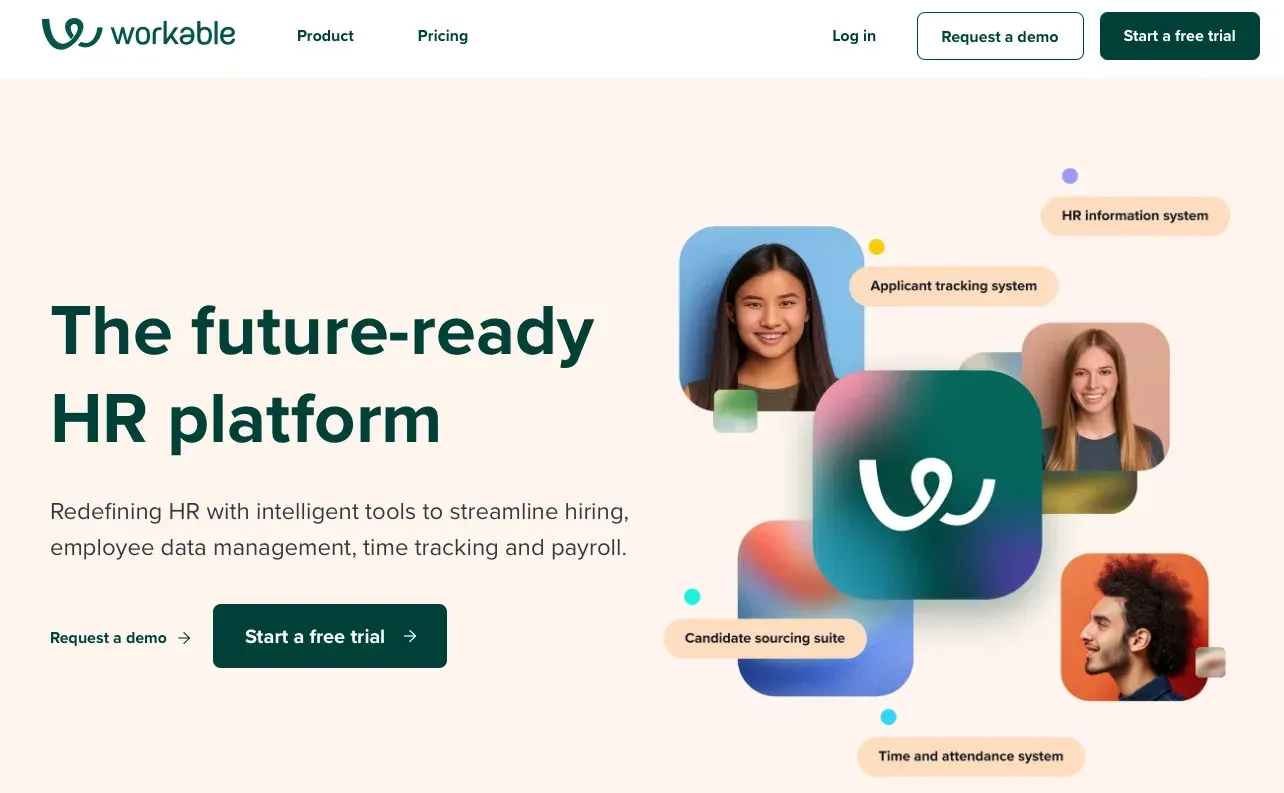
Workday offers an ATS as part of its Human Capital Management suite, built for large enterprises that want recruiting, payroll, benefits, and workforce planning under one roof.
Here is what the system covers:
-
Full talent acquisition lifecycle from requisition to onboarding
-
Native HCM integration for unified employee data
-
Mobile-optimized workflows for candidates and recruiters
-
Embedded analytics covering time-to-fill and sourcing effectiveness
Good for enterprise organizations with 1,000+ employees, especially those already running Workday infrastructure across multiple locations.
The tradeoff is considerable. Workday pricing is not publicly listed and typically requires a custom quote based on company size and modules, and implementation can cost roughly as much as the annual software fee itself. Implementation typically takes 6 to 10 months and often requires outside consultants.
For a Fortune 500 company with a dedicated HRIS team, that may be acceptable. For a startup that needs to hire next month, it isn’t.
iCIMS
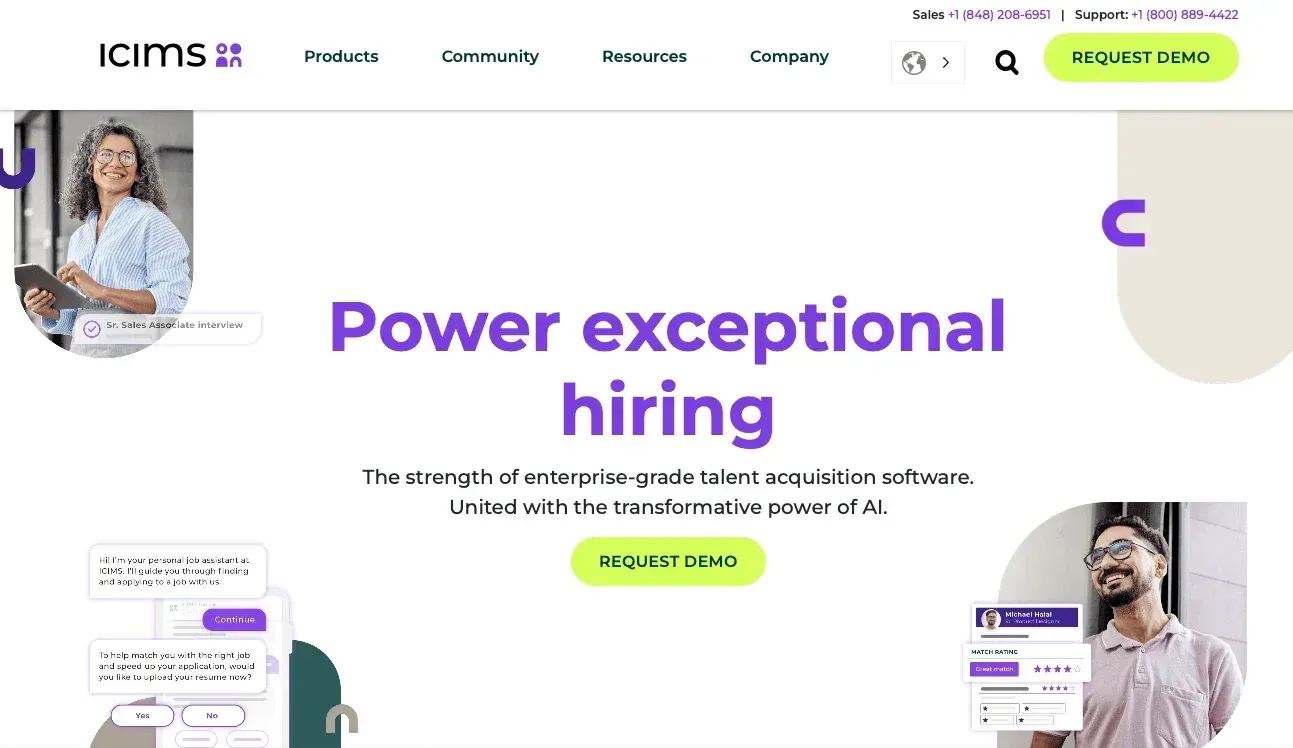
iCIMS targets mid-market and enterprise organizations running high-volume or complex hiring operations. It handles end-to-end recruitment with a level of configurability that appeals to teams with dedicated recruiting staff.
Here is what it offers:
-
Recruitment marketing tools that support distribution across a wide range of job boards and channels
-
Centralized candidate database with configurable workflows and permissions
-
Integrations with hundreds of HR tools through the iCIMS Marketplace
-
Mobile-first application flow and automated candidate communication
Good for mid-market to enterprise companies with the bandwidth to configure and maintain the system properly. The limitations are real, though. Recruiters must manually trigger many repetitive workflow steps, and collaboration features can feel limited without proper configuration, leading some teams to rely on external communication. As a result, teams often end up back in email anyway. Pricing requires a sales call, with no free tier available.
For enterprises with mature recruiting ops, iCIMS works. For startups that need something running today with built-in collaboration and zero cost, it is the wrong tool.
Bullhorn
Bullhorn is a combined ATS and CRM built for staffing and recruitment agencies, not internal hiring teams.
Here is what they offer:
-
Unified ATS and CRM so recruiters can see candidate pipelines, client interactions, and job orders together
-
Gmail, Outlook, and LinkedIn integrations with resume parsing built in
-
300+ third-party integrations through an open API
-
Automated invoicing and timesheet management for agency billing
Good for staffing agencies that place candidates at client companies and need billing and relationship management alongside recruiting tools.
Some users report performance issues and duplicate candidate records, particularly at scale, and the interface overwhelms new users. Pricing is opaque for smaller firms, and the UX feels dated compared to newer tools.
If you are hiring for your own team instead of placing candidates at client companies, Bullhorn is solving the wrong problem entirely.
Greenhouse
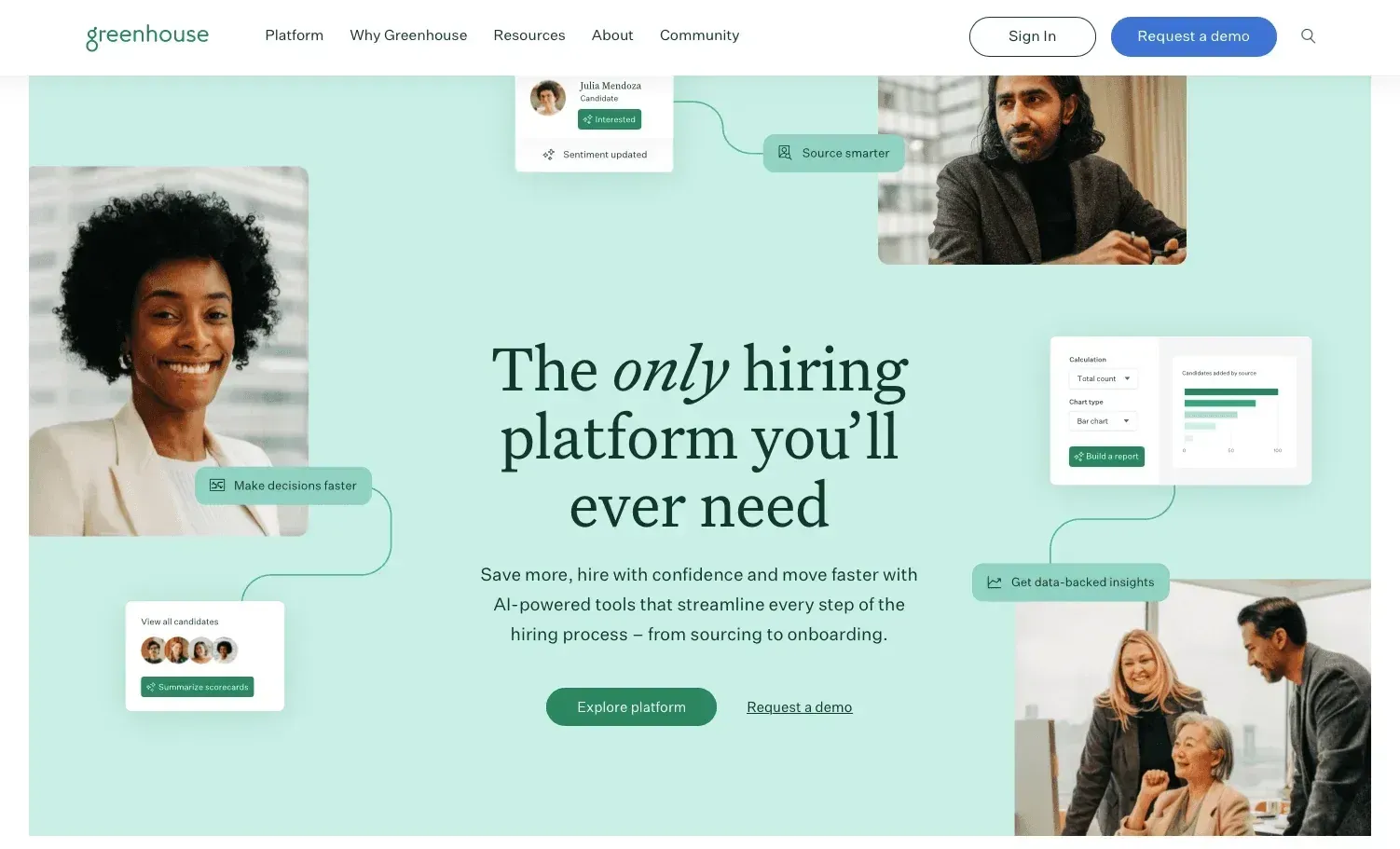
Greenhouse helps companies bring structure and consistency to recruiting through a full-featured ATS with strong analytics and candidate experience tools.
Here is what it offers:
-
Over 400 pre-built integrations with HR and recruiting tools
-
Structured interviews with standardized scorecards and collaborative feedback tools
-
Automated interview scheduling that helps manage availability and coordination
-
DEI reporting tools to reduce bias in job descriptions
Good for tech companies with dedicated recruiting teams that value structured hiring and have budget for premium software plus implementation support.
The costs add up beyond licensing fees once you factor in integrations and add-ons. Rolling out Greenhouse also requires defining role requirements, interview plans, and scorecards upfront, which can feel rigid for teams with more informal hiring processes.
Why Dover Is the Best ATS System
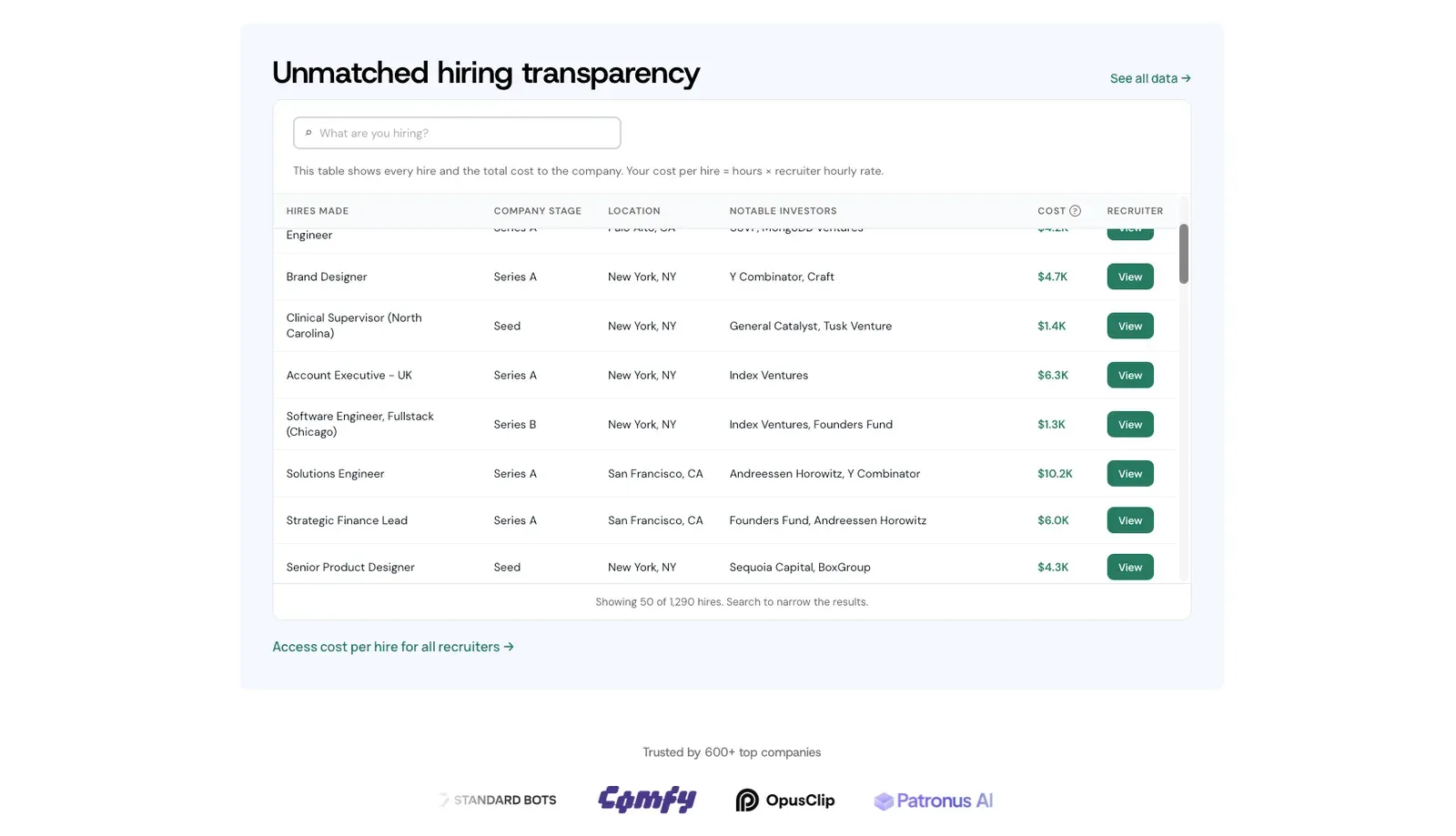
The free ATS gets you running in minutes, with no implementation fees, no consultants, and no contracts. When hiring picks up and you need expert support, Dover’s platform connects you to fractional recruiting agencies and independent recruiters, each with verified client reviews, billing hourly with full visibility on both sides.
The ATS market is growing fast, and most vendors are racing toward enterprise complexity. Fortune Business Insights values the global ATS market at $18.57 billion in 2026, with projections to reach $34.83 billion by 2034 at a CAGR of 8.20%. Dover is moving in the opposite direction: simpler software, more flexible support, and pricing that makes sense for growing teams.
That combination tends to matter most for teams in a particular window: past the point of managing hiring in a spreadsheet, but not yet ready to invest in a full-time recruiter or an enterprise system. For those teams, the ATS covers the working layer of posting, tracking, scheduling, and candidate communications, while the recruiter marketplace handles sourcing and closing when a search needs more than the team can manage alone. Both work from the same pipeline, with no separate onboarding timelines or contracts, and the cost stays tied to real hiring activity instead of a fixed monthly commitment.
What’s Changing in ATS Heading Into Late 2026
Three developments stand out for any team weighing tools right now.
AI is now table stakes. 93% of recruiters plan to increase AI usage this year, and most platforms have embedded it directly into core workflows. What separates them is how well it actually works in practice, not whether it exists.
ATS and CRM are merging. The line between candidate tracking and relationship management has dissolved, with more platforms combining both into one workflow. According to HiringThing’s 2026 enterprise trends report, the global recruitment software market sits at $3.77 billion today, with projections pointing to $5.5 billion by 2031.
Skills-based hiring is replacing keyword matching. Newer platforms weigh competencies over job titles or degree requirements, which tends to produce better shortlists with less manual correction for over-filtering.
Frequently Asked Questions
What’s the real difference between free and paid ATS options?
Free systems cover the basics: resume parsing, candidate tracking, job board posting. Paid platforms add workflow automation, structured interview tools, and deeper analytics, which matter more as your hiring process scales and you need better reporting visibility.
Which ATS works best for companies that don’t have a full-time recruiter yet?
Systems built for simplicity and fast setup work best when hiring managers or founders run recruiting directly. Look for tools with intuitive interfaces, pre-built workflows, and minimal dependencies on dedicated recruiting or IT staff to maintain them.
Do I need a recruiter if I’m already using an ATS?
An ATS handles the process side of hiring: posting jobs, tracking applicants, scheduling interviews, and keeping candidate data organized. What it can’t do is actively source candidates or own the closing process. For high-volume inbound roles, the ATS alone may be enough. For specialized or senior searches, a fractional recruiter fills those gaps without requiring a full-time hire or agency retainer. Both work from the same pipeline.
Final Thoughts on ATS Selection
Choosing among the best ATS systems comes down to how quickly you need to hire and how much support your team actually needs. Dover stands out by giving you working software on day one, without contracts or setup delays, and layering in recruiter support only when you want it. That flexibility keeps costs tied to real hiring activity, and because Dover operates as the infrastructure layer fractional recruiting agencies run on, both sides share the same pipeline without coordination overhead. If that model fits how your team operates, you can take a closer look at Dover here.