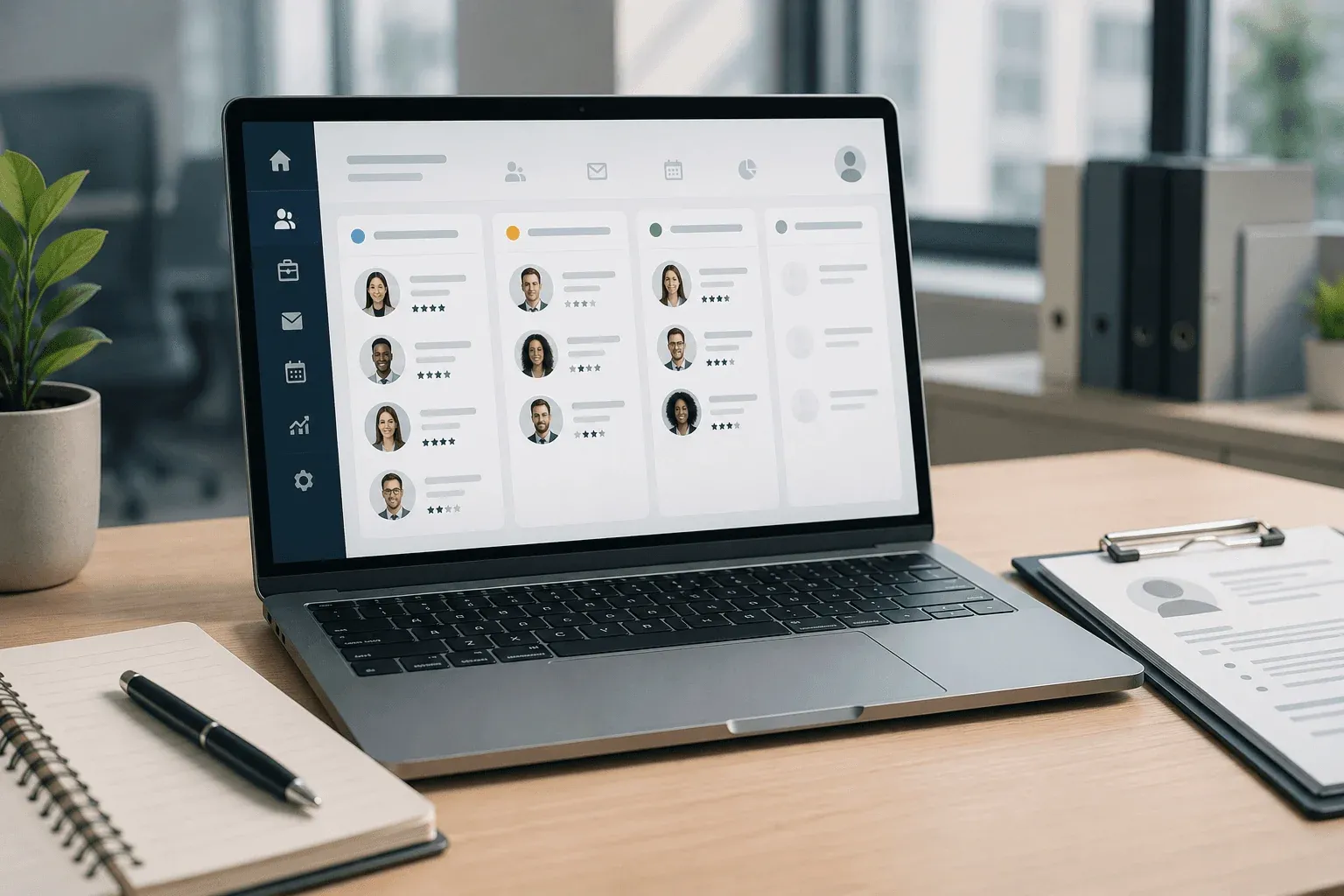

Talent is the lifeblood of a startup, but it’s not always easy to find. There’s no magic wand to wave that will put the top candidates in front of you, ready to accept your offer. But that doesn’t mean there aren’t tools that can make the hiring process much easier, for both your hiring team and your candidates. An applicant tracking system (ATS) helps organize your hiring process and track candidates through the recruiting journey. But there are a lot of ATS options out there. How do you find the right one for your startup? In today’s article, we’ll cover some of the top ATS and recruiting tools available today, so you can narrow down your decision.
TLDR:
-
A traditional ATS organizes your hiring pipeline and tracks candidates, while active outbound sourcing usually requires additional recruiting capacity or sourcing-focused tools.
-
Public starter prices for paid ATS options in this post range from $75/month to several hundred dollars per month, while larger teams or enterprise tiers may require custom quotes.
-
For senior or technical roles where inbound applicants fall short, a fractional recruiter can layer onto your existing ATS without rebuilding your pipeline.
-
Some tools combine free ATS software with on-demand recruiting support inside a single shared system, removing coordination overhead between software and human help.
-
The right fit depends on your hiring volume, the seniority of the roles you are filling, and how much recruiting bandwidth your team has available.
Top ATS & Recruiting Software Companies
Ideally, your ATS solution gives you an all-in-one tool to manage your company’s hiring process while also fitting your budget. ATS adoption data shows that 75% of recruiters already use an ATS or another tech-driven recruiting tool, making the right choice more important than ever. Here are some software companies that could fit those parameters for your startup:
| Tool | Starting Price | Free Tier | Best For |
|---|---|---|---|
| Dover | Free | Yes, unlimited jobs and users | Startups that want a free ATS with optional on-demand recruiter support |
| Lever | Custom (quote required) | No | Growing teams that need a combined ATS and CRM with strong automation |
| Ashby | $400/month (up to 100 employees) | No | Scaling startups (20+ employees) with dedicated recruiting headcount |
| Zoho Recruit | Free (1 active job); paid from $25/user/month | Yes, limited to 1 active job | Teams that want an ATS and CRM combo with broad automation features |
| JazzHR | $75/month (3 active jobs) | No | Small businesses hiring a few roles at a time on a tight budget |
| Workable | $189/month (up to 20 employees) | No | Teams that need ATS plus onboarding and HR management tools |
| BreezyHR | Free (1 position); paid from $157/month | Yes, limited to 1 position or pool | Businesses of any size looking for a modern ATS with a large template library |
1. Lever
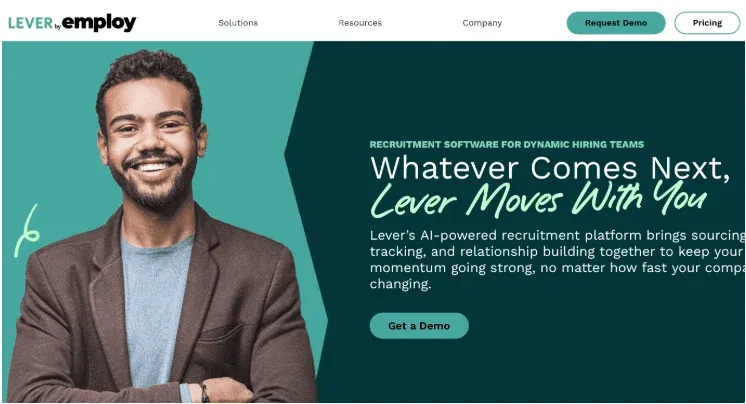
First up is Lever, which promises to help with your hiring quality and speed by way of its LeverTRM ATS + CRM system. Some top features noted by Lever include:
-
Automation: Custom workflows eliminate tedious tasks and reduce workload for your hiring team.
-
Built-in nurturing: Preset nurture campaign templates help you personalize outreach and boost candidate conversion rates.
-
Actionable data: Talent analytics give you a view of recruiting performance and hiring metrics to sharpen your strategy.
Lever’s pricing isn’t publicly listed. You can reach out for a free quote on their standard or enterprise tier.
2. Our Free ATS for Startups: Dover
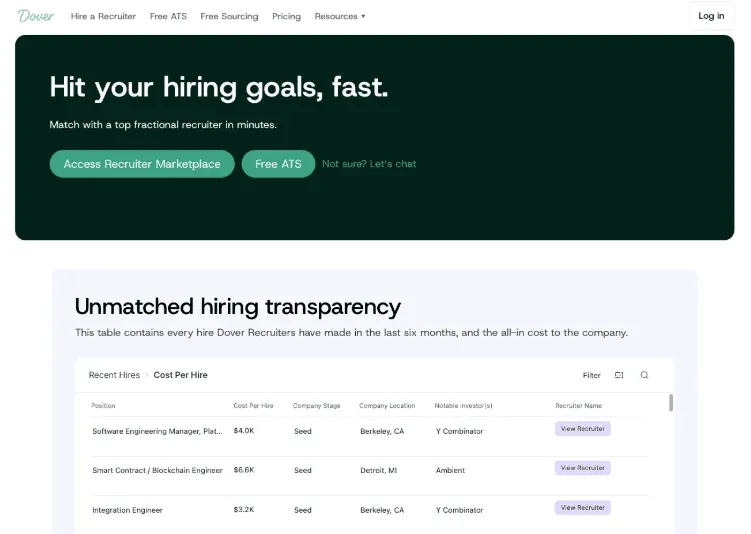
Sure, we may be biased, but we think our ATS is one of the best solutions for startups. Here are some of our top features to help you with recruiting and hiring:
-
AI-powered hiring: AI resume scoring, auto-generated job descriptions, and career pages help you move faster at every stage.
-
Unlimited jobs: Post through 50+ job board integrations, with no cap on active roles.
-
Full candidate tracking: One centralized dashboard keeps your entire pipeline visible so no candidate slips through.
Dover’s ATS is completely free, including unlimited jobs, candidate tracking, AI-powered applicant sorting, job board integration, and an onboarding call with our support team.
3. Ashby
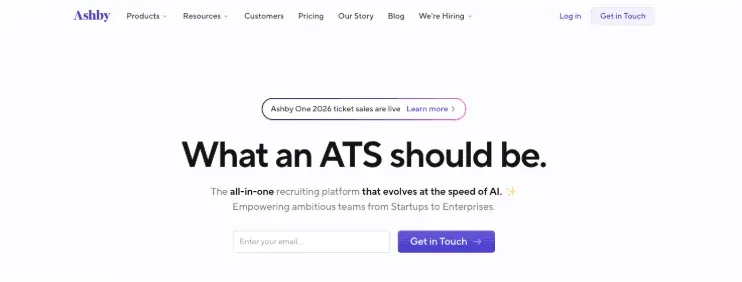
Ashby is an all-in-one recruiting tool that helps companies of all sizes improve their hiring process. Some top features they call out include:
-
One-click sourcing: Automated sourcing emails extend your talent pipeline and improve response rates.
-
Speedy scheduling: Interview scheduling tools cut setup time in half, keeping candidates moving through your pipeline.
-
Easy integrations: Connects with Gmail, Google Calendar, Slack, and other tools to keep hiring data in one place.
Ashby’s Foundations tier covers companies with up to 100 employees and starts at $400 per month. Larger teams can request a custom quote.
4. Zoho Recruit
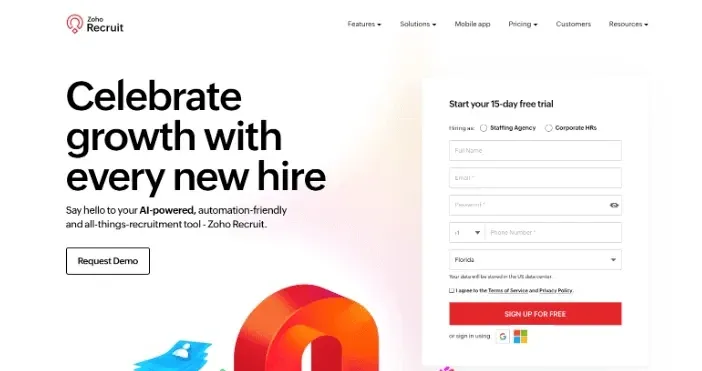
Zoho Recruit is a cloud-based hiring solution that gives companies a suite of tools to hire for the roles they need. Some top features they call out include:
-
All-in-one ATS and CRM: Covers both applicant tracking and candidate relationship management for staffing agencies and HR teams.
-
Automated features: Automation tools cover every step of the candidate journey, from sourcing to communication.
-
Advanced analytics: Built-in reporting helps you understand and refine your recruiting process over time.
Zoho Recruit offers a basic tier with one active job for free. This limited tier comes with candidate management, interview scheduling and email management features. The other priced tiers range from $25 per user per month to $75 per user per month.
5. JazzHR
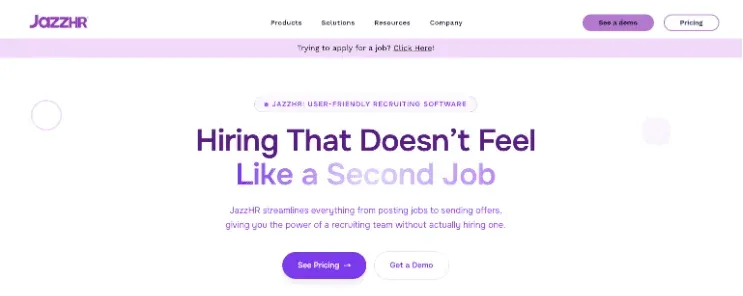
JazzHR describes itself as a powerful recruiting software for small businesses. Some of the top features they call out include:
-
Automate repetitive tasks: Automation tools cut down on manual work and keep your hiring pipeline moving.
-
Unlimited jobs and users: No caps on active roles or team members, with no added fees.
-
Direct integrations: Connects with other HR tools to round out your recruiting stack.
JazzHR offers its basic tier for $75 per month, though this only allows for 3 active jobs with a cost of $9 per additional job. Unlimited job tiers range from $269 to $420 per month with the options for additional add-ons like candidate texting, Zoom integrations, E-signatures and more.
6. Workable
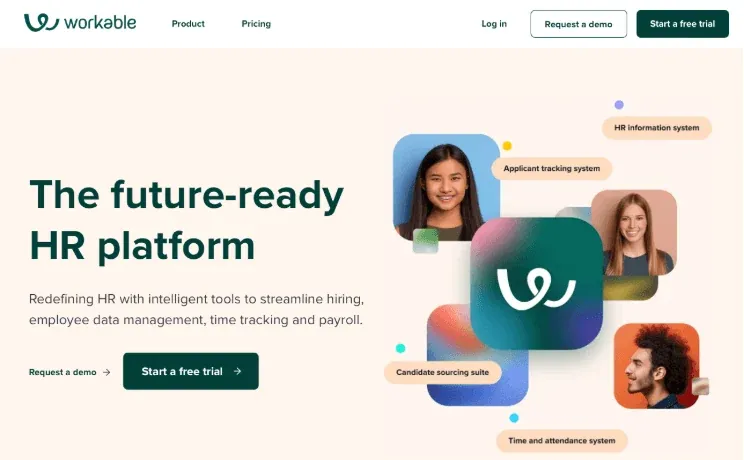
Workable is a full-featured recruiting and management tool for hiring, onboarding, and managing team members. Some of the top features they call out include:
-
Sourcing candidates: One-click posting to over 200 job sites with AI-assisted sourcing built in.
-
Automated hiring tools: Handles approvals, interview scheduling, and other manual tasks automatically.
-
Custom onboarding: E-signatures and employee profiles let you tailor the onboarding experience for new hires.
Workable offers its Starter tier for up to 20 employees for $189 per month. The upper tiers can range from several hundred dollars per month depending on employee count and premium features.
7. BreezyHR
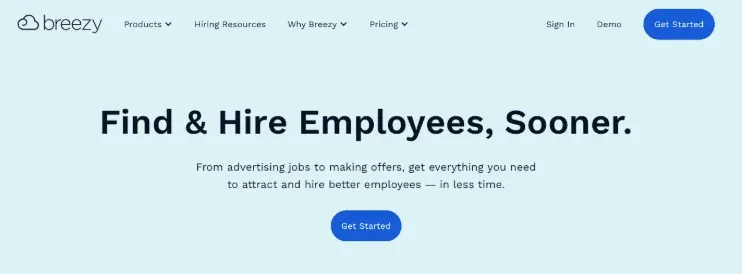
BreezyHR is a modern hiring software and ATS that works for businesses of all sizes. Some top features they call out include:
-
Single-click sourcing: Advertises your jobs across 50+ job sites with one click.
-
Task automation: Automates pre-screening, emails, interview scheduling, and feedback collection.
-
Free templates: Over 800 HR and recruiting templates available at no extra cost.
BreezyHR offers its basic tools for one position or pool for free. Other tiers range from $157 per month to $439 per month.
How Dover Stands Apart for Startup Hiring
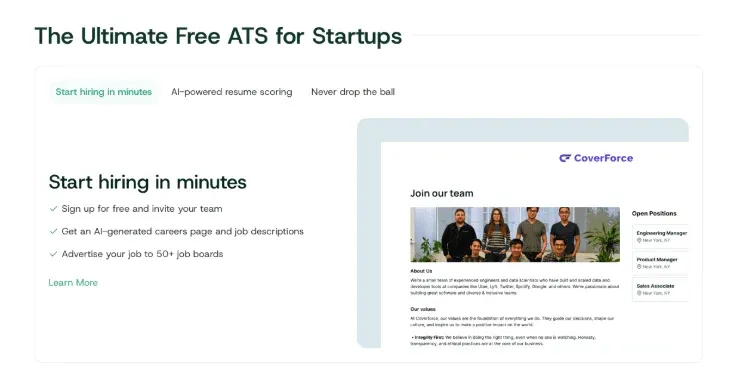
Most ATS options on this list charge a monthly fee before you’ve made a single hire. With the ATS market projected to grow from $3.28 billion in 2025 to $4.88 billion by 2030, more tools are entering the space at every price point. Dover’s free ATS works differently: unlimited jobs, unlimited users, AI-powered applicant scoring, one-click posting to 50+ job boards, and a native careers page builder, all at no cost. For founders running lean, that frees up budget for the parts of recruiting that actually require human time. You can learn more about how it compares in our ATS comparison for startups and our complete ATS guide.
Where Dover goes beyond standard ATS software is the recruiter marketplace. When inbound applications fall short (for senior engineering roles, specialized operator hires, or positions where your team lacks the bandwidth to run active sourcing) you can bring in a fractional recruiter directly through the same system. Fractional work growth has made this model more accessible than ever, with experienced recruiting talent available without a long-term commitment. Recruiters set their own rates, with no retainer and no placement fee. Most roles fill within $2,000 to $7,000 in total recruiter cost. If you’re weighing whether that model fits your budget, our breakdown of fractional recruiter costs walks through the full picture.
The part that separates Dover from a two-tool stack is that the ATS and the recruiter marketplace operate in a single shared system. Your hiring team and any fractional recruiter you bring in work from the same pipeline, see the same candidate data, and track the same metrics. There’s no handoff friction, no duplicate outreach, and no coordination gap between software and human support. For a deeper look at how the two layers work together, see our guide on pairing an ATS with a fractional recruiter.
Frequently Asked Questions
Do I need a recruiter if I’m already using an ATS?
Not necessarily. An ATS handles the process layer: posting jobs, tracking applicants, and keeping candidate communication organized. It doesn’t do outbound sourcing or bring recruiting expertise to a search. For roles where inbound applicants meet your quality bar, an ATS may be all you need. For senior or hard-to-fill positions, a fractional recruiter can operate inside your ATS alongside your team, with the ATS as the infrastructure and the recruiter as the capacity layer on top.
What’s the difference between an ATS and full recruiting support?
An ATS organizes your hiring process: tracking applicants, managing stages, and storing candidate data. Full recruiting support means someone actively sourcing, screening, and managing the offer process. Most startups start with an ATS for inbound and lower-complexity hires, then add a recruiter for roles that need active pipeline-building. Some tools pair a free ATS with an on-demand recruiter marketplace in one shared system, so you can start self-serve and add human support when a search calls for it.
When should a startup use a fractional recruiter vs. self-serve hiring software?
Self-serve hiring software works well when inbound applications are coming in and the role isn’t highly specialized. A fractional recruiter typically makes more sense when the role is senior or technical, when inbound applicants aren’t meeting your quality bar, or when your team lacks bandwidth to run sourcing outreach alongside their regular work. Fractional recruiters tend to work best when an ATS is already in place, so the recruiter and internal team share pipeline visibility and can avoid duplicate outreach or coordination gaps.
Final Thoughts on Choosing the Right ATS and Recruiting Tools for Your Startup
Picking an applicant tracking system (ATS) comes down to matching the tool’s model to how your team actually hires. For high-volume inbound roles, a low-cost or free ATS with solid automation may be all you need. For technical or senior roles where passive candidates are the only realistic pipeline, the software layer alone won’t move the needle, you’ll need sourcing capacity behind it. Dover is built for both situations: a free ATS for teams that want to stay self-serve, and a recruiter marketplace for searches that need more hands-on work, all within one shared system. The right fit depends on your hiring volume, the seniority of the roles you’re filling, and how much recruiting bandwidth your team has to spare.
-for-recruiting-in-may-2026-hero-fd0fc0f6.CdG1MPH0_jE4Sd.webp)