
Most founders overthink ATS selection and spend more time comparing tools than actually hiring. The best ATS for startups isn’t the one with the longest feature list; it’s the one that helps you move from opening a role to closing it without extra work. Early hiring breaks down without clear structure, and the wrong system adds setup overhead and hidden costs. Pairing software with hands-on recruiting support can remove much of that early guesswork.
TLDR:
-
Startup ATS pricing ranges from free to $500+/month, with hidden add-ons often doubling costs.
-
Some modern solutions offer a free ATS with unlimited seats plus fractional recruiters whose rates have averaged $75-125/hour.
-
Traditional agencies charge $18,000-$30,000 per $120,000 hire vs. an average of $2,000-$7,000 with certain modern options.
-
Setup time matters. Some platforms take under 5 minutes; enterprise tools can take days to weeks.
-
Certain tools combine free recruiting software with on-demand recruiter access in one system.
What Is an Applicant Tracking System?
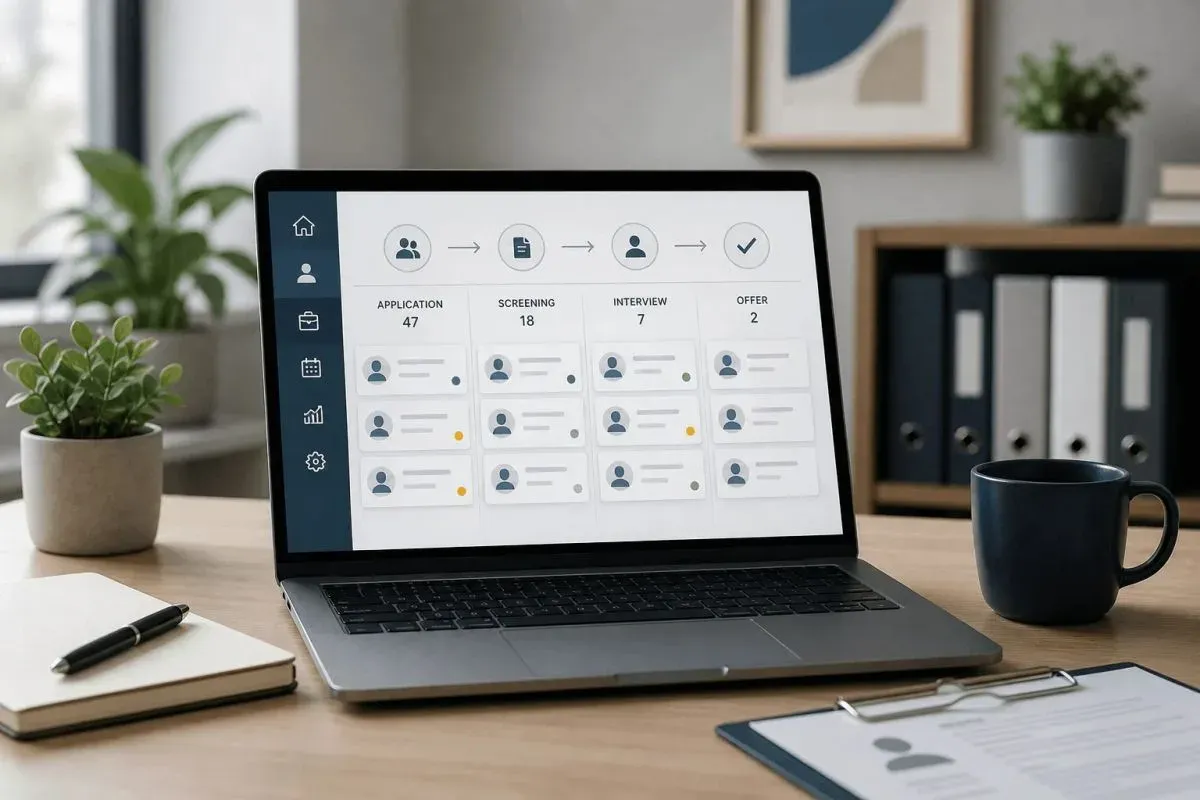
An applicant tracking system manages hiring from start to finish: post a job, collect applications, move candidates through stages, and make an offer, all in one place instead of scattered across email and spreadsheets. Research shows 86% of ATS users report reduced time-to-hire after implementation.
What an ATS doesn’t provide is recruiting capacity. Tracking applicants is different from sourcing candidates, running outreach, and closing offers. Most early-stage teams handle that recruiting work themselves. When volume grows or a role needs specialized sourcing, a fractional recruiter adds the human capacity an ATS alone can’t supply.
How We Ranked ATS Systems for Startups
Not every ATS ranking applies equally to a 12-person startup and a 500-person enterprise. We focused on what founders need when hiring their first team members.
Each system was assessed on:
-
Ease of setup and onboarding speed
-
Pricing transparency, including whether a free tier exists
-
Core features: job posting, candidate tracking, and team collaboration
-
Scalability as headcount grows
-
Startup-specific fit based on verified user reviews
Cost and simplicity were weighted heavily, because a system built for a dedicated HR team is a different product for a seed-stage founder. A system that takes three weeks to configure and charges per seat is a different product for a seed-stage company than for a mature org with a dedicated HR team.
| ATS | Fractional Recruiting Support | |
|---|---|---|
| What it handles | Postings, applications, pipelines, scheduling, team notes | Sourcing, outreach, interviews, offer management |
| Who does the work | Your team | A recruiter (fractional or full-time) |
| Cost structure | Free to low monthly fee | Hourly or placement-based |
| Best fit | Organizing candidates already in your pipeline | Building a pipeline from scratch |
| Recruiter vetting | Not applicable | Published reviews and cost-per-hire data per recruiter |
What’s Shifted in Startup Hiring Tools in 2026
Three changes are worth knowing as you evaluate ATS options in the second half of 2026.
AI is now standard, but setup still matters. Most established tools include AI-assisted screening or scoring. The real question is whether those features work without a dedicated recruiter to configure them. For lean teams, the setup cost can outweigh the gain.
Bundled tools are more common. More vendors now package ATS, CRM, and scheduling together. Pricing reflects that breadth, and for seed-stage companies the tradeoff usually still favors simpler, cheaper setups. Fractional recruiting agencies are a growing category here too, and the ATS they operate on matters because it determines whether the client team has real-time visibility into the work being done.
Free tiers have expanded, but vary widely. Most vendors offer some free entry point. What matters is what’s actually included and where the upsell pressure starts. The headline price rarely tells the full story.
Best Overall ATS for Startups: Dover
Dover’s free ATS is genuinely free, not a trial. Setup takes under five minutes, with no-code career pages, one-click posting to 100+ job boards, candidate tracking, and unlimited seats from day one. AI applicant scoring and AI note taking sit on the $199/month Premium ATS plan rather than the free tier. For a founder juggling product, fundraising, and hiring, that simplicity is the point.
Some fractional recruiting agencies run their searches on Dover’s infrastructure, giving clients direct pipeline visibility instead of opaque agency-side tracking.
Where Dover separates itself is the recruiter marketplace. When you need extra capacity, you can bring in a vetted fractional recruiter with 10-15 years of startup experience. Recruiters set their own rates, which have averaged $75-125/hour, with no placement fees. Each recruiter has published reviews and cost-per-hire data, so you can compare options before committing. Traditional agencies typically charge 15-25% of first-year salary, meaning a $120,000 hire can cost $18,000-$30,000. Most startups using Dover’s recruiters have spent roughly $2,000-$7,000 per hire instead, though the total depends on the role and the hours it takes.
Your internal team and any fractional recruiter work from the same ATS, so there’s no visibility gap between inside and outside your org. Both sides see the same pipeline, the same candidate notes, the same metrics.
Dover was built for seed to Series C companies filling their first 100 roles. You can run it entirely on your own, bring in a recruiter for one search, or scale support across multiple roles at once. No contracts, no long-term commitments.
BambooHR
BambooHR is an HRIS first and an ATS second. It manages the full employee lifecycle from offer letter to offboarding, and the recruiting module is an add-on, not a core product. The ATS capabilities have real limits worth knowing before committing.
What They Offer
-
Job posting and applicant tracking, though active openings are capped on the Core plan, which can be a hard stop for teams hiring across multiple roles at once.
-
Integration with broader HR tools for candidate-to-employee transitions, including self-onboarding with electronic forms and welcome emails.
-
Payroll, time and attendance, and performance tracking as part of the wider HR suite.
Pricing starts at $10/employee/month for Core and $17/employee/month for Pro, with key ATS features locked behind the higher tier. For a 20-person startup, that’s $200-$340/month before a single job is posted.
Where It Gets Complicated
If your hiring volume is low and BambooHR is already running your HR ops, keeping everything in one system is a reasonable call. The recruiting module lacks resume ranking, deep pipeline automation, and sourcing tools that fast-growing startups typically need. Growing teams can also hit the Core plan’s job opening cap faster than expected, making the Pro tier a near-requirement for anyone hiring across more than a handful of roles.
Workable
Workable is a recruitment tool with solid sourcing capabilities, posting to 200+ job boards and providing access to a database of 400 million candidate profiles. AI-powered sourcing can surface passive candidates automatically, and LinkedIn Recruiter integration rounds out the outreach toolkit. International hiring support and built-in salary estimators add breadth.
What They Offer
-
One-click posting to 200+ job boards with a built-in passive candidate database for sourcing at scale
-
AI sourcing, video interviewing, texting, and LinkedIn Recruiter integration for multi-channel outreach
-
Autofill forms, bulk email actions, and professional templates to reduce repetitive recruiting work
Where It Gets Complicated
The Standard plan starts at $299/month, but the real cost is higher. Texting adds $89/month, video interviews $99/month, and assessments $59/month, pushing full functionality closer to $546/month before a single hire.
Customization is also limited compared to enterprise tools, which matters if your hiring process has any complexity. For a startup hiring across engineering, product, and sales simultaneously, that rigidity shows up fast.
Greenhouse
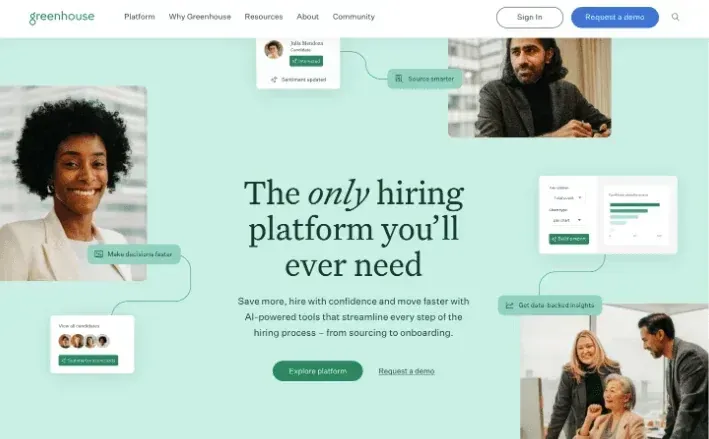
Greenhouse is built for structured, enterprise-scale hiring. The interface is clean, the reporting is deep, and the integration library covers virtually every HR tool a mid-sized company might run. For a 200-person company with a dedicated HR team, it’s a strong fit.
What They Offer
-
Anonymized resume review, inclusion analytics, and customizable scorecards for DEI hiring
-
Detailed pipeline reporting: conversion rates, stage timing, and interview consistency
-
500+ integrations with HRIS, assessment, and background check providers
-
CRM tools for nurturing passive candidates over time
Where It Gets Complicated
Pricing is not public. Buyer-reported contracts in 2026 run from roughly $10,000 to more than $75,000 per year depending on company size, with a median around $26,000 to $27,000. Implementation fees can add $1,000 to $15,000 on top. Advanced analytics, sourcing tools, and onboarding modules cost extra. For most early-stage startups, it is more infrastructure than the moment calls for.
Lever
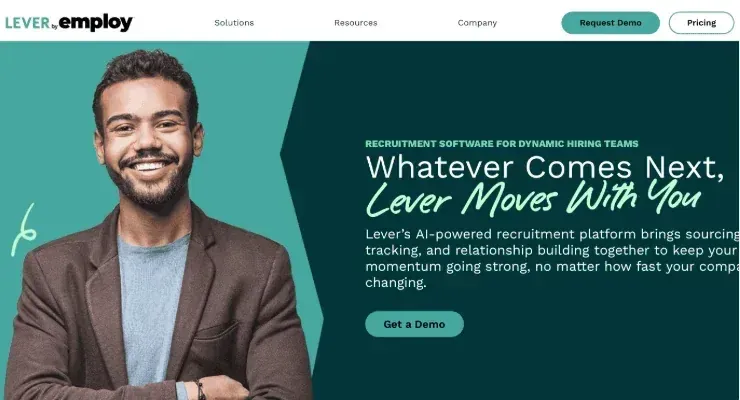
Lever combines ATS and CRM into one system, tracking candidates from first touch through onboarding. It’s built for teams running both active pipelines and passive talent nurturing simultaneously.
What They Offer
-
Full talent relationship management spanning sourcing, engagement, and onboarding in a single system
-
Visual analytics, DEI tools, automated workflows, and 300+ integrations
-
Multi-channel sourcing, customizable hiring workflows, and collaborative interview tools
-
Native integrations with Slack, BambooHR, DocuSign, and Tableau
Where It Gets Complicated
Lever suits mid-sized teams that focus on relationship-driven recruiting. For early-stage startups without dedicated HR staff, pricing opacity and contract requirements add friction that simpler, lower-cost options avoid.
Ashby
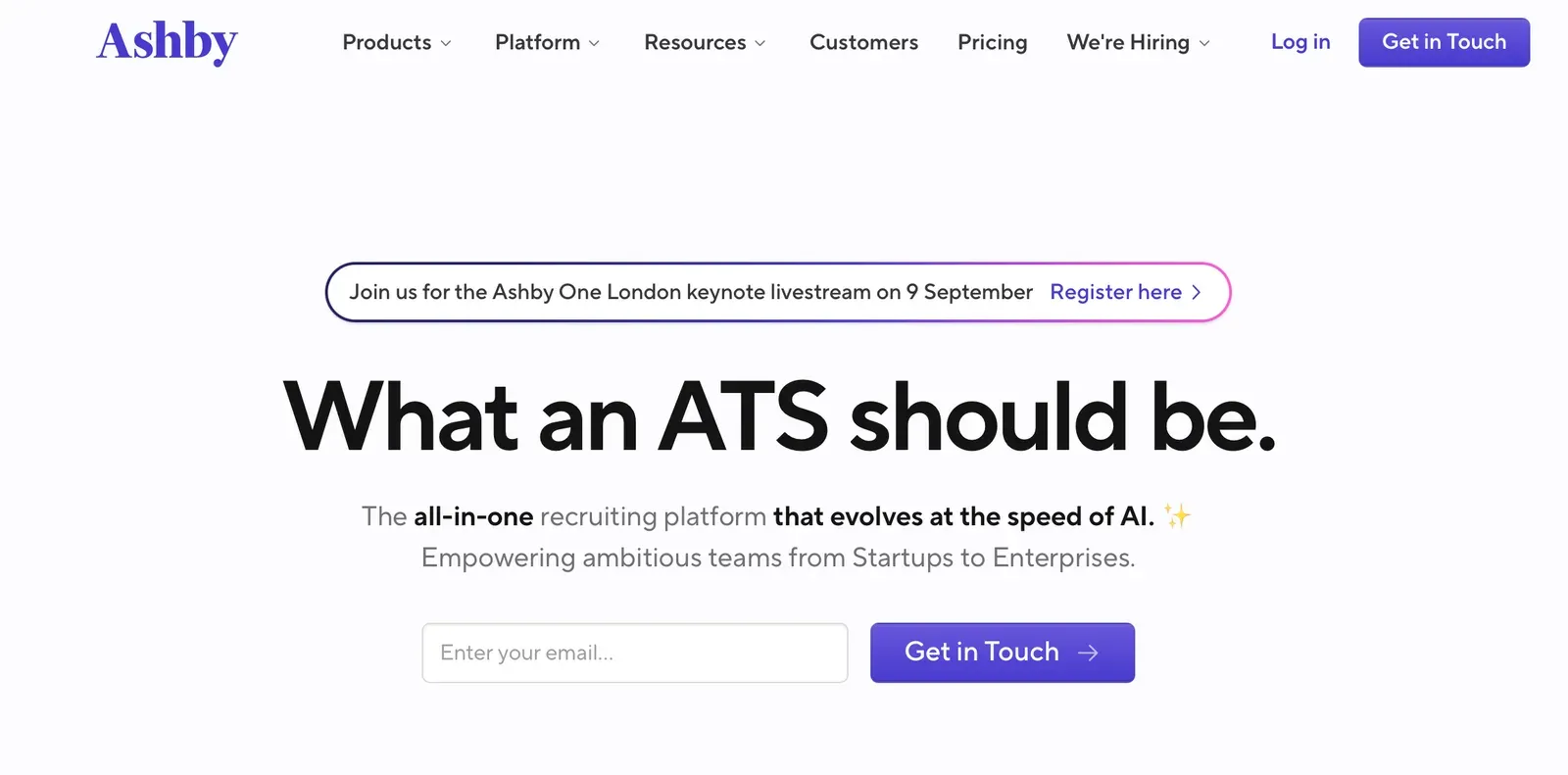
Ashby combines ATS, CRM, scheduling, and analytics into one recruiting tool aimed at teams that want BI-level reporting without pulling in a data scientist. Foundations pricing starts around $400/month, and custom quotes kick in once you exceed 100 employees.
What They Offer
-
Consolidated ATS, CRM, scheduling, and analytics in one system with configurable workflows
-
Native video interviews, AI-generated interview summaries, and candidate filtering built on AI
-
Detailed reporting with unlimited custom reports built for data-driven recruiting teams
Where It Gets Complicated
The interface takes real time to learn. The Interview and Scheduling section alone has 14 settings tabs, and basic workflows require more clicks than comparable tools. Sourcing has monthly email lookup caps and limits on bulk actions, which creates friction for high-volume outreach. The Chrome extension requires manual profile entry instead of mass importing.
Ashby is a strong fit for growth-stage companies with dedicated recruiting teams that live inside recruiting analytics. For early-stage startups without that infrastructure, the setup overhead and pricing path work against you.
Why Dover Is the Best ATS for Startups
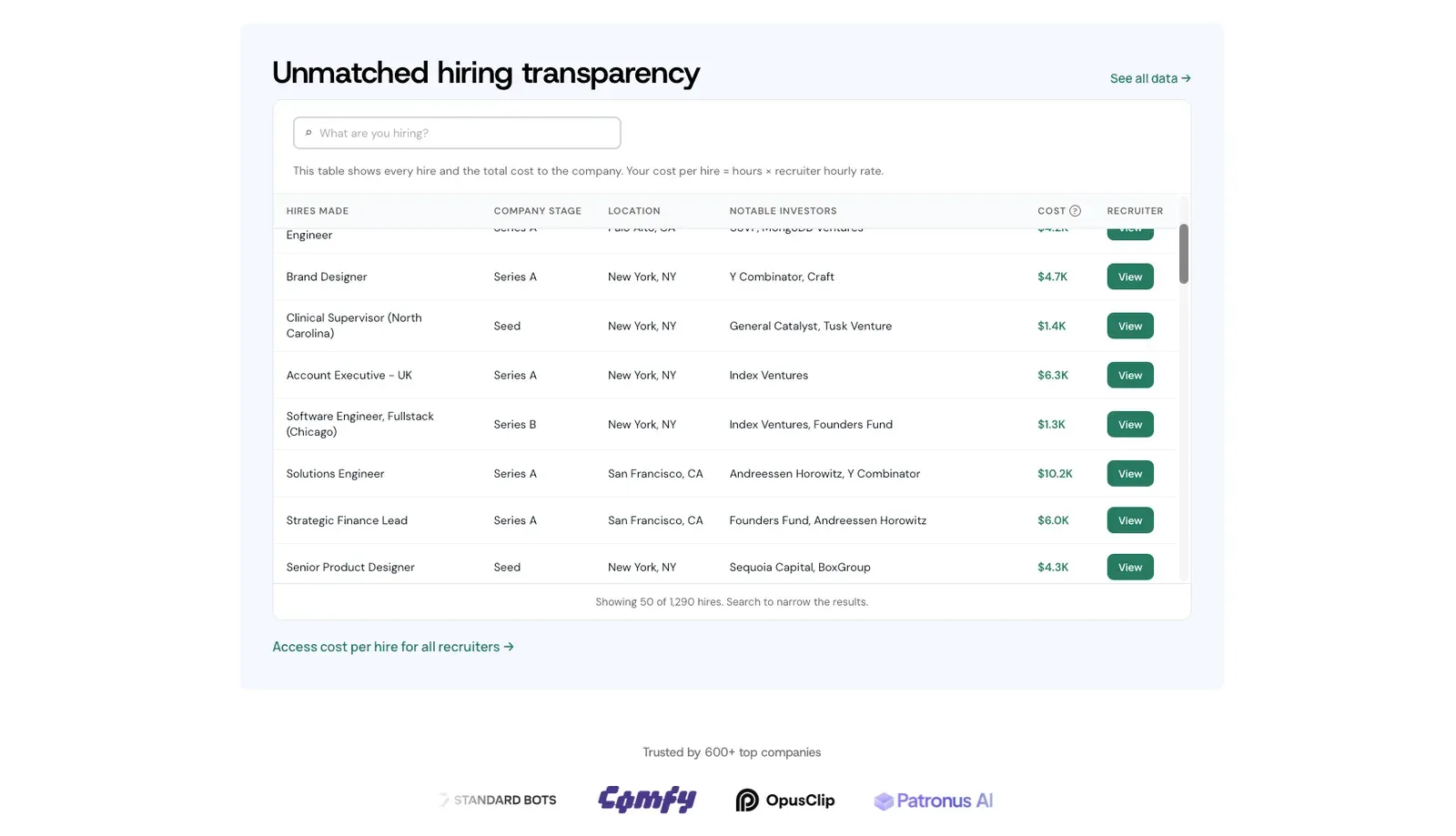
Dover’s free ATS covers the basics from day one, with no credit card, no trial clock, and no seat limits. When hiring gets complex or capacity runs thin, the recruiter marketplace is already built in. You can bring in an experienced fractional recruiter within days, pay by the hour, and stop when the role is filled.
Fractional recruiting agencies are an emerging alternative to traditional placement firms, and Dover is the shared infrastructure those agencies run on, so clients keep full pipeline visibility regardless of who is doing the recruiting work. Both options run through the same ATS, so nothing falls through the cracks between your team and whoever you bring in to help.
Frequently Asked Questions
When should I bring in recruiting help instead of handling it myself?
If you’re spending more than 15 hours per week on recruiting tasks, the opportunity cost alone can make outside support worthwhile. Fractional recruiters or marketplace options make sense for teams hiring 5-50 roles annually who aren’t ready for a full-time recruiter, which many startups begin to consider once hiring volume becomes consistent year-round.
What’s the difference between an ATS and full recruiting support?
An ATS manages the process layer: job postings, application collection, candidate pipelines, scheduling, and team collaboration. A recruiter handles the active work: sourcing, personalized outreach, and closing offers. The two work together. For many early-stage teams, the ATS handles structure while the founder handles recruiting. When hiring volume grows or a role needs specialized sourcing, a fractional recruiter working inside the same pipeline removes the handoff friction between tracking and execution.
Can a startup just use spreadsheets instead of an ATS?
Spreadsheets work for the first one or two hires, but they break down fast. Once you have more than a handful of candidates, multiple interviewers, or more than one open role, tracking falls apart: feedback gets lost, follow-ups get missed, and no one has a clear picture of where each candidate stands. A free ATS like Dover costs nothing to set up and solves those problems from day one, so there’s little reason to stay on spreadsheets past your first hire.
Final Thoughts on Startup ATS Selection
Choosing the best ATS for startups comes down to how quickly you can get value from it and whether it supports you as hiring needs change. Early teams don’t just need software; they need a way to keep hiring moving without adding unnecessary complexity or cost. Dover brings those pieces together by giving teams a free ATS alongside access to experienced recruiters when extra help is needed, all within the same system so nothing gets lost as you scale.