
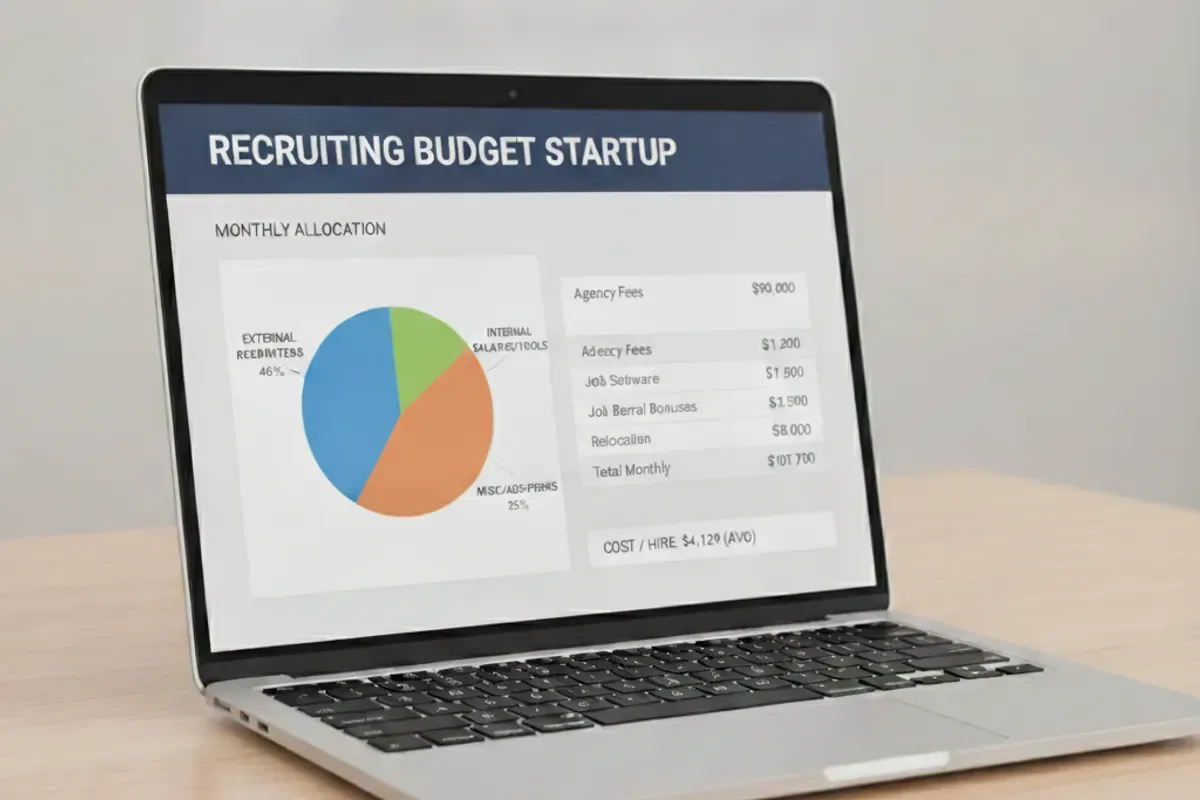
The traditional way of recruiting isn’t cheap. The Society for Human Resource Management estimates recruitment costs were around $4,129 per hire in 2024. Fortunately, there are plenty of savvy ways to cut your recruitment costs while still bringing in top talent that makes an impact. Let’s get into it.
The last thing you want to do as a startup is burn more money than you need to. But you also need top talent to drive your company forward. So what do you do? The obvious answer is to find ways to cut costs in your recruiting budget. But there’s also the issue of missing out on top talent if you cut in the wrong places. In other words, cutting recruitment costs is easier said than done, unless you have the right tools and strategies in place. But, as we mentioned, hiring top talent can be far from cheap. The statistic we mentioned earlier, the $4,129 per hire, can balloon quite a bit when you start adding recruiters to the mix. Let’s take a look at what a typical recruiting budget might look like for a startup and why this can put a huge strain on a growing company.
TLDR:
-
Recruiting agency fees of 15-30% per hire can cost $45,000-$90,000 for just three mid-level roles.
-
A free ATS covers the full hiring workflow at no cost; add fractional recruiting only when sourcing becomes the bottleneck.
-
Employee referrals can produce shorter time-to-hire and stronger candidate quality than job boards or agencies.
-
Remote work expands your talent pool while cutting office costs most of your workforce prefers to avoid anyway.
-
Some tools pair free ATS software with on-demand recruiting support billed for time worked instead of fixed placement fees.
What Does a Recruiting Budget Typically Look Like?
The “typical” recruiting budget can vary from company to company, but many startups have to funnel money into the same places. The typical recruiting budget likely includes:
-
Internal costs - These costs might be internal recruiters you have on staff, your applicant tracking system, sourcing tools, and other software your team might need.
-
External costs - These could include job board postings, ads, background checks, relocations for new hires, and recruiting agencies who usually charge a 15-30% fee.

Let’s put it this way: You need to hire 3 mid-level employees with a budget of $100k for each of them. If you have a recruiting agency handle them, you’re looking at $45-90k just for your recruiting agency fees. And many startups are spending more.
There’s a better way.
| Approach | Typical Cost Per Hire | Best For | Main Tradeoff |
|---|---|---|---|
| Recruiting agency | 15 to 30% of first-year salary ($18K to $45K on a $120K to $150K hire) | One-off, urgent roles where speed outweighs cost | High fixed cost; incentives tied to placement speed, not fit |
| Fractional recruiter | ~$4,800 per hire on average; recruiters set their rates | Hard-to-fill or passive-candidate roles where inbound falls short | Requires sourcing complexity to warrant the added cost |
| Free ATS + inbound | $0 in software cost; variable job board spend | Early-stage teams with steady inbound and internal bandwidth to screen | Depends on inbound volume; sourcing gaps require additional support |
Ways to Cut Back on Hiring Spend as a Startup Founder
When you start researching ways to cut costs on recruiting, you’ll likely run into a lot of advice to invest in software and tools to help you save time and (eventually money) on your recruiting processes. This can work, but you’re looking at spending more to save more, which can be hard on a company that’s already looking to minimize hiring spend.
Instead, you can cut back on recruitment costs by shifting strategies and making use of free tools. Let’s take a look at some of the best ways to cut costs:
Use a Free Applicant Tracking System (ATS)
According to a survey by GetApp, a whopping 86% of recruiters said an ATS has increased the speed at which they hire candidates and 78% say it improved the quality of candidates they hire. So it shouldn’t be a question of “if” you need an applicant tracking system. The question is, which one do you use?
Applicant tracking systems can vary widely in price, with many companies spending thousands if not tens of thousands, on these platforms. The truth is, that most of these companies could be spending $0 on their ATS and still get world-class features.
That’s where Dover comes in. Dover is a free ATS that helps hiring teams stay organized, post to 50+ job boards, tap into AI-powered candidate sorting and get a bird’s-eye view into your entire hiring pipeline. Using Dover, you can review applicants 10x faster and make sure you never ghost a top candidate again. And you don’t need to spend a dime.
For most early-stage teams, the ATS alone covers the full workflow: posting roles, managing inbound, tracking candidates, and keeping communication organized. The calculus changes when sourcing becomes the bottleneck, such as hard-to-fill roles, passive markets, or a hiring pace that outpaces internal bandwidth. In those cases, layering in fractional recruiting support on top of the ATS keeps costs proportional while covering the sourcing gap.
Hire Freelancers and Contractors
The case for adding external recruiting support is not universal. An ATS handles the workflow well when inbound volume is steady, roles are clearly defined, and the team has bandwidth to screen applicants and keep candidates moving. The math changes when sourcing complexity rises: hard-to-fill technical roles, passive-candidate markets, or a hiring pace that outstrips internal capacity.
That is when bringing in a fractional recruiter tends to pay off. Unlike a freelancer hired for a discrete task or a contractor scoped to a fixed deliverable, a fractional recruiter owns the full hiring process, sourcing, screening, interviewing, and closing, over an extended engagement. They also work inside the same pipeline as the rest of the team, so there is no handoff friction or duplicate candidate outreach. Dover’s Recruiting Partners follow this model, with recruiters setting their own rates and no minimum commitment, keeping cost proportional to actual hours worked instead of tied to a placement fee.
The practical decision point: if inbound is covering your role requirements and the team has bandwidth to run candidates through the process, the free ATS is sufficient on its own. When sourcing complexity or capacity becomes the constraint, fractional recruiting support is the layer worth adding.
Make the Most of Sourcing Software
The right sourcing software allows you to find qualified candidates in your sleep. And like applicant tracking systems, you can pay the appealing price of nothing for them. Dover’s Sourcing Autopilot helps you find great candidates and use AI to generate a highly personalized email based on their profile.
The first touch is key when contacting top candidates, and Dover’s Sourcing Autopilot takes all the guesswork out of the process. This way, you can reach out to the most qualified candidates in seconds.
Offer Internships and Part-Time Positions
The Society for Human Resource Management says that most companies find internships and part-time positions to be highly effective, yet hardly anyone is doing it. Beyond being cost-effective compared to full-time hires, these positions also give you a chance to bring on future top talent early and grow them within the company.
Internships and part-time positions allow both the company and the hire to decide if the arrangement is a good fit. And if things don’t work out in either direction, the cost is far less than onboarding and offboarding full-time positions. It’s a win-win for everyone.
Transition to Remote Work
A report by Buffer found that a shocking 98% of workers would prefer to work remotely, at least part of the time. Chances are, your employees want to work remotely, and startup founders should want the same thing. For one, offering remote work or hybrid work is clearly a priority for a huge portion of the workforce. Remote work also gives you a much wider talent pool, letting you find top candidates all over the world.
Remote work can lead to sizable cost savings too. Startups often feel pressured to offer cool or trendy office spaces in expensive areas. But why spend the money when your employees would prefer to stay home anyway? The continued industry-wide transition to remote work isn’t slowing down anytime soon, and it’s not hard to see why.
Encourage Employee Referrals
If you value the people you have, you probably value their opinions too. There’s a good chance that your employees know someone who could be an asset to the company, so encouraging employee referrals is an easy and cost-effective way to increase your candidate pool.
Of course, this suggests you should offer incentives like a bonus if a referral makes it through the hiring process. But that bonus is far less than you would have to pay a recruiter, and the quality of the candidate is probably higher. Plus, you increase morale because you give an employee a bonus and they have someone they like on the team.
There’s also the fact that GetApp’s report also said that many recruiters found referrals led to the shortest time to hire and the best quality applicants compared to other methods like job boards, recruitment agencies and social media.
How Dover Fits Into a Startup Recruiting Budget
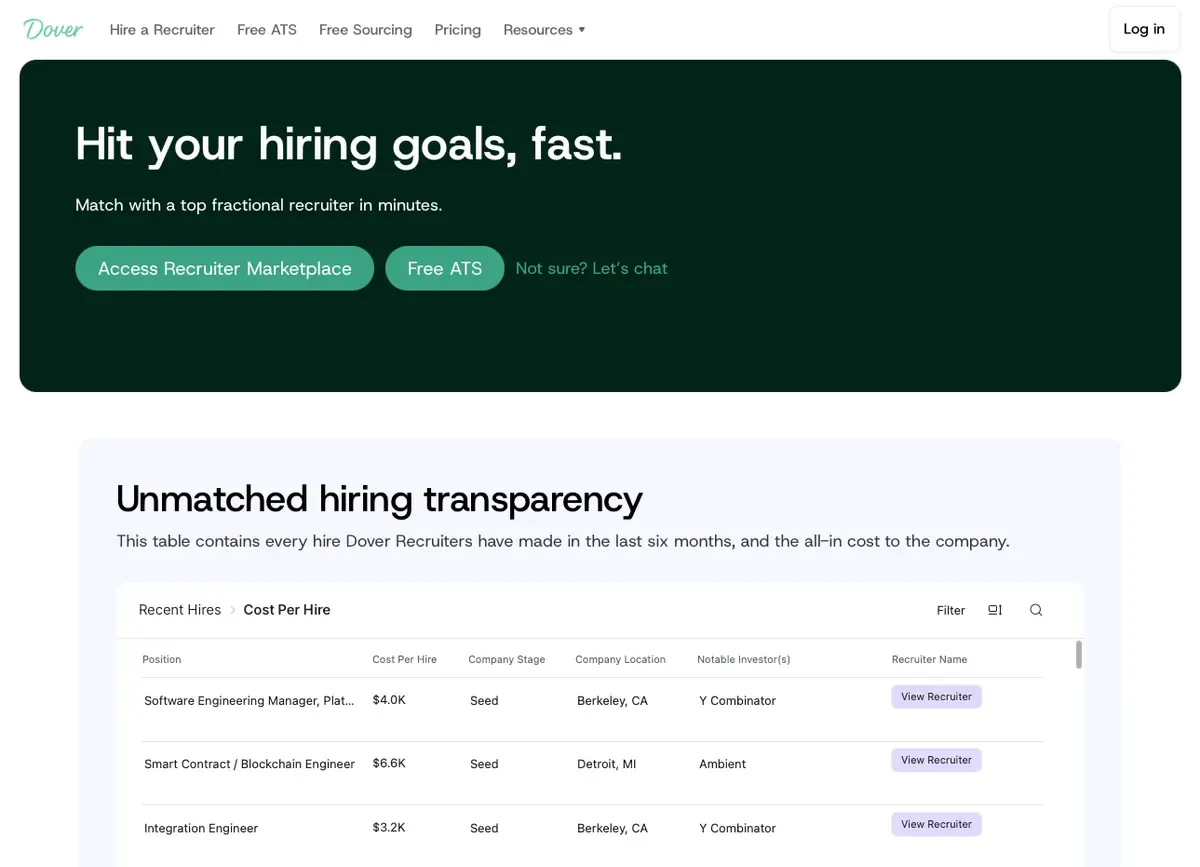
Dover’s free ATS is built for the reality most early-stage teams face: a hiring workflow that needs to be up and running before a recruiter is even a line item in the budget. Setup takes under five minutes. From there, the ATS handles job postings across 50+ boards, inbound applicant tracking, AI-powered resume scoring, automated scheduling, and candidate communications, all at no cost, with no seat limits and no cap on open roles. For teams filling roles through inbound alone, that covers the full workflow.
When sourcing becomes the bottleneck, Dover’s recruiter marketplace layers on top of the same ATS. Fractional recruiters on Dover handle the full hiring cycle: sourcing passive candidates, screening, coordinating interviews, and closing. Because they work inside the same pipeline the team already uses, there is no duplicate outreach, no handoff friction, and no separate system to bring back into line. You pay only for time worked, with no placement fees, no minimum commitment, and no contracts. Most roles come in at about $4,800 per hire, a fraction of what a traditional agency charges on a percentage-of-salary model.
The practical value of the integrated model is that the cost stays proportional. Teams that are running well on inbound pay nothing beyond the ATS. Teams that hit a sourcing constraint add fractional recruiting hours only for the roles that need it. Neither path requires switching systems, onboarding a new vendor, or committing to a retainer before the hiring need is clear.
FAQs
What’s the cheapest way to reduce recruiting costs at a startup without sacrificing candidate quality?
Start with a free ATS to handle job postings, pipeline management, and candidate communication at no cost, then add sourcing support only when inbound volume or role complexity outpaces your internal bandwidth. This keeps spend proportional to actual hiring needs instead of locked into agency fees or full-time recruiting headcount before you need it.
How do I know when to stop relying on inbound applications and bring in external recruiting support?
The signal is usually sourcing complexity, not headcount. If your roles require passive candidates, highly specialized technical skills, or a hiring pace that your team cannot keep up with while running the business, inbound alone will stall. At that point, fractional recruiting support (billed hourly with no placement fee) tends to cost far less than a traditional agency while covering the sourcing gap without committing to a full-time recruiter salary.
How much should a startup expect to spend per hire when using fractional recruiting instead of a traditional agency?
Fractional recruiting typically runs $4,800 per hire, with recruiters setting their own rates, compared to traditional agency fees of 15-25% of first-year salary, which can reach $18,000-$30,000 on a $120,000 hire. The cost difference comes from the hourly billing model: you pay for hours worked, not a percentage tied to the candidate’s accepted salary.
Final Thoughts on Startup Recruiting Costs
Cutting recruiting budget as a startup is less about slashing spend across the board and more about spending where it moves the needle. The strategies above share a common thread: replace fixed, agency-style costs with tools and approaches that scale with your actual hiring needs. For most early-stage teams, a free ATS covers pipeline management, job postings, and candidate communication at no cost. When sourcing becomes the constraint, fractional recruiting support layers in on an hourly basis. Dover’s Recruiting Partners, for example, have averaged about $4,800 per hire with no placement fees and no minimum commitment. The right setup depends on your role mix, hiring pace, and internal bandwidth.