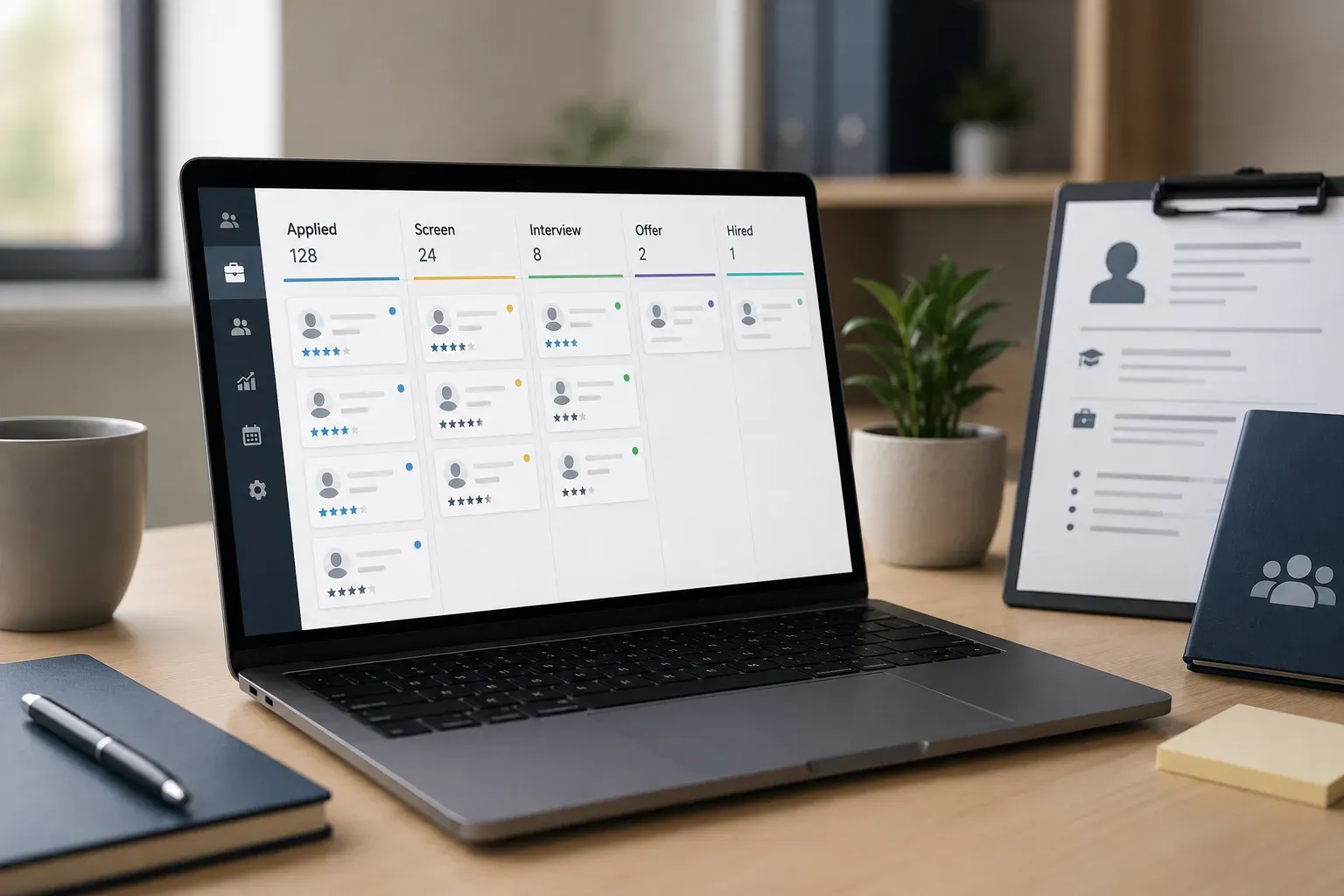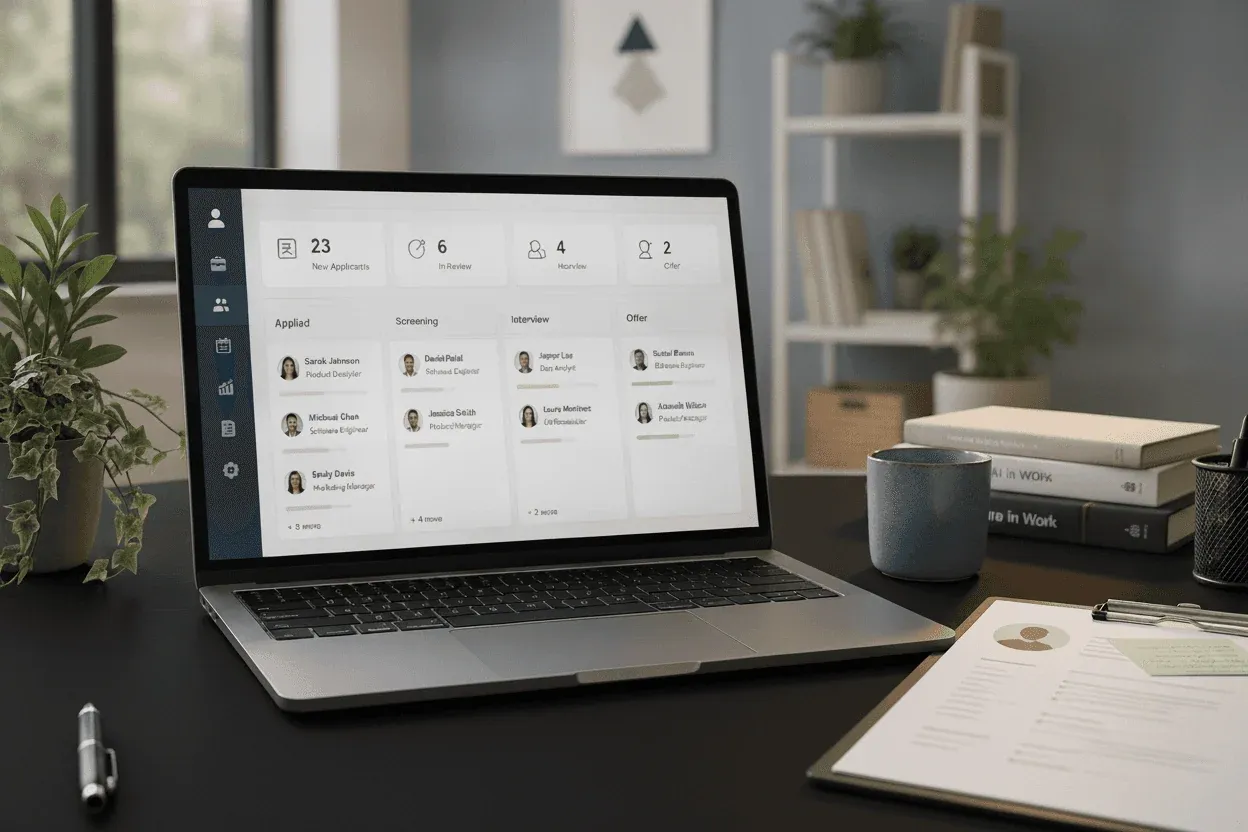
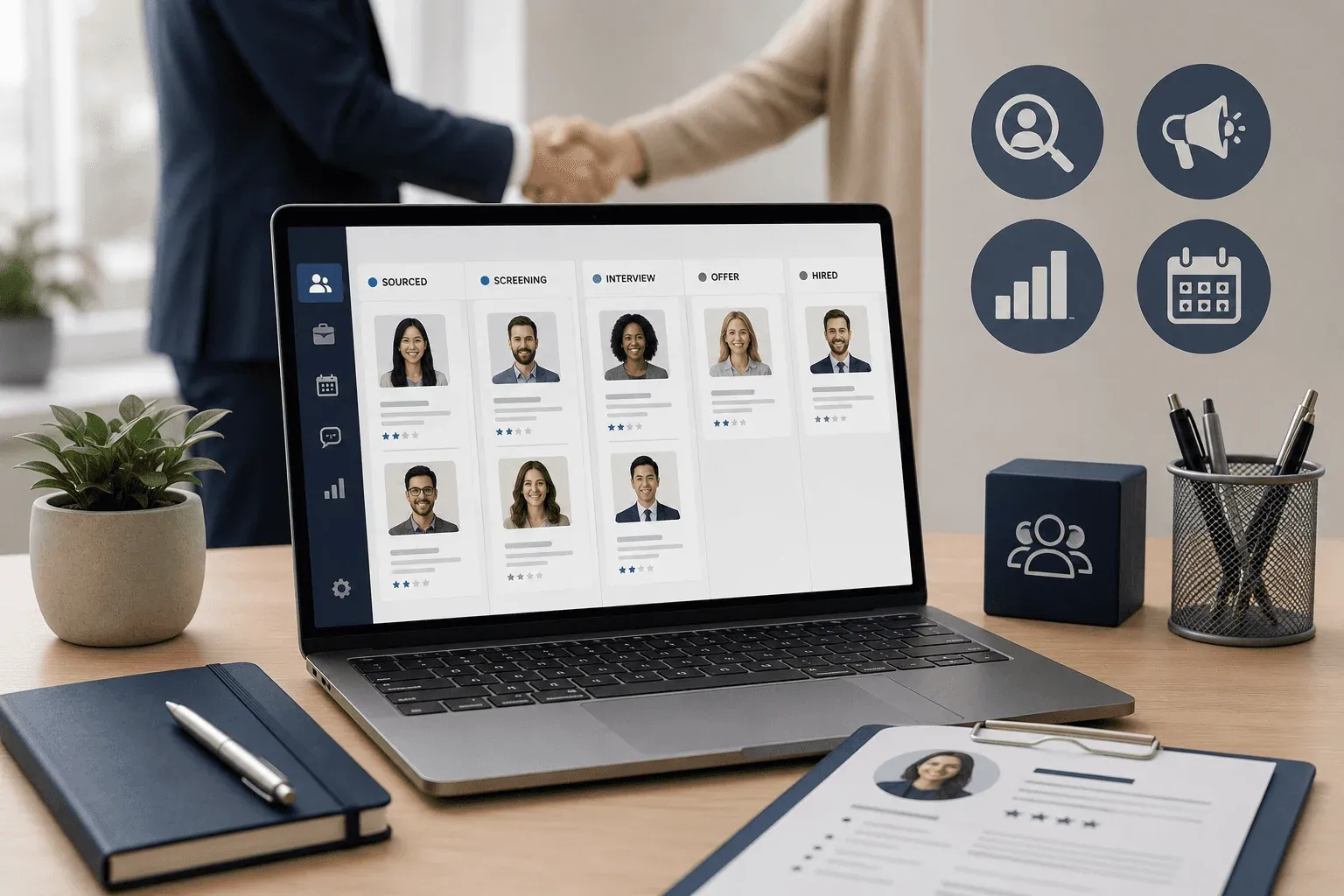
Picking the wrong startup recruitment software usually doesn’t feel like a mistake until you’re three weeks in and still configuring workflows instead of reviewing candidates. What early-stage teams actually need is pretty different from what most tools lead with. This guide walks through what matters at each stage and which tools are worth your time.
TLDR:
-
Startups need low setup friction, flexible pricing, and job board distribution. Not enterprise ATS complexity.
-
Entry-level tools run $15 to $75 per user per month; mid-market tools run $200 to $500 per month with features most early teams won’t use.
-
Your hiring stage determines which features matter: free tiers and pipeline basics at seed, reporting and collaboration at Series A.
-
Per-seat pricing models look affordable early but scale awkwardly once more team members need access.
-
Some tools pair free ATS software with on-demand recruiting support at $2,000 to $7,000 per hire, with no retainer required.
What Startups Actually Need from Recruitment Software
Startups hire differently than large companies. No dedicated HR team, no recruiter coordinating feedback loops, and no budget for software with six-month implementation timelines. The tools built for a 500-person company often create more overhead than they remove for a team of ten trying to close its first engineering hire.
A few things actually matter at this stage:
-
Low setup friction: a tool you can get running in an afternoon, not one that requires weeks of configuration before you can post a job.
-
Flexible pricing: free tiers or low monthly costs that don’t assume a full-time recruiting operation.
-
Enough structure to stay organized: candidate tracking and status updates and interview scheduling that keeps candidates from going cold.
-
Job board distribution: reach across major boards without manually posting to each one.
What startups rarely need at the seed or Series A stage is a deeply configurable enterprise ATS with custom workflows, compliance modules, and a dedicated account team; features that solve problems most early teams haven’t run into yet.
Top Recruitment Software for Startups: At a Glance
Here’s a quick overview of the tools covered in this guide, so you can get your bearings before going deeper into each one.
| Tool | Starting Price | Free Tier | Best For |
|---|---|---|---|
| Dover | Free ATS; $2,000 to $7,000/hire for recruiter support | Yes | Startups hiring without a dedicated recruiting team |
| Ashby | ~$360/month (billed annually) | No | Scaling startups that want analytics-heavy ATS |
| Lever | Custom pricing | No | Mid-stage teams that need CRM and ATS combined |
| JazzHR | From $1,000/year | No | Small businesses with straightforward hiring volume |
| Zoho Recruit | From $30/user/month | Yes (limited) | Budget-conscious teams already in the Zoho ecosystem |
Tool-by-Tool Breakdown: Recruitment Software for Startups
Zoho Recruit
Zoho Recruit fits best when a startup already runs other Zoho products, since the value compounds through CRM and HR integrations. The free tier covers a single active job, but most growing startups will hit its limits quickly. Some users report the interface feels dated and configuration takes more setup time than lean teams can spare.
Ashby
Ashby targets growth-stage startups that need deeper hiring analytics and is one of several best applicant tracking systems for startups in this space. Pricing is geared toward teams with enough hiring volume to support the cost, and some users report the interface takes time to learn.
Lever
Lever combines ATS and CRM functionality, making it a reasonable fit for teams tracking both active candidates and longer-term prospects. The candidate portal gets generally positive marks for usability. Some users note the feature set can feel like more than a startup hiring two or three roles per year needs.
JazzHR
JazzHR is one of the more accessible hiring platforms for small business, with solid job distribution and collaborative review features. Straightforward to set up, it suits early-stage teams that want a functional ATS without a steep learning curve. Reporting and analytics are thinner than more analytics-heavy tools.
Dover
Dover’s ATS is free, covers unlimited jobs, and connects to over 100 job boards. Teams can add fractional recruiters on a per-hire basis at $2,000 to $7,000, no retainer required, useful when a search needs hands-on support without a full-time recruiter seat.
Key Features to Look For in Recruitment Software
Startup recruiting tools range from bare-bones applicant tracking to AI-assisted sourcing with built-in analytics. The right set depends on your hiring volume and whether you need the software to do the heavy lifting or simply keep things organized.

Applicant Tracking and Pipeline Management
A solid applicant tracking system gives every candidate a clear place in your process. Look for drag-and-drop pipeline stages, automated status updates, and structured feedback without switching tools, small teams need this to keep candidates from going cold.
Job Distribution
Posting manually to a dozen boards compounds fast across multiple roles. Look for software that syncs to LinkedIn, Indeed, and niche sites from one place. Indeed’s 2025 recruiting trends show competition on major boards remains strong, making automated distribution a real advantage for small teams.
Candidate Sourcing and Outreach
Some tools stop at inbound applications. Others help you find and contact passive candidates directly. For competitive or specialized roles, outbound sourcing or LinkedIn Recruiter integration can make a real difference in hiring top talent for your startup. For senior or specialized roles where inbound is thin, outbound sourcing is where self-serve hiring tends to stall and where some teams bring in a fractional recruiter to work inside the same pipeline without adding full-time headcount.
Reporting and Analytics
Time-to-fill, source quality, and stage conversion rates show where your process breaks down. SHRM recruiting benchmark data puts average time-to-fill above 40 days, and 2026 tech startup hiring rates show early-stage teams are making fewer but more deliberate hires, so even a lightweight dashboard gives small teams enough signal to course-correct.
Integrations and Scalability
Your ATS should connect to Slack, Google Calendar, your HRIS, and LinkedIn. Software that requires workarounds at 10 hires will create friction at 50.
How to Choose Recruitment Software by Hiring Stage
Your hiring stage shapes which features actually matter in recruitment software, and what works for a five-person team making its first hire looks very different from what a 50-person company running multiple concurrent searches needs.

Pre-Seed and Seed Stage
A free or low-cost ATS that gets postings live quickly and tracks candidates through a basic pipeline is enough. Advanced analytics and custom workflows are overhead at this stage.
Series A
With more roles open at once, reporting and pipeline visibility earn their cost. Structured interview kits, hiring manager collaboration, and calendar integrations start to matter here.
Series B and Beyond
Scale requires workflow automation, role-based permissions, and deep analytics. At this stage, a poorly integrated ATS increases recruiter time and contributes to missed hires beyond the direct cost of the software.
Understanding Recruitment Software Pricing Models
Most tools charge per user per month, per job posting, or as a flat monthly subscription. Entry-level tools run $15 to $75 per user per month; mid-market products fall in the $200 to $500 per month range. For context, SHRM’s 2026 recruiting benchmark reports a median cost per hire of $1,300 for nonexecutive positions, although actual hiring costs vary considerably by role, company size, and recruiting model. Per-user pricing looks affordable early but scales awkwardly as more team members need access; flat-rate subscriptions are more predictable but often bundle features early-stage teams won’t use.
Free Tiers and What They Actually Cover
Some free tiers cover applicant tracking, job posting, and candidate communication with no time limit; others cap access to a single active job. The key question is whether the free tier supports real workflow or just serves as a trial. Zoho Recruit and JazzHR offer free or low-cost entry points, though collaboration features and integrations are typically gated behind paid plans. Ashby ATS has no meaningful free tier, positioning itself toward teams that want deep analytics from day one.
How Dover Fits Into Startup Hiring
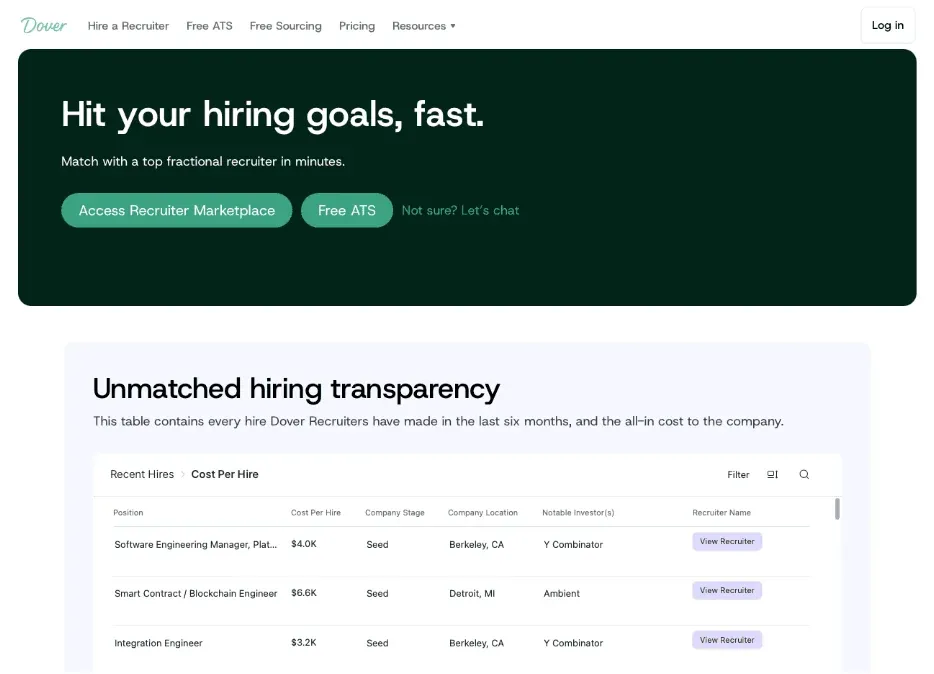
Sure, we may be biased, but here is what Dover actually does. The ATS is free, covers unlimited jobs, posts to over 100 boards automatically, and takes under five minutes to set up.
Instead of committing to a full-time recruiter or paying a contingency agency 20% of a salary, teams can bring in a fractional recruiter at $2,000 to $7,000 per hire, with hourly support at $75 to $125 per hour, an $800 refundable deposit, and no retainer required. Before engaging, teams can review real performance data, hire history, and client feedback, transparency uncommon in traditional search. Dover is the foundational infrastructure fractional recruiting agencies are built on: the ATS handles pipeline and sourcing automation while recruiters bring the judgment and outbound reach that software alone does not replicate.
The fit is strongest for startups hiring one to three roles at a time who want pipeline visibility without handing the search off entirely. The recruiter works inside the same shared ATS, with real-time visibility for both sides. Teams weighing the Dover vs Ashby decision will find the structural differences considerable. For high-volume hiring across many simultaneous roles, a dedicated in-house recruiter or RPO tends to make more economic sense.
Frequently Asked Questions
What’s the best recruitment software for a seed-stage startup with no dedicated recruiter?
For seed-stage teams, a free ATS with job board distribution and simple pipeline tracking is enough. Dover fits this stage: setup takes under five minutes, posts go out to over 100 boards automatically, and the free tier has no limits on jobs or users. For harder searches, fractional recruiter support is available at $2,000 to $7,000 per hire, no retainer required.
Ashby ATS vs. Dover for an early-stage startup: which makes more sense?
Ashby targets scaling teams with dedicated recruiting operations. Its Foundations Plan for companies with up to 100 employees starts at $400 per month, with a 10% discount available for annual commitments, and it does not offer a permanent free tier. Dover is built for founder-led hiring at seed and Series A, where setup speed and cost matter more than deep analytics. For teams hiring their first five to ten people without a full-time recruiter, Dover’s free ATS and on-demand fractional support are a better structural fit.
Do I need a recruiter if I’m already using an ATS?
An ATS handles pipeline organization, job distribution, and candidate communication, but it does not source candidates or manage judgment calls in a competitive search. For roles where inbound is sufficient, it is often enough. The case for adding a recruiter builds when the role is senior or specialized, outreach is required, or hiring bandwidth is thin. Fractional recruiters can work directly inside the same ATS pipeline, giving both sides real-time visibility without coordination overhead.
Final Thoughts on Choosing the Right Recruitment Software for Your Startup
Choosing the right startup recruitment software comes down to matching the tool to where your team is now, not where it might be in two years. A free ATS with job board distribution handles most of what seed-stage teams need; structured analytics and collaboration earn their cost at Series A. The key distinction is between tools that organize hiring and models that actively run it. Dover’s free ATS paired with on-demand fractional recruiters at $2,000 to $7,000 per hire covers both, with no retainer or full-time recruiter commitment required.