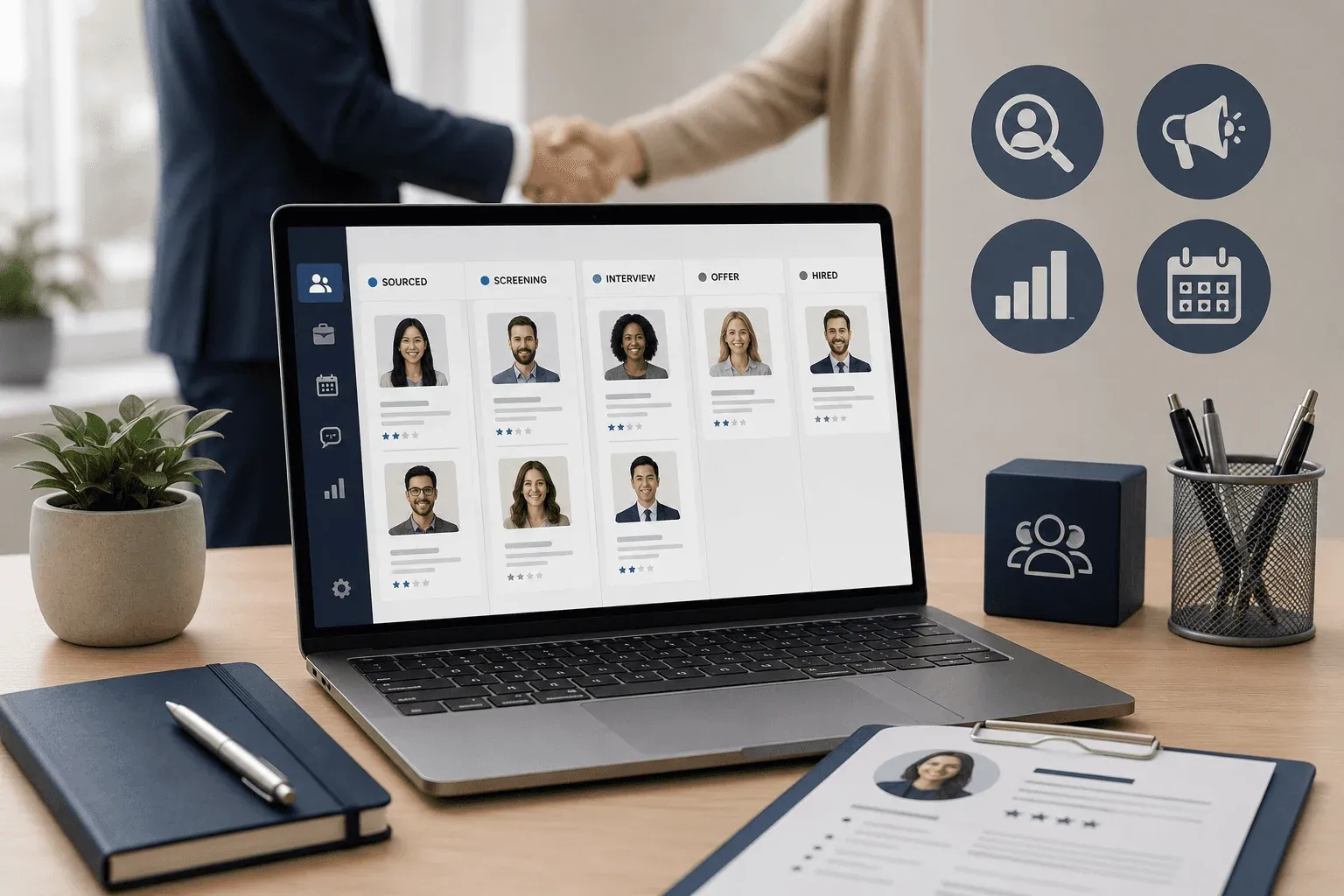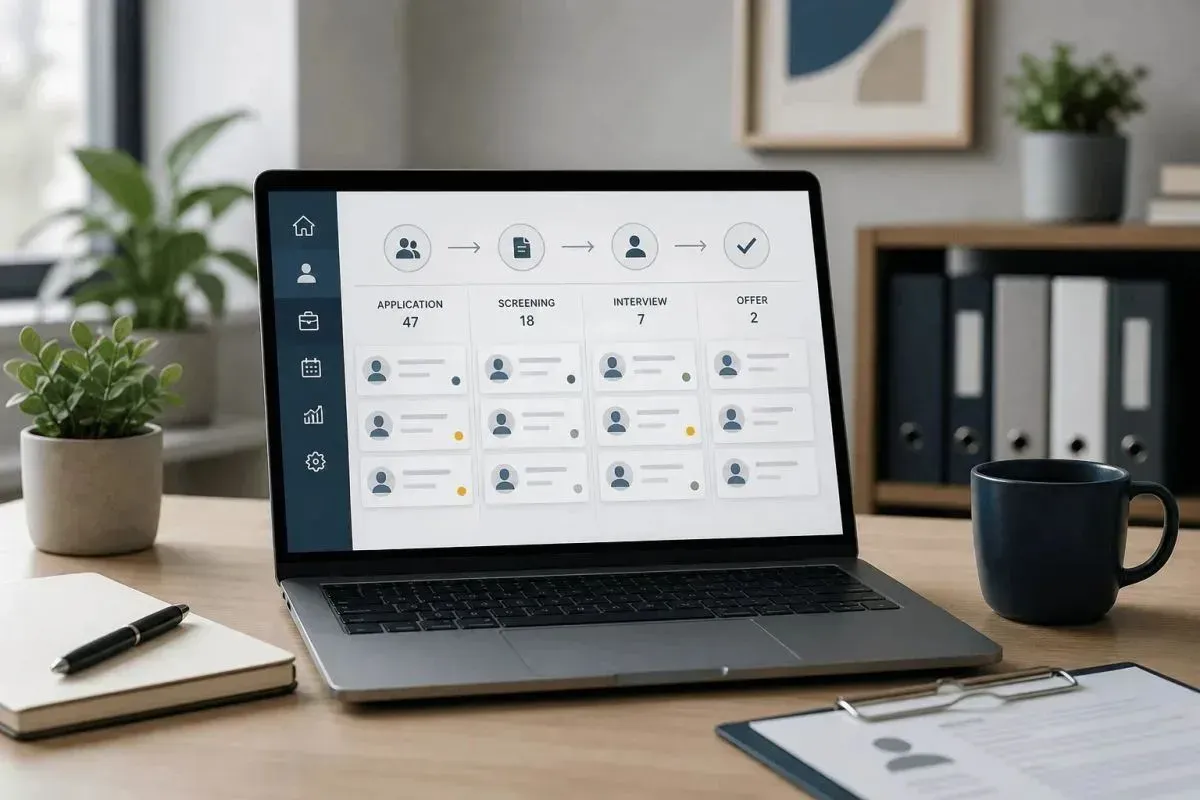
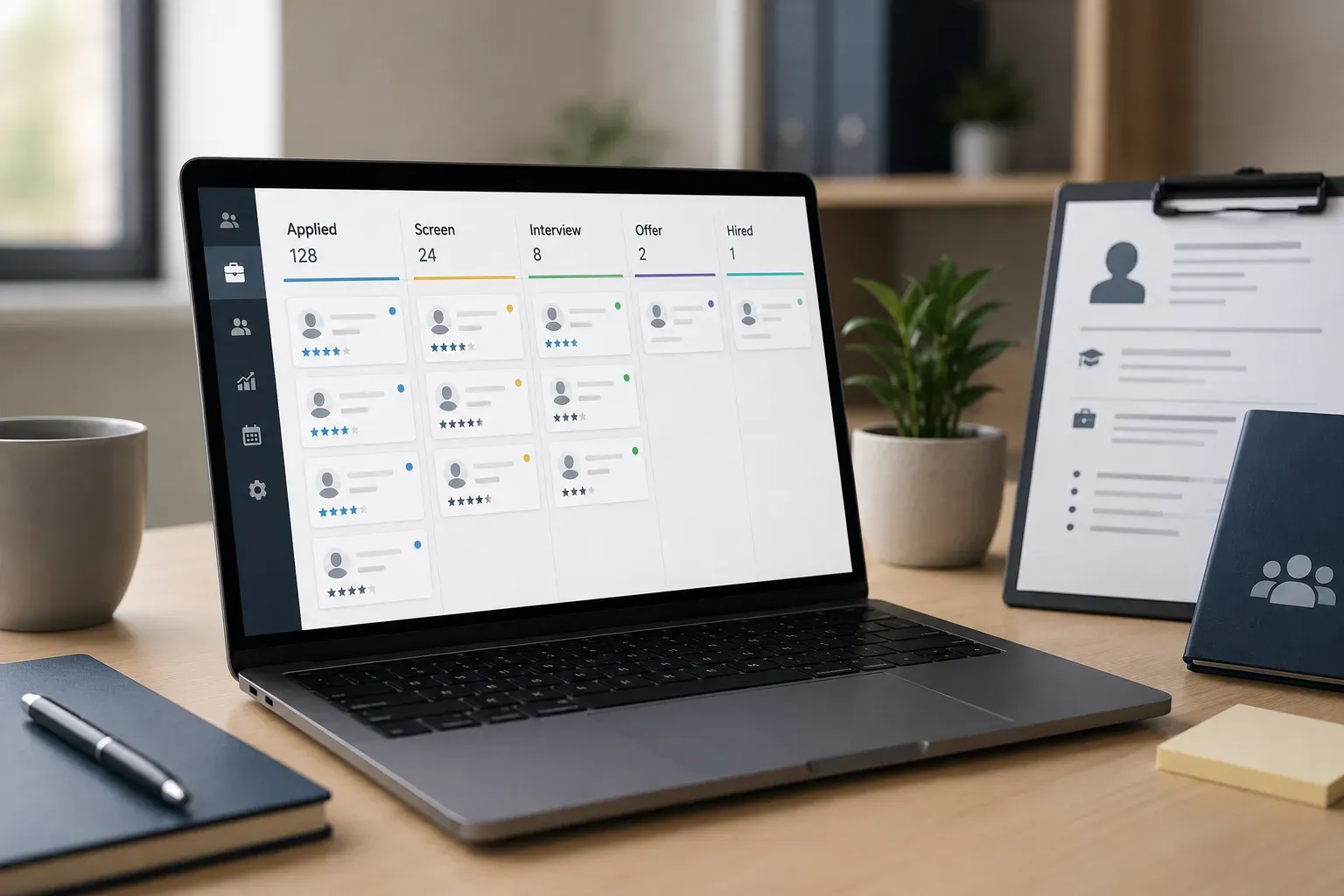
Your first few hires probably worked fine with a spreadsheet and a Gmail folder. But once you’re running two or three roles at the same time, that system stops working fast. Stages get out of sync, notes live in different places, and candidates start falling through without anyone meaning for it to happen. The applicant tracking system examples that hold up under that pressure share one thing in common: a single, structured way to route and track applications from the start.
TLDR:
-
An ATS centralizes hiring by routing all applications into one pipeline, removing the inbox chaos that causes qualified candidates to slip through.
-
“Free” ATS tiers vary widely: some cap you at one active job, which breaks any multi-role workflow immediately.
-
Key differentiators worth checking are multi-board distribution, AI-assisted scoring, and referral tracking at the candidate level.
-
Enterprise ATS contracts often run $15,000 to $125,000 annually, with implementation fees of $1,000 to $10,000 rarely included in the headline price.
-
Some tools pair a free ATS with hourly fractional recruiting agency support, covering both software and recruiting capacity without a long-term contract.
What Is an Applicant Tracking System?
An applicant tracking system is software that centralizes the hiring process: job postings go out, applications come in, and instead of a scattered inbox, every candidate lands in one place where they can be sorted, scored, and moved through stages.
The core problem an ATS solves is volume. Once a role gets more than a handful of applicants, manual tracking breaks fast. Spreadsheets get stale, emails get missed, and qualified candidates slip through without a clear record of why they were passed over. An ATS handles the parsing and organizing so hiring teams spend time on decisions, not data entry.
HR teams at large companies have used these systems for decades. What changed is accessibility. Tools that once required enterprise contracts and IT support are now available to founders and small teams, often for free. If you want a deeper breakdown, see this guide on what an applicant tracking system is. Who uses an ATS today ranges from a solo recruiter managing a pipeline to a startup founder filling their first five roles without any dedicated recruiting staff.
How an ATS Works: Step by Step
Most ATS workflows follow the same sequence regardless of which tool you use.
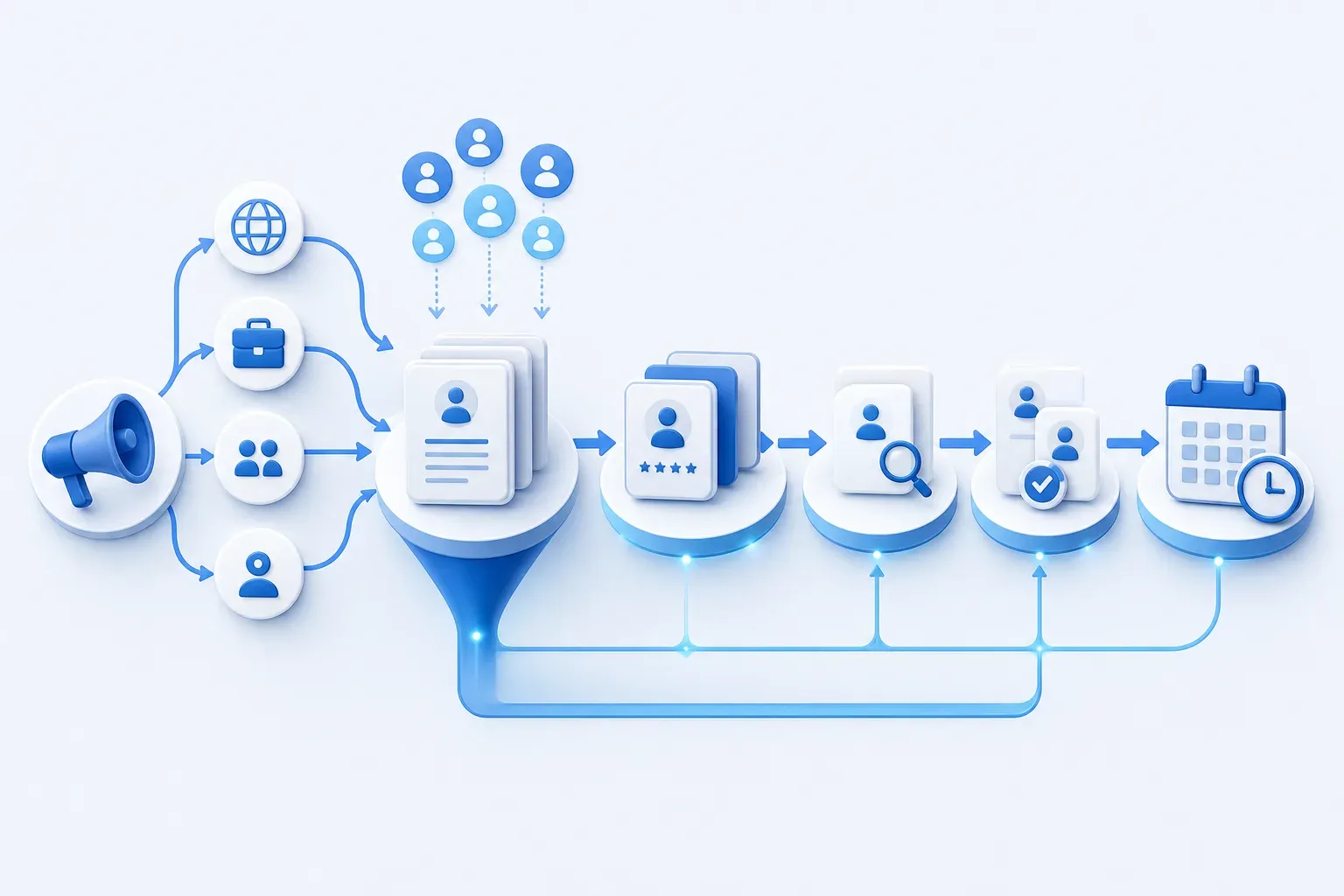
You write a role description, publish it, and the ATS distributes it to job boards automatically. One action covers LinkedIn, Indeed, and dozens of other sites, with every application routing back to a single pipeline. As resumes come in, the system parses structured data (work history, education, skills) and, in most tools, scores candidates against the criteria you set. A role with hundreds of applicants gets condensed into a shorter review list without manual sorting.
From there, candidates move through customizable stages: phone screen, technical interview, hiring manager review, offer. Moving someone forward or rejecting them triggers automated emails, and calendar integrations let candidates self-schedule interviews. At the close of a search, the ATS holds the full record of every applicant, every stage change, and every decision, which matters for compliance and for running better searches on the next similar role.
Applicant Tracking System Examples in Practice
A 20-person startup posts a backend engineer role and receives applications from LinkedIn, Indeed, and a niche tech board at the same time. For a fuller walkthrough, see the startup guide to using an ATS. Without an ATS, three separate inboxes fill up and candidates slip through. With one, every application routes to a single pipeline and the hiring manager reviews one consolidated list.
Top ATS Systems Compared
Fortune 500 ATS adoption data points to roughly 99% of large companies using some form of applicant tracking, with Workday, Taleo, Greenhouse, iCIMS, and Lever leading enterprise market share. For smaller teams, the options look quite different.
| Tool | Starting Price | Free Tier | Best For |
|---|---|---|---|
| Greenhouse | Custom pricing | No | Scaling companies with dedicated recruiting ops |
| Workday | Custom (enterprise) | No | Large enterprises needing full HR suite integration |
| Lever | Custom pricing | No | Mid-size companies wanting CRM-style candidate nurturing |
| Ashby | ~$400/month | No | Growth-stage startups with recruiting ops support |
| iCIMS | Custom pricing | No | Enterprise hiring with compliance-heavy requirements |
| SmartRecruiters | Freemium (limited) | Limited | Companies wanting a broad feature set at mid-market price |
| Workable | ~$189/month | No | SMBs hiring across multiple roles simultaneously |
| BambooHR | ~$108/month | No | Small businesses wanting HR and ATS in one system |
| JazzHR | ~$75/month | No | Small teams on a tight budget |
| Dover | Free (premium available) | Yes | Startups and founders hiring their first ~100 roles |
Dover’s free ATS is built for early-stage teams, with one-click distribution to over 50 job boards, AI-powered resume scoring, and built-in referral tracking. The free tier carries no seat limits or job limits, and a premium tier adds more advanced features as hiring scales.
Free Applicant Tracking System Options
What “Free” Actually Means
The distinction matters. A plan that limits you to one active job posting at a time isn’t free in any practical sense for a team filling multiple roles. It’s a demo with a permanent login.
Free Plans Worth Knowing
One criterion worth weighting when comparing free tiers: whether the tool distributes to multiple job boards in a single action. Manually reposting to each board is the kind of repetitive work that adds up fast, and it’s the first thing most free plans cut.
Best ATS for Small Teams and Companies Under 50 Employees
Small teams get squeezed on ATS selection in a specific way: most tools are priced and configured for companies with a recruiting coordinator on staff. See a focused comparison of small business hiring software for teams under 50. A founder making eight hires this year doesn’t need a system that takes three weeks to implement and charges per seat.
According to Select Software Reviews, 20% of small and mid-sized businesses currently use an ATS, compared with 70% of large companies. The category has changed. The question is which tools actually fit how small teams hire.
Key ATS Features That Actually Matter
The differentiators worth weighing:
-
Multi-board job distribution. Posting once and having applications route to a single pipeline from 100-plus boards is a meaningful time saver. Manually reposting per site is the kind of friction that compounds across every search.
-
AI-assisted candidate scoring. According to Select Software Reviews, 79% of organizations have integrated AI or automation directly into their ATS. Used well, scoring tools filter high-volume inbound down to a reviewable list. The key word is “assistive.” These tools surface candidates worth reviewing; they don’t make the hire.
-
Interview scheduling automation. Calendar integrations that let candidates self-book eliminate the back-and-forth that eats coordinator time without adding any value.
-
Employee referral tracking. Most ATS tools treat referrals as an afterthought. If your referral pipeline matters, check whether the tool tracks referral source at the candidate level or just logs it as a note somewhere.
-
Careers page builder. A branded careers page that collects applications directly removes the dependency on a developer every time a role opens.
-
Funnel reporting. Knowing where candidates drop off, whether they were sourced but never screened or screened but rejected at the phone-screen stage, tells you where the process breaks, not merely how many people applied.
ATS Pricing: What to Budget for
Free tiers serve many small teams well when they’re genuinely usable rather than capped demo versions. Per-user plans typically run $15 to $75 per month and compound quickly as you add seats. Mid-market flat-fee tools like Workable land between $3,000 and $15,000 per year. For a side-by-side look, see the best applicant tracking systems for 2026. Enterprise contracts run $15,000 to $125,000 or more, with implementation fees rarely included in the headline price.
The better frame is what hiring costs without one. SHRM’s 2025 Benchmarking Report puts the average non-executive cost per hire at $5,475. For searches that need more capacity, pairing an ATS with fractional recruiting agency support can keep total costs well inside that range.
When to Upgrade or Switch Your ATS
Any one of these is a signal worth taking seriously. All of them together mean the system is generating work instead of removing it. For context on what a well-configured system looks like, see how an ATS scales startup hiring.
ATS in HR: Compliance, DEI, and Data Integrity
For HR teams managing hiring across multiple roles or geographies, an ATS often serves as the primary compliance infrastructure instead of a convenience layer.

EEOC recordkeeping rules require covered employers to retain certain personnel and employment records, including application and hiring records, for specified periods. An ATS can make those records easier to retain and manage consistently. GDPR adds another layer for companies hiring across Europe: employers need an appropriate lawful basis for processing candidate data, along with processes for retention, transparency, and applicable data-subject rights such as erasure.
How Dover Fits Into the ATS Market for Startups
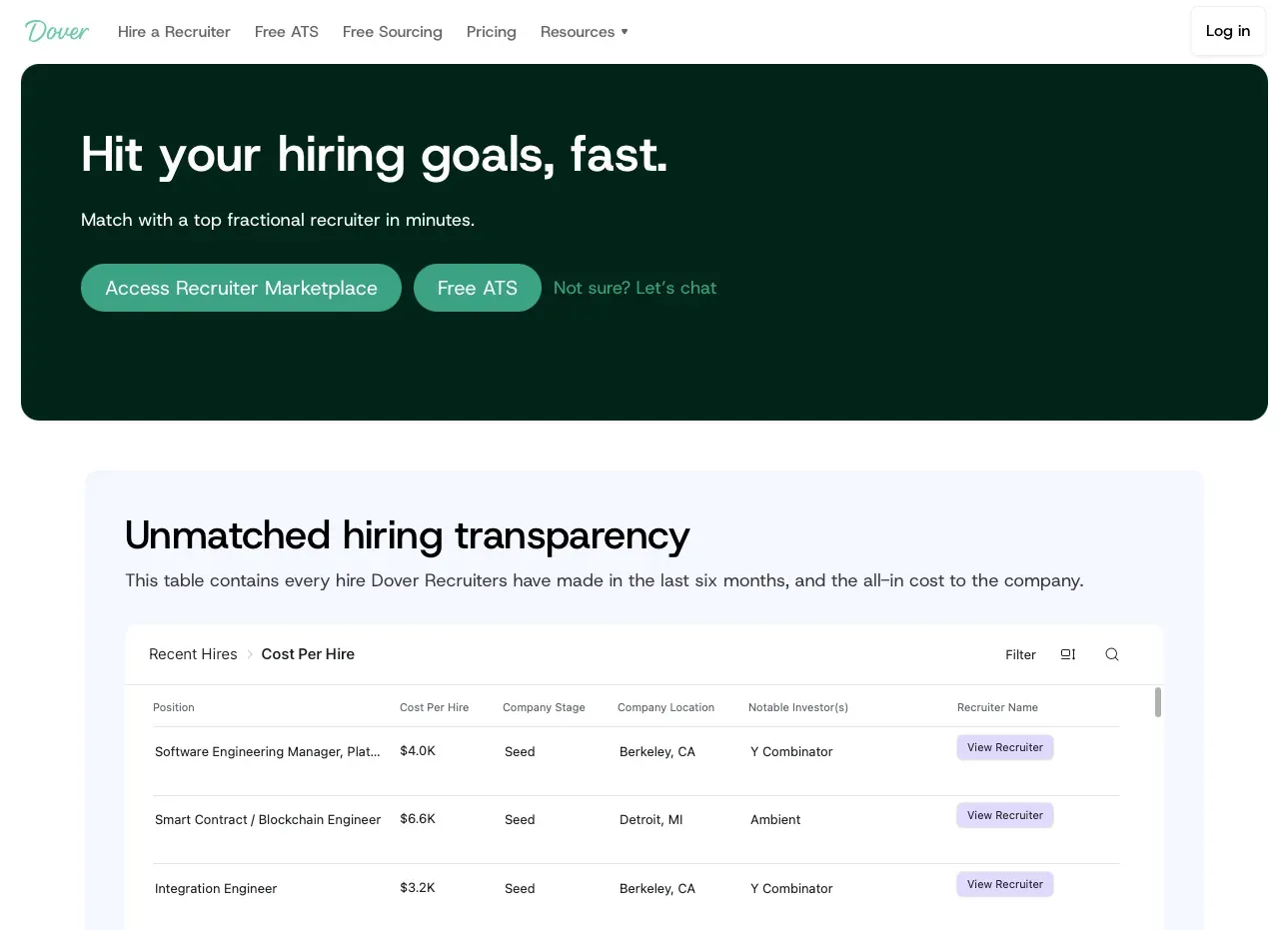
Dover’s free ATS has no seat limits, no job limits, and no expiration. One action distributes any job posting to over 50 boards, and every application routes back to one pipeline. Referral tracking, AI-assisted resume scoring, automated scheduling, and an AI Interview Notetaker are all included without a paywall. Over 2,000 companies have used Dover’s recruiting solutions, including companies such as Stripe, Scale AI, and Vanta, and more than 100 Y Combinator startups use it as their hiring infrastructure.
What separates Dover from a standalone ATS is the fractional recruiting agency layer built into the platform. Dover is the infrastructure that fractional recruiting agencies run on, and each fractional recruiter in the network carries verified reviews from prior searches. Founders can start with an $800 fully refundable deposit, with each recruiter setting their own rate and no long-term contract. Most searches run $4,800 per hire total, competitive against SHRM’s 2025 average cost per hire. Any recruiter Dover assigns works inside the same ATS the internal team uses, so sourcing activity, candidate notes, and stage history stay visible to everyone in real time.
For early-stage teams deciding between software alone or software plus recruiting capacity, Dover’s structure makes it straightforward to start with one and add the other later without switching anything.
FAQs
What’s the best free applicant tracking system for a team just starting to hire?
Dover’s free ATS is the strongest free-tier option for early-stage teams because it removes the caps that make most “free” plans impractical: unlimited jobs, unlimited users, and no expiration. Tools like Zoho Recruit and Breezy HR cap active job postings at one, which breaks the workflow immediately for any team running more than a single search at a time.
What tools let you post jobs to multiple boards at once without paying per listing?
A handful of ATS platforms include multi-board distribution as a core feature instead of a paid add-on. Dover’s free ATS distributes to over 50 boards, including LinkedIn and Indeed, in a single action, with all applications routing back to one pipeline. Workable and SmartRecruiters also support multi-board posting, though both require paid plans to access full distribution capability.
What recruiting platforms do Y Combinator startups actually use for hiring?
Hundreds of Y Combinator startups have used Dover to hire, making it a well-established option among early-stage YC companies. The free ATS with built-in job board distribution, referral tracking, and AI resume scoring fits the founder-led hiring model most seed-stage teams are running before they bring on a dedicated recruiter.
Final Thoughts on Applicant Tracking Systems for Small Teams and Growing Companies
The applicant tracking system examples that work for small teams are the ones that don’t lock every useful feature behind a paywall. For most teams under 50 people, the decision comes down to how many roles you’re running at once, who needs visibility into the pipeline, and whether you want recruiting support built in or bolted on later. Picking the wrong tool mostly just means switching later, and lighter systems make that switch fast. Dover is one place to start: free software that handles your pipeline paired with fractional recruiting agency support when searches need more capacity, with no long-term contract required.