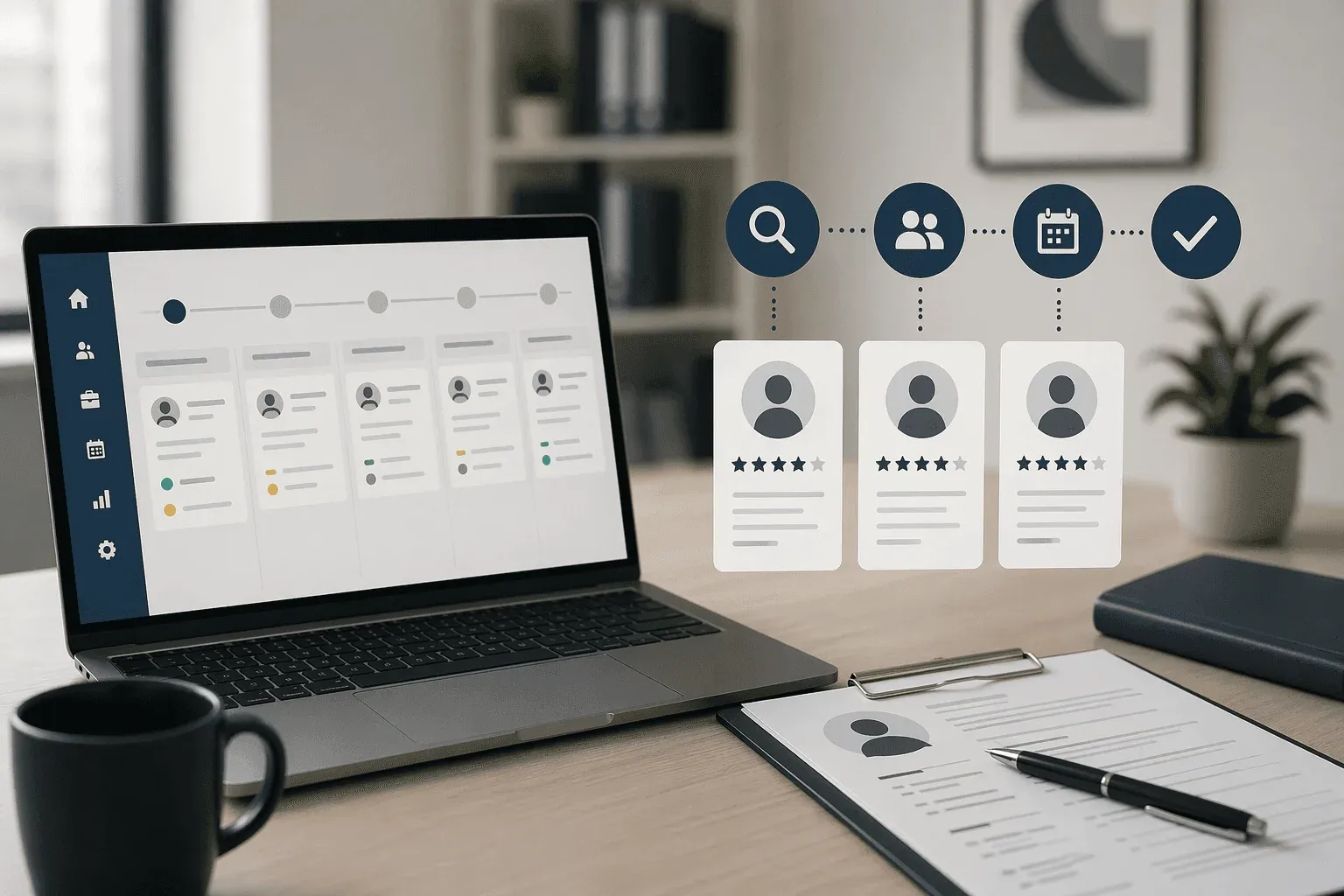
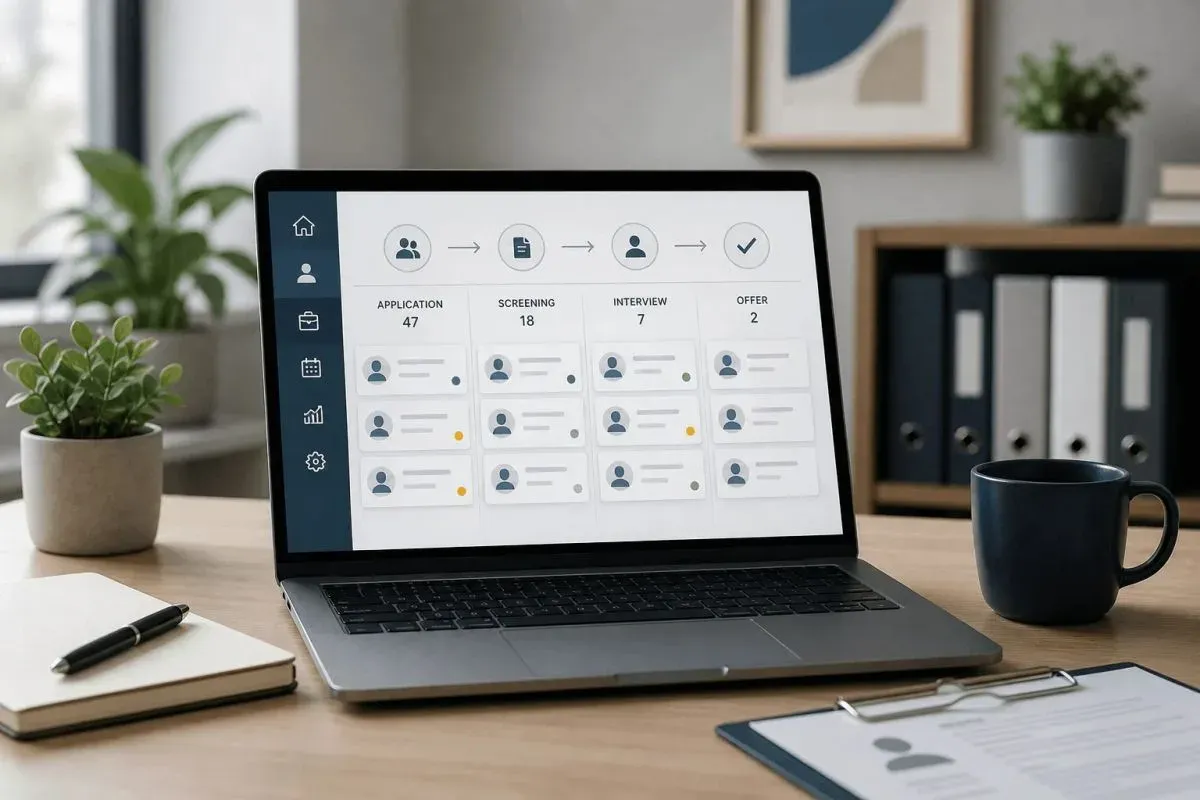
You post a job, and fifty resumes arrive in three days. Suddenly you’re juggling calendar invites, forwarding applications to your team, and trying to track who said what about which candidate. Without a proper applicant tracking system in recruitment, this mess only gets worse as you scale. The systems below were built to fix exactly this problem, and some of them won’t cost you anything to start using today.
TLDR:
-
An ATS centralizes job posts, applications, and interview stages so hiring teams avoid inbox chaos.
-
Some free ATS options include AI screening and one-click distribution to 50+ job boards with no seat fees.
-
Enterprise systems like Workday and iCIMS require months of setup and substantial licensing costs.
-
Certain tools combine a free ATS with on-demand recruiters who set their own rates, averaging about $4,000 per hire, instead of placement fees.
-
The best free options offer unlimited users and jobs, plus access to experienced startup recruiters.
What Is an Applicant Tracking System?
An applicant tracking system (ATS) is software that manages hiring from start to finish. Instead of juggling spreadsheets, email threads, and scattered notes, an ATS gives hiring teams one place to post jobs, collect applications, and move candidates through each stage of the interview process.
Core functions include:
-
Resume parsing and centralized candidate storage so hiring teams can search and filter applicants without digging through inboxes
-
Stage tracking from application through offer, giving everyone on the team visibility into where each candidate stands
-
Interview scheduling and automated communications to reduce back-and-forth and keep candidates informed
-
Team collaboration and structured feedback collection so hiring decisions reflect input from everyone involved
Companies use them because hiring, even for a single role, generates more information than any inbox can handle. An ATS keeps everything organized so strong candidates stay visible and nothing gets buried. Research shows that 86% of recruiters report reduced time-to-hire after implementing an ATS.
How We Ranked Applicant Tracking Systems for Recruitment
Rankings here draw from publicly available information: verified features, pricing, and user reviews from major review sites. No vendor paid for placement, and no system got credit for features it doesn’t actually offer.
The criteria we weighted:
-
Ease of use: how quickly a new user can set up and start managing candidates without hand-holding
-
Core features: job posting distribution, candidate stage tracking, and team collaboration tools
-
Pricing transparency: whether costs are clear upfront, and whether free tiers deliver usable functionality
-
Integrations: connections to popular job boards, HR tools, and calendar apps
-
AI capabilities: resume scoring, automated outreach, and interview assistance
-
Scalability: whether the system works for a 10-person startup as well as a 500-person org
| Tool | Starting Price | Free Tier | Best For |
|---|---|---|---|
| Dover | Free | Yes, with unlimited jobs and users | Startups and small teams |
| Greenhouse | ~$6,500+/year | No | Mid-to-large enterprises |
| iCIMS | Quote-based | No | High-volume enterprise hiring |
| Workday | Quote-based | No | Large orgs with existing Workday HR |
| Bullhorn | Quote-based | No | Staffing and recruitment agencies |
| Jobvite | Quote-based | No | Mid-to-large enterprises, full suite |
Best Overall Applicant Tracking System for Recruitment: Dover
Dover’s free ATS was built for founders and hiring managers who can’t spend weeks onboarding new software. Setup takes under 5 minutes, and the interface is familiar enough that anyone on your team can start tracking candidates on day one.
Here’s what’s included at no cost:
-
A full ATS with unlimited jobs and users, so you won’t hit paywalls as your hiring scales
-
Candidate tracking, custom interview plans, and email templates to keep every pipeline moving
-
One-click distribution to 50+ job boards, including LinkedIn
-
No-code career pages, referral tracking, and agency management tools built in
AI applicant scoring and AI note taking sit on the $199/month Premium ATS plan rather than the free tier. See AI-powered applicant tracking systems for how that scoring works.
For teams that want recruiting support beyond the software, Dover also offers an on-demand marketplace of vetted recruiters who set their own rates, with hires averaging about $4,000. This gives you the flexibility to bring in expert help by the hour instead of paying agency placement fees.
Dover works best for startups that want a full-featured ATS without monthly fees. The recruiter marketplace runs on the same platform, and every recruiter in it carries verified reviews.
Workday
Workday is an enterprise HR suite built for large organizations managing complex workforce operations. Its ATS is bundled into an HCM system, which works well for companies that want recruiting, payroll, benefits, and workforce planning under one roof.
For most small and mid-sized teams, though, Workday is overbuilt. Licensing costs are substantial, implementation can take months, and the configuration complexity often requires dedicated HR ops support to maintain.
It tends to fit best when a company already runs Workday for HR and wants to avoid adding a separate recruiting tool to the mix.
iCIMS
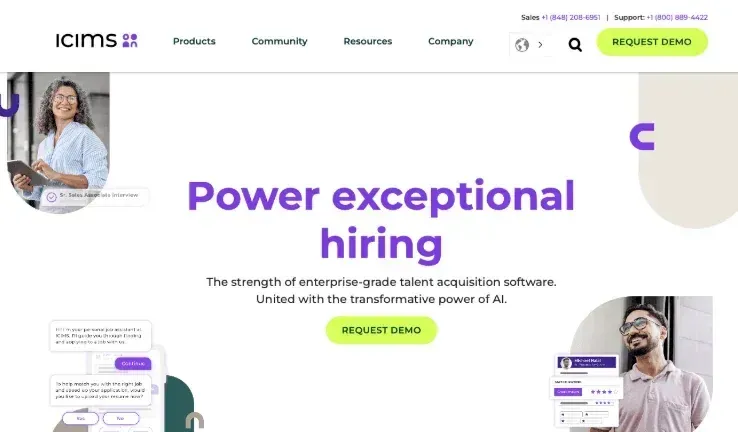
iCIMS Hire sits at the core of the iCIMS Talent Cloud and serves more than 4,400 companies across technology, healthcare, finance, and manufacturing. It covers the full hiring lifecycle with applicant tracking, candidate relationship management, career site personalization, interview scheduling, and a recruitment marketing solution that distributes jobs across more than 300 social networks. The iCIMS Marketplace adds hundreds of HR tool integrations on top of that.
Where it struggles is accessibility. Pricing is typically quote-based and varies widely depending on company size, modules, and configuration. The candidate application flow also tends to be long, with many required steps that create unnecessary friction before you even get a submission.
For high-volume enterprise recruiting, iCIMS is a capable system. Smaller teams that need a working ATS without complex setup or per-user costs will likely find it more than they need.
Bullhorn
Bullhorn is built for staffing and recruitment agencies, covering the full agency workflow: sourcing candidates, placing them at client companies, and managing payroll. Over 10,000 agencies worldwide use it, and its combined ATS and CRM functionality is genuinely useful for firms that need to track both candidate pipelines and client relationships in one place. AI-powered candidate-job matching, resume parsing, job management, and client contact tracking all sit within the same system.
The friction is real, though. Capterra and G2 user reviews consistently flag a dated interface, clunky candidate uploading, and integration headaches. Features like email automation and LinkedIn integration often carry extra costs on top of base pricing. Implementation gets expensive when customizations are involved, and prices can increase at renewal depending on contract terms.
Bullhorn fits staffing agencies well. For companies focused on internal hiring instead of agency placement workflows, a fractional recruiting model built on a free ATS infrastructure handles sourcing, screening, and offers without the added complexity or escalating costs.
Jobvite
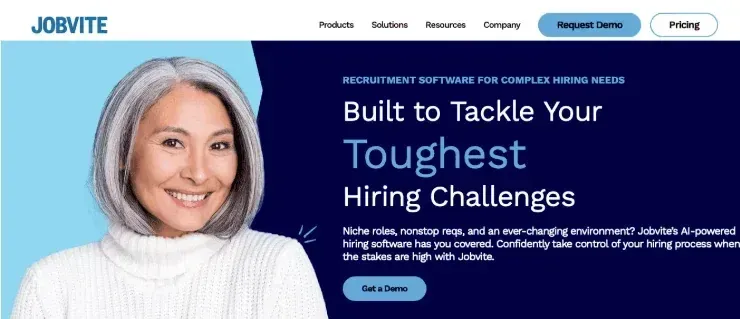
Jobvite covers end-to-end recruiting: candidate relationship management, recruitment marketing, applicant tracking, onboarding, and analytics. Its AI matching pairs candidates to roles based on skills and culture fit, and text recruiting features see 98% open rates with 90-second average response times.
The catch is bundling. Jobvite has no standalone ATS option, so you pay for the full suite regardless of what you actually need. Pricing reflects that, making it cost-prohibitive for smaller teams.
Good for mid-to-large enterprises running high-volume hiring who can use the full feature set. For startups that need to move candidates through a pipeline without paying for recruitment marketing modules they won’t touch, a fractional recruiting model with a free ATS as the foundation covers sourcing and hiring without the overhead.
Greenhouse
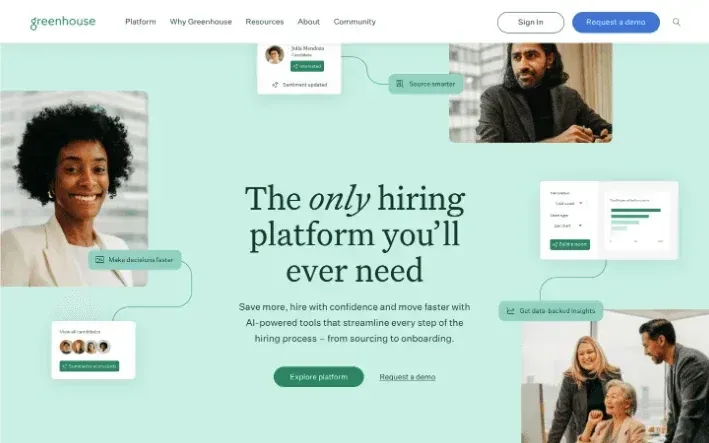
Greenhouse targets mid-to-large enterprises that need structured, customizable hiring workflows. Its reporting suite covers pipeline conversion rates, interview consistency, time-in-stage data, and diversity metrics. Over 400 native integrations plus open API access connect it to most HR stacks.
Greenhouse pricing varies by company size and feature set, typically starting in the thousands per year, and growing teams often upgrade as their hiring needs expand.
What’s Changing in ATS in 2026
The ATS market has shifted considerably heading into the second half of 2026. The most important change: AI is no longer a differentiating feature. It’s a baseline expectation. Roughly 79% of organizations have now integrated AI or automation into their ATS workflow, which means the evaluating question has moved from “does this platform have AI?” to “how good is this platform’s AI?”
The better implementations in 2026 offer explainable candidate scoring (not opaque ranking), bias auditing, and AI-generated job descriptions. The weaker ones layer a chatbot on top of legacy infrastructure and call it intelligent recruiting.
A second shift worth noting: the ATS alone is increasingly not enough. Karat’s 2026 State of Hiring Technology Report found that 61% of recruiting teams now use at least three separate tools alongside their primary ATS, with point solutions for interview intelligence, skills assessment, and offer management filling gaps the core system leaves behind. For most startups, that means either picking an ATS that covers more natively, or keeping things lean with a free system and layering in only what you actually need.
One layer worth considering as searches get more competitive is fractional recruiting support from agencies that specialize in startup and growth-stage hiring. An ATS handles the workflow: posting jobs, tracking applicants, and moving candidates through stages. It doesn’t source passive candidates, run intake calls, or close offers. When a role sits open longer than expected, or requires outreach to candidates who aren’t actively applying, a fractional recruiting agency can work within the existing ATS infrastructure instead of replacing it. Dover is built to be that infrastructure: the pipeline, candidate records, and stage tracking stay in one place while agency recruiters operate on top of it. The decision point is typically role complexity and internal bandwidth, not a preference between software and human support.
Why Dover Is the Best Applicant Tracking System for Recruitment
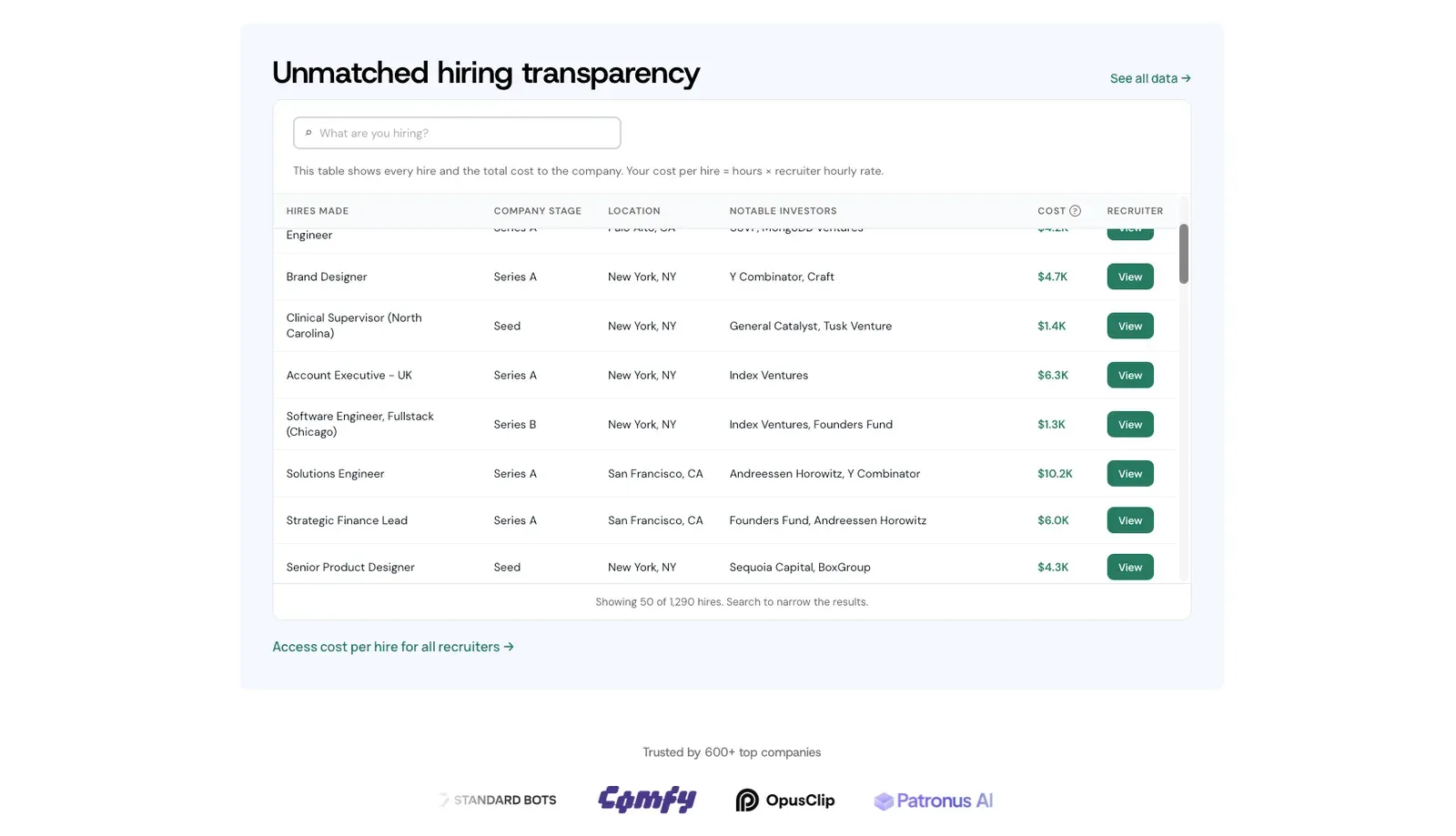
Dover serves as the infrastructure layer that fractional recruiting runs on, and more than a marketplace to browse. The software is free with no per-seat fees or usage limits, and recruiting support is available hourly through a network of vetted recruiters with deep startup hiring backgrounds and verified reviews.
When roles get competitive or time runs short, those recruiters step in at hourly rates instead of placement fees that scale with salary. No long-term contracts, no pricing surprises.
For startups and small businesses hiring without a dedicated recruiting team, that combination is hard to find elsewhere.
Frequently Asked Questions
What’s the difference between a free ATS and paid enterprise systems like Greenhouse or Workday?
Free systems like Dover provide core applicant tracking, job posting, candidate screening, and team collaboration without per-seat fees or usage limits. Paid enterprise platforms add custom workflow builders, granular reporting dashboards, and hundreds of integrations, but those features come with implementation timelines measured in weeks or months and annual costs starting around $6,500. For most small teams, the gap between what free tools offer and what enterprise systems deliver doesn’t support the cost difference.
Do I need a recruiter if I’m already using an ATS?
An ATS handles the infrastructure of hiring: collecting applications, tracking candidates through stages, scheduling interviews, and keeping your team aligned. It doesn’t do the work of finding candidates who aren’t already applying. If inbound volume is solid and your team has the bandwidth to review and advance candidates, an ATS alone can carry the process. For roles that are senior, specialized, or generating thin inbound pipelines, fractional recruiting agencies can step in to provide sourcing and outreach capacity. Dover serves as the infrastructure layer those agencies operate on, so recruiters work directly inside your existing pipeline. Each recruiter carries verified reviews, which makes it straightforward to evaluate fit before committing. The ATS and a fractional recruiter cover different parts of the same workflow.
What ATS tools work best for YC startups and early-stage companies?
YC startups and early-stage companies tend to need tools that work immediately, don’t require a dedicated HR team, and won’t lock you into annual contracts. Dover fits that profile well: the ATS is free with no seat limits, setup takes under 5 minutes, and you can bring in vetted recruiters by the hour when a role gets competitive. Most YC-backed companies are hiring under 20 people at a time, and the overhead of enterprise systems like Workday or Greenhouse rarely makes sense at that stage.
Final Thoughts on Selecting Your Recruiting ATS
The best applicant tracking systems for recruiters don’t ask you to choose between affordability and actual functionality. Dover’s free ATS includes everything most teams need to run hiring smoothly, and when roles require expert help, you can tap into experienced recruiters without agency contracts or placement fees. Your setup stays lean whether you’re hiring two people or twenty. The right fit depends on your hiring volume, role complexity, and how much recruiting bandwidth your team can spare. A free ATS is the right foundation either way, and on-demand recruiter access averaging $2,000 to $7,000 per hire is available when a search needs more than software alone can deliver.