

If you start comparing types of applicant tracking systems, the differences show up fast. Some tools are built for early teams that need something simple and live within minutes, while others are designed for large organizations with layered workflows and longer setup cycles. Pricing, feature access, and hiring volume all play a role in narrowing the field before you even get into detailed comparisons. For teams trying to make a clean choice early, working with a recruiting solution that combines software and hands-on support can make it easier to land on something that actually fits how you hire.
TLDR:
-
ATS software manages hiring from job posting to offer, replacing scattered spreadsheets and email threads.
-
Some free solutions include unlimited jobs and users, while enterprise systems require custom quotes.
-
Enterprise platforms like Workday and Greenhouse offer deep analytics but typically require custom pricing and annual contracts.
-
Some recruiting solutions combine ATS software with on-demand recruiter support without placement fees.
-
Matching the system to company size and hiring volume rules out many options early in the selection process.
What Is an Applicant Tracking System?
An applicant tracking system, or ATS, is software that manages the hiring process from job posting to offer. Companies use it to collect applications, organize candidates, screen resumes, and move people through interview stages without losing track of anyone.
Instead of juggling spreadsheets and email threads, hiring teams work from a shared pipeline where recruiters leave feedback, hiring managers review candidates, and the whole process stays visible in one place. ATS platforms automate manual operations that would otherwise consume hours of administrative work each week.
For job seekers, the ATS acts as a gatekeeper. Applications flow directly into the employer’s system and get screened against job requirements before a human ever reads them.
How We Assessed Applicant Tracking Systems
To compare the options in this guide, we looked at publicly available information across several factors that actually matter to hiring teams.
Here’s what we assessed:
-
Pricing transparency and total cost of ownership, including hidden fees that appear after onboarding
-
Core features like resume screening, job board integrations, and pipeline management
-
Ease of setup and day-to-day use for teams without dedicated HR staff
-
Scalability across company sizes, from early-stage startups to large enterprises
-
Support for unlimited users and jobs without seat-based pricing restrictions
-
AI-powered screening and automation capabilities
-
Integration depth with tools like LinkedIn, Google Meet, and HRIS systems
-
Mobile access and candidate communication tools
No single ATS wins across every category. A system built for a 5,000-person company will overwhelm a 12-person startup, and a lightweight free tool may not cut it once hiring volume picks up. The goal here is matching the right system to the right stage.
| Tool | Pricing | Best For | Key Limitation |
|---|---|---|---|
| Dover | Free (unlimited jobs and users); recruiter marketplace averaging ~$4,800 per hire | Seed to Series C startups running 5-50 hires per year without a dedicated recruiting team | Less suited for large enterprises needing full HCM integration |
| Workday | Custom quote only; no free plan | Large enterprises already running Workday HCM who want recruiting in the same ecosystem | Cost and complexity make it a poor fit for startups or teams without HCM infrastructure |
| iCIMS | Custom quote; annual licensing plus optional module and implementation fees | Medium to large enterprises in tech, healthcare, finance, and manufacturing with high-volume hiring | Pricing model can be prohibitive for smaller organizations |
| Workable | Starts at $149/month; pricing scales based on number of active job slots | Small to mid-sized businesses that need fast sourcing at a transparent price | Costs rise as headcount grows even when hiring volume stays flat; reporting lags behind enterprise alternatives |
| Greenhouse | Custom pricing; typically mid-market to enterprise contracts with advanced modules priced separately | Mid-market to enterprise teams with dedicated recruiting staff who need DEI tooling and deep analytics | No published pricing; advanced features require going through a full sales process |
| Lever | Custom quote only; no published pricing | Tech companies and enterprises needing combined ATS and CRM with long-term candidate relationship management | Steep learning curve, limited reporting customization, and no onboarding tools in the core product |
Best Overall Applicant Tracking System: Dover
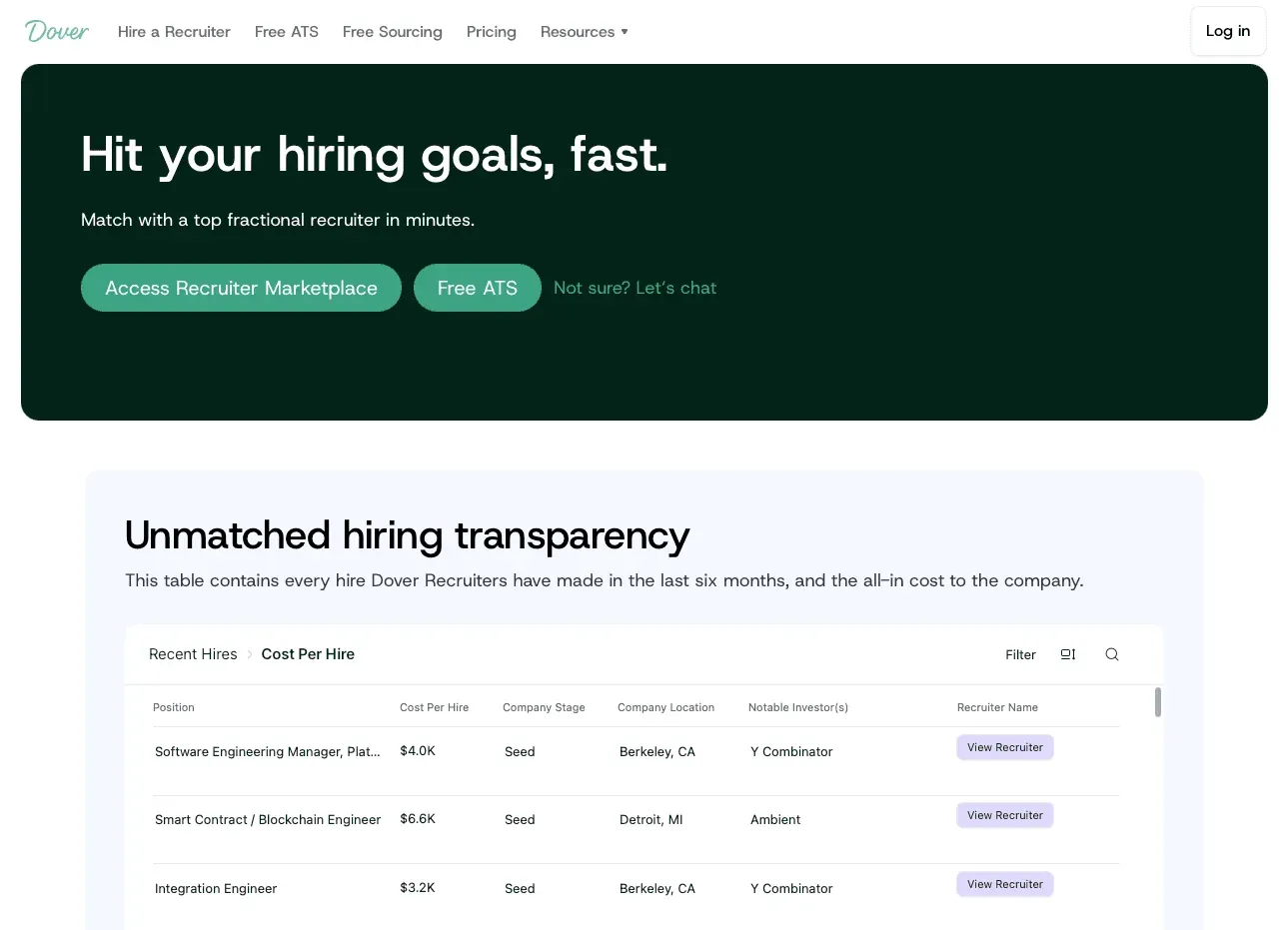
Dover’s free ATS is built for startups that need to hire without a dedicated recruiting team. Setup takes under five minutes, and the free tier includes unlimited jobs and users with no seat-based pricing, which separates it from most competitors in this space.
What Dover Offers
-
Free ATS with unlimited jobs and users, no hidden costs
-
AI-powered applicant scoring that ranks candidates against job requirements automatically
-
One-click distribution to 50+ job boards including LinkedIn and Indeed
-
No-code career pages, referral tracking, and agency management tools
-
Chrome sourcing extension for finding and reaching passive candidates
-
On-demand recruiter marketplace with vetted fractional recruiters who set their own rates
-
Real-time visibility into sourcing activity, candidate flow, and recruiting metrics
When hiring gets more complex, the recruiter marketplace gives you on-demand access to experienced fractional recruiters who work hourly with no contracts and no placement fees. Most companies spend about $4,800 per hire through Dover, well below what traditional agencies charge for the same role.
Good for: Seed to Series C startups and small businesses running 5-50 hires per year, especially founders spending 15-25 hours weekly on recruiting tasks they’d prefer to delegate.
Dover removes the usual tradeoff between free tools that cut corners and enterprise systems that require annual contracts. The free ATS covers everything needed for your first 100 hires, and expert recruiting help is available the moment you need it.
Workday
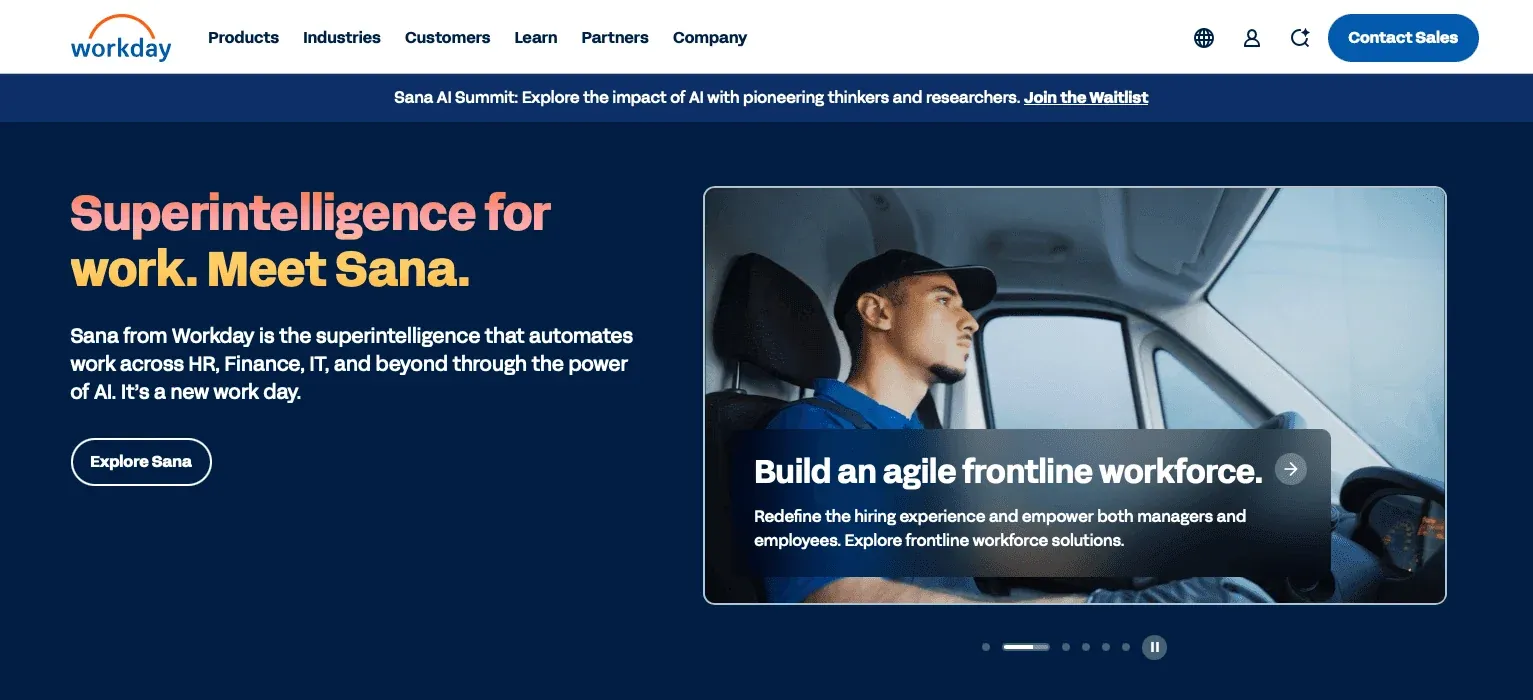
Workday Recruiting sits inside Workday’s broader HCM system, handling everything from job requisitions to onboarding while sharing data with payroll, benefits, and workforce planning. It’s genuinely powerful for enterprises that want one system of record across all HR functions.
Here’s what it offers:
-
Machine learning-assisted screening, automation, and interview coordination
-
Branded career sites and automated offer management
-
Deep integration with Workday HCM across payroll, benefits, and employee data
-
Recruiting analytics and real-time collaboration tools for distributed hiring teams
Good for: Large enterprises already running Workday HCM who want recruiting built into the same ecosystem.
Limitation: No published pricing, no free plan, and custom quotes only. The cost reflects the scale of what Workday sells, which makes it a poor fit for startups that don’t need full HCM infrastructure.
iCIMS
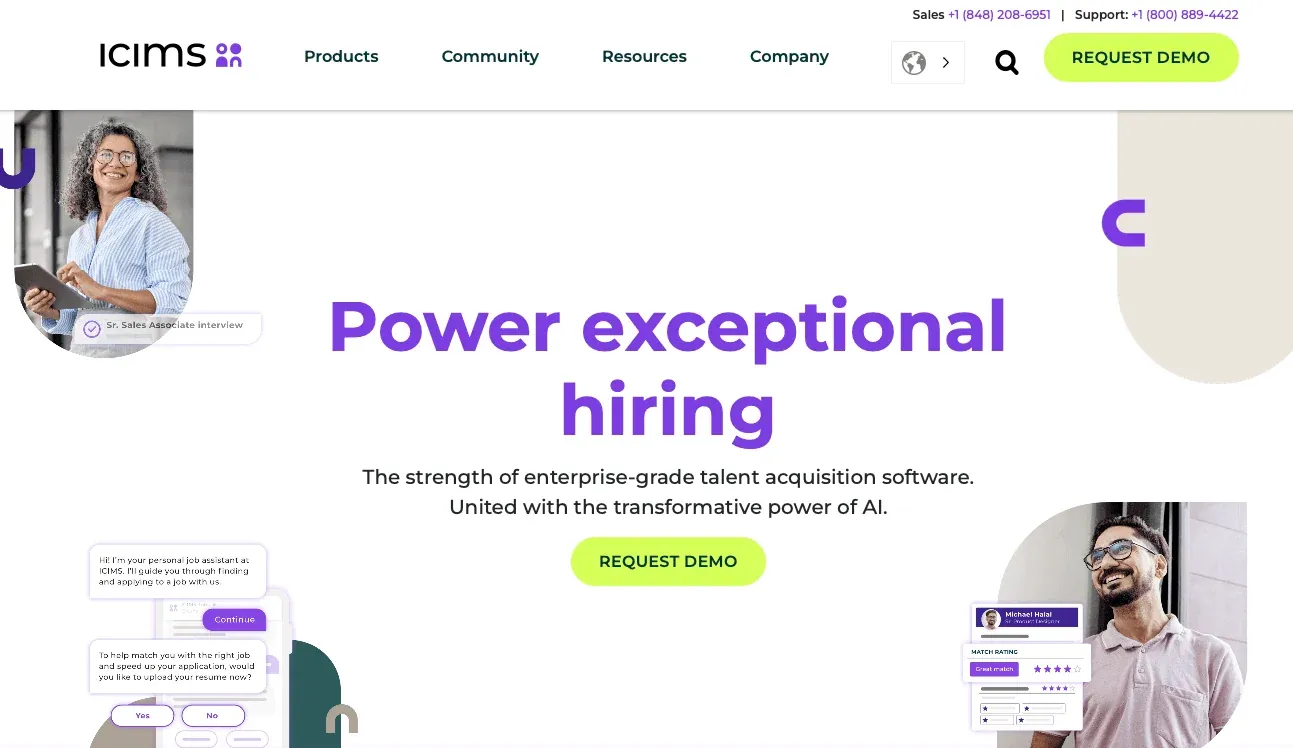
iCIMS Hire sits at the core of the iCIMS Talent Cloud, combining tracking, communication, analytics, and integrations into a single recruitment hub. It serves more than 4,000 companies across the full hiring lifecycle.
Here’s what it offers:
-
Enterprise and high-growth support connecting strategy, tech, and people in one ecosystem
-
Recruitment Marketing that distributes jobs across 300+ social networks with campaign tracking inside the ATS
-
Hundreds of HR tool integrations through the iCIMS Marketplace to keep data consistent
-
Scalable support for high-volume posting and simultaneous applicant tracking across large teams
Good for: Medium to large enterprises in technology, healthcare, finance, and manufacturing with complex, high-volume hiring needs.
Limitation: Pricing is custom and quote-based, covering annual licensing plus optional module fees and implementation costs. No free plan, no published pricing, and the model can be prohibitive for smaller organizations.
Workable
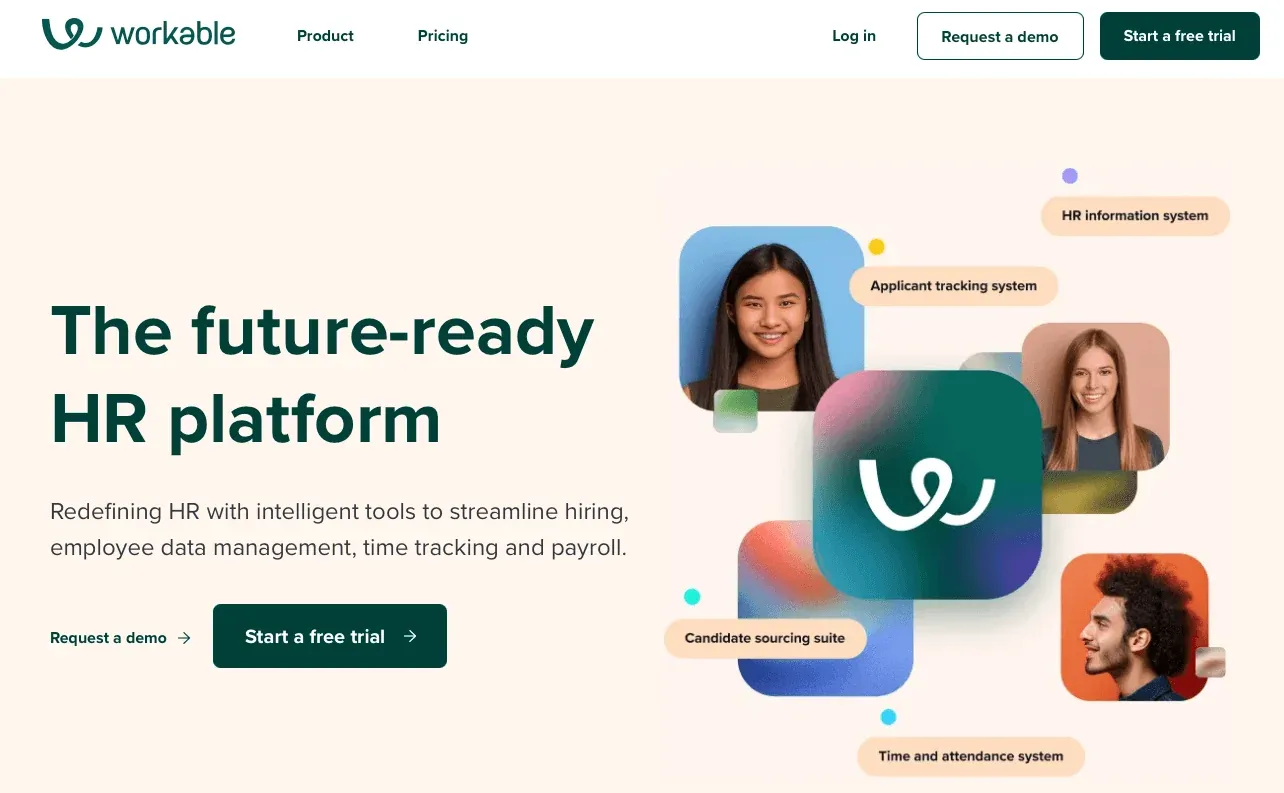
Workable is a sourcing-focused ATS for small businesses, founded in 2012 and serving over 20,000 customers. Teams can go live in days, with one-click posting to 200+ job boards and a built-in database of 400 million candidate profiles.
Here’s what it offers:
-
Starter plan at $149/month with room to expand into onboarding, time tracking, and performance management as hiring needs grow
-
AI-powered candidate matching, requisition building, and salary insights baked into the core product
-
Visual candidate pipeline, interview scheduling, offer management, and a branded careers page included across plans
-
Multilingual support for international hiring teams across multiple regions
Good for: Small to mid-sized businesses that need sourcing speed at a transparent price.
Limitation: Pricing scales based on active job slots, so costs can increase as hiring activity grows. Reporting and CRM tools lag behind enterprise-grade alternatives.
Greenhouse
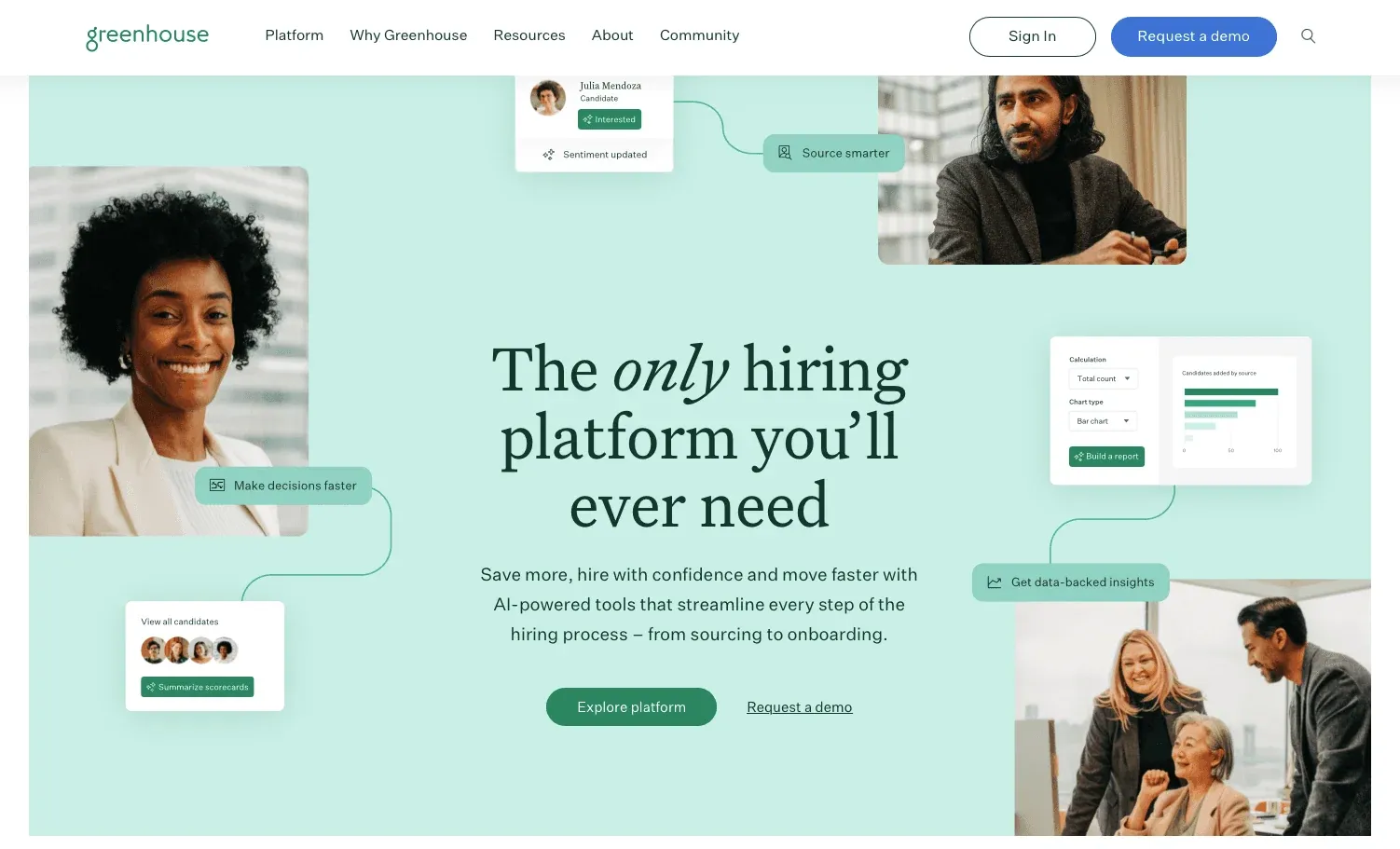
Greenhouse targets mid-size to enterprise companies that hire regularly and want structured, data-driven processes. It’s especially popular with tech companies and professional services firms in the 100-10,000+ employee range.
Here’s what it offers:
-
DEI capabilities including anonymized resume reviews, inclusion analytics, demographic data collection, and bias nudges for interviewers
-
Pipeline velocity reports, source effectiveness tracking, offer acceptance analysis, and DEI reporting at every stage
-
500+ pre-built integrations covering HRIS, background checks, assessments, and video interviewing
Good for: Mid-market to enterprise teams with dedicated recruiting staff who need deep analytics and DEI tooling.
Limitation: Pricing is custom and typically targets mid-market to enterprise budgets, with advanced analytics, sourcing tools, and onboarding modules priced separately. A sales process is required to receive exact pricing.
Lever
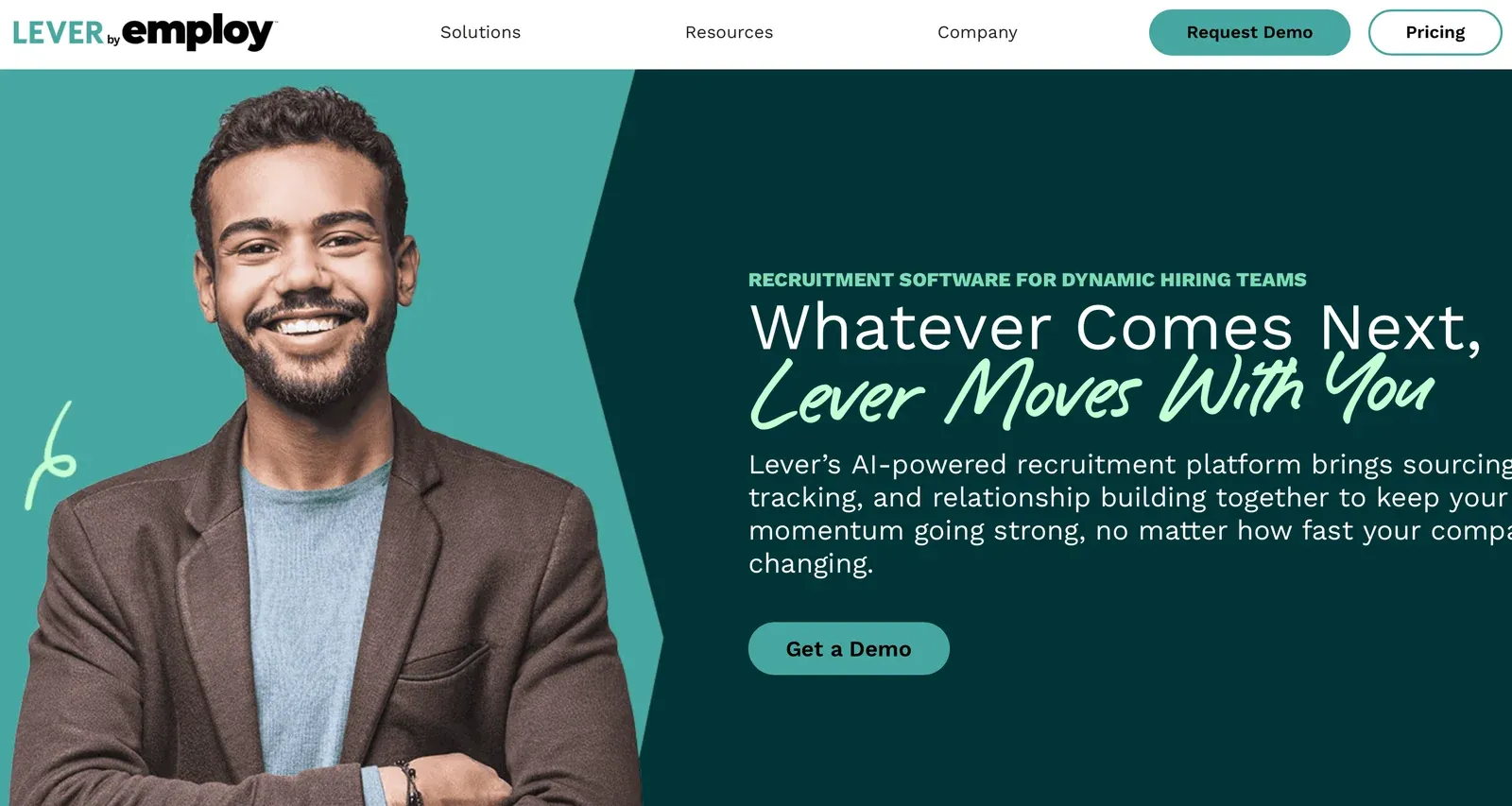
Lever combines ATS and CRM functionality called LeverTRM, giving recruiting teams one place to track applicants and manage long-term candidate relationships. It is used by thousands of companies and is especially common in tech, ML, and AI companies.
Here’s what it offers:
-
Customizable analytics covering offer acceptance rates, interview feedback, and pipeline health
-
Automation for repetitive tasks like follow-ups and job posting across social channels
-
Integrated ATS and CRM for end-to-end pipeline management
-
Wide third-party integrations with HR systems and productivity tools
Good for: Tech companies and enterprises needing combined ATS and CRM with advanced analytics.
Limitation: The interface has a steep learning curve, reporting customization is limited, and some third-party integrations sync partially. No onboarding tools are included in the core product, and pricing requires a custom quote.
Why Dover Is the Best Applicant Tracking System
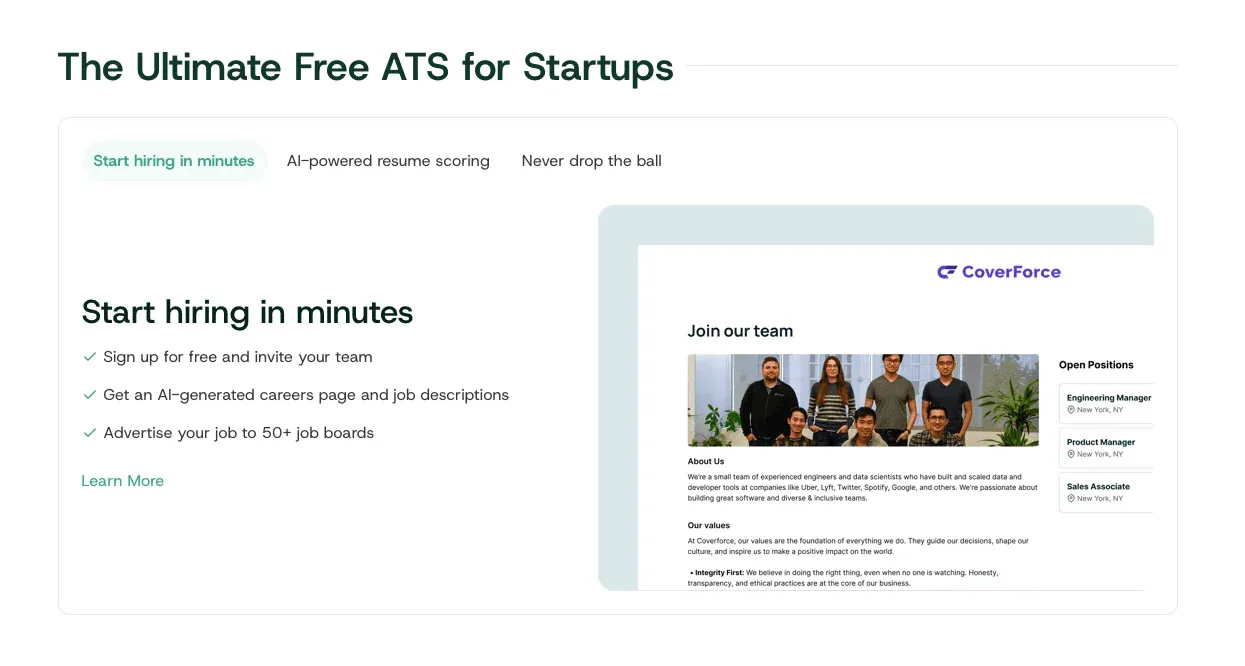
Dover brings together free ATS functionality and on-demand recruiting support in a way that most tools separate into two entirely different products.
The free tier covers unlimited jobs, unlimited users, AI-powered screening, and distribution to 50+ job boards with no annual contract required. When you need expert help, fractional recruiters are available with no placement fees and no long-term commitments. Most companies spend about $4,800 per hire, a fraction of what traditional agencies charge for the same outcome.
For startups and small businesses hiring without a dedicated recruiting team, that combination is genuinely hard to find elsewhere.
Frequently Asked Questions
What types of applicant tracking systems work best for early-stage startups?
Free or low-cost systems with quick setup work best when you’re running your first 20-30 hires without dedicated recruiting staff. Look for options that include AI screening, job board distribution, and unlimited users without seat-based pricing that scales with headcount.
When should I consider switching from my current applicant tracking system?
Consider switching when setup takes longer than a day, you’re paying for features you don’t use, or the pricing model penalizes growth. If your team avoids using the system because it slows them down, that’s a clear signal the match isn’t right.
What’s the difference between an ATS with a recruiter marketplace and hiring a traditional agency?
A recruiter marketplace typically offers hourly fractional recruiters who work inside your ATS without placement fees, while traditional agencies operate separately and charge 15-25% of first-year salary per hire. The marketplace model gives you more control over cost and process, while agencies handle everything externally with less transparency into their workflow.
Final Thoughts on Selecting an Applicant Tracking System
Understanding the different types of applicant tracking systems makes it easier to choose something that fits your current hiring needs without overcommitting too early. The right setup should support your team without adding extra work or cost as you grow. Dover brings a practical option into that mix by offering a free ATS alongside access to experienced recruiters, giving teams flexibility to manage hiring in one place while scaling support when needed.
-for-recruiting-in-may-2026-hero-fd0fc0f6.CdG1MPH0_jE4Sd.webp)