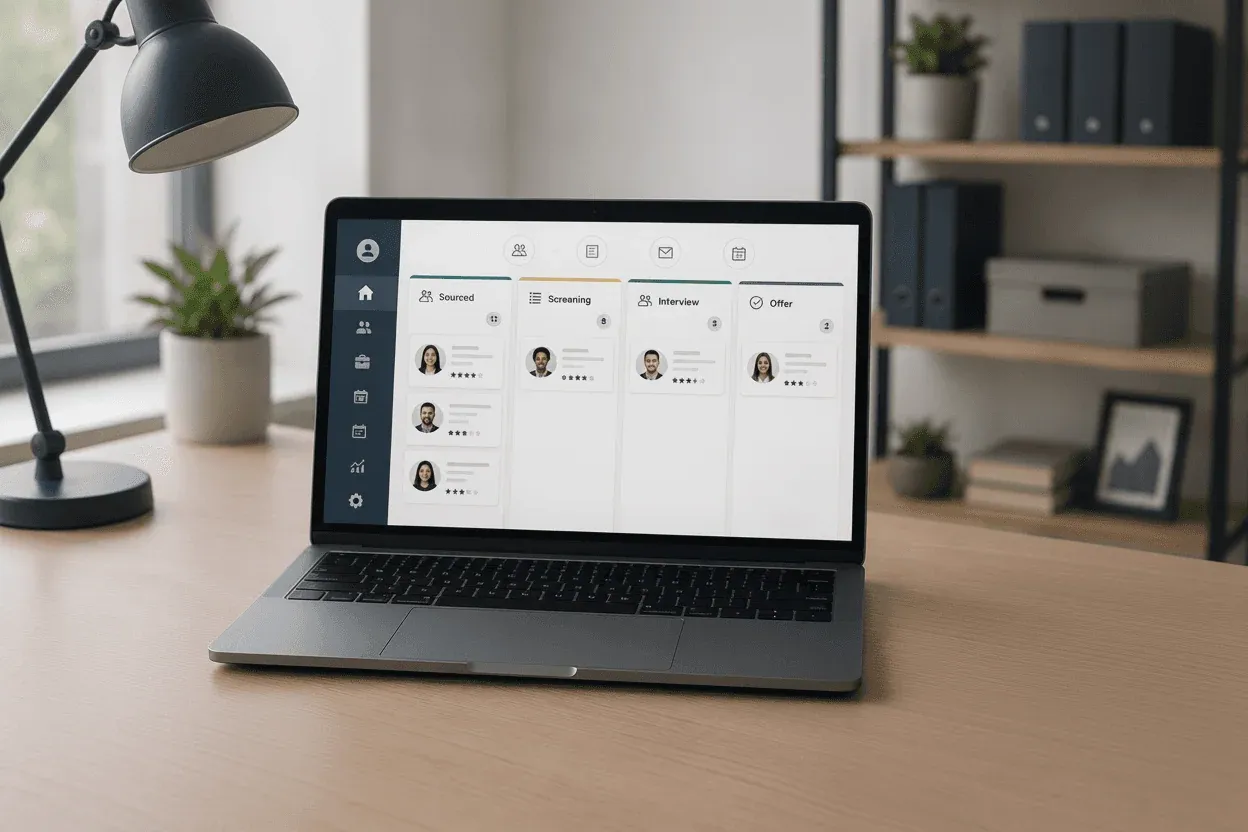

A scalable ATS is one that handles growing application volume, supports configurable workflows, integrates with your existing tools, and automates repetitive tasks without requiring proportional increases in headcount. Jobscan’s analysis of Fortune 500 companies found that nearly all of them use an ATS, and the same category now serves small teams, with solutions like Dover giving startups the ATS features larger companies rely on. For a startup, that definition matters because hiring volume rarely grows in a straight line, and the same few people usually handle sourcing, scheduling, and feedback. An ATS can keep candidates organized and automate repetitive work, so you can make more great hires without adding headcount.
TLDR:
-
A GetApp survey found 86% of recruiters report reduced time-to-hire after adopting an ATS.
-
Automated candidate communication and AI-assisted resume scoring can keep pipelines moving without added headcount.
-
A scalable ATS handles volume through unlimited job postings, customizable workflows, and role-based permissions.
-
Even two to three open roles benefit from pipeline visibility, and many modern tools can be running in under an hour.
-
Some tools pair a free ATS with on-demand recruiting support, giving small teams a structured hiring process without long-term contracts.
What Is an Applicant Tracking System?
ATS stands for applicant tracking system, and these software solutions are designed to help simplify the recruiting and hiring process. Features and functionality vary by product, but generally you get tools to track candidates, post jobs, schedule interviews, and automate manual tasks in the hiring process so you can make more great hires in a fraction of the time.
Why an ATS Saves Time for Small Teams
In practice, that means less time copying candidate details between spreadsheets and inboxes. SHRM’s overview of AI-enabled ATS software lists resume parsing, application tracking, and interview scheduling among the features that save recruiters time.
Why Do Startups Need One?
Signs Your Hiring Process Needs More Structure
Running a startup means any way you can save time is a win. If your hiring process has frequent bottlenecks, or top talent slips through the cracks because follow-up lags, those are signs your process needs more structure. An applicant tracking system can help you fill roles faster and save time and money along the way.
How an ATS Keeps Hiring Organized
An ATS keeps the hiring process from turning chaotic, helping you track candidates and keep them organized through every step of the process. Your hiring team members are likely wearing multiple hats without an expert recruiter on board, and an ATS gives you the tools to run a professional process without being an expert yourself.
Common concerns (and why they don’t apply to modern ATS tools)
-
Too expensive: modern options like Dover are free
-
Too complex to set up: many modern tools can be running in under an hour
-
Only useful at scale: even two to three open roles benefit from pipeline visibility
Key Benefits of Using an ATS for Startups
1. Speed Up the Recruiting Process
A Select Software Reviews roundup of ATS statistics reported that more than 86% of recruiters say that using an ATS has reduced their time-to-hire. An ATS gives you the power to automate and organize many steps of the recruiting process to cut down on time and minimize the likelihood of errors like forgetting to respond to a top prospect. An SHRM Labs conversation on AI in recruitment cites that more than four in five employers using automation or AI say it saves time. A junior-developer hiring experiment reported higher final-interview pass rates after AI-assisted screening than after manual resume screening. That preprint tested AI interviews with human review, not ATS resume scoring, so test results like these against your own hiring criteria rather than treating them as a given.
Here are a few ways that platforms like Dover can greatly speed up the recruiting process:
-
Generate job descriptions - Dover helps draft job descriptions and posts them to 50+ job boards at once, broadening your reach in seconds.
-
Automate sorting - AI-powered resume scoring on the premium plan can surface top candidates first, while you can still review every applicant in the stack.
-
Track candidates - A pipeline dashboard shows each candidate’s stage, giving you a clear view of hiring progress.
2. Improve Communication
An applicant tracking system can improve communication both internally and with candidates. Internally, stakeholders can share feedback about candidates in one place, keeping everyone aligned on the most current information. Externally, automated acknowledgments, rejection emails, and interview scheduling keep candidates engaged and moving through the process, which improves the candidate experience and helps you avoid missing out on top talent.
3. Make Data-Driven Hiring Decisions
Faster time-to-hire matters only if hire quality holds up, and a Select Software Reviews roundup of ATS statistics reports that 79% of recruiters saw an increase in hire quality after adopting an ATS. Applicant tracking systems like Dover support that with data-driven hiring decisions: an applicant scoring system can put top candidates in front of you first, while a person still makes the final call. Since top talent is in demand, surfacing strong candidates sooner can help you build a team that stays for the long haul.
4. Support Scaling in a Growing Startup
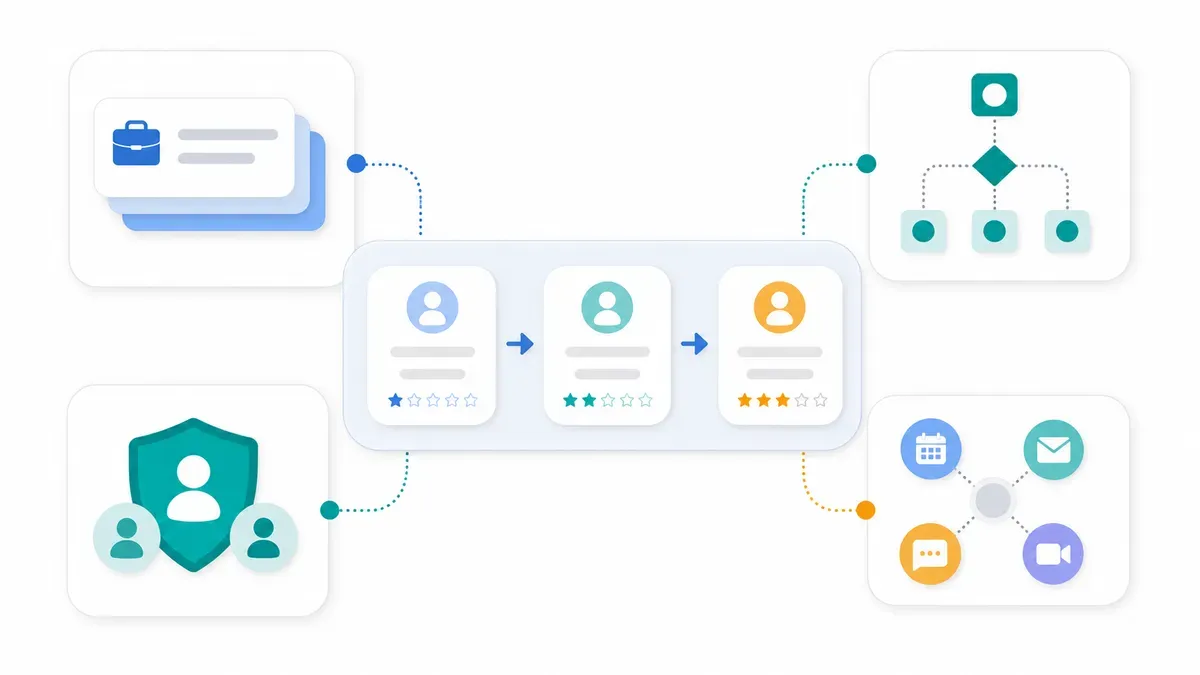
A scalable ATS earns that label through specific capabilities. It handles candidate volume: Dover tracks unlimited candidates and job postings, with bulk resume upload so a small team can work through hundreds of applications without a separate spreadsheet. Workflows adapt as you add roles: customizable interview plans define the stages for each job, so an engineering role and a sales role can run their own pipeline.
Permissions scale collaboration: unlimited users, built-in roles, and private jobs control who sees what (custom permission sets are part of the premium plan). Integrations remove manual workarounds: Dover connects with Gmail or Outlook, Google Calendar, Zoom, Calendly, and Slack, plus webhooks and 50+ job boards, with API access on the premium plan.
What to Look for in a Scalable ATS
| Feature | Entry-Level ATS | Growth-Stage ATS | Enterprise ATS |
|---|---|---|---|
| Job posting volume | Limited (capped roles) | ✓ Unlimited | ✓ Unlimited |
| Automation capabilities | Limited (basic email templates) | ✓ Automated responses, scheduling links, knockout questions | ✓ Custom multi-step workflows |
| AI resume screening | Not included | ✓ Assistive scoring with human review | ✓ Advanced, often custom-tuned |
| Integrations/API access | Limited (email and calendar) | ✓ Native connectors, webhooks, API | ✓ Deep HRIS and custom integrations |
| Team collaboration tools | Limited (few users) | ✓ Unlimited users, role-based permissions | ✓ Advanced permissions and approval flows |
An ATS covers tracking, candidate communication, and scheduling, but it does not source passive candidates or close senior offers. A founder with a few straightforward roles can often run the pipeline alone. When a role is senior, specialized, or nobody has recruiting hours to spare, a fractional recruiter can work inside the same pipeline on sourcing, screening, and closing. Role complexity and available bandwidth matter more here than application volume.
How to Choose the Right Recruiting Software
Now that you know the benefits of an applicant tracking system, the next step is finding one for your startup, and there are a lot of ATS options out there. Look for one that covers the features discussed here and fits your budget, since many Applicant Tracking Systems aren’t really built with startups in mind.
Try Dover’s Free ATS and Recruiter Marketplace for Founders!
At Dover, we designed our ATS to help startup founders. It’s completely free, user-friendly, and set up in minutes, so no one needs to spend hours learning the nitty-gritty before sourcing and tracking candidates. If you decide you still need help with hiring, our recruiter marketplace connects you with experienced full-cycle recruiting partners who charge hourly as you need them instead of locking you into a fixed contract.
Choosing an ATS comes down to finding a system that fits how you hire today while leaving room to scale, and Dover’s free ATS is built with unlimited jobs, candidates, and users for that reason, with a recruiter marketplace on the same system so a fractional recruiter can join the existing pipeline when a search needs more hands-on work than software alone.
FAQs
What is an applicant tracking system, and do startups need one?
An applicant tracking system is software that tracks candidates, posts jobs, schedules interviews, and automates repetitive steps in the hiring process. It does not replace sourcing or judgment, but even with two or three open roles, pipeline visibility can keep strong candidates from slipping through while the team is focused elsewhere.
How can a startup scale hiring without adding recruiting headcount?
An ATS handles posting, tracking, candidate communication, and scheduling, but it does not source or close candidates on its own. Automating those repetitive steps frees up time for the work that needs a person. When a search needs more hands-on effort, a fractional recruiter working inside the same pipeline is another option, usually billed hourly instead of through a full-time salary, with no long-term contract.
What is the difference between a free and a premium ATS plan?
Free ATS plans typically cover core pipeline tracking, while paid tiers add automation, AI features, and reporting depth. Dover’s free plan includes unlimited jobs, candidates, and users. The $199/month premium plan adds AI resume scoring (up to 2,000 candidate scores per month), an AI interview notetaker, bulk actions, offer management with e-signing, an interview scheduling tool, API access, and a fully customizable careers page.
Do I need a recruiter if I already use an ATS?
An ATS tracks candidates, automates communication, and schedules interviews, but it does not source passive candidates or close offers. Whether a recruiter adds value typically depends on role complexity and available hours: a few straightforward roles can often be run by the founder alone, while senior or higher-volume searches may call for dedicated recruiting capacity. Dover’s ATS and recruiter marketplace run on the same system, with an average cost per hire of $4,800 across all roles, though individual costs vary by role and seniority.
Final Thoughts on Choosing an ATS and Recruiting Support for Your Startup
The right scalable ATS for a startup is the one that fits how you hire today and leaves room for more roles, candidates, and teammates to arrive without a rebuild. Software covers tracking, candidate communication, and scheduling, while sourcing and closing still depend on people, so the decision usually comes down to how many recruiting hours your team has and how complex the roles are. Dover is one example of that framework: its free ATS is built with unlimited jobs, candidates, and users, and its recruiter marketplace runs on the same system, with an average cost per hire of $4,800 across all roles, though individual costs vary by role and seniority. Teams at different stages will weigh these tradeoffs differently, and a founder with a few straightforward roles may need little beyond the software itself.