The difference between AI-powered applicant tracking systems comes down to how much they do after the resume gets scored. Some platforms rank candidates and step back. Others automate outreach, schedule interviews, and manage communication until someone accepts an offer. We reviewed seven systems ranging from enterprise-grade implementations requiring months of setup to tools you can start using this week, focusing on what matters when you’re actually trying to fill roles instead of just organize pipelines.
TLDR:
-
AI-powered ATS tools use machine learning to rank candidates by fit, beyond simple keyword matches.
-
One platform pairs a free ATS with fractional recruiters averaging about $4,000 per hire, compared to $18k to $30k in traditional agency fees.
-
Most AI systems handle screening only; one solution includes recruiters for full-cycle hiring support.
-
Enterprise options like Workday and iCIMS often require longer implementation timelines and dedicated administrative support.
-
One free option includes AI resume scoring and distribution to 50+ job boards with no per-user fees.
What Are AI-Powered Applicant Tracking Systems?
AI-powered applicant tracking systems go beyond storing and sorting resumes. Where a traditional ATS flags a resume for containing the word “Python,” an AI-powered system understands context, ranking candidates by predicted fit, surfacing passive talent, and flagging potential drop-off risks before they happen.
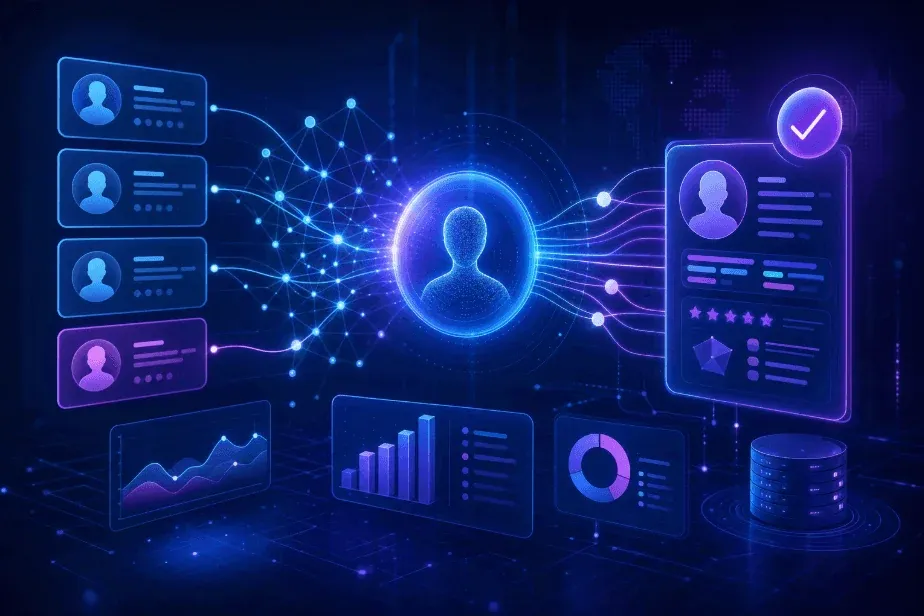
Many AI-powered ATS platforms use machine learning models to help rank and focus on candidates based on role-specific criteria. The result is a recruiting workflow that moves faster and wastes less time on manual screening.
How We Ranked AI-Powered Applicant Tracking Systems
Every tool on this list was assessed using publicly available product information, feature documentation, and pricing details. No internal trials were run. We looked at criteria that matter most to hiring teams making real decisions:
-
AI capabilities, including resume scoring, candidate matching, and automated outreach
-
Ease of setup and day-to-day use
-
Pricing transparency and total cost
-
Integrations with existing HR tools
-
Fit across company sizes, from early-stage startups to enterprise
No single system wins on every dimension, which is why context matters. A Series A startup and a 5,000-person company have very different needs from an applicant tracking system.
Best Overall AI-Powered Applicant Tracking System: Dover
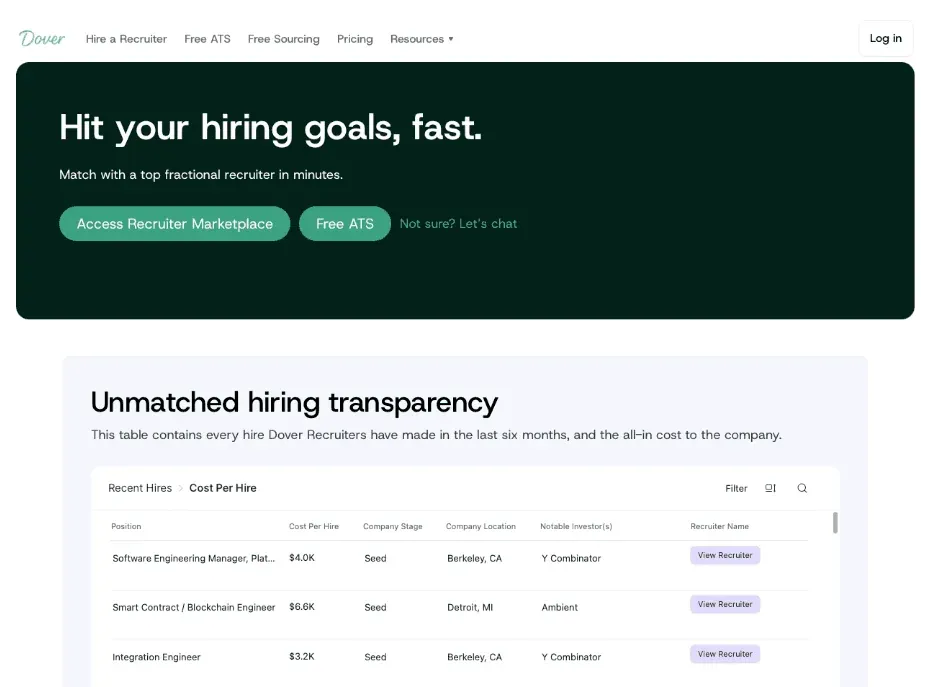
Dover’s recruiting solution goes beyond resume storage and pipeline tracking. It pairs AI-powered candidate sourcing with a network of experienced fractional recruiters who embed directly into your hiring process, handling outreach, screening, and coordination on your behalf.
Where most AI applicant tracking systems hand you a list of candidates and step back, Dover stays involved through the full hiring cycle. The AI surfaces relevant candidates across sourcing channels, while recruiters bring the judgment needed to assess fit, manage timelines, and keep hiring moving without creating more work for your team.
What Dover Offers
-
Sourcing and outreach run automatically, pulling candidates from multiple channels and personalizing messages based on role requirements.
-
Fractional recruiters handle screening calls, candidate communication, and interview coordination so your team focuses on final decisions.
-
The workflow ties sourcing, tracking, and coordination into a single view instead of scattered tools.
-
Pricing is structured around outcomes, making it accessible for startups and growing teams that need serious recruiting support without full-time hiring overhead.
Dover works especially well for companies that want AI-assisted sourcing with human recruiters who understand early-stage and high-growth hiring contexts.
Sapia.ai
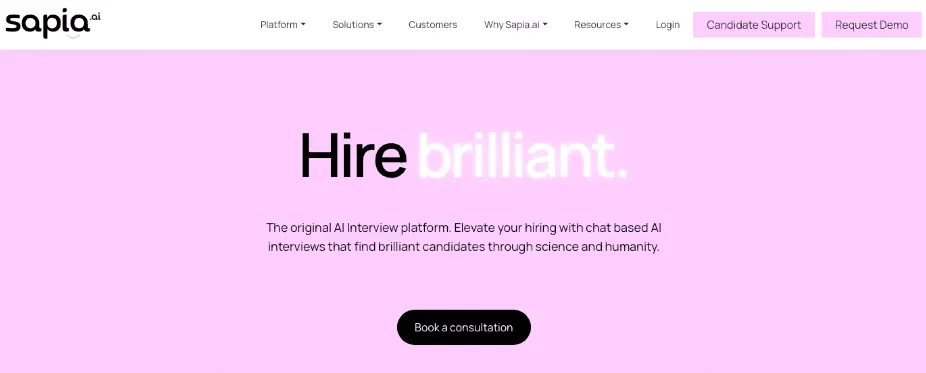
Sapia.ai takes a conversational approach to screening. Instead of forms or async video, candidates go through AI-driven chat interviews that assess personality traits, behavioral competencies, and communication style through text exchanges.
What They Offer
-
AI chat interviews assessing personality traits, behavioral competencies, and communication skills across text-based conversations
-
SAIGE scoring engine that ranks candidates against scientifically validated competency models
-
Integration capabilities with major ATS providers to sync candidate data and screening results
-
Job Analysis Studio for building structured, science-based interviews quickly
Good for large enterprises running high-volume frontline hiring that need to process thousands of applicants through automated chat assessments.
The main limitation is that the chat-only format may feel impersonal for professional or technical roles where candidates expect more structured evaluation experiences.
Workday Recruiting
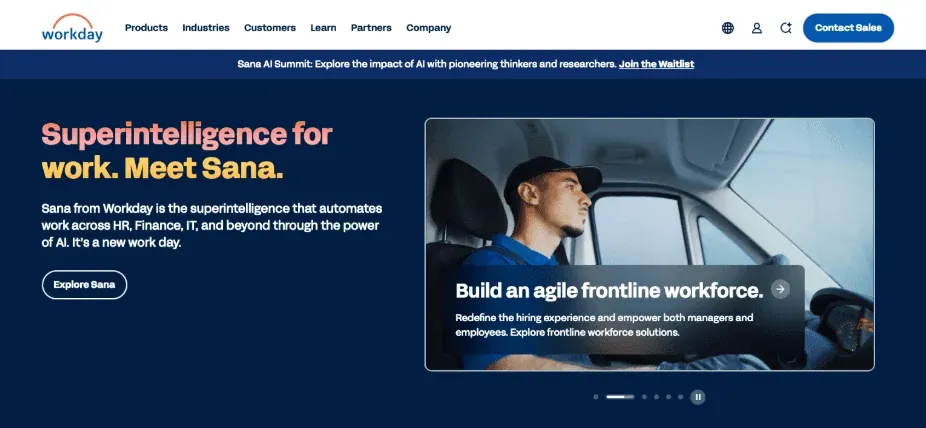
Workday Recruiting is the ATS built into Workday’s broader HR suite, making it a natural fit for large enterprises already running Workday for payroll, benefits, or workforce planning. The appeal is consolidation: recruiting data lives alongside employee records in one system.
What They Offer
-
AI candidate matching that ranks applicants based on role requirements
-
Job description generation to speed up role setup
-
Automated interview scheduling built natively into the HR suite
-
Consolidated recruiting data alongside payroll, benefits, and workforce planning records
The tradeoff is complexity. Workday Recruiting is expensive to implement, typically requires dedicated admin resources, and can take months to configure properly. Smaller hiring teams often find the overhead hard to support.
iCIMS
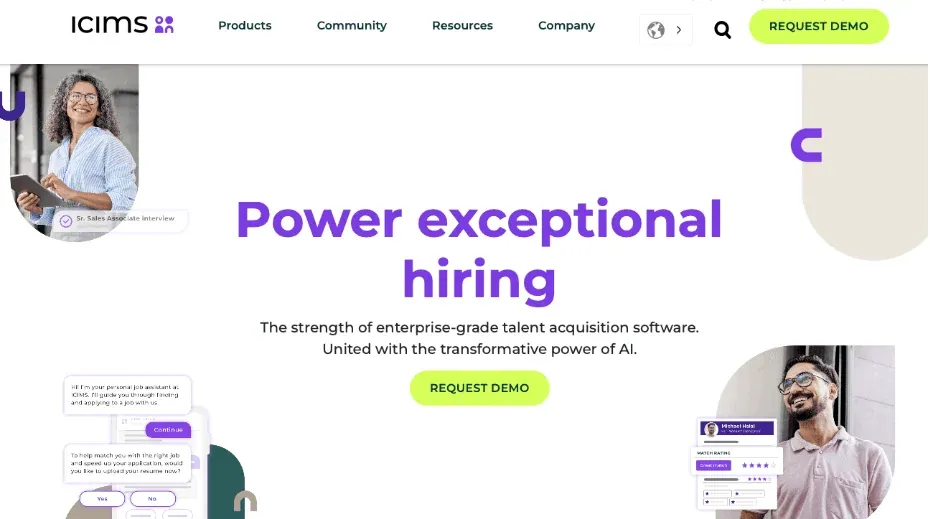
iCIMS positions itself as a full talent cloud for enterprise recruiting, covering applicant tracking, candidate relationship management, recruitment marketing, onboarding, and AI-powered engagement.
The system is built for organizations running complex, high-volume recruitment across multiple brands or locations that need deep customization and extensive integration capabilities.
What They Offer
-
AI-powered resume parsing, candidate ranking, and job description optimization against specific role requirements
-
Conversational AI chatbots on career sites to answer candidate questions in real time
-
Text recruiting capabilities for high-volume candidate communication
-
A large prebuilt integration ecosystem with HCM connectors and APIs to centralize HR tech stacks
Higher pricing and longer setup times create friction for smaller teams with straightforward hiring needs.
Phenom People
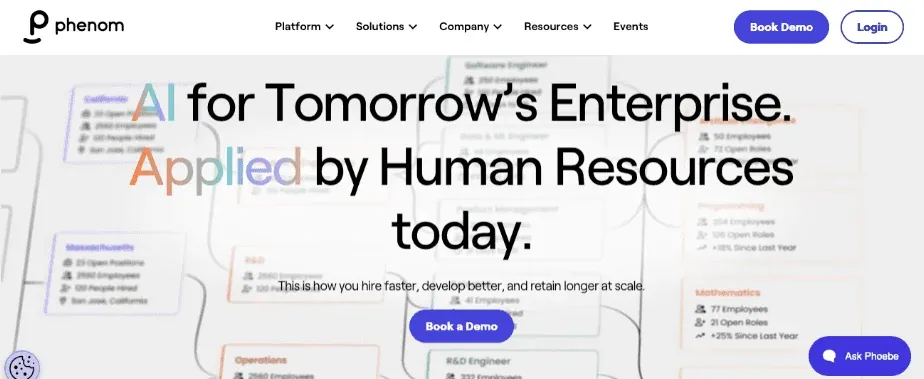
Phenom treats recruiting as an experience layer, personalizing every touchpoint from first career site visit through internal promotion.
What They Offer
-
An AI career site that personalizes job recommendations and messaging based on visitor behavior, with a chatbot for initial engagement and scheduling
-
A recruiter CRM with automated candidate matching and pipeline intelligence
-
Internal mobility and career pathing tools for employee development
-
High-volume hiring automation
Phenom fits large enterprises wanting sophisticated candidate experiences across both external hiring and internal talent development. The structural limitation: Phenom layers on top of your existing ATS instead of replacing it. You still need Workday, SAP SuccessFactors, Oracle, or iCIMS running underneath, which means paying for two systems. Teams that want a complete, standalone solution will find that overhead hard to support.
Beamery
Beamery sits at the strategic end of talent tech, built for enterprises managing the full talent lifecycle instead of just filling open roles. Its TalentGPT engine ties together a candidate CRM, internal talent marketplace, skills inference, and workforce planning in one system.
What They Offer
-
TalentGPT covers candidate engagement, internal mobility, skills inference, and workforce planning across the hiring cycle.
-
AI candidate matching factors in skills, experience, and role requirements to surface relevant profiles.
-
Integration with SAP SuccessFactors for enterprise users running that system.
The catch: Beamery is not a standalone ATS. It layers on top of existing HR infrastructure, adding cost and complexity. For startups that need to hire now instead of planning three years out, that overhead rarely makes sense.
Greenhouse
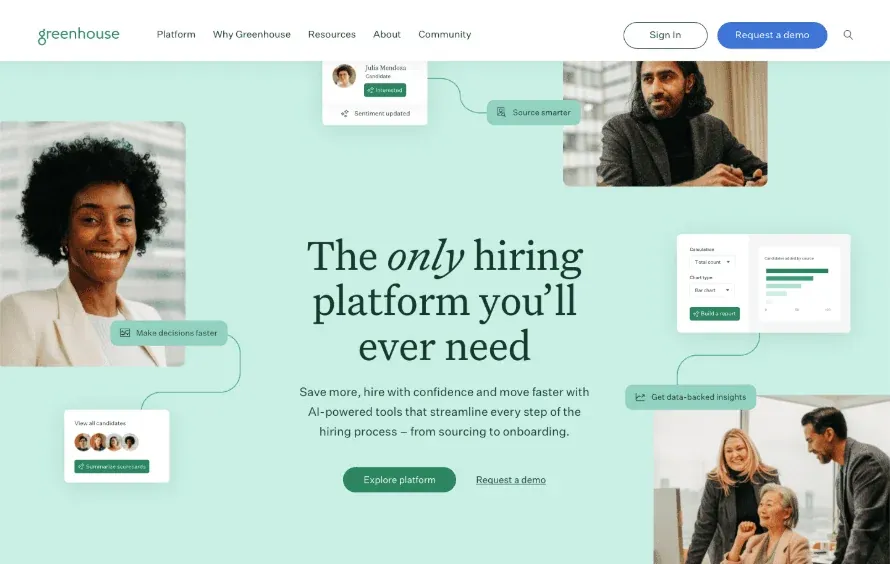
Greenhouse built its reputation on consistent, data-driven hiring and remains one of the most widely adopted ATSs in the tech sector.
What They Offer
-
AI sourcing, CRM functionality, and candidate matching against open requisitions
-
AI workflows for summaries, job descriptions, scheduling, and pipeline management
-
Structured interview kits and scorecards to reduce bias and standardize evaluation
-
Over 400 integrations with HRIS, sourcing, and collaboration tools
Greenhouse fits Series B+ tech companies with 100 to 2,500 employees that have dedicated recruiting operations teams and want a repeatable, measurable hiring process. Headcount-based pricing scales costs as the business grows, and setup typically requires TA operations resources most early-stage startups lack.
Feature Comparison Table of AI-Powered Applicant Tracking Systems
Here’s how the seven AI-powered ATS options stack up across the features that matter most to hiring teams.
| Feature | Dover | Sapia.ai | Workday | iCIMS | Phenom | Beamery | Greenhouse |
|---|---|---|---|---|---|---|---|
| AI Resume Screening | Yes | Yes | Yes | Yes | Yes | Yes | Yes |
| Free Tier | Yes | No | No | No | No | No | No |
| Job Board Distribution (50+) | Yes | No | No | Yes | No | No | Yes |
| Recruiter Marketplace | Yes | No | No | No | No | No | No |
| Fast Setup | Yes | Moderate | No | No | No | No | No |
| Transparent Pricing | Yes | No | No | No | No | No | No |
| Standalone ATS | Yes | No | Yes | Yes | No | No | Yes |
| Integration Ecosystem | Moderate | Limited | Yes | Yes | Yes | Yes | Yes |
Why Dover Is the Best AI-Powered Applicant Tracking System
Most AI-powered ATS options force a choice: sophisticated software or human recruiting support. Dover skips that tradeoff entirely. The free ATS includes AI resume scoring, distribution to 50+ job boards, and unlimited seats with no per-user fees.
When you need extra help, Dover’s recruiter marketplace connects you with vetted specialists, with hires averaging about $4,000. Traditional agencies typically charge $18,000 to $30,000 per hire, making Dover’s model a considerably more accessible option for teams that need real recruiting expertise without committing to an agency retainer.
For startups and growing teams, that pairing is hard to match. You get serious recruiting infrastructure without the enterprise price tag or a months-long implementation.
Frequently Asked Questions
How do you choose the right AI-powered ATS for your hiring volume?
Match your selection to hiring frequency and team structure. Companies hiring 5 to 50 roles annually often benefit from flexible solutions combining free core features with on-demand support, while organizations filling 100+ positions per year may need dedicated enterprise systems with structured workflows and larger integration ecosystems.
What’s the main cost difference between ATS platforms?
Free and mid-market options typically charge nothing or moderate subscription fees, while enterprise systems like Workday or iCIMS can require considerable implementation investments and ongoing license costs that scale with headcount. Factor in both software fees and the time needed to configure and maintain the system when comparing total cost.
Can an AI-powered ATS work without replacing your entire HR tech stack?
Some platforms like Phenom and Beamery layer on top of existing systems instead of functioning as standalone tools, meaning you’ll pay for both the new software and your current ATS. Standalone options like Dover, Greenhouse, or Workday replace your tracking system entirely, which simplifies costs but may require migration work upfront.
When should a startup consider adding human recruiters alongside their ATS?
Most early-stage companies hit this inflection point when founders spend 15+ hours weekly on recruiting tasks or when hiring velocity demands more than software alone can provide. Fractional recruiters working hourly can fill this gap without the $85,000 to $170,000 annual cost of a full-time hire.
Which AI features matter most for reducing time spent screening candidates?
Resume scoring and candidate matching handle the heaviest manual work by ranking applicants against role requirements automatically. Automated scheduling and communication tools save additional hours by removing coordination tasks, letting hiring teams focus on interviews and final decisions instead of administrative follow-up.
Final Thoughts on Picking Your Recruiting Stack
The right AI-powered applicant tracking system depends less on feature counts and more on whether it removes friction from your actual hiring process. Dover gives startups and growing companies AI sourcing with optional recruiter support at hourly rates, which beats paying for enterprise software you won’t use or agency retainers you can’t afford. The tools that work best are the ones you’ll actually use every week, not the ones with the longest integration list. Talk through what fits your team, hiring volume, and company size.