If you’re staring down an open role with thin inbound and no dedicated recruiter, the usual options aren’t great. Agency fees eat into your budget fast, and most ATS tools hand you a workflow without doing any of the sourcing. These small business hiring software picks cover the full range, from free tiers to recruiter-backed options, so you can match the tool to the search.
TLDR:
-
Pricing runs per-user or per-job, from free tiers to several thousand dollars a year.
-
Free plans like Zoho Recruit and Breezy HR cover basic ATS tracking but skip recruiter-led sourcing.
-
Greenhouse and Lever tend to cost more, and some users report longer onboarding.
-
Some tools pair a free ATS with on-demand recruiters, backed by real client reviews, no agency success fees.
-
Inbound applications alone cover only part of a competitive search.
What Hiring Software for Small Business Is
Hiring software for small businesses helps companies find, track, and hire candidates without a dedicated HR team, replacing spreadsheets and email threads with a structured system for job postings, applicant pipelines, and interview coordination.
The category splits into two broad types. Applicant tracking systems (ATS) organize candidates who apply to open roles but do not go out and find candidates. Sourcing tools and recruiter services, including fractional recruiting agencies, fill that gap by identifying passive candidates who have not applied but might be a strong fit. Most small businesses need both, in a balance that depends on how competitive the role is and how much inbound interest a posting draws on its own.
Key Features to Look For in Small Business Hiring Software
-
Job board syndication. Posting to Indeed, LinkedIn, ZipRecruiter, and other boards from one place saves time and widens reach.
-
Applicant tracking and pipeline management. Structured stages, scorecards, and interview scheduling keep candidates moving across multiple open roles.
-
Sourcing and outreach tools. Inbound applications rarely fill competitive roles alone. Look for AI matching, a searchable candidate database, or fractional recruiter access backed by real client reviews.
-
Onboarding and payroll integrations. Connections to HRIS or payroll tools like Gusto, BambooHR, or Rippling avoid re-entering data once an offer is accepted.
-
Transparent, predictable pricing. Flat monthly fees or per-hire costs that don’t balloon with headcount or add-ons make budgeting easier as hiring volume changes.
How We Reviewed These Tools
Filling open roles is one of the most common challenges small businesses face. NFIB’s September 2026 jobs report found that 87% of owners who were hiring or trying to hire reported few or no qualified applicants for their open positions. Each tool below was assessed against five criteria: pricing transparency and total cost of ownership, sourcing versus inbound-only tracking, ease of setup for non-HR teams, integration with payroll and HRIS tools, and scalability as headcount or hiring volume grows.
Quick Comparison: Small Business Hiring Software at a Glance
| Tool | Starting Price | Free Tier | Sourcing Support | Best For |
|---|---|---|---|---|
| Dover | Free ATS, $199/mo Premium; recruiter-set rates | Yes (unlimited jobs) | Yes (fractional recruiters) | Teams needing recruiter help without agency fees |
| Zoho Recruit | Free; up to $50/recruiter/mo (billed annually) | Yes (1 active job) | Yes (paid plans) | Teams already using the Zoho ecosystem |
| Workable | $299/month | No (15-day trial) | Yes (AI sourcing) | Growing teams with a fixed recruiting budget |
| Breezy HR | Free; up to $439/month (billed annually) | Yes (1 active job) | No | Small teams managing inbound applicants |
| Greenhouse | Est. ~$5,100/year | No | No | Companies with dedicated HR staff and larger budgets |
| Lever | Est. ~$6-$8/employee/mo | No | Limited (email sequences) | Relationship-driven hiring with CRM needs |
| JazzHR | ~$75/month (billed annually) | No | No | Basic ATS needs at entry-level pricing |
Best Overall Small Business Hiring Software: Dover
Dover takes a different approach than most hiring software. Rather than handing you a tool and leaving the search to you, Dover pairs you with a recruiter who manages the search end to end, from writing job descriptions and sourcing candidates to coordinating interviews. Recruiters set their own rates and you agree terms directly, choosing hourly, retainer, or pay-per-hire, with no annual contract. The network is highly selective, drawing on recruiters with deep startup hiring backgrounds, and each one carries vetted reviews from real clients. Dover is also the layer that fractional recruiting agencies are built on.
Pros
-
Free ATS with no job or user limits, plus a $199/month Premium tier for AI applicant scoring
-
No annual contract; hourly, retainer, and pay-per-hire options
-
Vetted recruiters with published reviews, so you choose based on track record
Cons
-
Recruiter help averages about $4,800 per hire, which may not suit very low-budget teams
-
The managed model means giving up some direct control over the process
Zoho Recruit
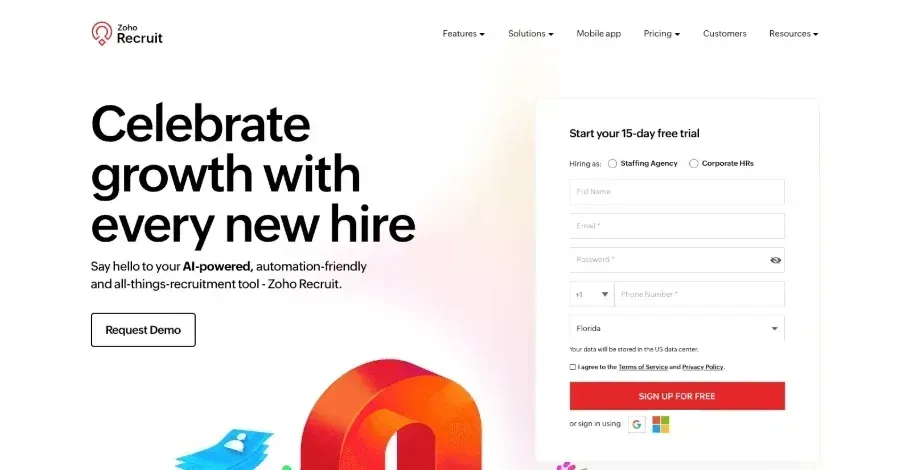
Zoho Recruit fits teams already running on Zoho CRM or Zoho People. Pricing runs from a Forever Free plan, capped at one active job with no AI features or sourcing tools, up to Enterprise at $50/recruiter/month billed annually. Some reviewers report a dated UI and inconsistent support, and candidate sourcing tools start on the paid Standard plan, so the Forever Free plan leaves proactive outreach out of reach.
Bottom line: Zoho Recruit suits the Zoho ecosystem, while Dover pairs a free ATS with recruiter access for active sourcing.
Workable
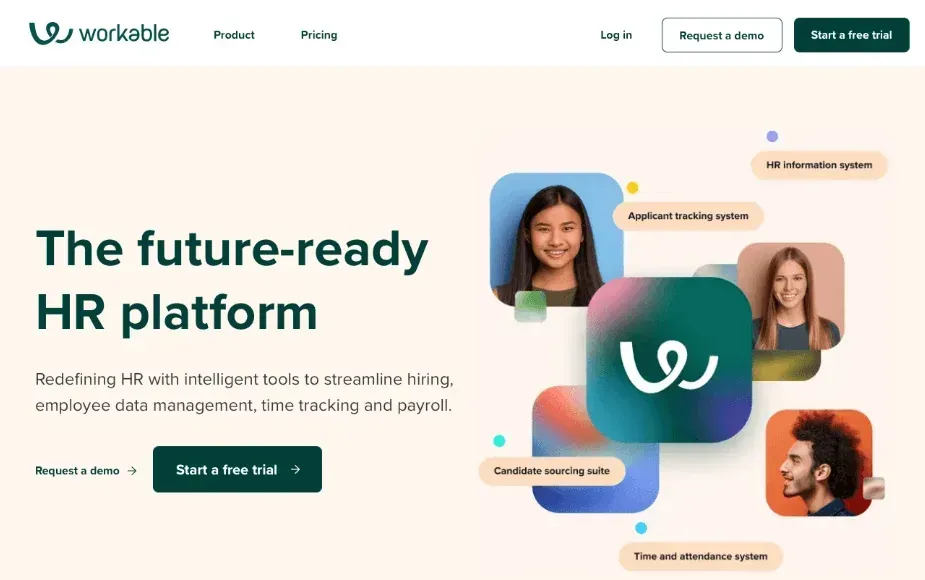
Workable’s Standard plan starts at $299/month with a 15-day free trial. Pricing scales by headcount band, so crossing an employee threshold can trigger cost jumps. The base plan covers posting to 200+ boards, AI candidate sourcing, interview scheduling, and offer management, while texting, video interviews, and assessments are add-ons. See how Dover compares in this Workable vs Dover breakdown.
Bottom line: Workable’s headcount-based pricing can climb unpredictably, while a free ATS with per-hire recruiting costs is simpler for small teams.
Breezy HR
Breezy HR runs four tiers: Bootstrap (free, one active job), Startup ($157/month), Growth ($273/month), and Business ($439/month), with those paid tiers billed annually and monthly billing running higher. All paid plans include unlimited users and positions. Feature gating can be steep: interview scorecards, eSignatures, and multiple pipelines require Growth, while HRIS integrations and offer management sit in Business.
Bottom line: Breezy HR tracks inbound applicants well, while Dover adds proactive sourcing through recruiters who find passive candidates.
Greenhouse
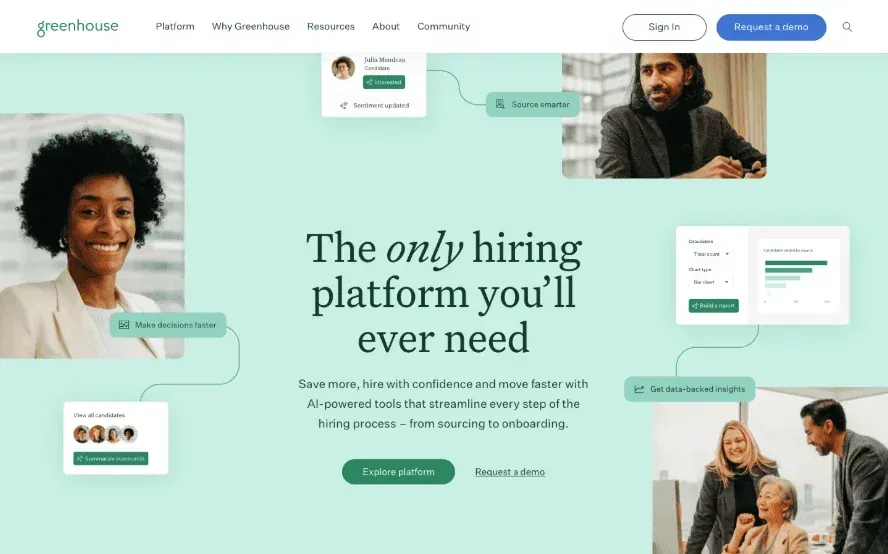
Greenhouse does not publish pricing. Third-party estimates put it at roughly $5,100/year for teams under 50 employees, and well above that for larger organizations. The tool covers structured hiring workflows, interview kits, scorecards, and reporting, with deep HRIS integrations. Implementation costs and onboarding of several weeks are commonly reported.
Bottom line: Greenhouse suits companies with considerable budgets, while Dover offers free ATS tools plus flexible access to experienced recruiters.
Lever
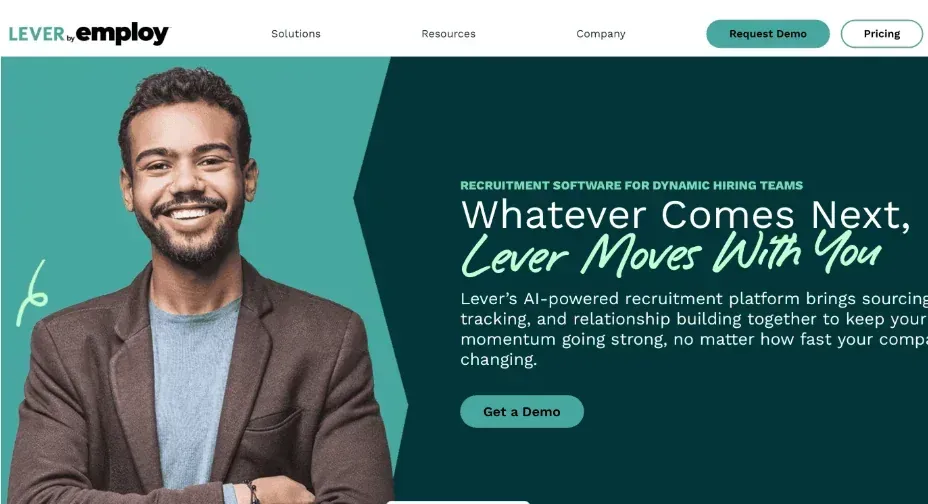
Lever reportedly prices its subscription at about $6 to $8 per employee per month, though Lever does not publish rates. The tool combines ATS and CRM into one view with customizable pipeline stages, automated candidate movement, and email sequences for passive candidates. Reviewers frequently flag inflexible reporting and Boolean search limitations, and e-signatures require third-party tools like DocuSign.
Bottom line: Lever’s CRM focus can suit relationship-heavy hiring, while Dover covers outreach through fractional recruiters at no added software cost.
JazzHR
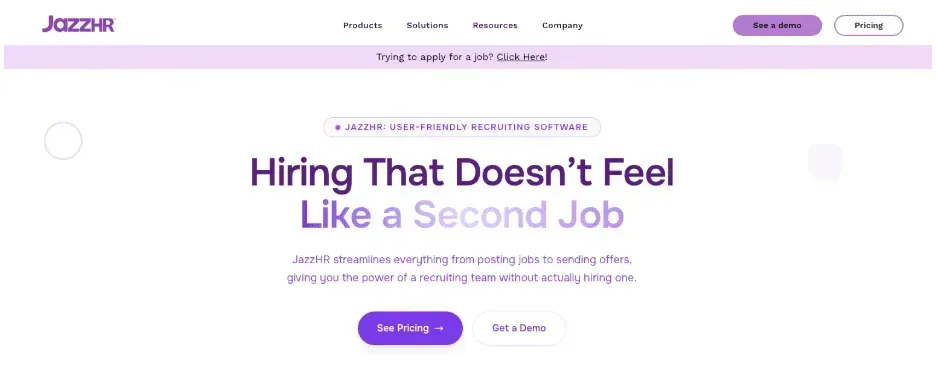
JazzHR lists three tiers, with reported annual-billing rates of about $75/month for Hero (3 active job postings), about $269/month for Plus (200 postings), and about $420/month for Pro (unlimited jobs). These figures could not be verified directly, so buyers should confirm current pricing before signing up. The tool covers applicant tracking, resume screening, interview scheduling, and candidate messaging, with EEO reporting and background check integrations included.
Bottom line: JazzHR covers basic ATS needs at entry-level pricing, while Dover’s free ATS has no job or user limits and includes recruiter access when you need it.
Why Dover Is the Best Small Business Hiring Software
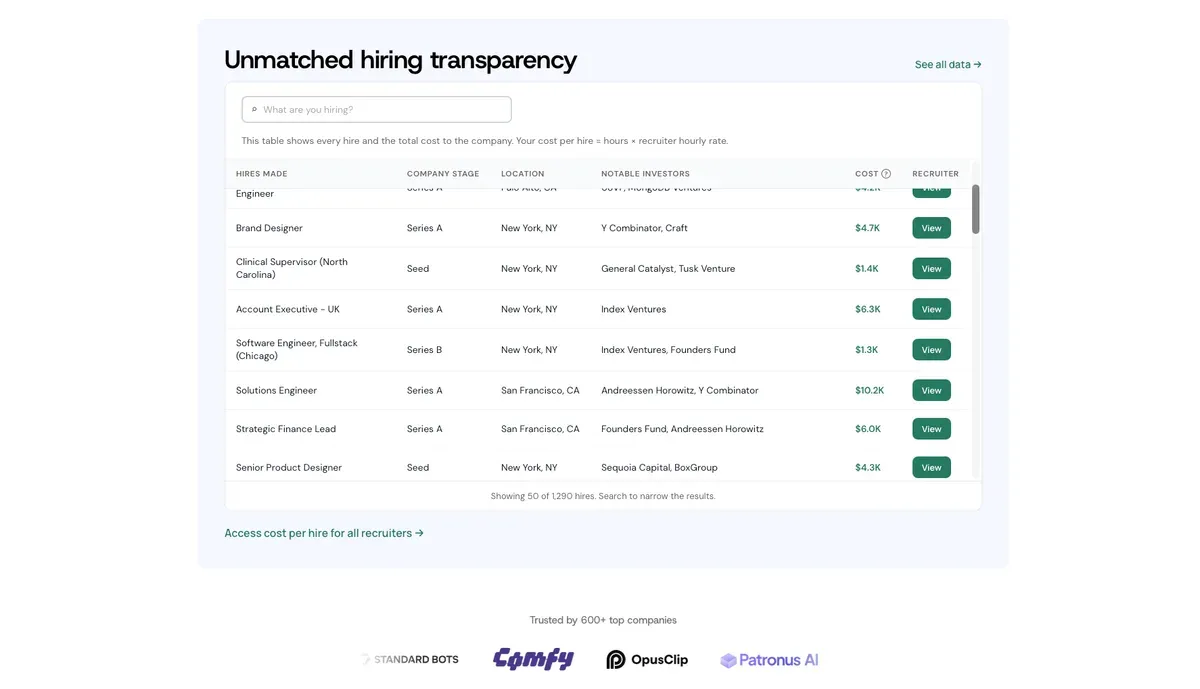
Most small businesses face two familiar options when a role gets hard to fill: pay a traditional recruiting agency a percentage of salary (with recruiting costs that can run well into five figures) or handle the search in-house, where an ATS organizes workflows but covers only the inbound side. Fractional recruiting fills that gap. Dover pairs a free ATS, with a $199/month Premium tier for AI features, with experienced fractional recruiters who set their own rates and agree terms with you directly. Dover’s average cost per hire is roughly $4,800 across all roles, though actual costs vary by role and recruiter, with no annual contract required, and vetted reviews from real clients still let hiring managers choose based on verified track record. It is the same layer fractional recruiting agencies are built on.
-
Recruiter and team visibility into the same pipeline, so sourcing activity and candidate status are accessible to both parties without manual handoffs.
-
Flexible hourly or retainer engagement with fast activation, so recruiting can start within days and scale up or down as a search needs.
For small businesses weighing DIY hiring against added recruiting support, the choice often comes down to hiring volume and role complexity. A free ATS typically covers roles with healthy inbound, while a fractional recruiter working inside the same pipeline can take on sourcing for searches that draw thin applicant flow.
The Hiring Picture in Q4 2026
According to the Intuit QuickBooks Small Business Index for October 2026, employment at US small businesses with one to nine employees fell by roughly 7,000 jobs in September, with declines in most sectors tracked. Some estimates suggest roughly half of small business leaders find skilled candidates harder to source than a year ago, even as a similar share still plan to grow headcount. For specialized roles, inbound stays thin regardless of posting quality, so sourcing tools or recruiter support are what close that gap.
Gusto’s September 2026 hiring analysis found that small businesses that adopted AI saw headcount rise about 7% more than comparable businesses that knew about AI but did not adopt it in the first year. The finding is associational, not proof that AI adoption alone drove the difference.
FAQs
What is the best ATS for small business in 2026?
Dover’s free ATS is a strong option for most small teams: no job or user limits, AI applicant scoring on the Premium tier ($199/month), and optional fractional recruiters who handle sourcing. Zoho Recruit’s free tier suits teams already in the Zoho ecosystem, and Workable ($299/month) adds AI sourcing but prices by headcount band. Greenhouse and Lever tend to fit companies with dedicated HR staff and larger budgets.
Which hiring software works best for teams with no dedicated HR function?
Dover pairs you with a fractional recruiter who handles sourcing, outreach, and coordination, removing the need for internal recruiting expertise. Recruiters set their own rates, so you price the engagement against the role instead of a fixed fee.
What tools should I use to post jobs to multiple boards at once without paying per listing?
Several ATS tools include multi-board distribution at a flat rate instead of per-listing fees. Dover’s free ATS posts to major boards with no per-listing charge, Workable’s Standard plan ($299/month) syndicates to 200+ boards, and Breezy HR also includes multi-board posting, including on its free plan. For small teams, an ATS with syndication built in is often more cost-effective than a standalone distribution tool.
Do I need a recruiter if I already have an ATS?
Not always. An ATS organizes applicants and keeps interviews moving, which may be enough for roles with strong inbound interest. For competitive, senior, or niche roles with low inbound volume, or when nobody on the team has time to source, the ATS alone tracks the shortage instead of filling it. A fractional recruiter can plug in on top of the ATS and run outreach inside the same pipeline, so the hiring team sees sourcing activity as it happens and avoids duplicate outreach. Whether that recruiter is internal, fractional, or agency-based typically depends on hiring volume and budget.
Final Thoughts on Hiring Software Options for Small Businesses
The right small business hiring software depends on the actual problem you’re trying to solve. For roles with good inbound volume, a free ATS keeps things organized. For roles where the right candidates aren’t applying, sourcing support does the work a pipeline view can’t. Dover’s model is one example of how the two can fit together: a free ATS paired with fractional recruiters, and the fractional recruiting agencies built on Dover, who work in the same system with vetted client reviews, with an average cost per hire of roughly $4,800 across all roles.