

You’re ready to pay for recruiting help, but the quotes cover different work and are hard to compare. An hourly sourcing project and a fee due at placement leave different tasks with your team. Knowing how to find a recruiter includes knowing what you’re buying: a shared hiring brief, clear ownership, and written fee terms give you a firmer basis for choosing.
TLDR:
-
Define your hiring roles, pay ranges, budget, and recruiter scope before searching.
-
Find recruiters through founder referrals or LinkedIn searches matched to your roles and stage.
-
Check comparable hires, references, and capacity before agreeing to fees and a trial.
-
Free introductions do not mean free recruiting work. Budget for paid services.
-
Some tools pair a free ATS with separately paid fractional recruiters.
Define the Recruiting Support Your Startup Needs
Finding a recruiter for your startup means hiring someone to fill company roles, not provide personal job-search support.
Before searching, draft a brief with:
-
Priority roles, seniority, and compensation ranges.
-
Location requirements and expected hiring volume.
-
Available interviewer time and recruiting budget.
A seed-stage founder making early hires might need sourcing-only help while handling interviews internally. A startup hiring across product and go-to-market teams might also delegate screening and coordination, or assign full-cycle ownership through signed offers.
Choose the Right Recruiter Engagement Model
| Model | Scope | Payment | Fits | Tradeoff |
|---|---|---|---|---|
| Fractional recruiter | Flexible ownership | Hourly/retainer | Variable workloads | Shared availability |
| Project-based support | Defined deliverable | Project/hourly | Sourcing sprints | Limited continuity |
| Contingency agency | Search through placement | Success fee | One-off searches | Less search control |
| Retained search firm | Dedicated search | Retainer | Leadership searches | Upfront commitment |
| Internal recruiter | Ongoing ownership | Salary, benefits, overhead | Steady workloads | Fixed payroll; BLS’s December 2025 compensation data provides benefits context, not recruiter-specific costs. |
For a closer comparison of flexible support and an internal hire, see fractional recruiter vs full-time recruiter.
Set a Recruiting Budget and Understand What “Free” Means
Compare quotes for identical roles, responsibilities, and hiring periods, including fractional recruiter costs. Include hourly charges, retainers, placement fees, or salary plus benefits, alongside tools, advertising, and hiring-manager time.
| Benchmark | Amount | Meaning |
|---|---|---|
| Overall hiring cost, not recruiter fees: SHRM’s 2025 average nonexecutive cost per hire | $5,475 | Context for total hiring spend, not a recruiter-fee benchmark or startup budget target |
Recognizing the signs your startup needs a recruiter matters before you start searching: finding a recruiter for free differs from getting recruiting work done; referrals and introductions can be unpaid, while recruiting services require a paid agreement. Free software still leaves human work with your team unless you budget for support.
Find Recruiters Through Founder Networks and Relevant Communities
Ask fellow founders and investor talent contacts for recruiters who filled comparable roles at a similar company stage, within constraints like yours. Useful referrals explain what the recruiter delivered and how much oversight they needed.

Broaden your shortlist through professional communities, specialist directories, and recruiter marketplaces as part of choosing the right recruiter for your startup. Note each recruiter’s relevant experience.
Reddit can provide leads, but anonymous recommendations don’t verify recruiter quality. Keep requests focused on hiring for your company, follow community rules, and seek permission before messaging members privately.
Find a Recruiter on LinkedIn With Employer-Focused Searches
To find a recruiter on LinkedIn, use LinkedIn’s people search with queries that reflect your hiring needs:
-
“fractional recruiter startup engineering” for fractional engineering recruiting support.
-
“technical recruiter early-stage” for experience with early-stage teams.
-
“recruiter remote-first SaaS” for remote SaaS hiring.
Check work histories for comparable searches and startup stages, or hire a fractional recruiter through a marketplace, then confirm whether they accept outside clients or recruit only for their own company.
Contact them through publicly shared business contact details or LinkedIn. Avoid guessing private emails or sending repetitive messages.
Match Technical and Remote Recruiting Experience to Your Roles
Ask a technical recruiter how backend and infrastructure searches differ, how they judge seniority, and which assessments need your engineers. Test their approach against your compensation ceiling. An engineering specialist may suit a deep technical search; a broader recruiter may suit hiring across product, sales, and operations.
For remote roles, ask for examples of supporting distributed teams: handling location eligibility, time-zone overlap, geographic pay differences, and interview coordination. Working remotely alone provides little evidence of remote recruiting experience.
Contact Recruiters With a Clear Hiring Brief
Reference a relevant search from the recruiter’s public work history. Keep candidate identities and confidential company plans out of initial outreach.
Hi [Name], your work hiring [role] for [startup stage] caught my attention. We’re a [stage/sector] company hiring [priority roles] in [locations], with compensation of [ranges]. We need help with [scope]. Could you share your engagement structure and current capacity before we arrange a call?
Checking terms upfront can reveal budget or availability mismatches before longer conversations.
Assess Relevant Experience and Professionalism
Assess each shortlisted recruiter against the same criteria:
-
Experience with comparable searches and your startup stage.
-
Knowledge of the role you need to fill.
-
Candidate communication practices.
-
Capacity to take on your search.
-
Willingness to share activity and progress.
As part of learning how to vet external recruiters, read founder reviews for hiring context, constraints, and recency, beyond star ratings. Ask permission to contact references about delivery.
Clarify guaranteed outcomes, unclear ownership, vague reporting, or unexplained fees and contract terms before proceeding.
Ask Questions That Reveal How a Recruiter Will Work
Use the same hiring brief for every recruiter call. Ask:
-
Where would you source candidates and calibrate the search?
-
Which screening criteria would you use?
-
How would other client commitments affect your availability?
-
Who owns candidate relationships and records?
-
How often would we communicate?
-
What would you change after a weak shortlist, an uncompetitive pay range, or changed priorities?
Request relevant examples without confidential candidate details, drawing on a fractional recruiting guide if you’re new to this engagement model. Favor explanations of decisions and tradeoffs over unsupported speed promises.
Agree on Scope, Fees, and Working Terms
Put working terms in writing before recruiting starts:
-
Define deliverables and ownership of sourcing, screening, and scheduling, including who makes interview decisions and approves offers.
-
Set billing triggers, spending caps, reimbursable expenses, and cancellation terms.
-
Specify confidentiality obligations, where candidate records live, and what data remains accessible after the engagement ends.
For placement-based agreements, document attribution periods, exclusivity, replacement provisions, and when fees become payable, including how fees apply to candidates already in your pipeline. Contingency and retained search fees are typically quoted as a percentage of first-year cash compensation, as SHRM’s guide to search firms describes, so state in writing which pay components the percentage applies to.
Trial the Engagement and Review Progress
Start with a bounded trial, agreed deliverables, regular calibration, and a shared candidate pipeline. Avoid guaranteed hiring deadlines.

Review qualified candidate flow, shortlist relevance, stage conversion, candidate communication, and spending against scope. Before expanding, changing, or ending support, distinguish recruiter execution gaps from unclear requirements, delayed interviewer feedback, or compensation mismatches, and weigh whether it’s time to hire your first full-time recruiter.
How Dover’s Marketplace Helps You Find and Choose Recruiters
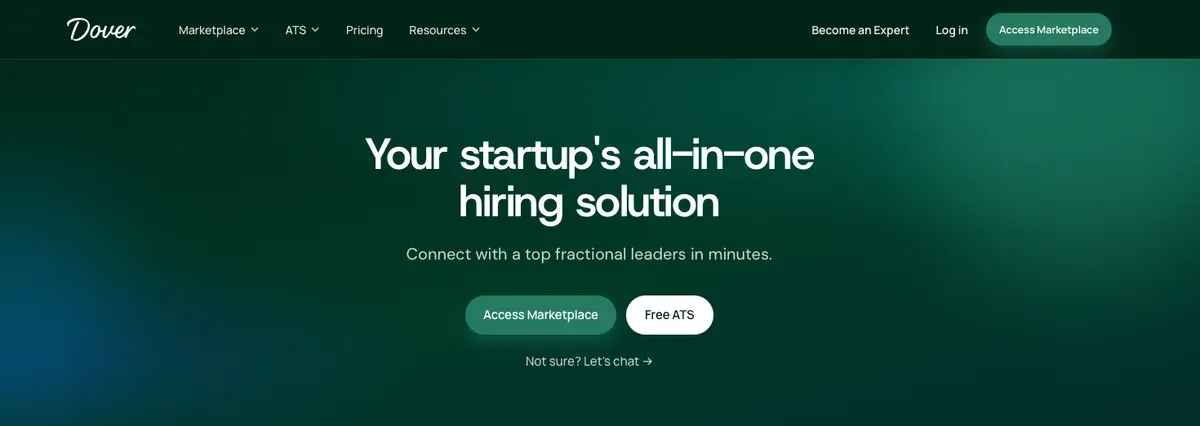
Fractional recruiting gives you recruiter hours for all or part of the hiring process. A seed-stage founder can buy sourcing help for one engineering search, while a growing team can hand off screening and coordination across several roles. Dover’s marketplace is built around that model, and hourly billing is its core structure. Each recruiter sets their own rate, and the average cost per hire across all roles is about $4,800, though costs vary by recruiter, role, and seniority. Hours are tracked in the app in real time, so cost per hire comes down to hours multiplied by rate. You can set a weekly or monthly budget, scale support up or down, and pause at any time. Retainers and pay-per-hire fees are also available, and some recruiters combine a base rate with a success fee.
You browse the marketplace and choose your recruiter, which is a useful way to see how fractional recruiting works for employers. Filter by roles worked on, location, industry, and founder reviews, or post a role and let recruiters apply. Recruiters typically bring years of startup hiring experience, so you can match someone to the roles you need filled, such as engineering, product, or go-to-market. Introductory calls are free and unlimited, and the average company speaks with 3.9 recruiters before deciding. Access starts with a fully refundable deposit that is applied to your recruiter’s work and refunded if you never work with one. With no long-term contracts, you can trial several recruiters at once, keep the best fit, and switch anytime. Recruiters can work in tools you already use, such as Ashby, Greenhouse, or Lever.
FAQs
Should you rule out a recruiter on LinkedIn if they haven’t hired your exact job title?
No, comparable search experience can matter more than an exact title match. Ask which skills, seniority levels, compensation ranges, and candidate pools overlap with your role, then request a relevant founder reference. For specialist technical roles, have your engineering lead check the recruiter’s proposed screening criteria before committing.
If you only need sourcing help, what should your team keep in-house?
Your team should retain candidate review, interviews, and offer decisions unless you explicitly assign more work to the recruiter. Before sourcing starts, agree on what makes a candidate qualified, who sends the first message, and who handles replies. A sourcing-only engagement can stall if nobody on your team owns the handoff from interested candidate to interview.
Do you need an ATS before bringing in a fractional recruiter?
No, but an ATS and a recruiter do different jobs. An ATS tracks candidates, stages, and interview feedback; it does not source, screen, or close candidates on its own. A fractional recruiter can work in a spreadsheet or your existing ATS, though a shared ATS gives the recruiter and your team the same view of the pipeline and keeps candidate records in your account. Hiring volume is a useful decision point. If you make fewer than five hires a year and have time to run searches yourself, an ATS alone may be enough. Fractional support tends to fit teams hiring roughly 5 to 50 roles a year, particularly when sourcing, screening, or interview coordination outgrows your team’s time. Around 15 to 20 annual hires, a first full-time recruiter may start to make sense. Dover’s free ATS and recruiter marketplace operate in one shared system, and recruiters can also use Ashby, Greenhouse, or Lever.
Final Thoughts on Hiring a Recruiter
Deciding how to find a recruiter often comes down to whether your team needs sourcing help or full search ownership. Starting with a clear scope leaves room to adjust as you hire. Dover’s model is one concrete version of this logic: a free ATS paired with on-demand fractional recruiters in a shared system, so the pipeline stays with your team as recruiting support grows or shrinks.