

You’re staring at three open roles, no dedicated recruiter, and a growing sense that posting jobs and waiting for applications won’t fill any of them fast enough. Startups in that position usually end up choosing between trying to run searches themselves, paying agency fees that can hit 25% of salary, or finding a middle path that doesn’t eat the budget or leave hiring to chance. For a full-cycle recruiting startup, that middle option is fractional: one recruiter who owns every stage of the process from sourcing through close, working part-time instead of as a salaried employee.
TLDR:
-
A full-cycle fractional recruiter owns all six hiring stages for a startup, from job scoping through offer negotiation, on a part-time or hourly basis instead of full-time headcount.
-
One fractional recruiter can typically manage 2 to 4 open roles at once, depending on seniority, hiring volume, and search complexity.
-
Fractional recruiting bills hourly ($75-$150/hour) or via retainer ($3,000-$10,000/month), often costing less than agency fees of 15-25% of first-year salary.
-
Startups typically bring in fractional support when planning 3+ hires in six months but lack the volume to support a full-time internal recruiter.
-
Some tools pair free ATS software with on-demand fractional recruiters at $2,000 to $7,000 per hire, eliminating retainer commitments.
What Full-Cycle Recruiting Actually Means
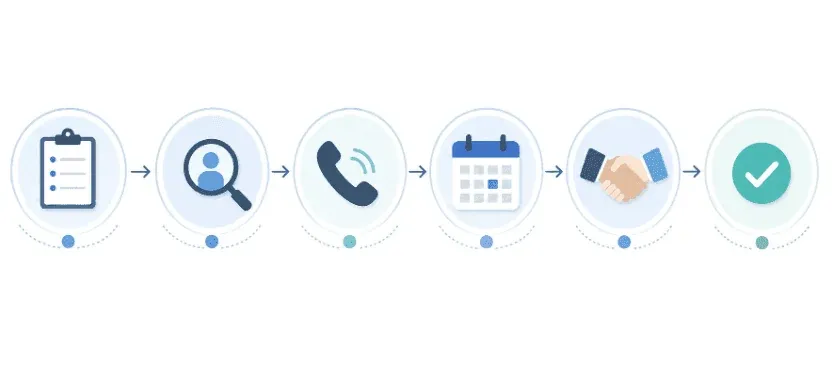
Full-cycle recruiting covers every stage of a hire from the moment a role opens to the day an offer is signed. A full-cycle recruiter owns the entire process without handing off work between sourcing teams, interview coordinators, and closing specialists. One person or a small pod carries the search start to finish. The six-stage talent acquisition framework applies whether the recruiter works full-time or fractional.
The “fractional” layer changes the staffing model, not the scope of work. A fractional recruiter performs the same full-cycle responsibilities as an in-house hire but operates on a part-time or project basis, typically engaged at an hourly rate or retainer instead of a full-time salary. The work itself stays the same; the commitment structure is different.
The Six Stages of Full-Cycle Recruiting (and What Happens at Each)
-
Intake and role scoping: Before any sourcing begins, the recruiter meets with the hiring manager to define what the role actually requires: compensation range, must-have experience, team fit criteria, and a realistic read on how competitive the search will be. Skipping this step produces misaligned pipelines and wasted time later.
-
Sourcing: The recruiter actively builds a candidate pool by searching databases, reaching out through professional networks, and sometimes running targeted outbound campaigns. For technical and senior roles, inbound applicants alone rarely fill the pipeline.
-
Screening and qualification: Initial calls narrow the field. The recruiter is assessing whether candidates meet baseline criteria and whether there is genuine interest on both sides before involving the hiring team.
-
Interview coordination: The recruiter schedules and manages the full interview loop, prepares candidates, and keeps the process moving so momentum does not stall between rounds.
-
Offer and negotiation: Once a finalist is identified, the recruiter structures the offer, manages back-and-forth on compensation, and works to keep the candidate engaged through what can be a fragile stage.
-
Close and onboarding handoff: After acceptance, the recruiter helps with reference checks, communicates next steps clearly, and hands off to whoever owns onboarding so the hire actually starts.
A fractional recruiter handling all six stages gives a startup something close to what a full-time in-house recruiter would provide, without the fixed headcount cost.
Full-Cycle vs. Specialized Recruiting: Why Startups Choose the Single-Owner Model
Startups often face a choice between hiring specialists who own discrete parts of the recruiting funnel or finding someone who can run the whole thing. In a larger organization, that specialization makes sense: one person sources, another screens, a coordinator schedules, and a closer negotiates. But for a team of ten trying to fill three roles, that division of labor creates gaps.
The full-cycle model resolves this by keeping one recruiter accountable across every stage. That accountability changes the incentives. A fractional recruiter running full-cycle on a role knows their work isn’t done when a candidate clears the screen. They care about whether the outreach message was compelling enough to attract someone who will actually accept an offer, because they’re the one who eventually has to get that offer signed.
How Much Recruiting Capacity One Full-Cycle Recruiter Can Handle
A single full-cycle recruiter working at full capacity can typically manage between two and four open roles at once, though the actual number depends on role complexity, seniority, and how much sourcing work each position requires.
Senior or technical roles tend to compress that range. When a recruiter is writing sourcing sequences, screening candidates, scheduling interviews, and managing offer conversations across multiple positions simultaneously, the work compounds quickly. A search for a senior engineer or head of finance often demands more outreach volume and a longer interview process than a functional hire, which means fewer concurrent searches stay manageable.
For early-stage teams, this capacity ceiling matters because it shapes what’s realistic to expect from a fractional arrangement. A part-time engagement spanning ten to fifteen hours per week covers roughly one focused search at a time, with some bandwidth for pipeline maintenance on a second role. A fuller engagement in the twenty-to-thirty hour range can support two to three active searches depending on stage and complexity.
| Engagement Level | Typical Weekly Hours | Concurrent Roles Supported |
|---|---|---|
| Light fractional | 10 to 15 hours | 1 active search |
| Mid-level fractional | 20 to 25 hours | 2 active searches |
| Near full-time fractional | 30+ hours | 3 to 4 active searches |
What Fractional Recruiting Means (and How It Differs From Agencies or In-House Hires)
Fractional recruiting sits between two familiar options: hiring a full-time recruiter you may not yet have enough work to support, or paying an agency a contingency fee that can reach 20-25% of a candidate’s first-year salary. A fractional recruiter works as a dedicated, embedded member of your team on a part-time or project basis, billing hourly or on retainer, without the placement fee structure that shapes how agencies operate.

The distinction matters because the incentive structure is different. Agencies typically get paid when a candidate accepts an offer, which can sometimes create incentives that focus on speed alongside candidate fit. A fractional recruiter, billing for time spent, has a reason to care about pipeline quality, candidate experience, and whether the role is scoped correctly in the first place.
When Startups Should Bring in a Fractional Recruiter
Timing matters as much as fit. A fractional recruiter tends to add the most value when a startup has enough hiring activity to warrant dedicated recruiting attention, but not enough to support a full-time internal hire.
The clearest trigger is hiring three or more roles within a six-month window. At that volume, founders and hiring managers typically can’t absorb sourcing, screening, and coordinating alongside their core work without something slipping. A fractional recruiter steps in to own that process without the overhead of a full salary and benefits package.
A few other situations where the model tends to fit well:
-
The team has no prior recruiting infrastructure. If there’s no ATS, no structured interview process, and no sourcing playbook, a fractional recruiter can build those foundations while filling active roles, so the next hire doesn’t start from scratch.
-
Speed matters but budget is tight. Contingency agencies charge placement fees that can reach 20-25% of first-year salary. For a startup making several hires, that adds up fast. Fractional support typically runs on an hourly or retainer basis, which keeps costs more predictable.
-
The roles are specialized or senior enough that generic job board applications won’t surface the right candidates. Fractional recruiters with relevant domain experience can run targeted outreach to passive candidates who aren’t actively applying.
Where fractional recruiting tends to fit less well: companies that need to hire 20 or more people in a short window often benefit more from building an internal team, since the coordination overhead at that volume favors dedicated headcount.
Pricing Models: How Fractional Recruiters Charge for Full-Cycle Work
Fractional recruiters typically charge through one of three structures: hourly rates, monthly retainers, or per-hire fees.
Hourly arrangements often fall between $75 and $150 per hour, which works well for startups with sporadic hiring needs or a single role to fill. Retainers tend to run $3,000 to $10,000 per month depending on scope, and they make more sense when a company needs consistent recruiting attention across multiple open roles. Different recruitment fee structures carry distinct tradeoffs in cost predictability and risk allocation. Per-hire fees are less common in fractional engagements but do appear, usually as a flat project fee agreed upon before a search begins.
For early-stage teams, the cost comparison against traditional agency fees is worth understanding. Contingency agencies typically charge 15% to 25% of a candidate’s first-year salary, which on a $120,000 hire translates to $18,000 to $30,000 in placement fees. Fractional recruiting at an hourly or retainer rate can come in well below that range for most startup roles, though the total cost depends on how long the search runs and how much support the recruiter provides across the full cycle.
How Dover Pairs Free ATS Software with On-Demand Full-Cycle Recruiters
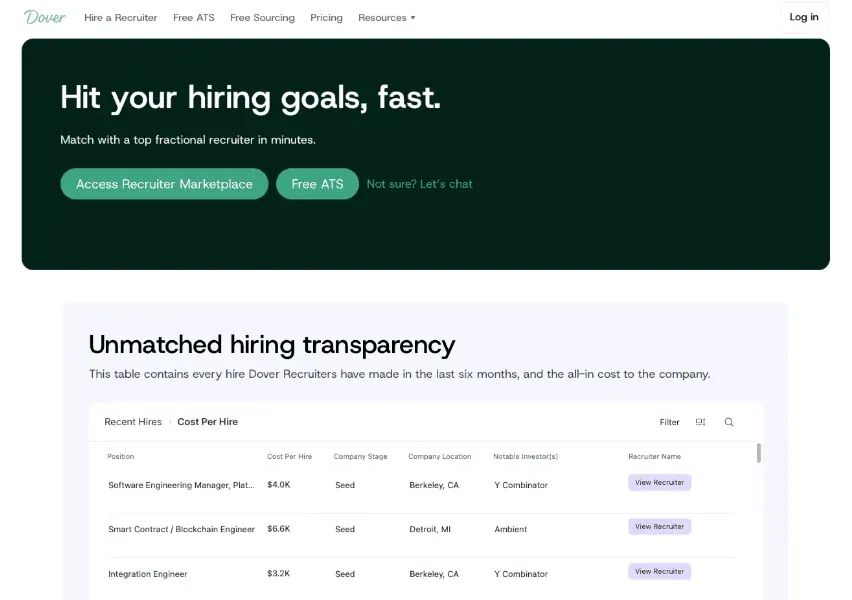
Dover’s recruiting model is built for early-stage teams that need consistent hiring support without the cost of a full-time recruiter on payroll. The free ATS handles pipeline management, candidate tracking, and interview coordination in one place, so founders aren’t stitching together spreadsheets and email threads to keep searches moving.
When a search needs more hands-on work, on-demand fractional recruiters can step in to cover sourcing, outreach, screening, and offer management at $2,000 to $7,000 per hire. That range sits well below what most contingency agencies charge, which typically run 15 to 25 percent of first-year salary.
The two pieces work together without requiring a retainer or long-term commitment. A founder can run straightforward hires through the ATS alone, then bring in recruiter support for roles that require active outreach or a more structured process.
Frequently Asked Questions
Full-cycle recruiting vs. specialized recruiting: what’s the difference?
Full-cycle recruiting assigns one person to own every stage of a hire, while specialized recruiting divides the work across separate sourcing, screening, and closing teams. The single-owner model keeps one recruiter accountable from first outreach through signed offer, which reduces handoff friction and maintains candidate experience quality across the entire process.
How many open roles can one fractional recruiter handle at once?
A full-cycle recruiter working at full capacity typically manages two to four open roles simultaneously, depending on seniority and sourcing requirements. Senior or technical searches require more outreach and longer interview processes, which compresses that range. A part-time engagement of 10 to 15 hours per week usually supports one focused search, while 20 to 30 hours can cover two to three active roles.
Can I use a fractional recruiter without hiring a full-time recruiting team?
Yes. Fractional recruiters work as embedded team members on an hourly or retainer basis, performing the same full-cycle responsibilities as an in-house hire without requiring a full-time salary, benefits, or long-term commitment. This model fits startups hiring three or more roles within six months but not enough volume to support dedicated recruiting headcount.
Final Thoughts on Running Full-Cycle Recruiting
For a full-cycle recruiting startup, keeping one person accountable from intake through close changes what sourcing, screening, and offer conversations look like in practice. Your outreach gets sharper because the person writing it is the same person who has to get the offer signed. Interview coordination stays tight because the recruiter scheduling rounds actually understands what the role requires. Dover’s model reflects this structure: a free ATS that handles pipeline tracking paired with on-demand fractional recruiters who own the full cycle when searches need more hands-on work.