
You need room for your next opening, your candidate records, and the teammates helping you hire. A $0 starting price doesn’t tell you whether all three are included, or how long access lasts. Comparing free recruiting software in 2026 starts with separating permanent plans from trials, then checking which limits match your startup’s hiring plans.
TLDR:
- Free recruiting software includes permanent plans and trials that require payment to keep hiring.
- Check job, candidate, and user caps against your hiring needs before choosing a free plan.
- Read-only access preserves candidate records but does not support new hiring activity.
- Some free ATS plans include unlimited jobs, users, and candidates, and recruiter support costs extra.
- Confirm export terms and post-trial access before moving candidate records into any new tool.
What Is Free Recruiting Software?
Tracking applicants across spreadsheets and inboxes can mean searching email threads to find who needs an interview. Free recruiting software, like many options for ATS for small business, organizes hiring activity without a subscription fee, but “free” can mean different things:
- Permanent free plans support ongoing hiring at no software cost, within the plan’s limits.
- Temporary trials provide access for a set period before payment is required.
- Read-only accounts retain access to existing records but restrict new hiring activity.
This list includes paid alternatives with free trials alongside ongoing free plans.
How We Ranked Free Recruiting Software
Free recruiting software can limit open jobs, candidate records, or teammate access. We publish this guide and have a stake in the comparison, since our own free ATS is included. Our rankings use published product and pricing information, without hands-on testing.

We compare each tool against the same criteria we use for top ATS systems:
- Ongoing free access, weighted most heavily, and expiration terms.
- Hiring capacity, including job and candidate limits.
- Teammate access for hiring collaboration.
- Candidate management included at no cost.
- Tasks or features that require payment.
We separate free functionality from paid features so the ranking reflects what teams can use without upgrading.
Feature Comparison Table of Free Recruiting Software
| Tool | Starting Price | Free Tier | Active Jobs | Candidate Management | Careers Page | Best For |
|---|---|---|---|---|---|---|
| Our Free ATS | $0 | Permanent | Unlimited | Unlimited | Basic | Startups |
| Manatal | $15/user/month annually | Trial | 15 | Paid plan limits | Included in paid plan | Subscription budgets |
| Recooty | $79/month annually | Trial | 5 | Paid | Included in paid plan | Occasional hiring |
| Zoho Recruit | $0 (paid from $25/recruiter/month, billed annually) | Permanent | 1/license | Free | Official plan details | Limited openings |
| Workable | Varies by company size | Trial; read-only afterward | Paid hiring capacity | Post-trial access limits | Unconfirmed | Paid budgets |
| Breezy HR | $157/month, billed annually | Trial (14 days); no free plan | Unlimited (Startup plan) | Paid plan | Included in paid plan | Regular hiring on a paid plan |
Best Overall Free Recruiting Software: Our Free ATS
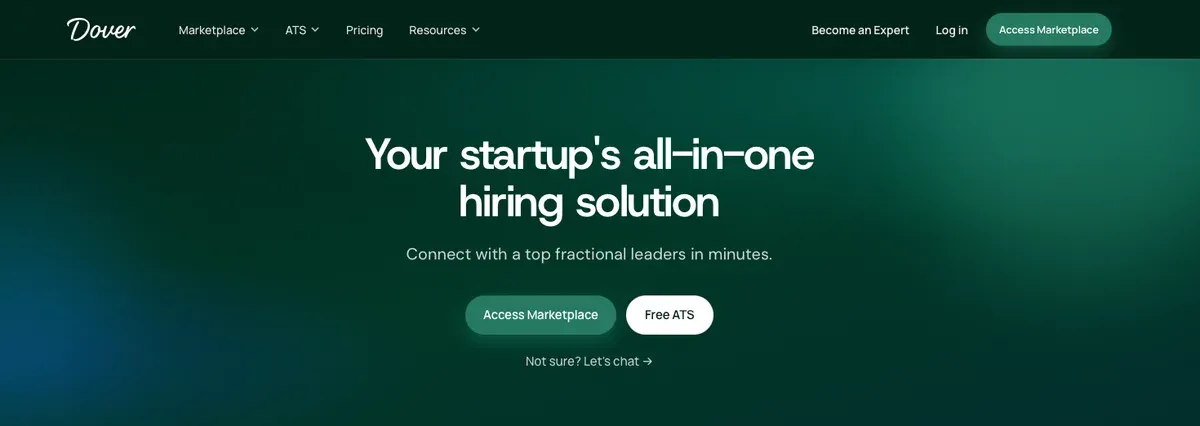
We are biased as the publisher of this guide, but we built our ATS for startups that manage hiring themselves. Our free recruiting software, Premium plan, and marketplace recruiting support can each be used independently.
What They Offer
Our Free plan includes unlimited jobs, users, and candidates, plus a CRM, email outreach campaigns, and a basic careers page where applicants can apply.
The free plan fits teams needing shared hiring workflows without recurring ATS fees. Premium adds paid features; separately paid fractional recruiters are available through our marketplace for hands-on recruiting support.
Manatal
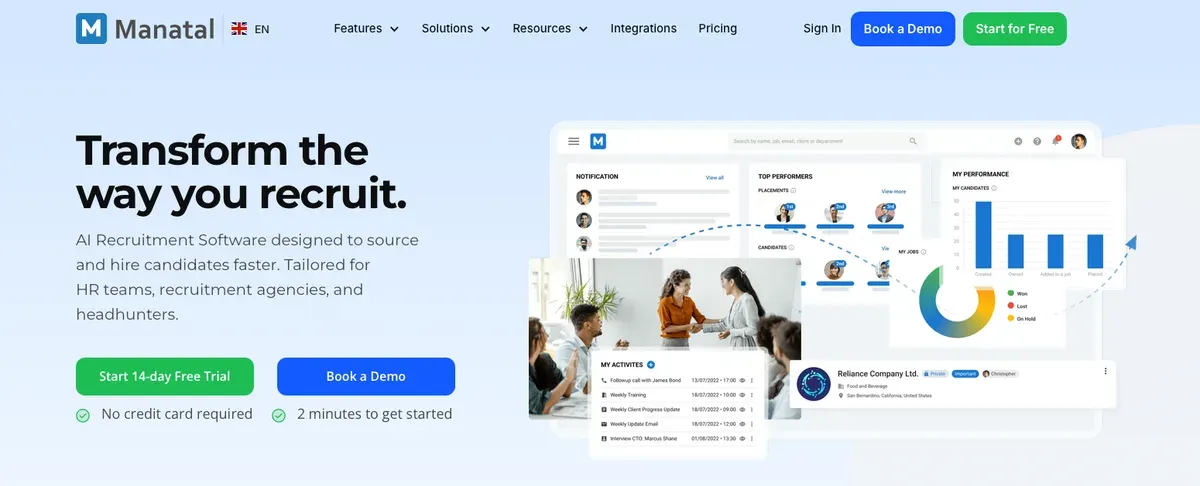
Manatal offers temporary access, not ongoing free recruiting software. It combines an ATS and recruiting CRM through a temporary no-card trial.
What They Offer
- Applicant tracking and candidate sourcing to manage hiring pipelines.
- Recruiting CRM and hiring-manager collaboration, listed among its Professional plan features .
It suits teams assessing a paid system for candidate management and recruitment relationships. Ongoing use requires payment, and reported Professional plan capacity limits include caps on jobs and candidates.
Recooty
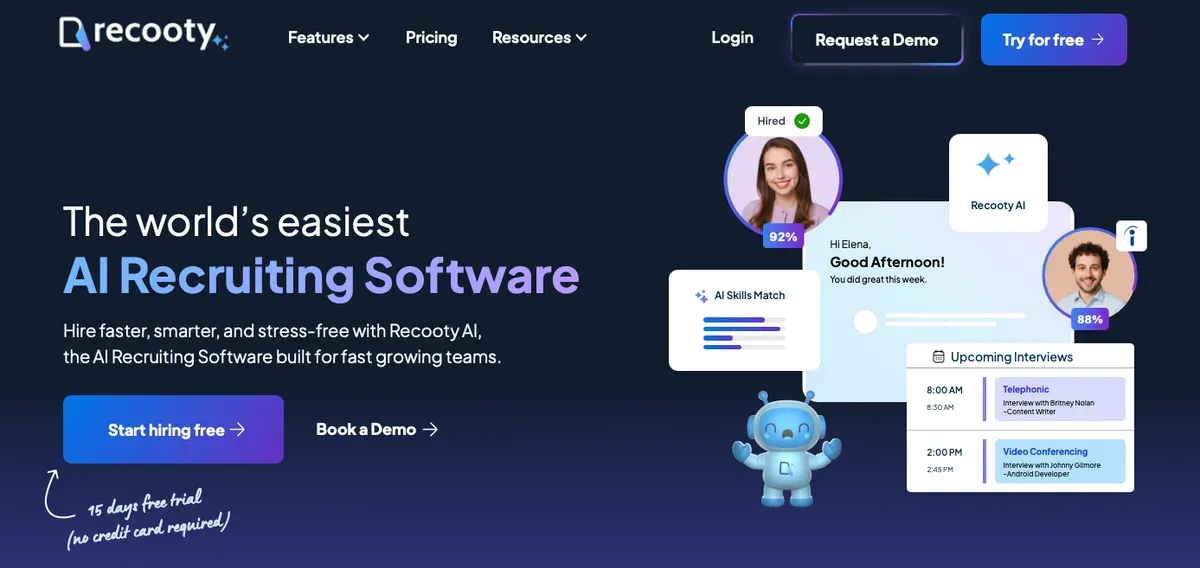
Recooty offers applicant tracking through a temporary trial, so teams seeking ongoing free recruiting software would need another option after it ends.
What They Offer
- Job distribution and a careers page builder for posting openings.
- AI candidate matching and resume scoring to support human review.
According to iSmartRecruit’s Recooty features and limits, the paid Starter plan has an employee cap, a monthly AI credit allowance, and a limit on active jobs.
Zoho Recruit
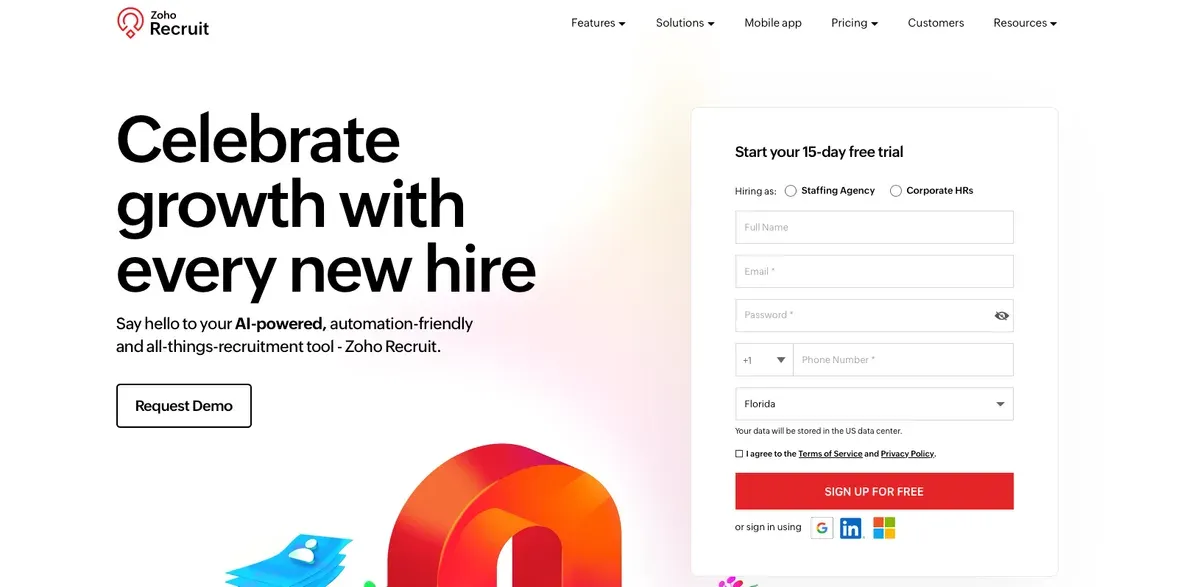
Startups with limited concurrent hiring can use Zoho Recruit’s Corporate HR edition as permanent free recruiting software.
What They Offer
The Corporate HR free features include:
- Candidate and email management to keep applicant records and correspondence together.
- Interview scheduling to coordinate candidate interviews.
According to Zoho’s pricing page and Compono’s Zoho Recruit pricing guide, the free plan allows one active job per recruiter license; candidate sourcing and branded careers sites require an upgrade, which is worth weighing against the best AI-powered ATS options. Hiring volume is the main limit: teams managing several openings need to check whether the job allowance fits their workload.
Workable
Workable offers temporary free access to paid recruiting software, not an ongoing free recruiting software plan.
What They Offer
Its trial recruiting tools include:
- Job posting and candidate management to organize applicants.
- Interview scheduling and team collaboration to coordinate hiring.
According to People Managing People, nonpaying accounts become read-only after the trial. Existing candidate records remain viewable, but new job posting and interaction with new candidates stop. The trial suits testing a hiring workflow before subscribing; continued active hiring requires a paid plan or support from a fractional recruitment agency.
Breezy HR
Teams seeking free recruiting software should note that Breezy’s own published pricing lists no free plan, only a 14-day free trial with no credit card required. Yardstick’s November pricing review, dated November 4, 2026, reports the same. StaffGrid still lists a free Bootstrap plan, but that listing conflicts with Breezy’s current pricing.
What They Offer
- Unlimited users and positions on Breezy’s paid Startup plan, which may suit teams with recurring hiring needs.
- Background screening integrations and one-way video screening, according to Yardstick’s review.
Because Breezy’s paid plans start at $157/month billed annually, it does not fit teams that need ongoing hiring without software fees. Separately, teams budgeting for hands-on hiring support may consider recruiting agencies for startups.
Why Dover Is the Best Free Recruiting Software for Startups
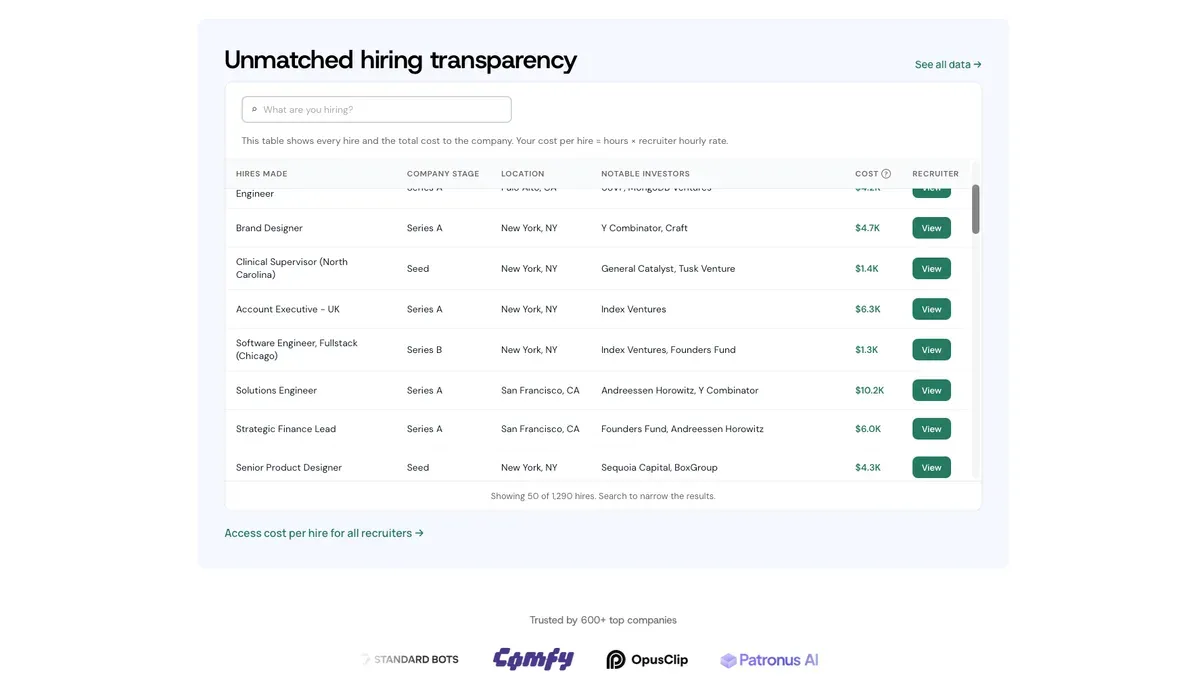
For startups needing ongoing free access and shared candidate workflows, we rank Dover first among free recruiting software options. We have a stake in that ranking, and the fit depends on your hiring needs. Our Free plan has no caps on jobs, users, or candidates, and it includes a CRM and email outreach campaigns, so teams can organize applicants and contact prospects without upgrading. Premium costs $199/month and adds AI resume review to support human judgment, offer e-signing, and data export.
An ATS tracks applicants, schedules interviews, and stores feedback, but it does not source candidates, screen them, or close offers. Teams hiring a few roles a year, or roles where qualified applicants arrive on their own, can often run the whole process on a free plan. A senior or specialized search can stall when nobody on the team has time to source and follow up, and that is where a fractional recruiter adds capacity on top of the ATS.
Our marketplace is built around that setup. Recruiters can work in the same ATS as the hiring team, which gives both sides real-time visibility into the pipeline and reduces duplicate outreach and handoff gaps. Intro calls are free, the deposit is fully refundable, time is tracked in the app, and there are no long-term contracts, so a team can add recruiting capacity for one search and pause it afterward.
Recruiters in our marketplace typically bill for hours worked, so cost follows the work done instead of the candidate’s salary. That differs from contingency marketplaces like Paraform, which typically charge a percentage of first-year salary per placement. Fractional recruiters are a separate paid engagement outside the Free plan.
FAQs
Do you need a recruiter if you already use an ATS?
An ATS organizes hiring but does not source, screen, or close candidates, so the answer depends on who on your team has time for that work. Teams with few openings or strong inbound applicants can often manage with software alone. A fractional recruiter becomes worth considering when roles are senior or specialized, sourcing stalls, or no one has recruiting bandwidth. Recruiters can work inside the same ATS as the hiring team, which keeps pipeline visibility shared and can reduce duplicate outreach. Dover’s free ATS paired with marketplace recruiters follows that model, with recruiters paid separately for hours worked.
What is the difference between an ATS and full recruiting support?
An ATS is the system where hiring is recorded: it stores candidate records, tracks pipeline stages, schedules interviews, and collects feedback. Full recruiting support is the work done inside that system, such as sourcing passive candidates, running screens, following up, and negotiating offers. Startups often begin with software alone and add recruiting support when roles become senior or specialized, or when hiring volume outgrows the team’s available time. A fractional recruiter typically works inside the company’s ATS, so candidate records and pipeline history stay with the company after the engagement ends.
How should you test recruiting software before committing to a paid plan?
A trial should test your daily hiring tasks, not serve as a deadline for completing a hire. Run the same sample workflow in each: create a role, add test candidates, collect feedback, and check scheduling. Confirm subscription costs, export access, and what happens to your records when the trial ends.
What should you check before moving candidate records into a new ATS?
Moving candidate names alone may leave interview notes, attachments, and hiring stages behind. Check import support and export terms, then test a small batch for duplicates and missing fields before transferring your full pipeline. Keep a secure backup.
How can you assess recruiting software if your team is new to it?
Beginner fit depends on whether your team can complete routine tasks without frequent help, not on the size of the feature list. Ask a hiring manager to find an applicant, record feedback, and identify the next step in each system. More experienced teams can also test permissions, reporting, and integrations against their existing hiring process.
Final Thoughts on Free Software for Hiring
Permanent free recruiting software makes sense when hiring needs to continue without a software subscription, provided its job, candidate, and user limits accommodate your expected hiring volume and teammates. A trial-based tool is worth considering when you have budget for ongoing use and want to test paid features against your daily workflow. Post-trial access and export terms matter in that decision: keeping records viewable is not the same as being able to continue hiring. Dover’s model is one example of how these layers fit together: a free ATS where on-demand fractional recruiters work in the same system as the hiring team, so the software tracks the pipeline and a recruiter adds sourcing capacity only for the searches that need it.