

You’re comparing talent acquisition tools, but a free trial doesn’t tell you what you can keep using without paying. For a startup with an uneven hiring schedule, ongoing access matters as much as scheduling tools or reports. We compare seven options by free-plan limits, paid features, and recruiting support so you can separate the cost of organizing candidates from the cost of getting help with a search.
TLDR:
-
Your ATS options include permanent free plans, paid subscriptions, and custom quotes.
-
Free trials can end in view-only access, unlike permanent free applicant tracking.
-
Pricing and plan availability need confirmation with each vendor.
-
Software organizes hiring, but judging fit and closing offers still need recruiting expertise.
-
Some tools pair free unlimited tracking with separately purchased fractional recruiting support.
What Is Talent Acquisition Software?
Applications sit in your inbox, outreach lives in a spreadsheet, and interview feedback arrives in Slack. You have to piece together a candidate’s history before deciding what happens next.
Talent acquisition software brings sourcing, candidate management, applicant assessment, and interview coordination into a shared workflow. An applicant tracking system (ATS) is one component: it tracks candidates through your hiring process.

Software can organize the search. Recruiting expertise still matters for judging fit, building candidate relationships, and closing an offer.
An ATS handles tracking, scheduling, and feedback. It does not source passive candidates, screen for fit, or close offers. Teams hiring a few roles a year with a founder who has time to run each search can often manage on software alone. When hiring volume rises, a role is senior or specialized, or no one has recruiting bandwidth, a fractional recruiter can work inside the same ATS and take on sourcing, screening, and closing while the hiring team keeps visibility into the pipeline.
How We Ranked Talent Acquisition Software for Startups
Founder-led teams without dedicated recruiting staff need usable software at a manageable cost. These rankings reflect Dover’s editorial perspective and public documentation, without hands-on testing. Criteria include:
-
Entry cost and permanent free-plan usefulness, separate from trials.
-
Candidate management, sourcing, scheduling, and reporting capabilities.
-
Recruiting support, distinguishing included features from paid upgrades and optional services.
Advanced reporting and governance matter too. We avoid unsupported claims about setup, satisfaction, or outcomes.
Pricing and plan details come from vendor pages and public sources and can change, so confirm current terms with each vendor before you commit.
Feature Comparison Table of Talent Acquisition Software for Startups
| Tool | Starting Price | Free Tier | Management/Sourcing | Scheduling/Reporting | Best For | Constraint |
|---|---|---|---|---|---|---|
| Dover | $0; Premium $199/month; Enterprise available | Yes | CRM; outreach | Links; reports | Founders | Recruiting separate |
| SmartRecruiters | Unverified | Unverified | Unverified | Unverified | Enterprise | Quoted tiers |
| Breezy HR | $157/month billed annually (as of Oct 2026; confirm current pricing) | Unverified | Unlimited positions/users; advertising | Unverified | Small teams | Plan-dependent |
| Greenhouse | Custom quote | No | Tracking | Reporting | Formalizing hiring | Quote required |
| Lever | Headcount-based quote | No | ATS/CRM | Analytics | Relationship-led recruiting | Bundle-dependent |
| Ashby | About $300/month for 1-10 employees | No | ATS | Unverified | Paid-ATS buyers | ≤100 employees |
| Workable | From $189/month | Trial | Tracking | Trial scheduling | Testing | Post-trial view-only |
Best Overall Talent Acquisition Software for Startups: Dover
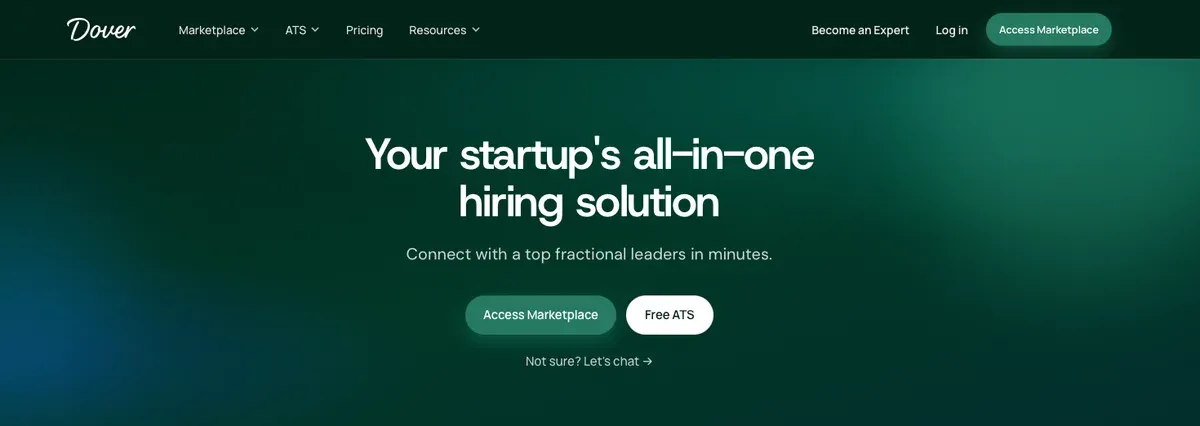
For founder-led teams with changing hiring needs, we rank Dover first, acknowledging our bias as its creators. Our free ATS includes unlimited jobs, users, and candidates, plus a built-in CRM for outreach, without requiring a recruiting services purchase.
What We Offer
We offer separate Premium and Enterprise plans that scale as your team grows, and an optional fractional recruiting services marketplace. You can add AI-powered recruiting features independently of human recruiting capacity, or engage a recruiter when a search needs hands-on attention. Paid software and recruiting support remain separate decisions based on your team’s needs, with flexible pricing options for each.
When Software Isn’t Enough
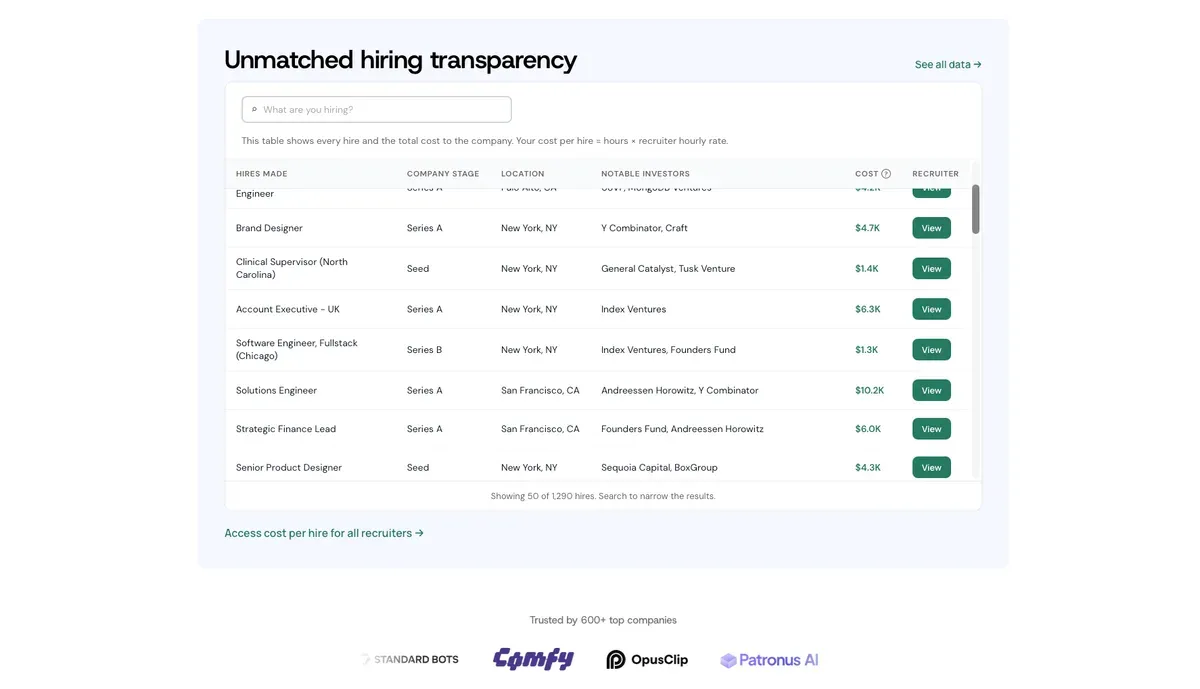
The ATS acts as the foundation, and a fractional recruiter adds capacity on top of it. The software tracks candidates, schedules interviews, and stores feedback; the recruiter takes on the work software cannot do, such as sourcing passive candidates, running screens, and managing offers. Fractional recruiters tend to work best when they share the ATS with the hiring team, because both sides see the same pipeline in real time. That can reduce duplicate outreach and the handoff gaps that appear when a recruiter keeps candidates in a separate spreadsheet. Dover’s marketplace lists vetted fractional recruiters who can work in Dover’s ATS or in the tools a team already uses. Hourly billing ties cost to the work done on your search, and each recruiter sets their own rate. Every marketplace hire’s all-in cost appears in a public cost-per-hire table, a fully refundable deposit gives instant access, and there are no long-term contracts.
SmartRecruiters
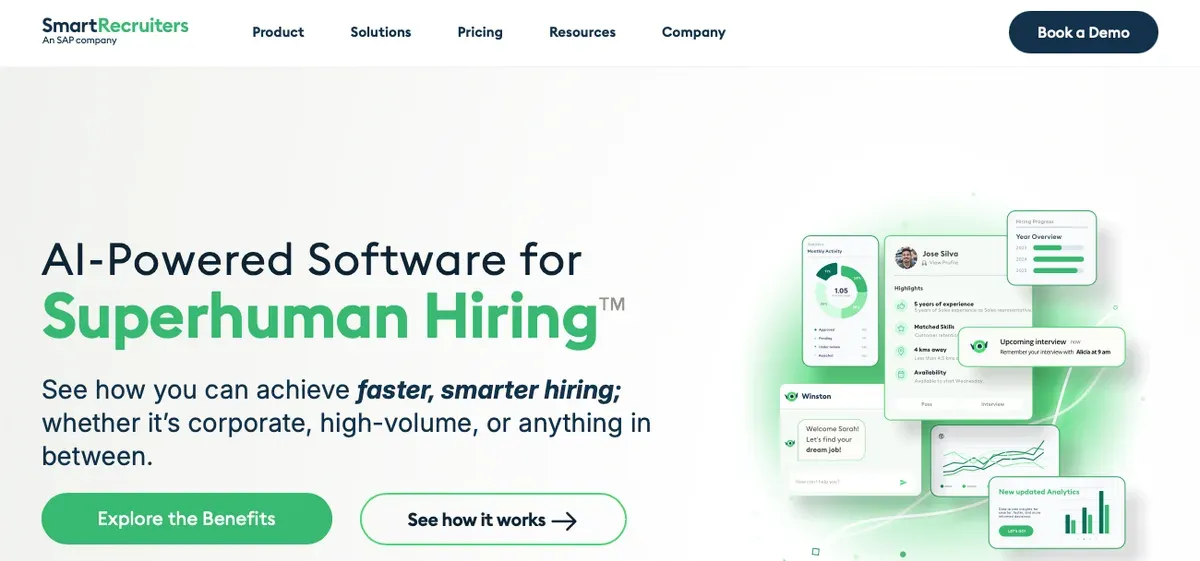
SmartRecruiters is enterprise recruiting software with tiered subscriptions, worth considering for startups weighing a larger recruiting investment, alongside other options like those covered in a Paraform vs Dover comparison.
What They Offer
-
An entry subscription tier for teams assessing the software.
-
Professional, High Volume, and Complete tiers with custom quotes, according to the SmartRecruiters pricing breakdown.
Custom quotes can make upfront budget comparisons harder because those tiers require sales input, a consideration also worth weighing against options covered in Paraform reviews and pricing. For startups focused on a low-cost starting point, a free applicant tracking system may be a more practical option.
SmartRecruiters may suit startups that expect to grow into structured, multi-stakeholder hiring with layered approvals. Because buying goes through a sales-led process, teams can face more lead time before access than they would with a self-serve tool.
Breezy HR
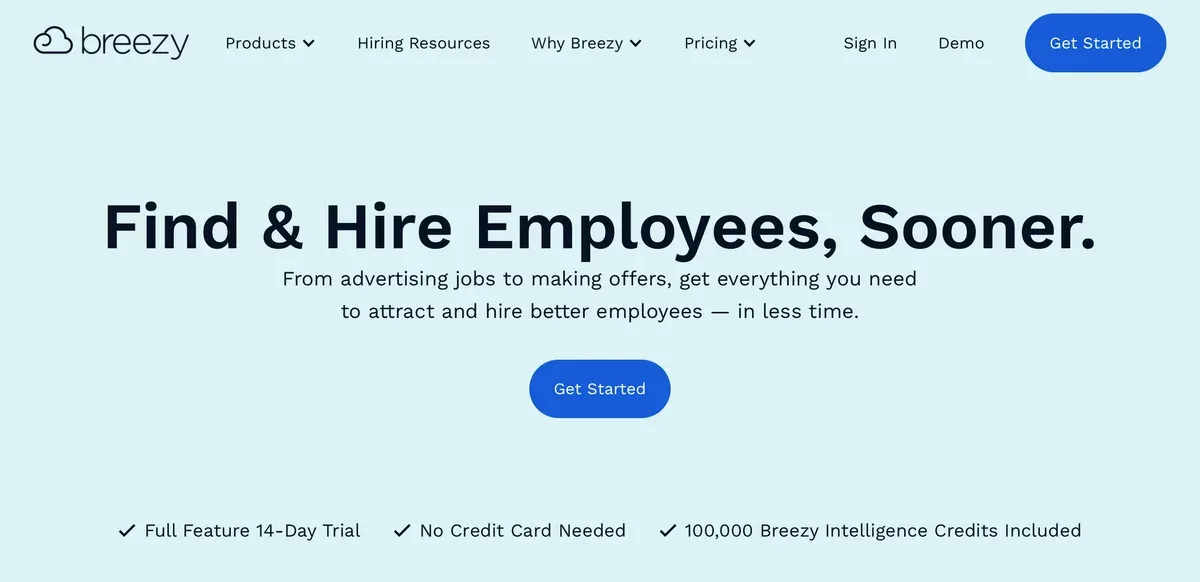
Small teams hiring regularly may need career-site tools alongside candidate tracking. Breezy HR combines both.
What They Offer
The Startup package includes:
-
Unlimited users and positions for teams managing multiple openings.
-
Branded career sites and bulk candidate actions, such as messaging several applicants at once.
These features come with a paid Startup subscription. For teams mainly keeping applicants organized, free unlimited tracking may be sufficient; the recurring expense is worth weighing against the need for career-site customization and bulk actions.
A team posting roles on a regular cadence may value branded career pages and bulk messaging more than a team with only occasional openings. It can be worth checking which plan actually includes the features your hiring pace requires.
Greenhouse
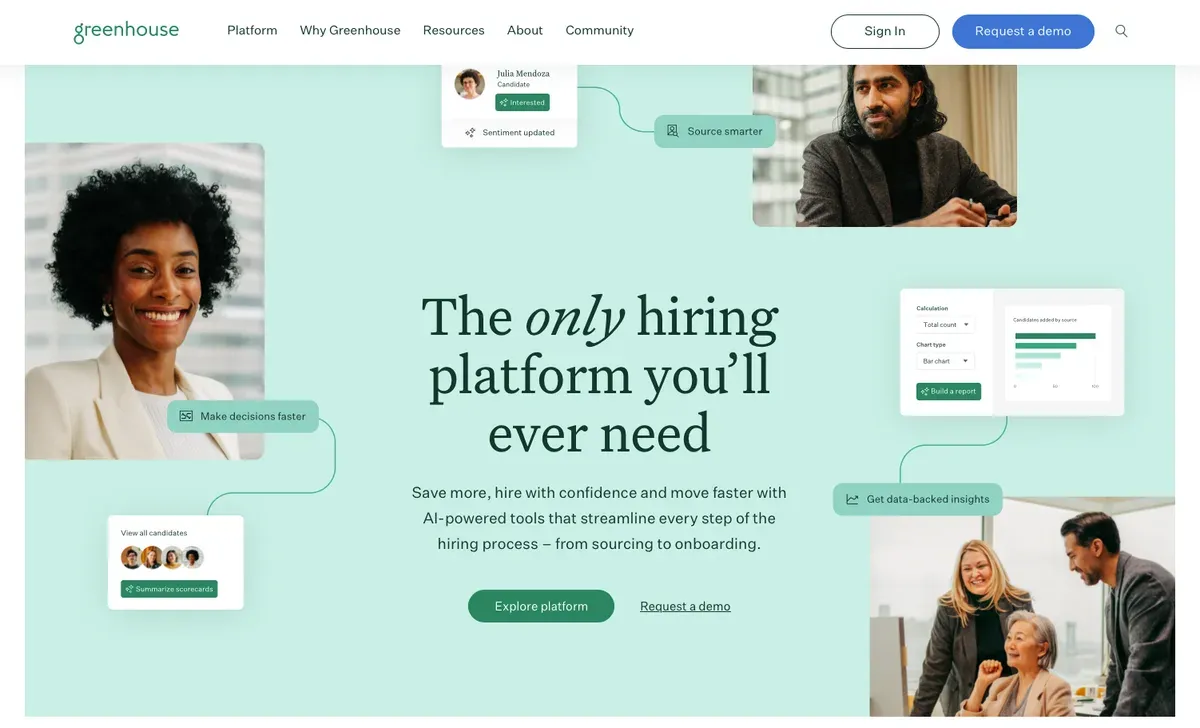
Greenhouse manages candidate pipelines and recruiting workflows for teams prepared to assess a company-specific software package.
What They Offer
The Greenhouse pricing guide lists:
-
Talent sourcing and candidate relationship management to support pipeline building.
-
Recruiting reports and automated task management to support hiring workflows.
Pricing requires a quote. Greenhouse may suit teams with defined recruiting processes, while budget-conscious founders may prefer published entry pricing from a broader applicant tracking systems comparison before committing time to sales discussions.
Its structured approach to hiring workflows can suit teams ready to define interview stages and scorecards in detail. Teams still shaping their process may find that level of structure more than they need this early on.
Lever
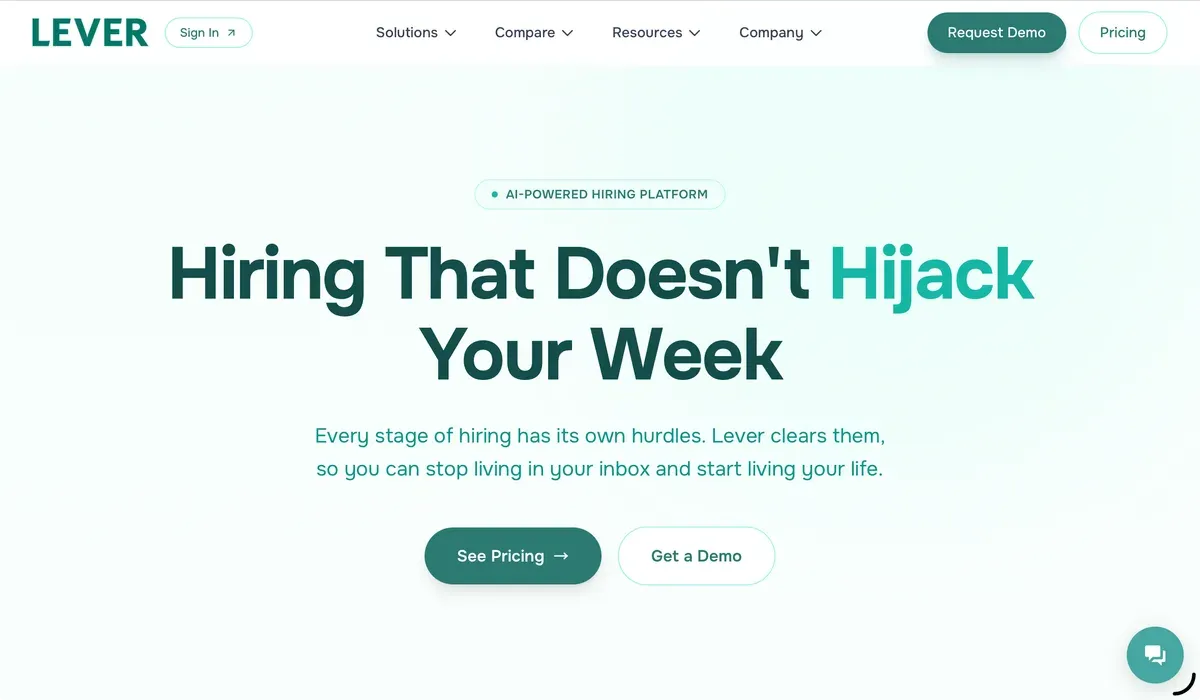
Recruiting teams managing active applicants alongside longer-term candidate relationships may find Lever worth considering.
What They Offer
-
Applicant tracking and candidate relationship management in one tool.
-
Talent analytics and visual reporting to review recruiting activity.
The Lever pricing guide describes customized pricing and separately packaged workflow enhancements. The fit depends on whether ongoing outreach warrants that scope; lean startups may prefer free tracking with recruiting support purchased separately as workload grows.
Combining tracking with relationship management can help teams who keep warm candidates in mind for future roles. Teams with only a few openings a year may not use those relationship features often enough to justify a paid tool.
Ashby
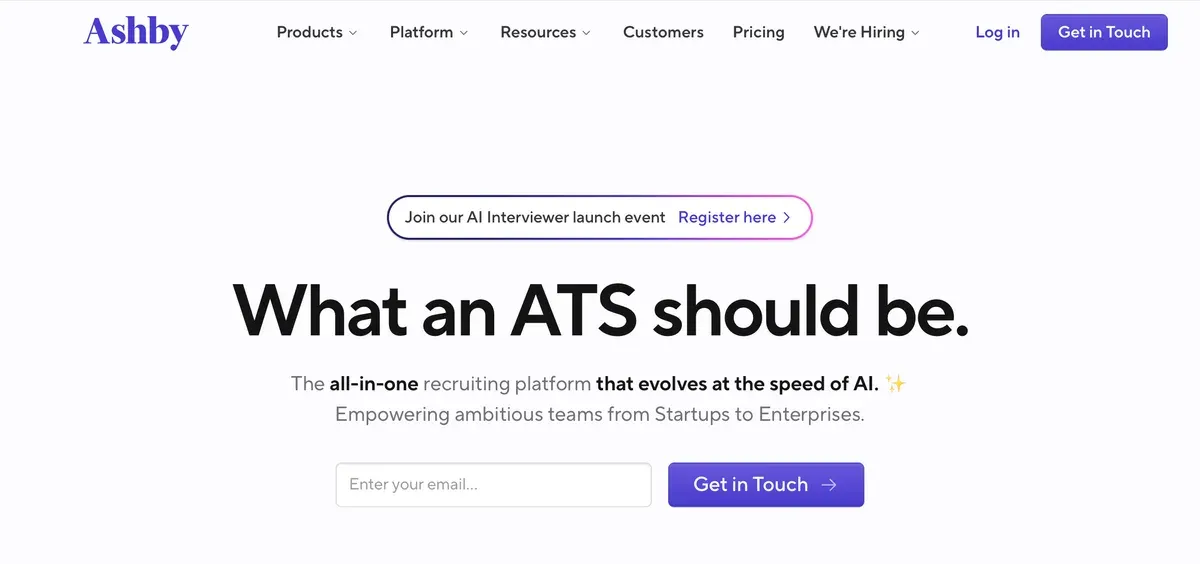
Startups wanting candidate tracking and scheduling in one tool may find Ashby’s bundled recruiting workflow useful, though it’s worth reviewing an Ashby vs Dover comparison first.
What They Offer
-
Applicant tracking to manage candidates through the hiring process.
-
Interview scheduling within the same recruiting tool.
Compono’s October 2026 Ashby pricing analysis describes paid entry pricing that scales with headcount. Confirm current pricing with Ashby.
For teams focused on minimizing initial software costs, a free ATS may be a better starting point.
Ashby positions itself as an all-in-one recruiting tool with analytics and scheduling built in, which can suit scaling teams with more complex hiring needs. Some users may find that setup involves more configuration than a simpler tracker requires.
Workable
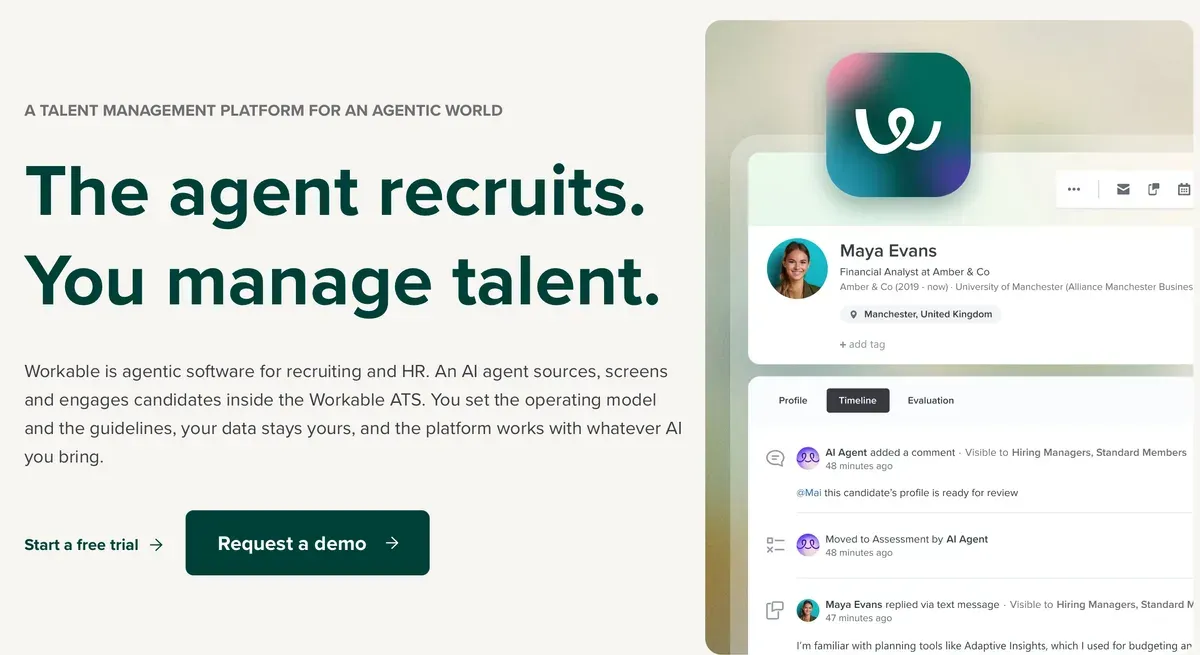
Teams combining job posting, candidate management, and hiring-team collaboration may find Workable a fit, though it’s worth comparing against AI-powered applicant tracking systems as well.
What They Offer
-
Job posting and candidate tracking keep recruiting activity in one workflow.
-
Interview scheduling and collaboration support hiring-team coordination.
The Workable pricing guide distinguishes trial access from ongoing hiring: nonpaying accounts can view existing candidate data afterward but cannot post jobs or interact with new candidates.
For startups needing continued applicant management without a subscription, a permanent free ATS may be a better fit.
A Workable trial can be a reasonable way to test job posting and hiring-team collaboration before committing. Teams should decide ahead of the trial’s end whether they will pay to keep posting jobs and managing new candidates.
Why Dover Is the Best Talent Acquisition Software for Startups
For startups hiring without dedicated recruiting staff, cost control drives our first-place ranking. We’re biased as Dover’s team, but our case rests on free unlimited applicant tracking, optional Premium features, and separately available fractional recruiting support that works inside the same pipeline. For a wider set of options by team size, our list of the best ATS for small business covers more tools.
These are separate purchasing decisions: you can upgrade software while keeping recruiting in-house, or pay for recruiter capacity while staying on the free ATS. Neither investment requires the other.
FAQs
What should you include in your hiring software budget?
Compare the total cost for your expected hiring workload, including billing commitments, required feature tiers, paid extras, and any setup charges. Ask for current written pricing and what access remains after a trial or cancellation, since an entry price alone may not cover your ongoing hiring needs.
How can you test hiring software before moving your candidate records?
A trial or guided demo can test daily tasks, but it does not prove that a full migration will preserve your records. Use a small sample of candidate data to check import options, duplicate handling, notes, interview stages, and permissions; a suitable choice should also offer an acceptable way to export your data later.
Do you need a recruiter if you already use an ATS?
An ATS organizes candidates, schedules interviews, and records feedback; full recruiting support adds the human work of sourcing passive candidates, judging fit, and negotiating offers. Many founder-led teams with a few openings a year manage on software alone. Adding a recruiter often makes sense when a search stalls, a role is senior or specialized, or founders spend several hours each week on recruiting tasks. A fractional recruiter can work inside the same ATS, so the hiring team keeps visibility into the pipeline and can scale support up or down as hiring volume changes.
Final Thoughts on Finding the Right Startup ATS
A free plan and a trial offer different starting points for your budget. The right talent acquisition tool gives you room to keep hiring beyond the first opening. Software can handle the tracking, and recruiting capacity can be layered in when a search outgrows it. Dover’s model is one example: a free ATS paired with on-demand fractional recruiters working in the same shared system.