

A competitive hiring market startup often loses candidates between the first call and the next round, while the team schedules the next interview. For a startup they don’t know, those delays leave more time for doubts and competing offers. Getting more people into the process may leave the same problem untouched. Clear decision owners, fewer repeat interviews, and early conversations about pay and business risk can help you keep suitable candidates engaged.
TLDR:
-
Separate your startup’s hiring barriers: low visibility, limited trust, and uncompetitive offers.
-
Publish your pay range, role expectations, product evidence, and interview stages upfront.
-
Use job-based assessments and remove interview rounds that repeat evidence.
-
Explain equity risks before the offer; flexibility cannot close every salary gap.
-
An ATS organizes hiring; some tools pair a free ATS with fractional recruiters when sourcing and closing capacity runs short.
The Hiring Barriers an Unknown Startup Needs to Overcome
An unanswered outreach message and a declined offer need different fixes. For an unknown startup, separate three hiring barriers:
-
Visibility: Are suitable candidates finding your company?
-
Trust: Do candidates have enough evidence to take the opportunity seriously?
-
Choice: Can your offer compete with their alternatives?
More applicants may not fix an uncompetitive offer or stalled interviews. Competition varies by role, seniority, location, and compensation, so one difficult senior engineering search says little about your other openings.
Define the Role and Candidate Profile Before Starting the Search
Define the business problem the hire will own. If customer onboarding takes too long, specify which steps this person controls and what measurable improvement counts as success. Set a compensation budget that fits the scope before sourcing, and settle on early stage startup titles that match the role’s actual authority.
-
Require skills you can test through relevant work.
-
Question degrees, prestigious company names, and experience requirements that add little evidence.
-
Seek candidates whose goals fit the role, such as deeper ownership or direct access to decision-makers. Comfort with uncertainty cannot replace competence.
Build an Employer Value Proposition Around Candidate Priorities
Tie benefits to concrete practices: project authority, weekly manager check-ins, paid learning time, and flexible hours with clear availability expectations. These cannot close every salary gap.
| Source | Finding | Scope |
|---|---|---|
| Gallup, reasons for changing jobs | Gallup reported that 51% of employees were watching for or actively seeking new jobs, the highest rate since 2015. | U.S. employees, based on 2024 data; broader workplace trends, not startup-specific hiring interest |
| Pew, remote work retention preferences | 46% would be unlikely to stay if their employer no longer allowed work from home. | U.S. employees (not self-employed) with jobs that can be done from home who work remotely at least sometimes; surveyed October 2024, published January 2025 |
These historical findings are not November 2026 startup hiring benchmarks or predicted acceptance rates.
Make an Unfamiliar Employer Easy to Assess
Candidates need enough information to assess an unfamiliar company before booking a call. Keep your careers page and job postings consistent, with:
-
A plain-language product description and demo.
-
Role expectations and the hire’s reporting line.
-
Work location and schedule requirements.
-
The compensation range.
-
Interview stages and expected time commitment.
Link to public work, such as release notes or engineering write-ups. Explain who approves decisions and how disagreements get resolved, giving candidates evidence beyond team biographies without an expensive branding campaign.

Use Referrals and Targeted Outreach to Start Relevant Conversations
Choose channels based on the role:
-
Employee and professional networks offer warm introductions, but referrals alone can narrow the pool.
-
Specialist communities suit niche skills, while recruiting agencies for startups can source candidates for a hard-to-fill ML engineer role when your team lacks sourcing time. In communities, contribute before recruiting and follow each community’s posting rules.
-
Relevant job boards reach active seekers.
-
Direct outreach reaches candidates who might miss your posting.
Personalize with verified details:
Your [experience] fits [problem you would own]. [Product evidence] shows our progress. Open to learning more?
Involve founders or hiring managers in high-fit conversations and substantive questions; delegate routine follow-ups.
Expand the Talent Pool Without Lowering the Hiring Standard
Adjacent-industry candidates may bring transferable skills, such as handling complex customer accounts, an approach worth weighing in how to hire as a seed startup with limited headcount. Consider alternative education paths and broader locations while using the same work-based assessment for everyone. Define “startup fit” through observable job requirements.
Before expanding geographically, check:
-
Required time-zone overlap and managers’ capacity to support remote staff.
-
Available employment arrangements and local compliance requirements, with qualified review.
International hiring can add administrative costs. Compare the full arrangement before assuming a location offers savings.
Run a Fast, Structured Interview Process
Assign each interview stage a purpose and decision owner. Use consistent core questions and a short, job-relevant assessment; let candidates discuss real work with future teammates.

-
Share target dates, assessment effort, and accommodation options upfront.
-
Reserve interviewer availability and offer self-scheduling to limit calendar delays.
-
Remove rounds that repeat evidence.
-
Collect independent feedback against agreed criteria, ideally using an interview scorecard, before the debrief.
Communicate plan changes promptly. At the decision meeting, resolve evidence gaps with focused follow-up instead of another general interview.
Make Compensation and Equity Easy to Understand
Before the final offer, share a written breakdown of cash, benefits, work arrangements, and equity terms:
-
Vesting determines when the grant is earned.
-
Dilution can reduce ownership percentage.
-
Exercising options requires payment and may trigger taxes; include the exercise price and applicable deadlines.
-
Liquidity is uncertain: candidates may be unable to sell shares for years, and equity may never produce cash.
If cash falls below a candidate’s needs, consider narrowing the role, revisiting seniority, or increasing the budget.
Respond to Candidate Concerns Before the Offer Decision
Ask candidates during interviews what remains uncertain about joining: management, workload, business risk, career development, or role boundaries. Offer a realistic job preview, including unfinished work and competing demands, plus a private conversation with the prospective manager or teammates.
At the offer stage, agree on a follow-up date that leaves room to decide. If a counteroffer changes their thinking, discuss the tradeoffs they care about. Avoid artificial deadlines and promises of promotions or funding you cannot support.
Deliver the Working Experience Promised During Hiring
Carry hiring commitments into onboarding: document initial priorities and decision authority, provide necessary tools, and schedule manager check-ins. If ownership or development helped someone accept, provide room to make decisions or protected learning time.
Ask new hires where daily work differs from the advertised role. Use their feedback to correct management practices and revise hiring materials when the role has genuinely changed.
Measure Where Candidates Drop Out and Allocate Recruiting Support
Review results by role and source:
-
Qualified response rates inform outreach changes.
-
Stage conversion flags sourcing or assessment issues.
-
Time in stage suggests scheduling or decision delays.
-
Offer acceptance and decline reasons inform revisions.
-
Recruiting spend guides channel budgets.
Treat small samples as clues; ask candidates before assuming causes.
A spreadsheet may suit one or two searches; an ATS can organize recurring workflows by recording stages, feedback, and source data. The ATS does not source candidates, write outreach, or close offers, so someone still needs time for that work. Teams hiring a few roles a year with available founder or manager hours often run searches on an ATS alone. When a role is senior or specialized, or hiring volume outgrows your team’s hours, fractional recruiting services can add sourcing and closing capacity inside the same ATS, so candidate history stays with your company after the engagement ends. Internal hires and external startup recruiters, such as those based in New York City, are other ways to add that capacity. Keep AI-assisted recommendations subject to human review.
Dover’s Role in Coordinating Startup Hiring
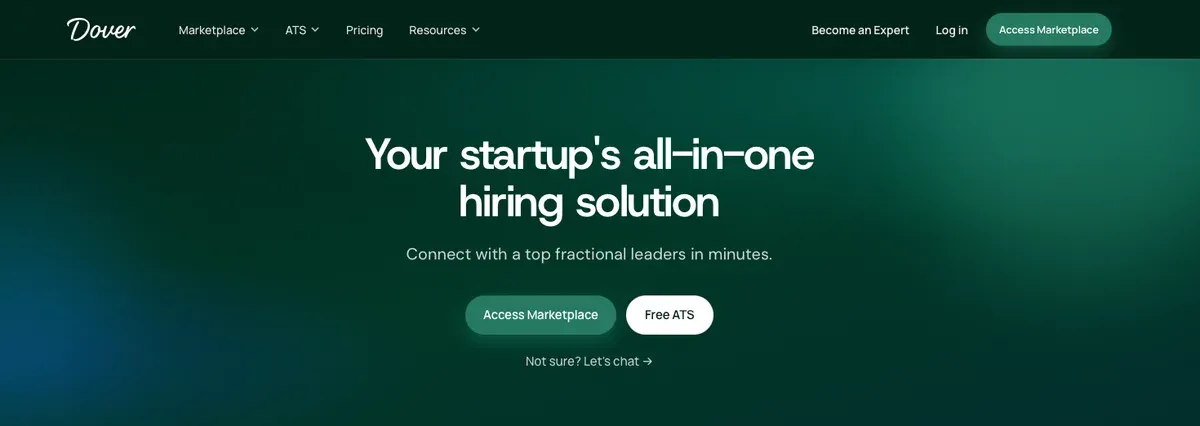
Dover pairs a free ATS with fractional recruiters who work in the same system as your hiring team. Both sides see sourcing activity, candidate stages, and interview feedback in real time, which can reduce handoff gaps and duplicate candidate outreach. Recruiters can also work in tools you already use, such as Ashby, Greenhouse, or Lever.
Each recruiter sets their own rate, and engagements can be hourly, retainer, or pay-per-hire. Dover reports an average cost per hire of $4,800 across all roles. There are no long-term contracts. Access starts with an $800 deposit that is applied to your recruiter’s work and fully refunded if you never work with one. Your team remains responsible for the role’s credibility, competitive terms, and delivering the working experience promised to candidates.
FAQs
If you have a limited budget, what should you ask a fractional recruiter to handle first?
Scope the work around one execution bottleneck, such as finding qualified candidates or coordinating interviews. Agree on deliverables, a weekly budget, and a review date before work begins; if candidates consistently reject the salary range, revisit compensation before paying for more sourcing.
How do you move an active candidate search from a spreadsheet into an ATS without losing context?
Clean up duplicate records, confirm each candidate’s current stage, and preserve notes about commitments and next steps before importing. Check imported records against your spreadsheet and assign follow-up owners before retiring the old tracker.
Do you need a recruiter if you already use an ATS?
An ATS records candidates, stages, feedback, and reporting, but someone still has to source, screen, schedule, and close. The ATS is the system of record; recruiting support is the people doing the work inside it. A fractional recruiter tends to fit when a search is senior or specialized, or when hiring volume exceeds your team’s available hours.
Final Thoughts on Choosing Which Hiring Gap to Close First
Any competitive hiring market startup without name recognition gets judged on the basics: a clearly scoped role, a visible pay range, a short interview process, and direct conversations about equity risk. Candidates choose between offers they can compare, so the gaps worth closing first are the ones they can see. Teams with spare founder hours may close them alone, while teams without may add sourcing and closing capacity once the role and offer are credible. Dover is one example of that second path: a free ATS alongside fractional recruiters who work in the same system, so candidate history stays with your company. The right sequence depends on whether visibility, trust, or the offer itself is holding back each search.