
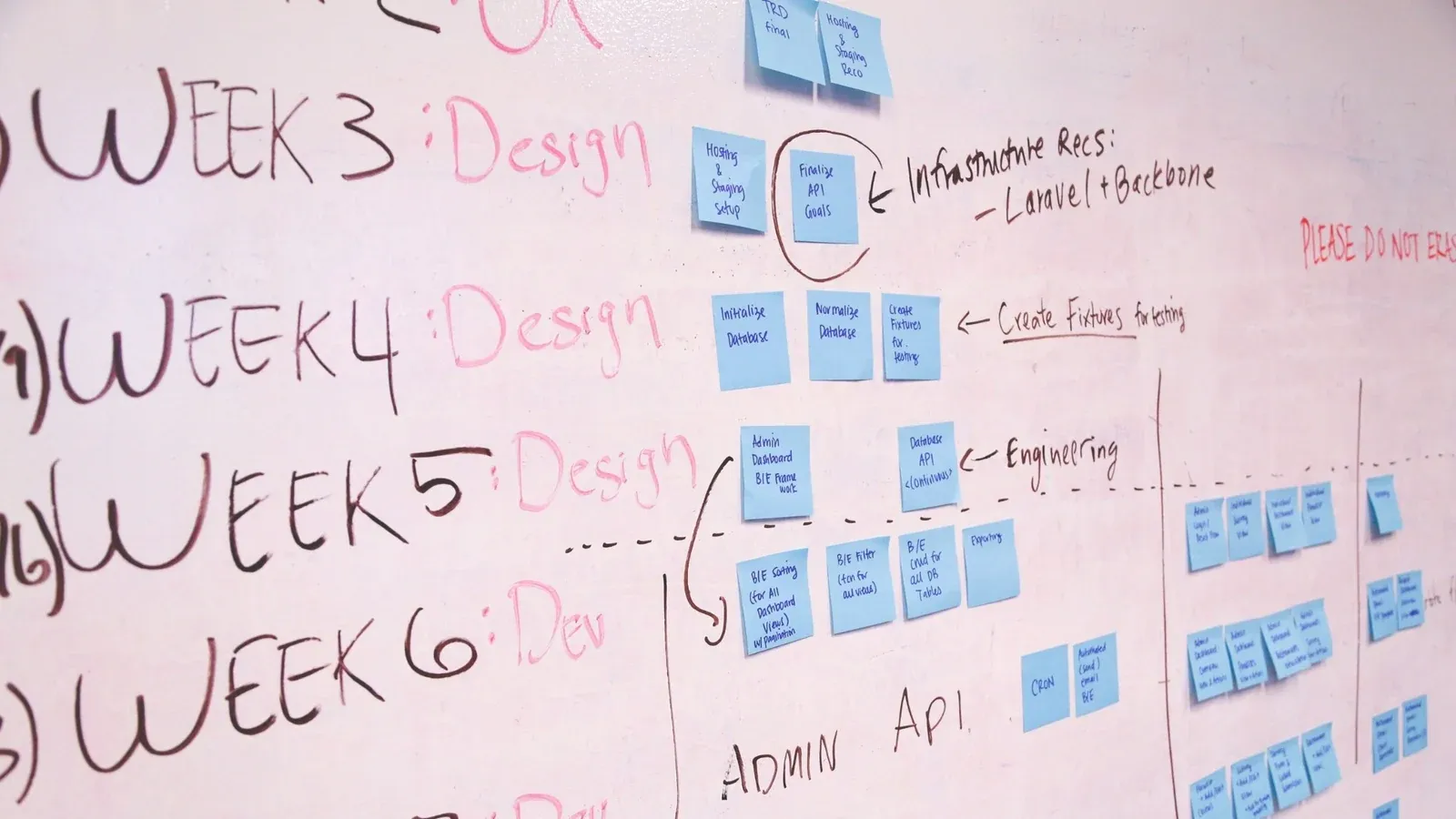
Early-stage startups experience a unique combination of rapid growth while trying to manage limited resources. That’s why startup founders can’t afford to make costly hiring mistakes. Hiring the right talent keeps your growth on track and helps your early-stage startup build a quality team that will stick with you for the long run. In short, your hiring practices can make or break you in the early days. In this guide, we’ll outline some top hiring practices that every early-stage startup should adopt to attract, assess and keep top talent.
TLDR:
-
Map skills and role requirements before posting jobs to keep hiring aligned with growth goals.
-
Employee referrals can cut hiring time and cost while producing candidates who already fit your culture.
-
Limiting interviews to two to three rounds reduces time-to-fill and protects your employer brand.
-
Equity, remote work, and flexible perks can offset salary constraints when competing for top candidates.
-
Some tools combine free ATS software with on-demand recruiting support to cover both pipeline tracking and active search.
Define Your Startup’s Hiring Needs Early
Before you start hiring, you need to define your talent needs. Early-stage startups often have to hire loosely defined positions that wear multiple hats. You need to take the time to clearly map out the skills and qualifications you need out of your early hires.

Start by identifying clearly defined key roles. Finding qualified candidates for these critical roles is easier since you know their roles and responsibilities. For more general roles, put skills ahead of job titles. Focus on the capabilities a candidate needs to have to succeed. Finally, keep your upcoming growth in mind and consider how many roles you’ll need to fill to keep your scaling efforts from slowing down.
By setting clear priorities, you can keep recruitment efforts aligned with your business objectives.
| Hiring Practice | Challenge It Solves | Key Benefit |
|---|---|---|
| Define hiring needs early | Vague roles lead to mismatched hires | Keeps recruiting aligned with growth goals |
| Build employer brand | Top candidates vet companies before applying | Attracts mission-aligned candidates without extra spend |
| Use employee referrals | Cold outreach yields low-quality pipelines | Faster time-to-fill with candidates who already fit your culture |
| Use an ATS | Manual tracking causes missed candidates and disorganized pipelines | Keeps all candidates in one place from applicant to offer |
| Simplify interviews | Long, multi-round processes lose top candidates | Reduces time-to-fill and protects your employer brand |
| Offer competitive compensation | Salary constraints put startups at a disadvantage | Equity, perks, and flexibility can offset pay gaps |
| Focus on diversity and inclusion | Narrow searches limit the talent pool | Broader candidate pipeline and stronger team performance |
| Allow remote work | Office-only roles restrict geographic reach | Access to global talent and lower overhead costs |
| Partner with recruiting experts | Hard-to-fill roles stall when handled solo | Speeds up hiring and takes recruiting work off founders |
Build a Strong Employer Brand
Your employer brand as a startup is your identity and reputation in the talent marketplace. A strong employer brand can help attract top candidates that resonate with your vision and values.
Showcase Your Culture and Values
You can build your employer brand by showcasing your work culture. Talk about your mission, workplace environment and vision for the future in job descriptions and on your website. Also, encourage your team to share their experiences and advocate for your brand online.
Create a Great Candidate Experience
One of the best ways to build a strong employer brand is by creating a great candidate experience. Even if a candidate isn’t hired, they should walk away feeling like their time was respected and valued during the recruitment process.
Use Employee Referrals to Expand Your Talent Pool
Employee referrals are among one of the easiest and most effective ways to get high-quality candidates. Your team likely already knows talented individuals, and they can reach out and connect you with them.
Referrals are great because they likely already align with your team culture if they get along well with your existing team members. Employee referral program research shows these hires fill roles faster and tend to stay longer. Since you trust the judgment of your team members, you may not have to spend as much time and effort in hiring.
To encourage referrals, make sure you have a structured referral program in place that rewards and incentivizes successful referral placements.
Use ATS for Efficient Candidate Management
An applicant tracking system (ATS) is a must-have for managing your candidate pipeline. Early-stage startups often struggle with manual processes and keeping hiring organized. This can lead to wasted time and missed opportunities.
With an ATS, you can keep all of your candidates in one place. An ATS allows you to track candidates from applicant to offer, so you don’t let any of them slip through the cracks.
ATS platforms like Dover can also greatly speed up hiring with tools like AI-assisted resume scoring, automated scheduling and automated job posting. Using these features leads to a more organized and smoother hiring process, and also to better-quality hires.
ATS covers pipeline organization, job board distribution, and inbound screening. That’s the foundation. What it doesn’t handle is outbound sourcing. When a role is hard to fill through inbound alone, or when sourcing is pulling time away from other priorities, fractional recruiting agencies can fill that gap. Agencies that operate on Dover’s infrastructure work inside the same ATS as your team, giving both sides real-time pipeline visibility without coordination overhead or duplicate outreach. Because they run through Dover’s network, each agency carries published reviews from other startups, so you can assess track record before any search begins.
Simplify Interview Processes to Save Time
In the fast-paced world of early-stage startups, you don’t have time for lengthy recruitment processes. If you have a clunky and slow hiring pipeline, you can lose out on top candidates and waste valuable time for both candidates and the company.
You can implement some best practices to speed up your interviews, such as:
-
Limit rounds: Five or six rounds of interviews are overwhelming and unnecessarily time-consuming. Reduce them to two to three rounds, depending on the role.
-
Prepare structured questions: Use consistent questions and align hiring stakeholders on the interview process.
-
Use technology: Remember how useful we said an ATS can be? Using an ATS can also help simplify interviews, as can other technologies like scheduling tools, video interviews and more.
A well-structured and efficient interview process also improves your employer’s brand, so it’s a win-win.
Offer Competitive Compensation and Benefits
Early-stage startups may not always be competitive with larger companies regarding salary. However, creative compensation and benefit packages can help attract the best talent eager to grow with the company.
You can offer compensation options like equity to make a lower salary more attractive. A compensation package can include perks like flexible work hours, unlimited PTO and remote work.
Finally, you should be transparent during the negotiation process and discuss your budget for the role. While it may be outside their preferred range, growth opportunities and other benefits may be enough to get a top candidate off the fence.
Focus on Diversity and Inclusion in Hiring
Having a team with diverse backgrounds and perspectives can be a huge advantage in the startup space. DEI hiring practices create a richer workplace culture, widen your talent pool and produce a more well-rounded team equipped to help your startup grow and thrive.
To focus on diversity and inclusion, make sure you have diversity and inclusion initiatives built into your hiring process. It’s also helpful to communicate these values by writing inclusive job descriptions that avoid biased language and encourage any and all applicants to apply.
Be sure you also provide training for your hiring team to remove unconscious bias and create a more equitable hiring process.
Consider Remote and Flexible Work Options
We mentioned including remote and flexible work as a perk in your compensation package, but these options have benefits beyond making the job more attractive.
For one, remote work expands your talent pool to anyone around the globe who fits your qualifications. Remote work can also reduce overhead costs by saving you money on office space. Plus, many employees prefer remote work for a better work-life balance, so you increase employee satisfaction for existing team members while also attracting great new hires.
Partner with Industry Experts and Networks
Sometimes, the best hiring strategy is to tap into external expertise. Recruiting experts and industry networks can help your startup quickly find and attract top-tier talent.
Expert recruiters have instant access to specialized talent pools and can quickly put highly qualified candidates in your hiring pipeline. Recruiters can also take a ton of work off your plate, saving you time and helping reduce your time-to-fill.
Dover functions as the infrastructure layer that fractional recruiting agencies run on: your pipeline, their expertise, one shared system. The Recruiting Partners network gives you access to vetted fractional recruiting agencies with published reviews from other startups, matched to your role and already working inside the tools your team uses.
Hire Fast with Dover’s Free ATS & On-demand Recruiting Partners
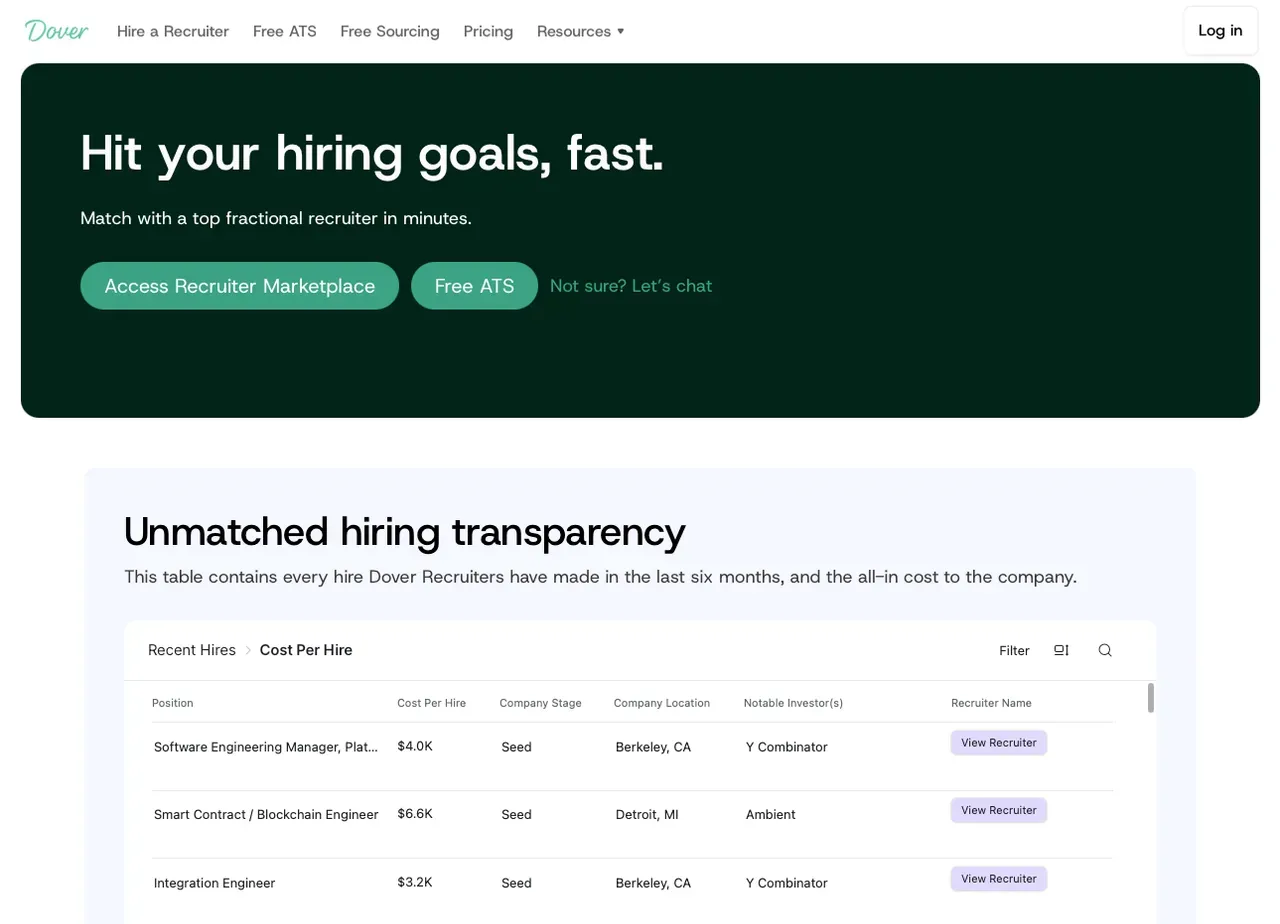
Without the right tools and support, it can be hard to fill startup roles. Dover offers the perfect solution with our free ATS and on-demand recruiting partners.
Our free ATS scales with your hiring needs and gives you tools to simplify your hiring pipeline and make great hires. Our ATS gives you access to AI-powered candidate scoring, job board listing generation, applicant tracking and much more.
Meanwhile, our Recruiting Partners network connects you with vetted fractional recruiting agencies that have real, published reviews from other startups. Every agency operates inside the same system as your ATS, so there’s no handoff friction and full pipeline visibility from day one.
Ready to get started? Add Dover to your hiring stack today.
FAQs
What’s the fastest way to reduce time-to-fill at an early-stage startup without adding headcount?
Combining two or three structural changes tends to move the needle fastest: activate an employee referral program, cut interview rounds to two or three, and use an ATS to automate job posting and scheduling. These steps work in parallel and remove the manual coordination that typically causes candidate drop-off.
How do I build an employer brand as an early-stage startup with limited resources?
Focus on two levers that cost more effort than money: write job descriptions that speak to your mission and culture directly, and ask current team members to share their experiences publicly. Even candidates you don’t hire form an impression of your brand based on how the process felt, so a structured, respectful interview experience compounds over time.
Can early-stage startups compete for top candidates against larger companies on compensation?
Yes, though it requires restructuring the package instead of matching salary dollar-for-dollar. Equity, remote flexibility, and transparent growth conversations can offset a pay gap for candidates who are genuinely motivated by ownership and upside. Being direct about your budget range early in the process also builds trust and keeps strong candidates engaged who might otherwise self-select out.
Final Thoughts on Hiring Practices for Early-Stage Startups
Getting your hiring practices right at the early stage comes down to putting the right structure in place before you urgently need it: clear role definitions, a consistent interview process, and a system that keeps your pipeline organized from the first application to the final offer. Dover is built for exactly that context: a free ATS that handles pipeline tracking, job board distribution, and applicant scoring from day one, paired with on-demand fractional recruiting agencies that step in when a role is hard to fill through inbound alone. Whether you’re hiring your first five people or scaling into your second year, the combination of organized infrastructure and agency access on your terms tends to hold up better than either approach on its own.