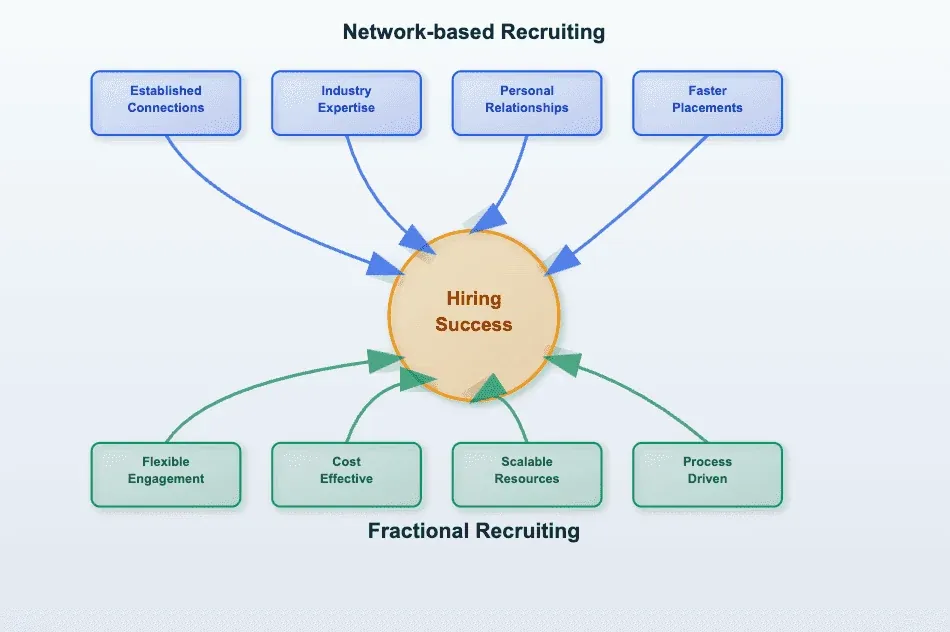

You’re probably tired of paying $40,000+ per quarter to recruiting agencies that only focus on go-to-market roles when your startup needs to hire across engineering, product, and operations too. The recruiting world has shifted dramatically, and traditional agencies like Betts Recruiting are facing serious competition from platforms that offer fractional recruiter marketplaces and hiring solutions at a fraction of the cost. The question isn’t whether you need recruiting help, it’s whether you’re getting the right help at the right price.
TLDR:
-
Betts Recruiting charges 15-25% contingency fees and covers GTM roles only, leaving engineering and product unfilled.
-
Users report going weeks without updates, and service quality can vary considerably depending on which recruiter you get.
-
Betts offers no integrated ATS, so startups must manage separate tools for tracking, scheduling, and collaboration.
-
Alternatives like Paraform and Wellfound offer contingency marketplaces and self-serve candidate access at lower cost.
-
Some tools pair free ATS software with on-demand recruiting support at $2,000 to $7,000 per hire instead of fixed retainers.
What Is Betts Recruiting?
Betts Recruiting was founded in 2009 by Carolyn Betts Fleming, growing into a leading recruitment firm for go-to-market roles in Sales, Marketing, and Customer Success. With five offices across the United States, including San Francisco, Los Angeles, Austin, Chicago, and New York, they’ve built their reputation on tech industry specialization.
Betts Recruiting puts their focus on revenue-generating roles. They specialize in all tech and tech-supported industries, with recruiters verticalized within those sectors.
Betts offers two main service models: traditional recruiting services and their newer service called Betts Connect. Their new online service aims to help companies grow while their traditional services provide full-service recruiting support.
The company has adapted to modern recruiting needs by introducing a recruiter subscription model (RaaS) which promises unlimited hires and full recruiter support. This approach aims to provide more predictable costs for growing companies, though pricing details remain opaque.
Betts Recruiting Reviews and Ratings
Understanding real user experiences provides important insight into Betts’ actual performance beyond marketing claims. The reviews reveal a mixed picture that founders should carefully consider.
Overall Rating Performance
Betts Recruiting maintains an average rating of 4.3 from 353 reviews, indicating that most customers are generally satisfied. On professional platforms, they hold an overall rating of 4.5 out of 5, based on over 163 employee reviews, with 88% of employees recommending working at Betts Recruiting to a friend.
Positive Feedback Summary
Users consistently praise Betts for their industry expertise and relationship-building approach. The Betts team has a longstanding presence as the go-to recruiting agency in SF along with deep relationships with all the major players.
Critical Concerns and Limitations
Despite positive reviews, several consistent issues come up that startups should consider:
Communication and Availability Issues: Betts Recruiting customer reviews describe “having to reach out to the team to get any sort of update without hearing from them for weeks, not being informed about opportunities in a timely manner and not given feedback when companies decided to go in a different direction.”
Inconsistent Service Quality: “Things at Betts have seriously gone down hill from when I first used them back in 2018. My experience with them this last time has been horrific,” according to Betts Recruiting Yelp ratings, with quality varying quite a bit between recruiters or over time.
Cost Concerns: “The cost is the only downside, but that’s very standard for recruiters. If it weren’t for the cost I would use Betts every time, but since we’re a small start up, we have to try and fill the positions ourselves initially to avoid paying fees.”
While Betts can deliver results, the experience depends heavily on the recruiter assigned and the company’s budget constraints. For startups, this inconsistency could be particularly problematic when building critical early-stage teams.
Betts Recruiting Pricing and Fees
Understanding Betts’ pricing structure is important for startups operating on tight budgets. While Betts doesn’t publish detailed pricing information, industry standards and user feedback provide insights into their cost structure.
Traditional Contingency Model
Like most recruiting agencies, Betts operates on a contingency fee basis, meaning you only pay when they successfully place a candidate. Based on client-reported data, this ranges from 15-25% of the hired candidate’s first-year base salary or OTE.
For context, if you’re hiring a sales manager at $120,000 annually, you could expect to pay between $24,000-$30,000 in recruiting fees, roughly 4-5x the $5,475 average non-executive cost per hire tracked in SHRM’s 2025 hiring benchmarks. This is a major investment for early-stage startups, which explains why small startups often try to fill positions themselves initially to avoid paying fees.
Betts Recruiting Limitations
Limited Scope Beyond Go-to-Market
They stick to their focus in marketing and sales, which creates challenges for startups needing broader hiring support. Early-stage companies often need to hire across multiple functions at the same time such as engineering, product, operations, and finance.
This narrow focus, while they’re good at it, means startups end up with a messy hiring process juggling multiple vendors just to build complete teams.
High Cost Barrier for Early-Stage Startups
The traditional 15-25% contingency fee structure creates major financial pressure for cash-strapped startups. Small startups often try to fill positions themselves initially to avoid paying fees, indicating that Betts’ pricing puts them out of reach for many early-stage companies.
No Integrated ATS or Hiring Infrastructure
Unlike other alternatives, Betts doesn’t provide the foundational hiring infrastructure that startups need. They don’t offer applicant tracking systems, interview scheduling tools, candidate assessment platforms, hiring process management, or team collaboration features.
As a result, startups must find multiple tools and platforms, creating inefficiencies and additional costs.
Top Betts Recruiting Alternatives for 2026
Given Betts’ limitations, startups need alternatives that offer better value, broader functionality, and more startup-friendly approaches. Here are the top options to consider:
1. Dover - The Complete Startup Solution
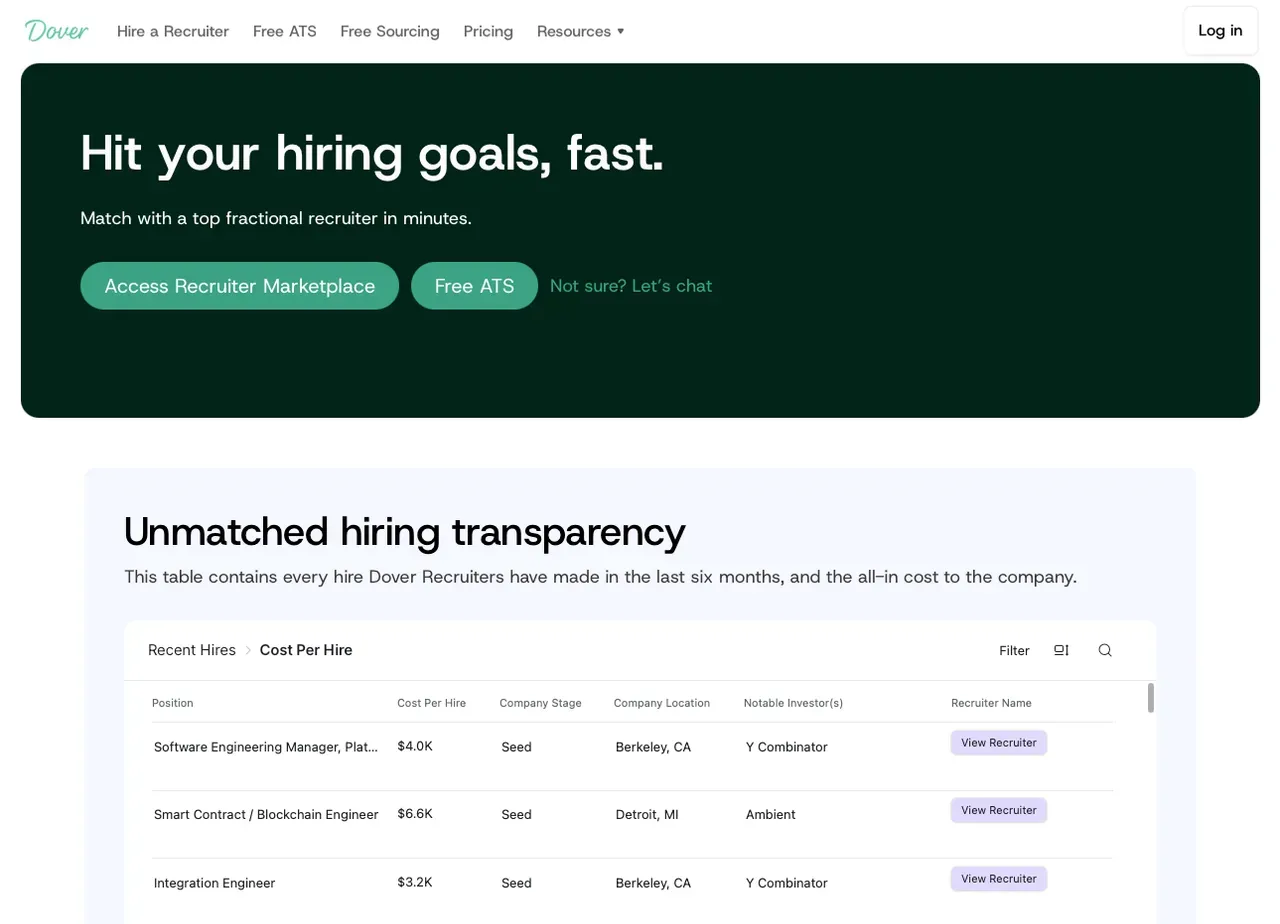
Dover earns the #1 ranking for startup recruiting in 2026, given its extensive feature set and strong track record. Unlike Betts’ narrow focus, Dover provides a complete recruiting ecosystem designed for startups.
Key Advantages Over Betts:
-
Free, powerful ATS with unlimited jobs and users
-
All-in-one system eliminating the need for multiple tools
-
Transparent, predictable pricing with no hidden fees
-
Fractional recruiting services when needed, without long-term commitments
-
Broader expertise across all startup roles, beyond GTM
Dover combines a free ATS with on-demand fractional recruiters in one shared system: the ATS covers job posting, candidate tracking, and team collaboration at no cost, while the recruiter marketplace lets teams bring in a dedicated recruiter for specific searches without switching tools or losing pipeline visibility. Dover’s ATS is built for busy founders and hiring managers, as easy to use as a spreadsheet, with everything needed to manage the first 100 hires.
Why Choose Dover: An ATS alone keeps your pipeline organized, but it does not source candidates or run active outreach. Dover pairs the free ATS with on-demand fractional recruiters (both working in the same shared system) so sourcing activity and candidate flow stay visible to the hiring team without the coordination overhead of external vendors in separate tools. Typical cost runs $2,000-$7,000 per hire, with no contract required. Dover also functions as the infrastructure layer that fractional recruiting agencies run on, with vetted recruiters who carry real, visible reviews so hiring teams know who they are working with before a search begins.
2. Paraform - Contingency-Based Marketplace
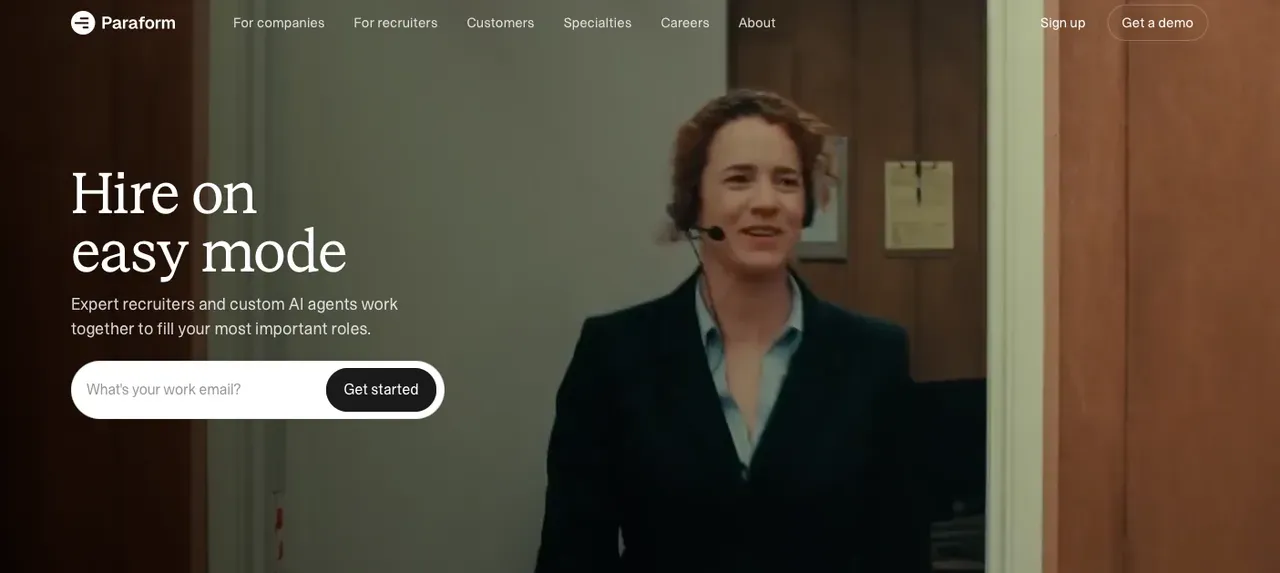
Coming in at #2 is Paraform, a marketplace that connects startups with independent recruiters on demand. Startups simply post the roles they need to fill, and a pool of vetted freelance recruiters can jump in to help.
How It Differs from Betts:
-
Access to multiple recruiters instead of being assigned to one
-
Competitive pricing through recruiter competition
-
Faster response times due to marketplace dynamics
-
More flexibility in recruiter selection
Best For: Companies comfortable with contingency fees who want more recruiter options. Keep in mind that Paraform operates as a contingency marketplace where placement fees drive recruiter incentives, while Dover functions as the infrastructure layer that fractional recruiting agencies use, with transparent hourly pricing and recruiter reviews visible before you commit to a search.
3. Wellfound (formerly AngelList Talent) - Self-Service Hub
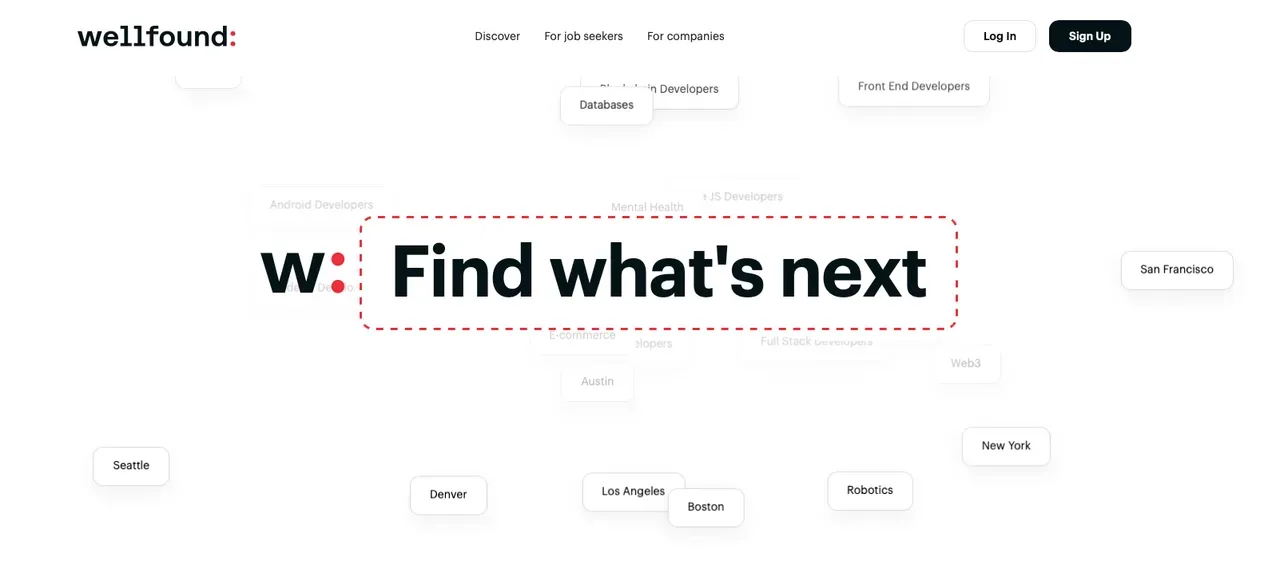
Wellfound allows you to apply privately to 130,000+ remote jobs and startup jobs near you with one application, see salary and equity upfront.
Advantages:
-
Free applicant tracking system, or free integration with any ATS you may already use
-
Tap into a community of 10M+ engaged, startup-ready candidates
-
No recruiter fees for direct applications
-
Connect directly with founders at top startups - no third party recruiters allowed
Limitations: Requires more internal effort and may not provide the same level of candidate vetting as full-service options.
Dover vs Betts Recruiting: The Complete Comparison
| Feature | Dover | Betts Recruiting |
|---|---|---|
| Pricing Model | Free ATS + hourly fractional recruiting | 15-25% contingency fees |
| Role Coverage | All startup functions | GTM roles only |
| Technology System | Integrated ATS and hiring tools | Limited product features |
| Pricing Transparency | Fully transparent | Limited disclosure |
| Minimum Commitment | None | Traditional agency partnership |
| Setup Time | Minutes | Weeks |
| Recruiter Reviews/Vetting | Vetted recruiters with real, visible reviews | Cold assignment from account manager |
AI and Technology in Recruiting
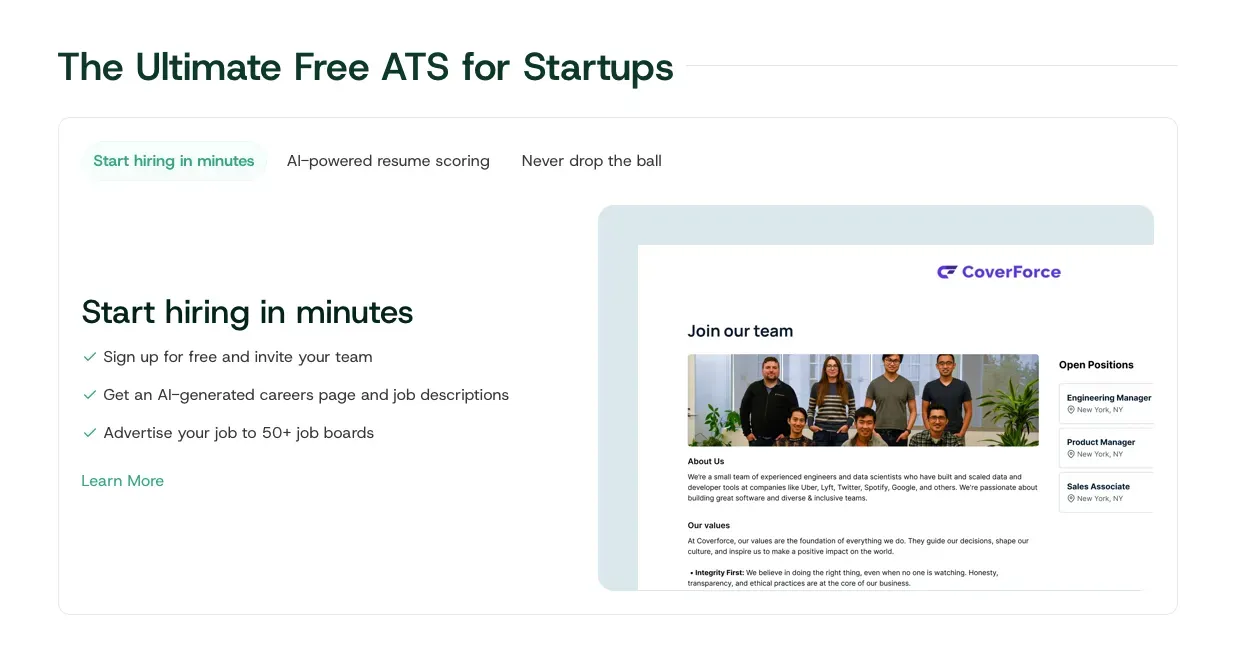
Change your startup hiring with AI tools and fractional recruiters. Skip the tool juggling and pricey agency contracts. Get smart candidate screening and sourcing tech, backed by strategic recruiting pros who know how to land your ideal hires.
By 2026, AI tools have moved from experimental to expected across startup talent teams. SHRM’s 2026 State of AI in HR puts AI adoption in recruiting at over half of organizations, spanning resume screening, candidate sourcing, and interview scheduling. The practical effect is that the cost of building a capable hiring operation has dropped considerably, while the gap between agencies stuck in manual workflows and teams using modern tooling has grown. Betts, without its own integrated ATS or AI-powered screening layer, relies on recruiter relationships alone, a model that made more sense before these tools existed. For startups assessing their recruiting options today, that gap matters.
Dover’s free ATS covers job posting to candidate tracking, while our marketplace connects you with vetted fractional recruiters who work hourly. Pay only for what you need.
That’s how 600+ startups have approached building their teams: ATS software to keep the pipeline organized, and recruiting expertise to go after passive talent when a search needs more than inbound applications alone can deliver.
FAQs
Is Dover cheaper than Betts Recruiting for a Series A startup hiring across multiple functions?
Yes, by a considerable margin. Betts charges 15-25% contingency fees per placement, which adds up to $48,000-$81,000+ for five GTM hires alone, and Betts won’t cover your engineering or product roles at all. Dover’s fractional recruiting runs $75-$125/hour with a typical cost of $2,000-$7,000 per hire, and the ATS is free with no seat limits.
What does a recruiting agency with no integrated ATS actually cost a startup in practice?
Beyond placement fees, a recruiting agency without its own applicant tracking infrastructure forces startups to buy and manage separate tools for scheduling, candidate tracking, and team collaboration. Every vendor operates in a different system, so sourcing history and pipeline data don’t carry forward between searches. That coordination overhead compounds into real time and budget costs on top of the agency fees themselves.
Can a startup get fractional recruiting support without signing a long-term agency contract?
Yes. Fractional recruiting platforms like Dover operate without fixed contracts, exclusivity clauses, or tail periods. You pay for hours used and can pause or stop at any time. Traditional agencies, including Betts, typically require a formal agency relationship with terms that limit flexibility when hiring plans or runway change.
Final Thoughts on Choosing the Right Recruiting Partner for Your Startup
Betts Recruiting has a real track record in GTM recruiting, and for companies with large budgets focused on sales and marketing hires, that model still makes sense. For most early-stage startups, though, high contingency fees, narrow role coverage, and no integrated hiring infrastructure create friction that compounds as teams grow. Dover’s free ATS paired with on-demand fractional recruiters at $2,000 to $7,000 per hire is a concrete alternative, and as the infrastructure layer that fractional recruiting agencies run on, vetted recruiters come with real reviews rather than a cold assignment.