Startup hiring rarely arrives at a steady, predictable pace. You might need to fill five engineering roles in six weeks after closing a round, then pause hiring entirely while the product catches up. That mismatch between variable demand and fixed recruiting capacity is the structural problem the fractional model was built to solve, and it’s why more early-stage teams are treating recruiting as a function to dial up or down, not a headcount to carry year-round.
TLDR:
-
Startup recruiting scales with your growth rate, not your headcount, making it prone to sharp spikes and pauses that full-time hires can’t absorb.
-
Fractional recruiting lets you match specialists to each role type instead of relying on one generalist for every hire.
-
You can blend senior recruiters at 5-10 hours per week for strategy with junior recruiters handling sourcing and coordination to cut costs.
-
Fractional arrangements let you ramp up after a funding round and scale back during product development without layoffs or idle headcount.
-
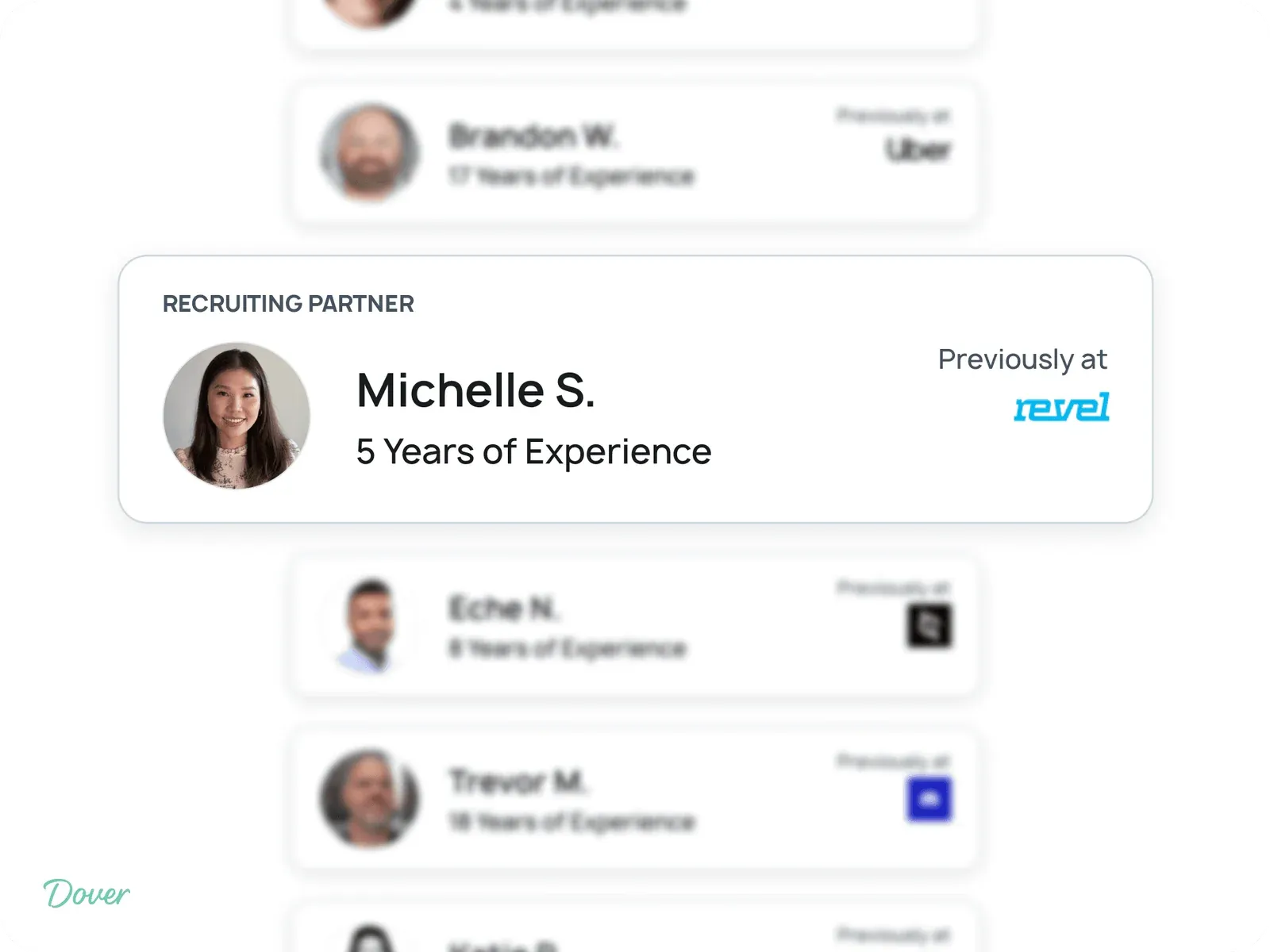
Some fractional recruiter marketplaces give early-stage startups access to recruiters with 10-15 years of experience on a per-engagement basis.
Fractional Recruiting in 2026: The Model Has Hit the Mainstream

The case for fractional recruiting has moved well past theoretical. The number of fractional professionals working in the U.S. roughly doubled from 60,000 in 2022 to over 120,000 in 2024, according to research published by Fractionus. LinkedIn profiles mentioning fractional roles grew from 2,000 to 110,000 over the same period, and the 2026 Fractional Work Report puts hiring demand growth at 149% year-over-year in Q1 2026, a signal that the model is now mainstream. For recruiting and people functions, that growth is especially sharp: recruiting is among the roles driving fractional demand at early-stage and growth-stage startups, where hiring needs spike unpredictably and keeping a full-time recruiter on staff creates structural waste. The five reasons below explain why.
What makes that mainstream adoption meaningful for startups in 2026 is the infrastructure catching up to the model. Platforms like Dover are now built precisely around the fractional structure, pairing a free ATS with on-demand recruiter access so that both the technology layer and the human layer can scale together. Instead of stitching together a job board, a spreadsheet, and an agency relationship, startups can manage the full pipeline in one system whether they are running searches themselves or working alongside a fractional recruiter.
| Model | Cost Structure | Flexibility | Best For |
|---|---|---|---|
| Fractional Recruiter | Hourly or per-hire fee, no retainer | High: scale up or down as needed | Startups with variable or stage-driven hiring needs |
| Full-Time In-House Recruiter | Fixed salary plus benefits | Low: headcount stays constant regardless of hiring volume | Companies with steady, high-volume hiring pipelines |
| Contingency Agency | Percentage of first-year salary (typically 15-25% contingency fee rates) | Medium: engage per role, but fees are high per hire | One-off or urgent roles where speed outweighs cost |
1. Hire Specialized Recruiters for Every Role
Why it matters: Your startup needs different types of talent at different stages.
Fractional recruiting allows you to tap into specialized recruiters to hire for specific roles:
-
Engineering recruiters for your technical roles
-
Sales recruiters for your go-to-market hires
-
Executive recruiters for your leadership positions
Unlike a single full-time generalist recruiter, this specialization gives you the right expertise for each critical hire.
2. Scale Resources With Changing Hiring Demands
Why it matters: Startup hiring often comes in waves, not steady streams. For example, you might hire a lot after a fundraising round, and then pause hiring for the next 6 months.
The fractional model allows you to:
-
Ramp up quickly after funding rounds
-
Scale back during your product development phases
-
Adjust to market conditions without layoffs
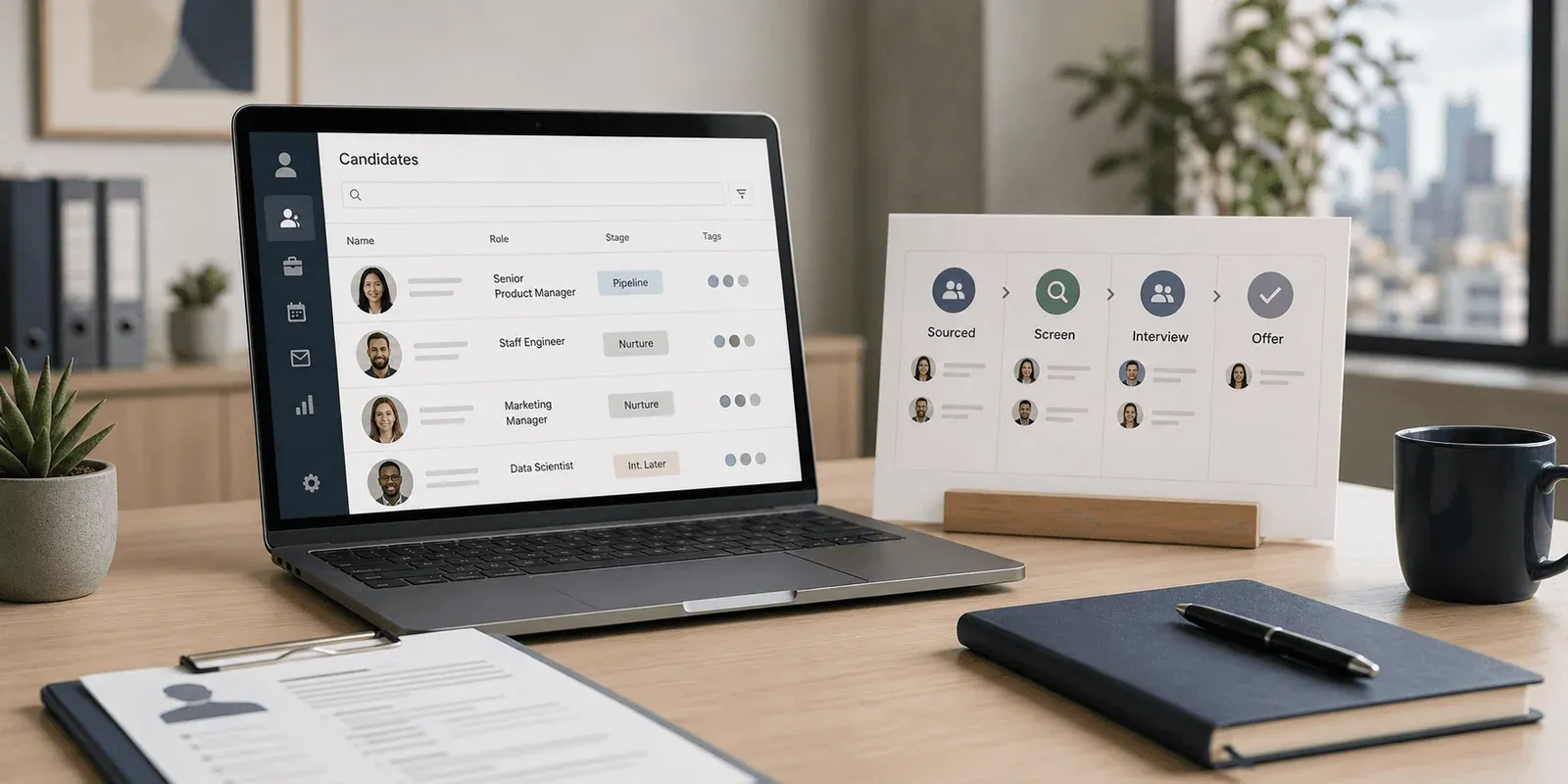
This flexibility prevents the common problem of in-house recruiters being either overworked or underutilized. The ramp-up/ramp-down cycle only works cleanly when the recruiter and your internal team share the same pipeline. A shared ATS keeps sourcing activity, candidate history, and stage data visible to everyone in real time, so bringing a fractional recruiter on or off a search doesn’t create coordination overhead or duplicate outreach.
3. Access Top-Tier Recruiting Talent
Why it matters: Early-stage startups need elite recruiting strategy but often can’t afford full-time top-tier recruiter salaries. See how fractional recruiter hourly rates compare to agency fees.
Fractional recruiting provides:
-
Access to recruiters with 10-15 years of experience from leading tech companies
-
Strategic guidance on par with late-stage startups
-
Cost-effective engagement (e.g., 5-10 hours/week of senior recruiter time)
4. Delegate Day-to-Day Recruiting
Why it matters: Recruiting involves both high-level strategy and day-to-day operations. When you a hire an in-house recruiter, they must do low-level operational work too.
The fractional model allows you to hire:
-
Senior recruiters (5-10 hours/week) focusing on strategy and accountability
-
Junior recruiters (20-30 hours/week) handling sourcing, coordination, and candidate experience
This blended approach is particularly effective for recruiting, where tasks are clearly divided between strategic and day-to-day, and can save you money.

5. Accelerate Feedback Loops and Pivot Quickly
Why it matters: In your fast-paced startup world, quick adjustments are important.
Fractional recruiting offers:
-
Faster evaluation of recruiter performance
-
Easy pivoting if strategies aren’t working
-
Rapid scaling of successful approaches
This agility is especially valuable in recruiting, where outcomes can heavily impact your overall company direction.
How Dover Fits Into the Fractional Recruiting Model
Dover was built around the same structural insight this post describes: recruiting demand is variable, role types require different expertise, and the cost of carrying idle headcount between hiring sprints adds up quickly. The platform pairs a free ATS with a marketplace of experienced fractional recruiters, so the technology layer and the human layer scale together instead of forcing you to manage them separately.
The ATS is free, with no limits on jobs or users, and takes under five minutes to set up. When you bring a fractional recruiter into a search, they work from the same pipeline your team does: same candidate history, same stage data, same sourcing notes. That shared visibility is what makes the ramp-up and ramp-down cycle described in section two actually work cleanly in practice, with no coordination overhead or duplicate outreach when a recruiter joins or exits a search.
On the cost side, most companies spend an average of $2,000 to $7,000 per hire through Dover’s marketplace, and recruiters set their own rates. For context, SHRM’s recruiting cost benchmarks put the average cost per hire across U.S. employers at roughly $4,700, and Dover’s per-hire range sits at or below that figure while removing the salary-linked incentives that agency models carry. There are no long-term contracts, and the $800 deposit to get started is fully refundable.
At Dover, we’re building a recruiter marketplace of top-tier Recruiting Partners designed around these structural realities. Our goal is to provide:
-
Diverse expertise across all roles and industries
-
Rapid deployment of experienced, pre-vetted recruiters
-
Matched recruiters by role type and industry vertical
-
Cost-effective hiring through our blended model
The right model depends on your stage and hiring volume, but the structural argument for fractional recruiting gets stronger the more variable your hiring needs are. Dover’s model is one concrete implementation of this: a free ATS that gives both your team and your fractional recruiter real-time visibility into the same pipeline, paired with on-demand recruiter access at $2,000 to $7,000 per hire on average, with no retainer and no long-term contract.
FAQs
What’s the difference between a fractional recruiter and a contingency agency recruiter?
A fractional recruiter works on an hourly, dedicated basis: one person embedded in your search who owns the process end-to-end and has no financial reason to favor faster-to-fill or higher-compensated candidates. A contingency agency recruiter gets paid only on placement, which creates pressure to put speed ahead of fit and can result in the same candidates being contacted by multiple recruiters simultaneously.
Should I hire a full-time recruiter or use fractional recruiting after closing a seed or Series A round?
If your hiring needs spike after a round and then slow during product development, a fractional recruiter fits that pattern better than full-time headcount. A full-time hire carries a fixed cost regardless of hiring volume; a fractional arrangement lets you run 20 to 30 hours of dedicated search work per role and scale back when the sprint ends, all without a layoff or idle salary.
How do fractional recruiters on Dover compare to contingency platforms like Paraform?
Dover uses a dedicated-recruiter model, where one matched recruiter works your role, while Paraform operates as a contingency marketplace where multiple recruiters compete on the same search. The contingency structure can lead to duplicate outreach to the same candidates and deprioritization of harder-to-fill roles. Dover’s hourly model, averaging $2,000 to $7,000 per hire, is also disconnected from the candidate’s salary, removing the incentive to push toward higher-compensated hires.
How does blending senior and junior fractional recruiters help control recruiting costs?
Senior fractional recruiters working 5 to 10 hours per week can handle strategy, accountability, and closing, while junior recruiters take on sourcing and coordination at 20 to 30 hours per week. Because recruiting tasks divide clearly between strategic and day-to-day work, this blended structure lets you pay senior rates only for the work that requires senior judgment, instead of a single full-time hire doing both at a flat salary.
When does fractional recruiting make more sense than building an in-house recruiting function?
Fractional recruiting fits best when you are hiring roughly 5-20 roles per year and your hiring volume is uneven across the year. Once you reach 15-20 annual hires on a consistent basis, the economics of a full-time recruiter start to make sense. Below that threshold, carrying full-time recruiting headcount typically means the recruiter is either overworked during hiring sprints or underutilized between them.
Final Thoughts on Fractional Recruiting
The five reasons in this post are all expressions of the same underlying reality: startup hiring is too uneven, too role-specific, and too consequential to treat as a fixed cost. Fractional recruiting fits that reality not because it is a cheaper version of something else, but because it is a different structural model, one where expertise, capacity, and cost all move with your actual hiring needs instead of ahead of them. Whether you are building your first recruiting motion after a seed round or trying to scale a pipeline without adding permanent headcount, the question worth asking is whether your current approach is built for the hiring cadence you actually have, not the one you wish you had.