
Startup hiring rarely follows a smooth curve. Headcount plans spike right after a funding round, stall while teams execute, then ramp again as the next raise approaches. A Series A can trigger a push for a dozen hires in a single quarter, followed by months of near-zero recruiting activity. Recruiting capacity planning for startups means building around this reality: predictable volatility driven by roughly 18-month funding cycles and uneven demand for recruiting effort. In this guide, we break down how to model hiring capacity using your own data and when flexible recruiting support fits better than a fixed internal headcount.
TLDR:
-
Recruiting capacity planning calculates how many roles your team can fill based on productivity per resource (PPR) and role complexity.
-
Startups face 18-month funding cycles creating boom-bust hiring patterns that traditional full-time recruiters can’t match cost-effectively.
-
Fractional recruiters average $4,800 per hire versus $80,000-$120,000+ annually for full-time staff or $24,000-$30,000 in agency fees.
-
Track time to fill and hires per recruiter quarterly, then build a 15-20% buffer capacity into your forecasts for attrition and delays.
-
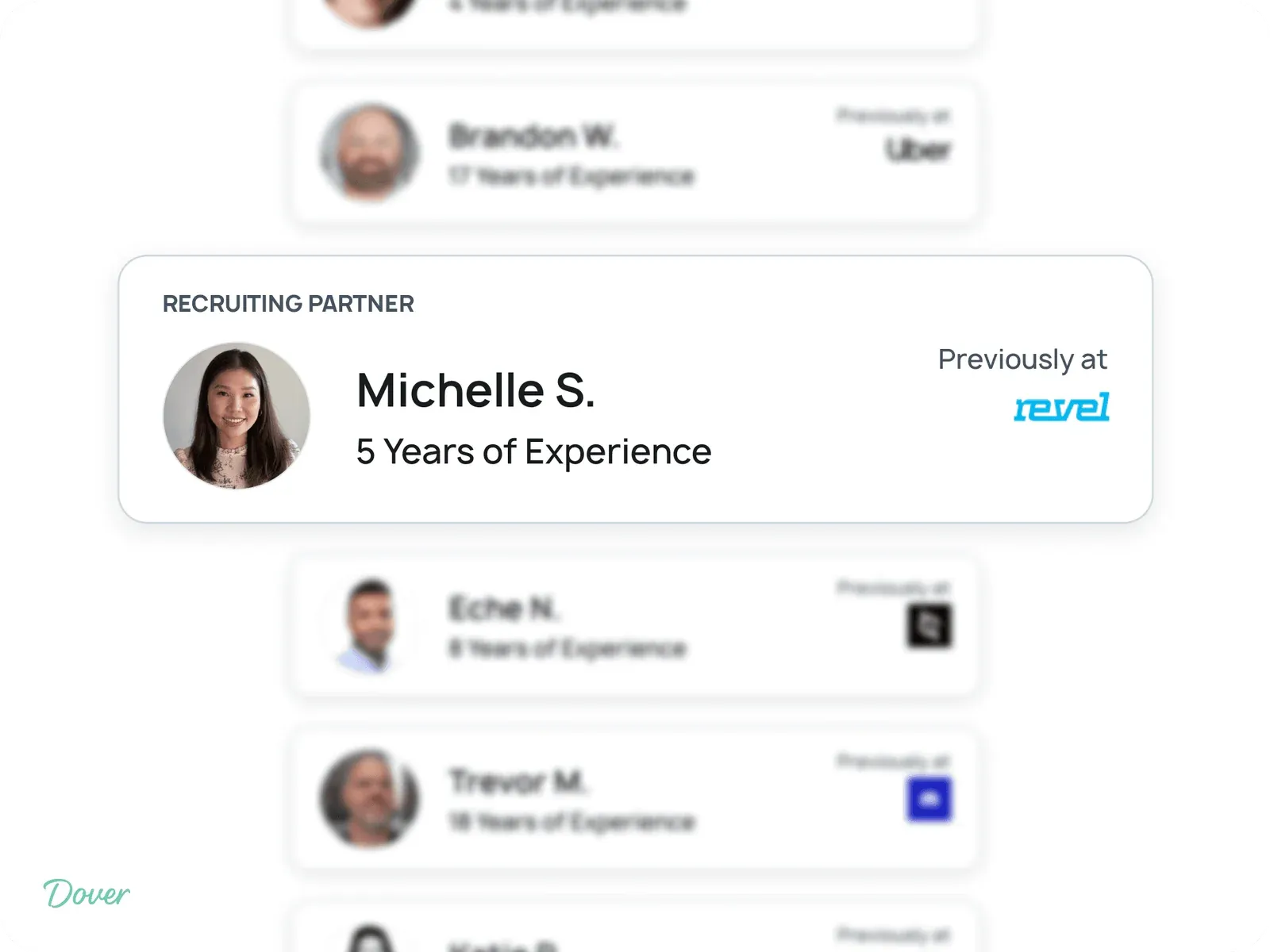
Some tools serve as the infrastructure layer fractional recruiting agencies are built on, with a marketplace of fractional recruiters backed by real, verified reviews so companies can scale up during hiring sprints and step back during quieter months.
Understanding Recruiting Capacity Planning for Startups
Recruiting capacity planning answers a simple question: how many roles can your team realistically fill in a given timeframe? For startups, the question is whether current recruiting resources can handle the next 10 hires before hitting a wall.
The math starts with productivity per resource (PPR), which measures how many successful hires one recruiter (or hiring manager) can deliver per month. If your team closes two roles per month on average, your PPR is 2.0. This baseline becomes the foundation for future capacity decisions.

Startups face a different planning challenge than larger organizations. You’re working with smaller teams, tighter budgets, and hiring needs that can double overnight after a funding announcement. Traditional enterprise planning assumes steady headcount growth and dedicated recruiting teams. Your reality looks more like hiring in sprints with limited bandwidth.
Role complexity matters more than raw headcount. Filling five entry-level customer support roles requires different capacity than hiring two senior engineers or a VP of Sales. Each role type demands varying time investments for sourcing, screening, and closing candidates. Your capacity model needs to account for this mix.
The goal is building a data-driven framework that tells you when to hire help, when to pause searches, or when you can accelerate hiring without burning out your team.
The Unique Volatility Challenge between Fundraising Rounds
Startups operate in fundraising cycles that create predictable chaos for hiring. Carta’s Q2 2025 data shows the median time from seed to Series A has stretched to 616 days (roughly 20 months), meaning your recruiting needs follow a boom-and-bust pattern instead of steady growth.
After closing a Series A, you might need 15 hires in three months. Six months later, you’ve hit headcount targets and hiring drops to one role per quarter. Then you’re preparing for Series B and ramping again. This creates massive swings in recruiting workload.
Traditional recruiting models assume consistent volume. A full-time recruiter works well when filling two to three roles monthly. But between funding rounds, your needs might range from zero to eight roles per month depending on runway and growth targets.
In September 2026, that volatility is playing out in a specific pattern. Founding engineer and first-of-function leadership hiring (first VP Sales, first Head of Product, first Head of CS) is running at 2021-level intensity at newly funded seed and Series A companies, with founding engineer time-to-offer at two to four weeks and two to four competing offers per finalist. Non-revenue mid-level roles at the same companies are largely frozen until the next revenue milestone. This split matters for capacity planning: the roles your team is most likely to open right after a raise are also the hardest to fill quickly, requiring more sourcing hours and recruiter bandwidth per position than historical averages may reflect.
Financial pressure compounds this. Post-funding, you have capital and aggressive goals. Mid-cycle, you’re managing burn carefully. By month 15, you might be stretching runway and pausing non-critical hires. Your recruiting capacity should flex with these realities.
Calculating Your Historical Recruiting Productivity
Start with three core metrics. Time to fill measures days from opening a role to accepted offer. Hires per recruiter tracks successful placements per resource per month. Role complexity segments positions by difficulty level (entry, mid, senior, executive).
Pull data from your last 12 months of hiring. How many roles did you close? How many people were involved (recruiters, hiring managers doing double duty, founders)? Divide total hires by total recruiting resources to get your baseline productivity rate.
| Metric | What It Measures | How to Calculate |
|---|---|---|
| Productivity Per Resource (PPR) | Hires one recruiter or hiring manager delivers per month | Total hires ÷ total recruiting resources (per month) |
| Time to Fill | Days from opening a role to accepted offer | Sum of days per closed role ÷ number of closed roles |
| Role Complexity | Relative sourcing, screening, and closing effort by level | Segment by tier: entry, mid, senior, executive, and track avg. time to fill per tier |
Forecasting Capacity Based on Historical Data
Take your baseline productivity numbers and project forward. If your team closes two senior roles per month, and you need to hire six senior engineers in Q2, you’re looking at a minimum of three months with current capacity.
A practical way to estimate capacity is to convert planned hires into expected concurrent searches: estimated concurrent searches ≈ (planned hires in period × average time to fill) ÷ length of the period. As of 2026, recruiters carry around 14 open reqs on average, up 56% in three years, while handling over 2,500 applications per cycle, according to the Gem 2025 Recruiting Benchmarks report.
Account for recruiter ramp time when adding resources. New recruiters typically take 30 to 60 days to reach full productivity, meaning a recruiter starting in January won’t deliver their first hire until February or March.
Map your hiring roadmap by quarter. If you plan 20 hires over six months with a 60-day time to fill, you need capacity to manage 6 to 7 active searches simultaneously. Compare this against your current team’s bandwidth to identify gaps before they become bottlenecks.
Building Buffer and Attrition into Your Model
Your capacity model needs buffer room. Add 15-20% above your baseline forecasts. If you calculate two recruiters for planned hires, build capacity for 2.4 roles worth of work.
Recruiter turnover is common in startups, creating gaps that can stall hiring during critical periods. With two full-time recruiters, one may leave within 18 months. Factor in 60 days to replace and ramp a new hire. This gap affects your ability to close roles mid-transition.
Build three scenarios into your planning:
-
Base case reflects your current hiring roadmap with confirmed headcount and existing budget constraints
-
Upside scenario adds 30-40% more roles if revenue accelerates or funding closes early, requiring scaled sourcing and interview coordination
-
Downside scenario cuts 50% of planned hires if runway tightens, potentially reassigning recruiting resources to other functions
Run capacity calculations for all three. Your base plan might need one full-time recruiter. Upside could demand two recruiters or fractional support. Downside might mean pausing hiring entirely.
The Cost Reality of Different Recruiting Models
A full-time recruiter runs $80,000 to $120,000+ in annual salary plus benefits, equipment, and software licenses. That fixed cost persists whether you’re hiring 20 people or zero.
Traditional agencies charge 20-25% of first-year salary. A $120,000 engineering hire costs $24,000 to $30,000 in placement fees. Fill four senior roles and you’ve spent over $100,000 on recruiting fees alone.
Fractional recruiting changes the cost structure.
| Recruiting Model | Typical Cost | Best For | Key Drawback |
|---|---|---|---|
| Full-Time Recruiter | $80,000 to $120,000+/year (salary + benefits) | Steady, high-volume hiring (2-3 roles/month consistently) | Fixed cost persists during zero-hiring months |
| Traditional Agency | 20 to 25% of first-year salary ($24,000 to $30,000 per $120K hire) | One-off senior or specialized roles | High per-hire fee; 4 senior fills can top $100,000 |
| Fractional Recruiter | $4,800 per hire (hourly, no long-term commitment) | Bursty hiring sprints between funding rounds | Requires shared ATS for smooth handoffs |
Hidden costs extend beyond sticker prices. Managing a full-time recruiter requires onboarding, performance reviews, and coordination overhead. Agencies demand candidate tracking and duplicate outreach management. Unfilled roles cost more through delayed product launches and founder time spent recruiting instead of building.
Flexible Recruiting Capacity Models
Fractional recruiting works hourly without long-term commitments, letting you bring in recruiting expertise for two weeks during a hiring sprint and scale back when roles are filled. No severance, no wasted fixed costs during slow months.
You get experienced recruiting help (typically 10-15 years in startups) who can jump into sourcing and closing immediately, then step away when hiring pauses. Think contract engineers for a product launch, but for recruiting.
The fractional model runs cleanly when both the recruiter and the internal hiring team work inside the same applicant tracking system. A shared ATS is the infrastructure layer that keeps everyone on the same pipeline in real time, so there is no coordination overhead, no duplicate candidate outreach, and no lag between what the recruiter is doing and what the hiring manager can see. Without that shared layer, fractional support creates as many handoff problems as it solves.
Hybrid approaches split the workload without requiring a full-time hire. Your founder handles final interviews and closing while a fractional recruiter manages sourcing and initial screens. This structure works when you can’t maintain recruiting headcount between funding rounds.
The math changes from fixed overhead to variable costs. Instead of $100,000 annually for a recruiter handling sporadic work, you spend recruiting dollars only during active searches (see hourly recruiter vs. agency fees for a breakdown). Startups often go from zero recruiting spend in months 1-3 to concentrated investment in months 4-6 when building out teams post-funding.
Aligning Capacity Planning with Finance
Get into headcount planning meetings before budgets close. You need start date expectations, department priorities, and conditional hires tied to revenue milestones. A plan with 15 approved roles looks very different spread across 12 months versus concentrated in Q1.
Ask specific questions about pacing constraints:
-
Does finance expect even distribution across quarters, or are hires front-loaded?
-
Are certain roles blocked until revenue targets hit, and what triggers release those positions?
-
Which positions are must-haves versus nice-to-haves if runway tightens unexpectedly?
Translate headcount into resource requirements using your productivity metrics. Twelve senior hires across six months at a 60-day time to fill means four to six concurrent searches, so present that to finance as a recruiting budget request. Fractional support runs $4,800 per hire through flexible arrangements versus $100,000 in fixed recruiter costs for sporadic volume.
How Dover Supports Flexible Recruiting Capacity for Startups
When a fractional recruiter and your internal hiring team work from the same ATS pipeline, both sides see sourcing activity, candidate flow, and recruiter metrics in real time. That shared visibility removes the coordination friction that appears when recruiters operate in separate external systems: missed handoffs, duplicate outreach, and blind spots in pipeline progress. Dover is built around this model: a free applicant tracking system paired with an on-demand marketplace of experienced fractional recruiters who can scale up during hiring sprints and step back when hiring slows, without long-term commitments or fixed overhead. Dover also functions as the infrastructure layer that fractional recruiting agencies run on, and each recruiter in the marketplace carries verified client reviews so hiring teams can evaluate fit before a search begins.
Founders and hiring managers use Dover to manage candidates, track pipeline data, and bring in senior recruiting help only when capacity gaps appear, without contracts, long-term commitments, or fixed overhead. This approach allows startups to align recruiting spend with actual hiring demand while maintaining visibility into time to fill, recruiter productivity, and cost per hire as conditions change.
FAQs
Do I need an ATS before bringing in a fractional recruiter?
A fractional recruiter can start without one, but coordination gets harder fast. Without a shared system, the recruiter works in a separate pipeline the hiring team can’t see, creating duplicate outreach and no cumulative record of sourcing work. When both parties work from the same ATS, the recruiter acts as a true extension of the team (see our ATS with fractional recruiter guide for how to set this up). Some platforms also surface vetted recruiter profiles with client reviews, so hiring teams can assess fit and track record before the first hour is billed. Many tools now pair a free ATS with on-demand recruiter access, so the infrastructure can be in place before the first search begins.
How do I calculate if my current team can handle upcoming hiring needs?
Start by tracking your productivity per resource (PPR): how many hires your team closes per month on average. Then multiply your planned hires by your average time to fill and divide by available working days to see if you have enough capacity, remembering to add 15-20% buffer for unexpected delays.
Can I mix different recruiting models to handle variable hiring needs?
Yes, many startups use hybrid approaches where founders handle final interviews and closing while fractional recruiters manage sourcing and initial screens, or they keep a lean internal team and scale up with hourly recruiting support during peak hiring periods.
What hiring tools work well for YC-backed startups?
YC-backed startups tend to need tools that are fast to set up, free or low-cost at the start, and built for bursty hiring instead of steady-state volume. A free ATS that handles job distribution across 50+ boards, candidate tracking, and referral management covers the baseline. The most common gap is recruiting capacity: once a new batch company closes a deal and targets 10-15 hires in a quarter, founder-led sourcing hits its limit quickly. Many YC companies pair a free ATS with fractional recruiting support so they can ramp fast post-funding without committing to a full-time recruiter between rounds.
What is the difference between RPO and a traditional recruiting agency?
The main tradeoff is commitment: RPO contracts work well for companies with steady, consistent hiring volume but carry fixed costs that don’t scale down during slow periods, which can create friction between funding rounds for startups.
Final Thoughts on Planning Recruiting Capacity between Funding Rounds
Recruiting capacity planning works best when it mirrors how startups actually grow. Hiring ramps after funding, slows between milestones, and accelerates again as the next round approaches. Teams that plan for this cycle gain clearer timelines, tighter cost control, and fewer last-minute tradeoffs when hiring pressure spikes. By grounding decisions in real productivity data and pairing internal effort with flexible recruiting support from a trusted partner like Dover, startups can match recruiting capacity to demand without carrying excess headcount or missing critical hires.