

Three free posts a month on Indeed. One active post on LinkedIn. Glassdoor no longer a standalone option. The free job posting sites that startups could count on a couple years ago look pretty different now, and a few of the go-to channels have either disappeared or shrunk. Here’s what still works and where it makes sense to post.
TLDR:
-
Indeed now caps free posts at 3 per month and cut organic visibility for unsupported API feeds as of March 2026.
-
Wellfound offers unlimited free posts with no expiration, making it the strongest free option for tech and startup roles.
-
Google for Jobs costs nothing but requires valid JobPosting schema on your careers page; indexing time varies depending on when Google crawls and processes the page.
-
Craigslist and state workforce boards can outperform general boards for local, hourly, and trade roles at little to no cost.
-
Some free ATS tools distribute to over 100 boards from a single post, routing all applicants into one central pipeline.
How the Free Job Posting Market Changed in 2026
The free posting picture looked meaningfully different heading into 2026. Indeed capped free hosted job posts at three per month, a sharp drop from what had been effectively unlimited free organic visibility. As of March 31, 2026, Indeed ended free visibility for certain single-source XML feeds when the jobs can instead be sent through an Indeed-integrated ATS, cutting off a distribution channel many recruiting teams had quietly relied on. Glassdoor, now fully consolidated under Indeed’s parent company Recruit Holdings, no longer functions as a standalone posting destination. For startups building a free-first hiring stack, the options that still work for free are fewer and more specific than they were a year ago.
The Best Free Job Posting Sites for Startups: A Quick Comparison
“Free” is doing a lot of work in this context. Some sites give you unlimited posts with zero candidate reach; others give you real visibility but cap it after a few listings. The table below cuts through that.
| Site | Free Tier Limit | Best For | Paid Upgrade? |
|---|---|---|---|
| Wellfound | Unlimited | Startup roles, tech hiring | Yes |
| Indeed | 3 hosted posts/month | Broad reach, high-volume roles | Yes |
| 1 active free post | Professional and senior roles | Yes | |
| Handshake | Unlimited | Entry-level, recent grads | Yes |
| SimplyHired | Unlimited | General hiring, SMBs | Yes |
| Google for Jobs | Unlimited (via schema) | Organic search visibility | No |
| Craigslist | No fixed posting limit; U.S. jobs cost $10-$75 per post | Local, hourly, trade roles | $10-$75 per U.S. job post |
| Your own careers page | Unlimited | Any role, full brand control | Depends on ATS |
The free tier limit column is where the real differences sit. Google for Jobs costs nothing but requires structured data markup on your own site. Craigslist charges $10 to $75 for job postings in the U.S., with fees varying by location; some job postings outside the U.S. may still be free. LinkedIn allows one free job post at a time, with additional limits on free posting within a 30-day period.
Wellfound: The Strongest Free Option for Startup Roles
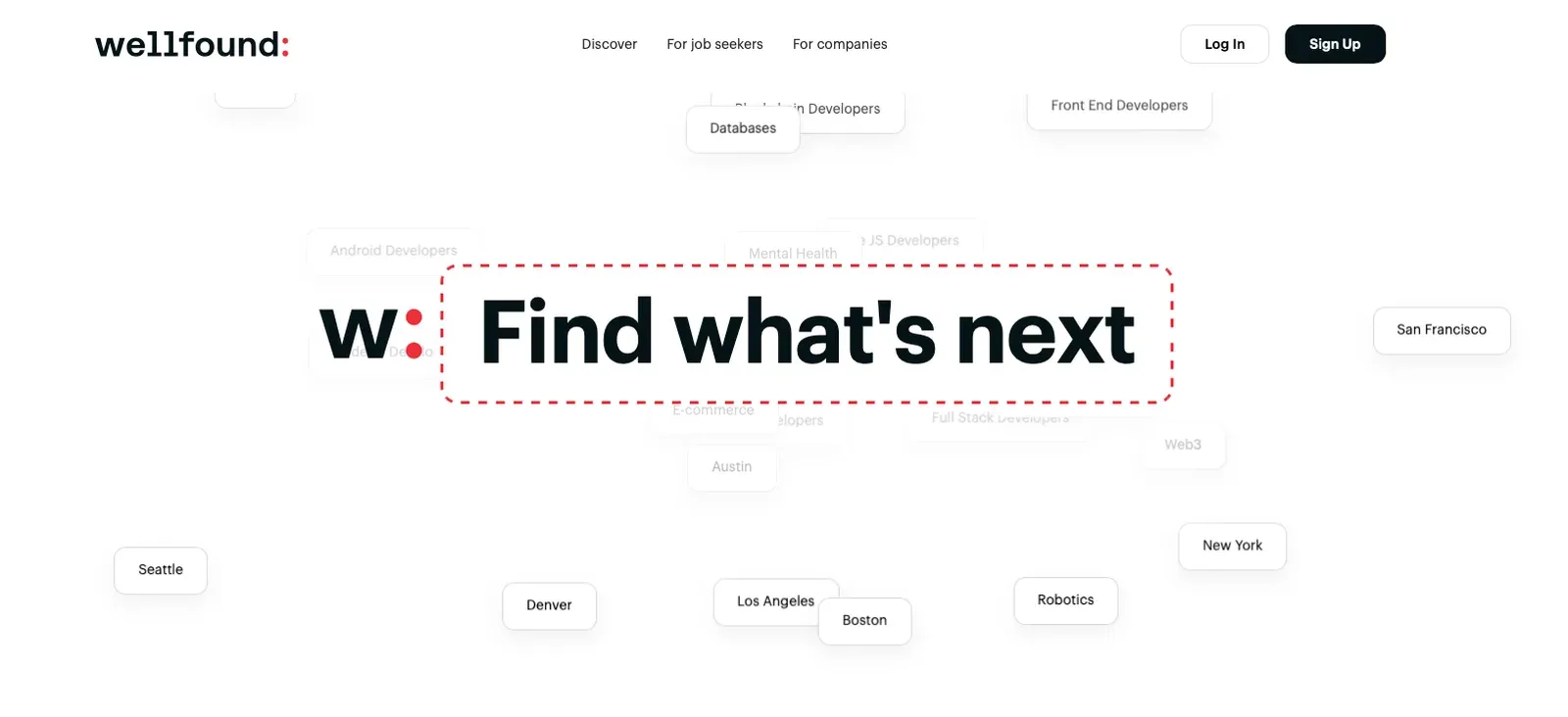
Wellfound’s free Access plan is the closest thing to a purpose-built free job board for startup hiring. Listings don’t expire, there’s no credit card required to get started, and the candidate base skews heavily toward people who already understand equity, early-stage risk, and startup culture.
The free tier includes unlimited job posts with built-in fields for salary range, equity percentage, and company stage, which sets expectations before candidates even apply. For engineering, product, and design roles at pre-Series B companies, it tends to outperform general boards on application quality. Teams looking for the best free ATS for startups often find Wellfound a strong complement. Promoted listings and AI-assisted sourcing are paid features, so organic visibility is what you’re working with on the free plan.
Where Wellfound underperforms: regional operations roles, non-tech positions, and hiring outside major metro areas. The audience is largely US-based and focused on tech. If you’re hiring a warehouse lead in Texas or a sales coordinator in a secondary market, expect thin results.
Indeed’s Free Tier: What You Actually Get
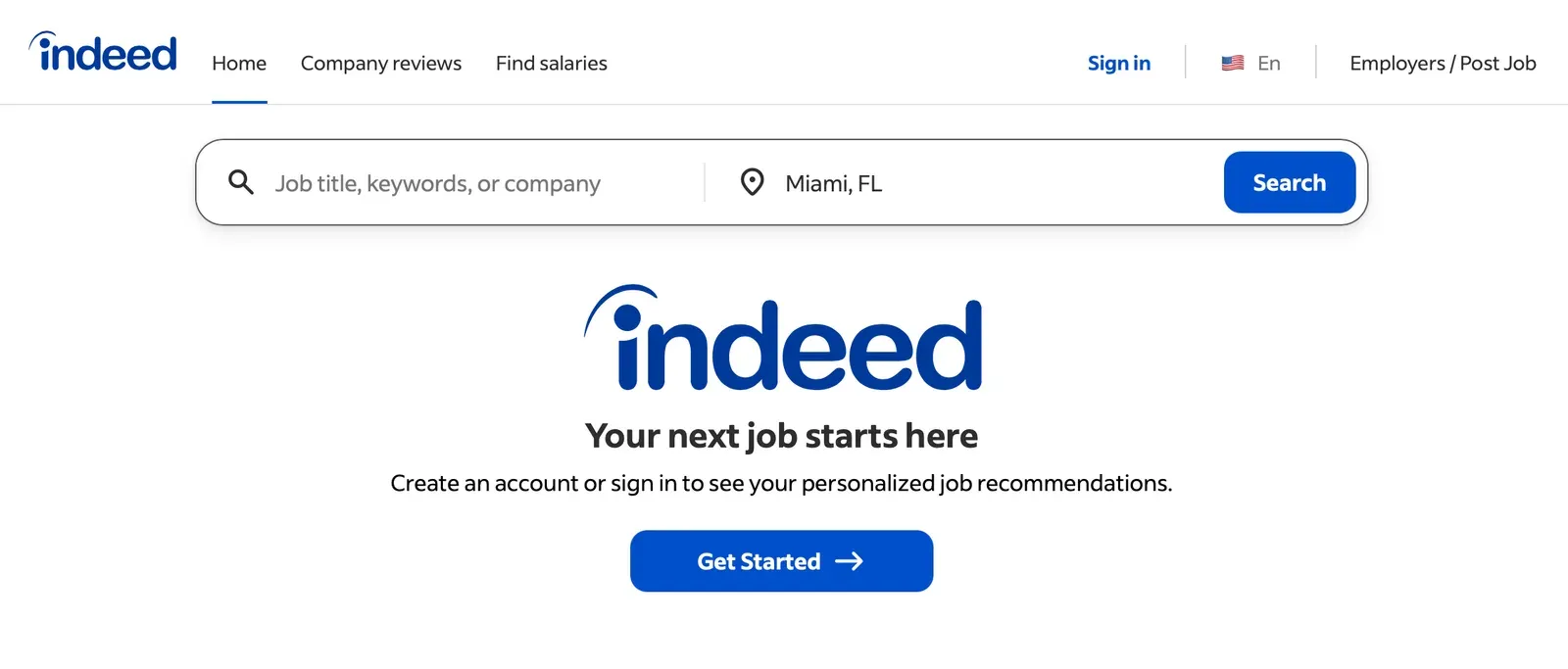
As of December 2025, Indeed’s free tier caps at three hosted posts per employer per calendar month, each staying live for up to 30 days.
The visibility caveat matters more than the post limit. Sponsored listings take priority in search results, which pushes free organic posts down. In competitive markets or high-demand roles, free listings can get buried quickly.
The ATS integration requirement is the bigger catch for teams using automated feed distribution. As of March 31, 2026, jobs sent through certain single-source XML feeds are no longer eligible for free visibility when those jobs can instead be delivered through an Indeed-integrated ATS. If your ATS already integrates with Indeed but you continue routing jobs through an affected single-source feed, those jobs generally need to be sponsored for visibility.
The free tier still makes sense for low-urgency roles in less competitive markets, or as a complement to paid listings where budget is tight. For urgent or competitive searches, sponsoring is likely the more practical choice given how aggressively promoted posts now dominate results.
LinkedIn, Handshake, and Other General-Purpose Free Boards

LinkedIn allows one free job post at a time, but free posts are paused after 14 days unless promoted and automatically close after 30 days if no action is taken, but the visibility ceiling is low. Free listings appear in LinkedIn search and can be surfaced through recommendations, but promoted jobs receive substantially broader placement, including prominent recommendations, feeds, and email alerts. For senior or specialized roles where passive reach matters, that’s a real constraint.
Handshake is the opposite situation: unlimited free posts, but a narrow audience. The candidate pool skews early-career and university students, and most postings require school approval before going live, adding a few days to turnaround. If you’re hiring entry-level or internship roles, Handshake often outperforms general boards on volume. For anything requiring three or more years of experience, the fit drops considerably.
SimplyHired aggregates listings at no cost to post, but accessing candidate contact info costs per click. That model works if you’re comfortable fielding inbound applications without direct outreach. Jora operates similarly as a free aggregator, pulling listings from multiple sources to supplement reach on hourly and general roles. Understanding your full recruitment sources mix helps clarify where each channel fits.
Google for Jobs: Free Visibility From Your Own Careers Page
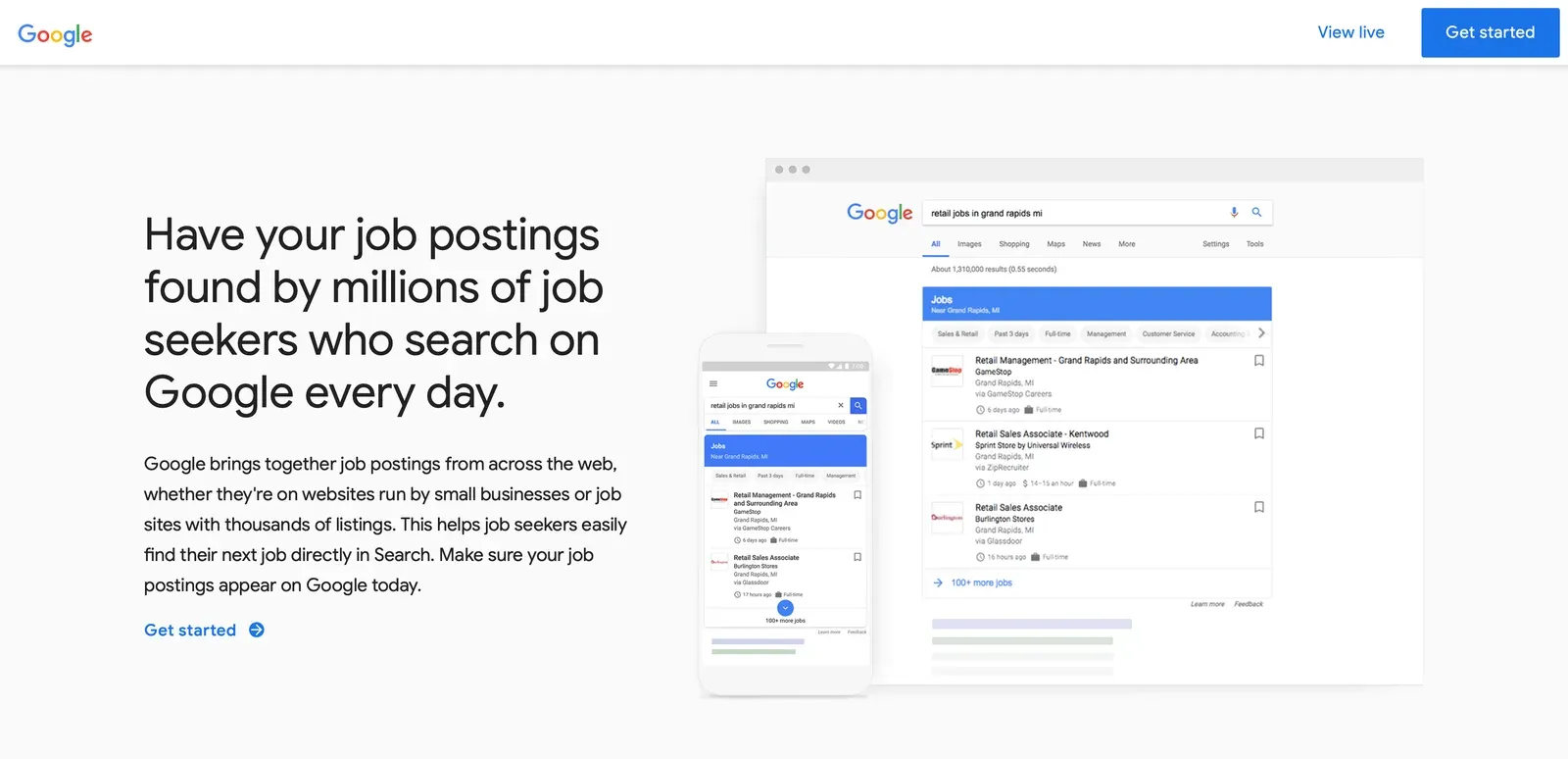
Google for Jobs surfaces job listings directly in search results as a rich widget above the organic links. Getting your listing into that widget costs nothing, but it requires valid JobPosting structured data on your own careers page, since Google crawls and indexes listings directly instead of accepting manual submissions.
Core required fields include title, description, datePosted, and hiringOrganization, along with location information appropriate to the role. validThrough is required when the posting has an expiration date. Incorrect or incomplete structured data can make a posting ineligible for Google’s job-search experience, including missing validThrough when the job has a defined expiration date. The schema also has to match what’s visible on the page; Google flags listings where the structured data describes a different role or location than what the page actually displays.
A few implementation issues consistently cause problems:
-
Pages where job content only loads after JavaScript executes are frequently missed by Googlebot, even if the schema is technically correct
-
Schema embedded in an iframe instead of the main document is effectively invisible
-
Listings without a
jobLocationfield fail for location-based queries, which represent the majority of job search volume
When implemented correctly, eligible listings can appear in Google’s job-search experience after Google crawls and processes the page. Google has discontinued its Jobs API, so schema-based crawling is the only path to inclusion. Most ATS tools generate compliant structured data automatically, so listings go live without any developer work on your end. A startup ATS guide covers how to configure these integrations from scratch.
Craigslist and Community Channels for Local Hiring
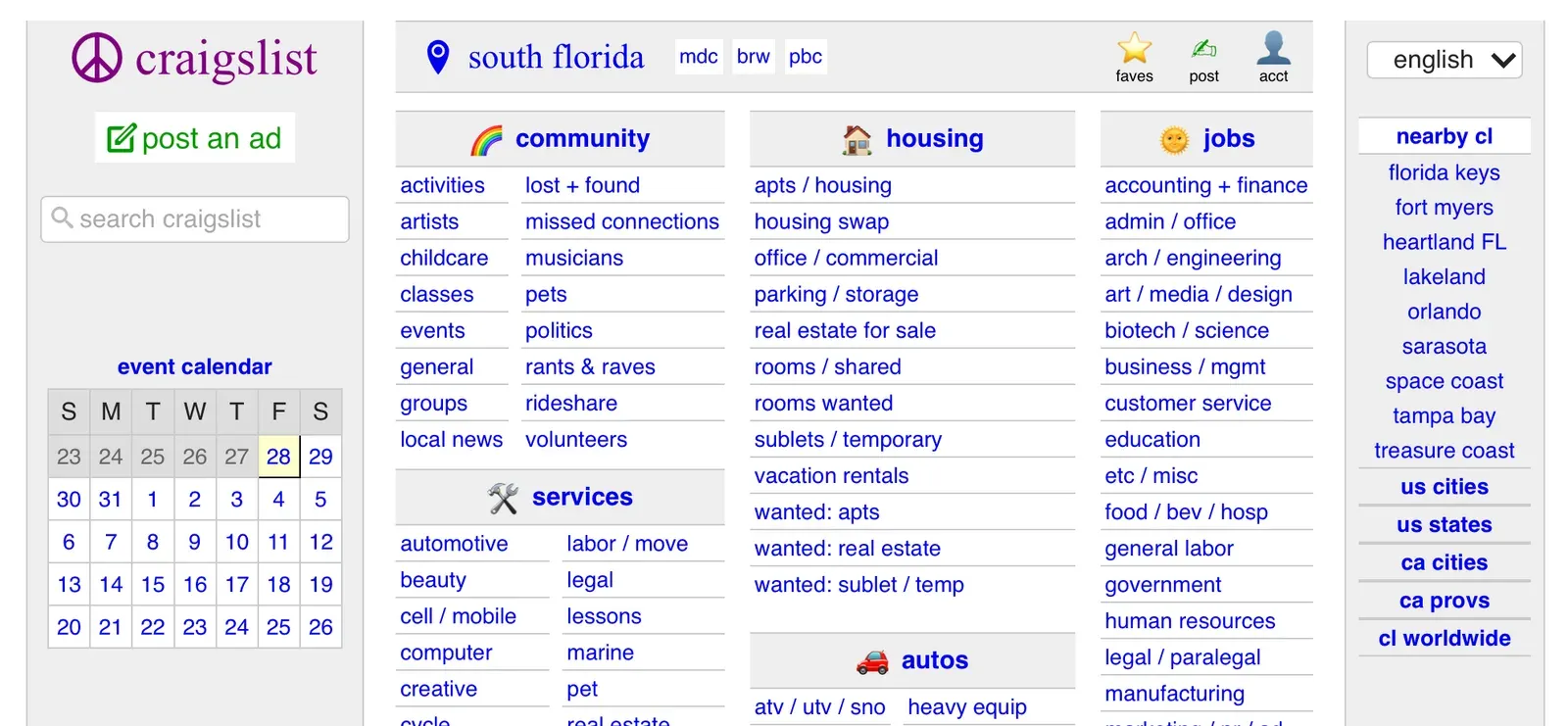
Craigslist job posting works differently from every other channel here. There’s no algorithm, no applicant matching, and no candidate profiles. You post in the right city, pick the right category, and wait for email responses.
Craigslist performs well for hourly, local, trade, and support roles. Warehouse coordinators, restaurant staff, delivery drivers, office admins. For those searches it regularly outperforms niche boards on raw application volume. The tradeoff is no ATS integration, no built-in screening, and wide variation in response quality. Plan to filter manually.
None of these replace a dedicated job board for competitive roles, but for local hiring on a tight budget, they cover ground that Indeed and LinkedIn won’t.
How to Post to Multiple Job Boards at Once Without Paying Per Listing
Manual board-by-board posting gets unwieldy fast. When choosing a distribution tool, a few questions are worth asking:
-
How many boards are in the distribution network, and are they boards your candidates actually use?
-
Are partner boards connected via direct API or scraped syndication? Direct integrations stay current and compliant; scraped syndication can break silently.
-
Do all applicants land in one central place, or do you end up checking inboxes across multiple sites?
Dover’s free all-in-one ATS distributes to over 100 boards from a single post, with candidates routing centrally into one pipeline. For a startup posting more than a few roles at once, that setup removes most of the coordination problem without adding cost.
How Dover Fits Into a Free-First Hiring Stack

Sure, we’re biased here. But the coordination problem this post describes maps directly to what Dover’s free ATS is built to fix. A single post distributes to over 100 boards, including Wellfound and Indeed, with every applicant routing into one central pipeline. Setup takes under five minutes, and the free tier has no limits on jobs or users.
Board distribution handles reach. It does not handle sourcing, screening, or closing a candidate with competing offers. When a role is senior, specialized, or stalled despite inbound volume, that’s where a fractional recruiter adds a layer: the ATS covers pipeline organization and board distribution; the recruiter covers outreach, qualification, and closing, all inside the same system. Recruiters set their own rates, which have typically averaged $75 to $125 per hour, with most roles landing between $2,000 and $7,000 total per hire on average, no retainer, no long-term contract, and a fully refundable $800 deposit. More detail on what drives that range is in this breakdown of fractional recruiter costs.
Frequently Asked Questions
What’s the best free way to post jobs to multiple boards at once without paying per listing?
Dover’s free ATS pushes a single post to over 100 boards and routes all applicants into one central pipeline, at no per-listing cost. If you use a multi-board aggregator instead, confirm it relies on direct API integrations; scraped syndication can break silently and create compliance issues with boards like Indeed.
Does Google have a free job posting option, and how do you actually get listed?
Yes. Google for Jobs surfaces listings in search results at no cost but does not accept manual submissions. You need valid JobPosting structured data on your careers page, with required fields including title, description, datePosted, validThrough, and jobLocation. Most ATS tools generate compliant schema automatically, so listings typically appear within 24 to 72 hours. The most common failure: pages where job content only loads after JavaScript executes.
When does an ATS stop being enough, and should I add a recruiter to my hiring stack?
An ATS handles pipeline organization, board distribution, and application routing. It does not source candidates, run outreach, or close offers. For most early-stage teams managing inbound from free boards, that coverage holds. The gap shows up when a role needs passive sourcing, when inbound volume is high but application quality is low, or when a search has stalled despite good visibility. A fractional recruiter working inside the same ATS pipeline adds capacity without the overhead of a full-time hire or a contingency agency.
Final Thoughts on Free Job Posting Options for Startups and Small Teams
Free job posting sites still deliver real results when you match the board to the role and manage the inbound carefully. The shift in 2026 narrows the field, but Wellfound, Google for Jobs, Handshake, and Craigslist each hold their lane for the right searches. Where free posting tends to break down is coordination and capacity, managing inbound across scattered platforms, or running a search that genuinely needs sourcing muscle rather than just additional reach. The right infrastructure layer depends on which of those two problems you’re actually solving.