Most artificial intelligence recruiting software does four or five things well and markets itself as doing twenty. If you’ve ever bought a tool that sounded like a complete solution in the demo and then sat mostly unused after onboarding, you know exactly what that gap feels like. Understanding what these tools genuinely handle inside an ATS makes it a lot easier to buy the right one.
TLDR:
-
AI recruiting tools handle sourcing, resume scoring, scheduling, and pipeline tracking, but results depend on how well your criteria are configured.
-
Screening quality reflects the job description fed into the system; vague requirements produce weak shortlists regardless of the tool.
-
Automated scheduling tends to deliver the fastest visible time savings since calendar coordination is constant, repetitive work.
-
AI scoring can encode historical hiring patterns, and several jurisdictions now require bias audits for automated decision tools.
-
Some tools pair free ATS software with on-demand recruiting support at $75 to $125 per hour instead of fixed retainers.
What AI Recruiting Software Actually Does (vs. What Vendors Claim)
AI recruiting software vendors tend to promise a lot: automated sourcing, bias-free screening, instant pipeline visibility. The reality inside most applicant tracking systems is narrower and more mechanical than the marketing suggests.
Here is what these tools actually do across the core functions they handle.
Candidate Sourcing
AI sourcing tools scan databases, LinkedIn, GitHub, and other public profiles to build lists of candidates who match a role’s requirements. The better AI sourcing tools, like Juicebox AI, go further by inferring fit from contextual signals instead of just keyword matches. Free AI tools for recruitment often cap database access or limit exports, which matters if you are hiring at volume.
Resume Screening and Scoring
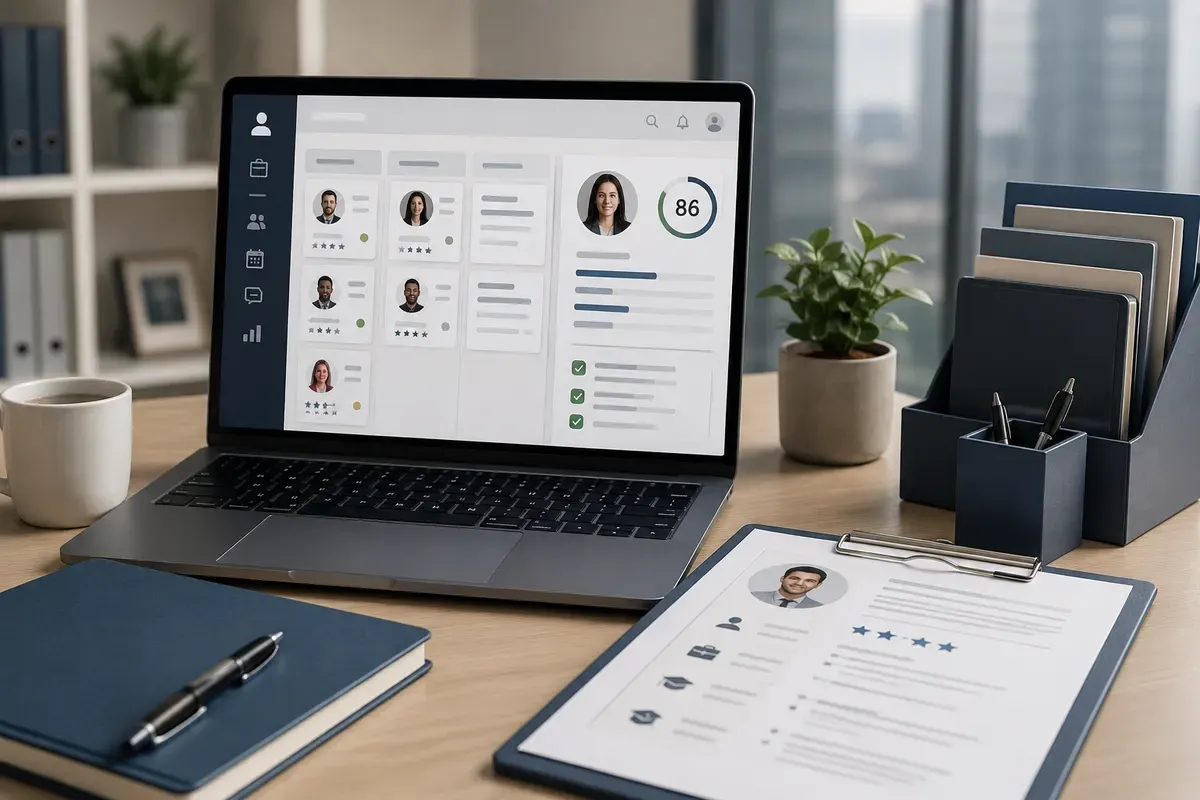
Most AI recruiting software scores inbound applicants against a rubric built from the job description. This filters obvious mismatches before a human reviews the pile. The scoring reflects whatever criteria the system was trained on, so a poorly written job description produces poor screening results.
Outreach and Scheduling
Some tools generate personalized outreach sequences and automate interview scheduling. This reduces coordination overhead without removing the recruiter from the loop entirely.
Pipeline Tracking
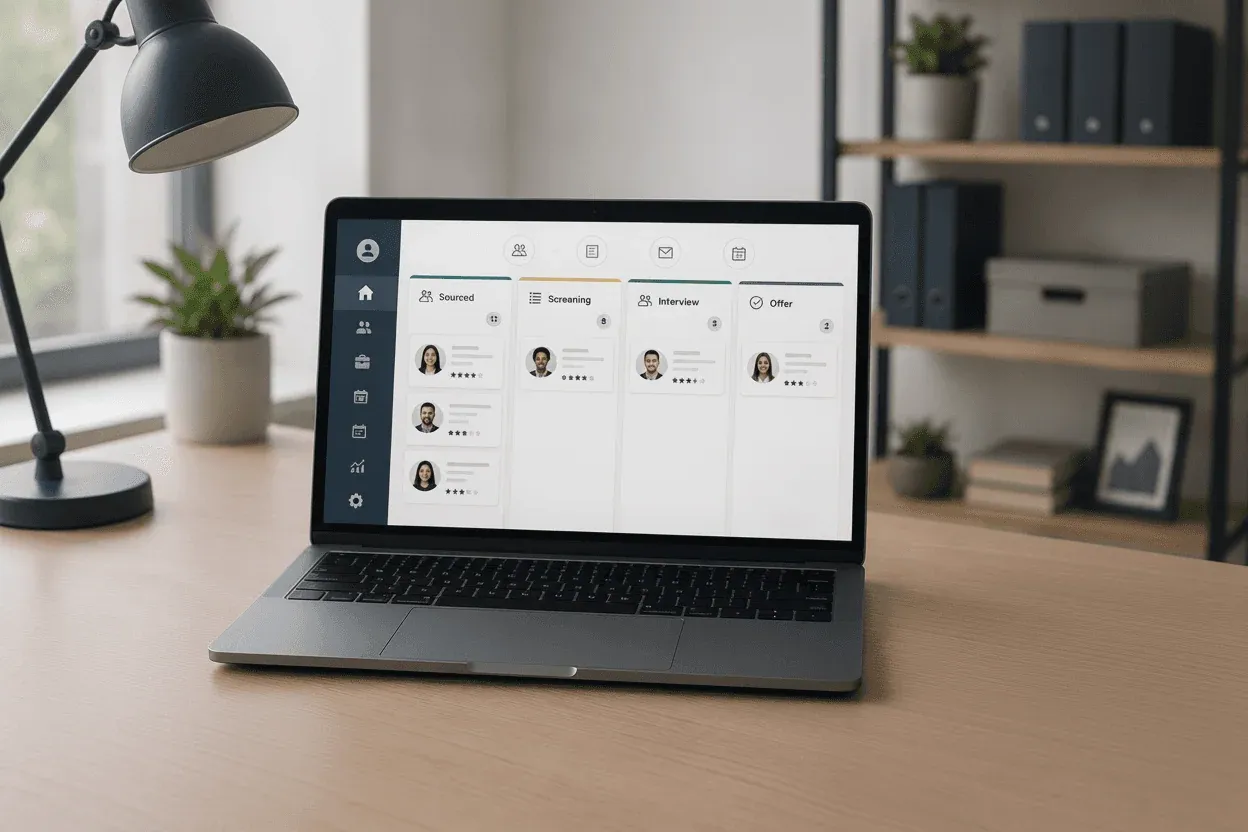
Every legitimate applicant tracking system tracks candidate status, hiring stage, and team feedback in one place. AI layers on top of that by surfacing stalled candidates or flagging roles that are falling behind.

Automated Scheduling and Candidate Communications
Scheduling logistics eat more recruiter time than most other coordination tasks. AI scheduling tools connect to calendars, surface mutual availability, and confirm bookings automatically. That single function tends to deliver the fastest visible time savings in an AI recruiting stack because the back-and-forth is constant, repetitive, and adds no hiring value.
Status updates and rejection notifications can run on event triggers instead of manual sends. Candidates get timely communication without a recruiter composing each message, which supports broader candidate sourcing techniques and reduces the risk of candidates going cold while waiting on a response.
The Limits of AI Recruiting Software
AI recruiting software handles a lot of the repetitive, high-volume work that slows hiring teams down, but there are real boundaries to what it can do well.
Fit scoring depends entirely on the quality of the criteria fed into the system. If the job requirements are vague or the historical hiring data reflects past biases, the AI will surface candidates that match those patterns, not necessarily the best candidates. Stanford HAI research analyzing millions of real-world job applications found substantial evidence of racial disparities in AI-based candidate screening and showed how reliance on the same hiring algorithm across employers can contribute to systemic rejection patterns. Garbage in, garbage out applies here as much as anywhere.
Most tools also struggle with roles that are genuinely novel or highly specialized. When there is no clean historical data to learn from, AI sourcing and screening tools are working with thin signal. Recruiters who rely too heavily on automated scoring in those contexts often find the shortlists feel off.
There is also the question of candidate experience. Automated outreach sequences can cover volume, but candidates for senior or hard-to-fill roles notice when they are in a generic drip. The tools that work best treat AI as a filter and a first pass, not as a replacement for the human judgment calls that determine whether someone is actually the right fit for a specific team. For searches where automated scoring runs thin, some teams layer in fractional recruiting support on an hourly basis, keeping human judgment in the loop without adding a full-time headcount line.
AI Recruiting Compliance in 2026
Compliance requirements inside an ATS have grown more specific over the past few years, and the tools that handle them well tend to do so quietly, in the background of workflows recruiters are already running.
The two areas that come up most often are data privacy and equal employment opportunity recordkeeping. On the privacy side, GDPR and CCPA impose requirements around how candidate data is collected, used, secured, retained, and disclosed, while also giving candidates certain rights over their personal information. A well-configured ATS logs consent at the point of application, enforces data retention schedules automatically, and gives candidates a mechanism to request removal without requiring a recruiter to manually track those obligations.
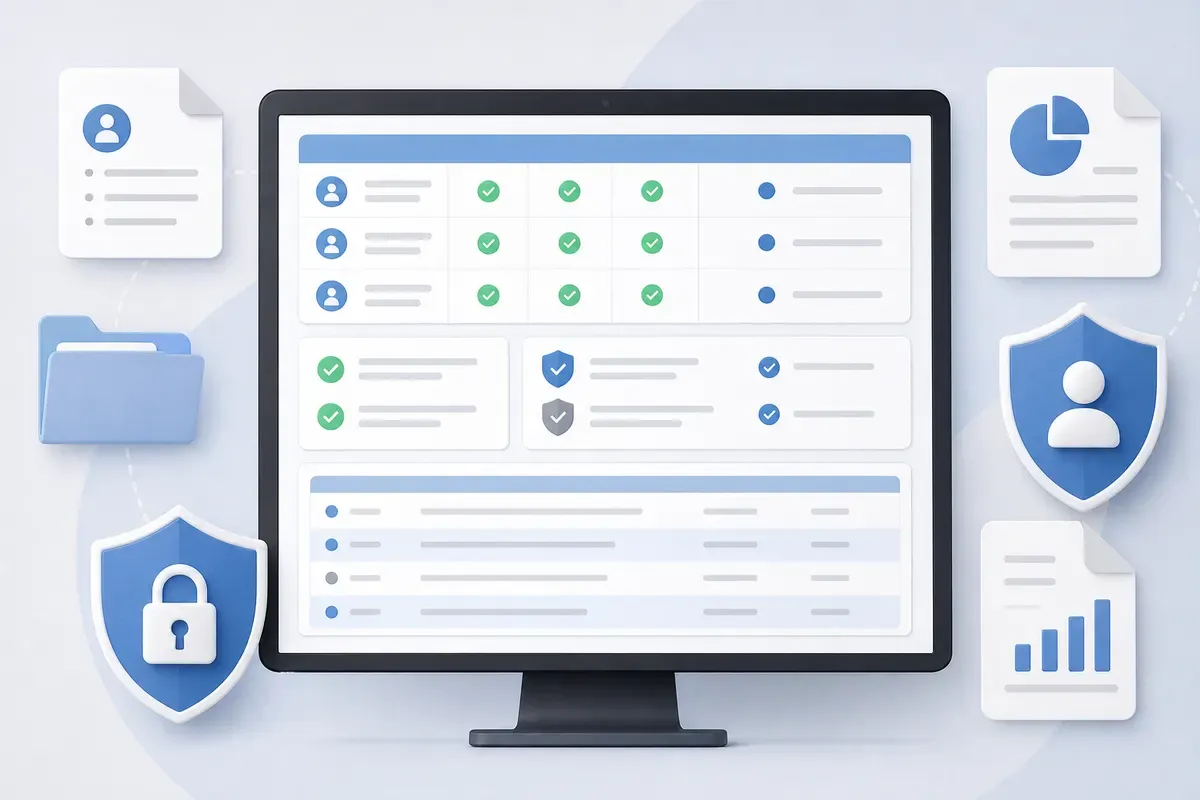
EEO and OFCCP compliance works differently. Covered federal contractors must maintain specified applicant and hiring records, including applicant demographic and selection data where applicable. Using consistent disposition reasons can also help document why candidates were screened out or advanced. AI recruiting software can support this by prompting recruiters to log standardized disposition reasons at each decision point, generating audit-ready reports without requiring manual spreadsheet reconstruction after the fact.
Where AI Screening Intersects With Bias Risk
This is where compliance gets more involved. AI screening tools that score or rank candidates based on resume data can inadvertently encode historical hiring patterns into their outputs. New York City requires certain automated employment decision tools to undergo a bias audit before employers or employment agencies use them, and other jurisdictions are introducing their own rules governing AI in employment decisions.
The practical implication is that AI scoring can reduce certain kinds of inconsistency in how candidates are reviewed, but it introduces its own audit surface. ABA guidance on AI employment bias recommends due diligence before implementing any AI-based employment tool, including vendor contract provisions and regular bias audits. Teams using these tools should understand what data the model was trained on, whether disparate impact testing has been run, and how the tool’s outputs are documented in the hiring record.
How to Choose AI Recruiting Software
Start with which bottleneck you actually have. Inbound screening tools and outbound sourcing tools solve different problems, and buying on feature count instead of fit leads to paying for capabilities that never get used.
Here are the factors worth checking before committing to any AI recruiting software:
| Criterion | What to check | Why it matters |
|---|---|---|
| ATS integration | Is the AI native to your ATS or a separate tool requiring manual imports? | Separate tools create sync gaps that cost time and introduce errors. |
| Scoring transparency | Are rankings explainable, or does the tool return black-box outputs? | Explainable rankings let you audit and defend shortlists when results look off. |
| Bias audit availability | Has the vendor run and shared disparate impact testing on their scoring models? | Vendors who haven’t done this work typically can’t answer the question clearly, which is a red flag before relying on automated scoring in hiring records. |
| Setup time | How quickly does the tool deliver value out of the box? | Days to value matters more than feature depth if your team lacks dedicated recruiting ops support. |
| Pricing structure | Is pricing per seat, per job, or a free tier with usage caps? | Each model carries different cost implications depending on hiring volume. |
| Scope | Does the tool cover inbound screening, outbound sourcing, or both? | Most tools are stronger at one than the other, so confirm which problem you’re actually solving before committing. |
If scoring logic is opaque, you can’t debug a bad shortlist or answer an auditor who asks why a candidate was filtered out. That’s worth pressure-testing before you commit.
How Dover Fits Into AI-Powered Recruiting
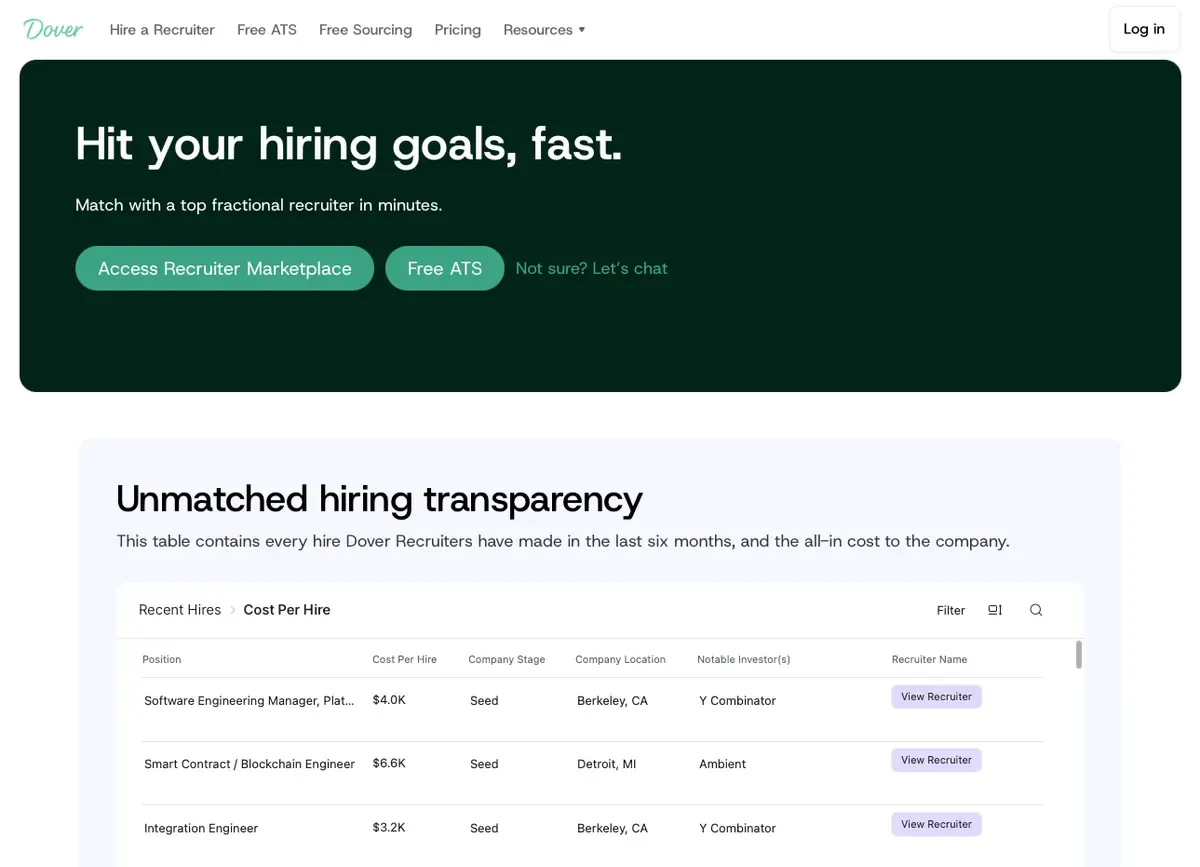
Dover is worth understanding in the context of what AI recruiting tools actually do inside an ATS. Dover’s free ATS handles the coordination layer that most AI tools automate: application tracking, stage management, interview scheduling, and candidate communication. The AI-assisted features work the way well-designed recruiting tools should, scoring and filtering inbound applicants against structured criteria instead of acting as a black box, so hiring managers can see why a candidate moved forward or didn’t.
Where Dover goes beyond standard ATS functionality is in pairing that free software with on-demand fractional recruiters who work directly inside the same pipeline, at $75 to $125 per hour, with total per-hire costs typically running $2,000 to $7,000. The ATS handles the coordination and tracking layer; the recruiter picks up sourcing, candidate conversations, and judgment calls when a search requires it. Dover is also the underlying system that fractional recruiting agencies are built on, and the recruiters in the marketplace carry verifiable reviews from real searches instead of opaque placement histories. That structure tends to fit early-stage teams better than choosing between a fully automated tool with no human support and a full retained search with a fixed monthly commitment.
FAQs
What’s the difference between AI sourcing tools like Fetcher AI or Juicebox AI and a standard ATS?
An ATS manages candidates who have already applied, tracking their status, stage, and team feedback in one place. AI sourcing tools like Fetcher AI and Juicebox AI work outbound, scanning databases and public profiles to surface passive candidates who match a role before anyone has submitted an application. The two functions solve different problems, and most teams need both.
Can AI recruiting software replace human judgment in screening and shortlisting candidates?
No. The best AI recruitment tools are designed to filter and rank, not decide. Scoring quality depends entirely on how clearly the job criteria are defined, and algorithms trained on historical hiring data can reflect past patterns instead of surfacing the strongest candidates. Human review before candidates advance remains the standard practice across AI recruiting companies and is how the tools work best.
What are the best AI sourcing tools for recruiters who need outbound candidate discovery without a dedicated sourcer?
Fetcher AI and Juicebox AI are the tools most commonly compared in this category. Juicebox AI uses contextual signals to rank candidates by inferred fit, going beyond keyword overlap. Fetcher AI pairs search with outreach automation. Free AI tools for recruitment in this space tend to cap database access or limit outreach volume, which works for lower hiring velocity but creates friction at scale.
How does AI recruiting software handle EEO and data privacy compliance inside an ATS?
A well-configured ATS logs candidate consent at the point of application, enforces data retention schedules, and generates audit-ready disposition reports without manual spreadsheet reconstruction. On the bias side, AI screening tools that score resumes based on historical hiring data can encode prior patterns into their outputs. Several jurisdictions, including New York City, now require bias audits for automated employment decision tools, so teams should ask vendors whether disparate impact testing has been run before relying on automated scoring in hiring records.
Final Thoughts on AI Recruiting Software
Artificial intelligence recruiting software works best as a filter, not a replacement for the judgment calls that actually determine whether someone fits a specific team. The tools that deliver the most value are the ones where scoring logic is transparent, database coverage matches where your candidates actually are, and workflow integration doesn’t require manual imports to keep things in sync. Getting that combination right takes some upfront assessment, but it pays off quickly in time saved per hire. Dover is one place to start if you’re assessing options: a free ATS with AI scoring built in, pipeline tracking without manual imports, and access to fractional recruiters at $75 to $125 per hour. Each recruiter in the marketplace carries verifiable reviews from real searches, and Dover is the underlying system fractional recruiting agencies are built on.