
You’re juggling offer letters, payroll setup, and break policies, with no clear owner for the gaps between them. California hiring laws reach across all three: a contractor agreement can’t settle worker status, and a signed break policy can’t prove daily compliance. A useful checklist connects each requirement to the records, deadlines, and people needed to carry it through.
TLDR:
- Check California hiring rules by your headcount and work location, including remote hires.
- Include pay scales in covered job postings if you have 15+ employees.
- Treat ATS resume scoring, ranking, and auto-reject features as possible automated-decision systems; keep related records for four years.
- Review duties and salary-basis tests; salary alone does not make an employee overtime-exempt.
- Start required first meal breaks by hour five’s end; qualifying late meals can trigger premium pay.
- Prepare final wages for immediate payment at discharge; include earned unused vacation.
California Employment Laws by Company Size and Work Location
California hiring laws can apply to remote hires. Check federal law, local ordinances, and industry wage orders too.
Harassment protections generally apply with 1 employee. Major FEHA discrimination protections and the California Family Rights Act generally cover employers with 5 employees, though eligibility for family leave requires a separate assessment.
Headcount tests vary by statute. The Civil Rights Department enforces state employment discrimination laws.
- 1+ employee: harassment protections generally apply.
- 5+ employees: FEHA discrimination protections, California Family Rights Act coverage (family leave eligibility needs separate assessment), and the Fair Chance Act, with exceptions.
- 15+ employees: pay scales required in covered job postings.
General information, not legal advice. Verify current requirements before relying on this information.
Job Postings, Interviews, and Background Checks
Employers with 15+ employees must include pay scales in job postings. Avoid salary-history and protected-characteristic questions; review equal pay, use job-related criteria, and provide reasonable recruiting accommodations.
California’s Fair Chance Act generally covers employers with 5+ employees, with exceptions. Delay criminal-history inquiries until a conditional offer; conduct individualized assessment and required notices before rejection. Follow background-check disclosure and authorization rules.
AI Screening, ATS Features, and California Automated-Decision Rules
A knockout question that auto-rejects applicants, or a resume score that sorts a shortlist, can turn an ATS setting into an employment decision California regulates. The Civil Rights Council’s automated-decision system regulations, effective October 1, 2025, cover computational tools that make or facilitate employment decisions, including resume screening for particular terms or patterns, targeted ad delivery, and analysis of facial expression, word choice, or voice in online interviews. Employers can be held liable for discriminatory outcomes even when a vendor built the tool.
- Disparate impact: a tool can create liability without discriminatory intent, and evidence of anti-bias testing, or its absence, can be relevant in a claim.
- Disability screening: assessments, questions, or games that elicit disability information can amount to an unlawful medical inquiry.
- Records: keep selection criteria, tool outputs, and audit findings for four years.
- Human review: pair scores with a person who can override them, and plan an alternative path for candidates who need an accommodation.
Separately, the California Privacy Protection Agency’s automated decisionmaking technology rules reach tools that replace or substantially replace human decisionmaking in hiring, with compliance required by January 1, 2027. Covered uses can require a pre-use notice, an opt-out or human appeal option, and a risk assessment. These rules sit within the CCPA, so confirm with counsel whether your company meets its coverage thresholds. Rules on AI in hiring are still developing, so recheck them before each hiring cycle.
For an ATS, list every feature that scores, ranks, filters, or rejects candidates and name who reviews its output. AI resume scoring and auto-reject knockout questions deserve the closest review; candidate tracking, scheduling, and feedback forms carry less automated-decision risk. Ask vendors what the tool does, whether it has been bias-tested, and whether you can export the records you must retain. A recruiter who reviews scores and decides independently is on firmer ground than one who accepts them unexamined.
Offer Letters, Employment Agreements, and New-Hire Notices
Offer letters should specify compensation, classification, work location, reporting relationships, and qualified at-will language. At-will status does not permit discriminatory, retaliatory, or otherwise unlawful termination.
Review noncompete restrictions and AB 692 repayment limits with counsel. Provide the Workplace Know Your Rights Act notice (required annually since February 1, 2026) and let employees name an emergency contact (required since March 30, 2026), including new hires.
Keep wage notices, work-authorization verification, payroll forms, and workplace postings separate from offers. Assign document owners; offer acceptance does not complete onboarding.

Employees, Independent Contractors, and Misclassification
California’s ABC test generally requires all three: freedom from control, work outside your usual business, and an independent trade. Agreements, invoices, or worker preference cannot settle status. Exceptions may require another legal test.
For a developer building your startup’s core product (someone you likely found through a process covered in how to interview candidates), review business overlap and control. Separately, exempt versus nonexempt classification concerns employee overtime protections, so assess a salaried sales lead’s actual duties and pay, with the hiring manager helping review.
California Minimum Wage, Exempt Salaries, and Overtime
Effective January 1, 2026, California’s statewide minimum wage is $16.90 per hour, and the usual annual salary floor for executive, administrative, and professional exemptions is $70,304. On January 1, 2027, the minimum wage rises to $17.40 per hour and the exempt salary floor to $72,384, per DIR’s 2027 minimum wage announcement.
Legal compensation minimums alone don’t determine exemption: duties and salary-basis tests apply.
Salaried nonexempt overtime generally includes:
- 1.5x after eight daily or 40 weekly hours; first eight hours on the workweek’s seventh consecutive workday.
- Double time after 12 daily hours or eight that seventh day.
Exceptions apply.
Los Angeles Minimum Wage and Local Employment Requirements
The City of Los Angeles minimum wage is $18.42 per hour effective July 1, 2026, as listed in the city’s official minimum wage notice. The ordinance provides for annual rate adjustments each July 1; confirm updated rates after official announcement. Unincorporated LA County and neighboring cities require separate local-rate checks.
Check work locations, including remote work, against city boundaries. Local paid sick leave, Fair Chance, and sector-specific requirements vary by ordinance and industry.
California Meal and Rest Break Rules and Shift Calculator
For covered nonexempt employees, exclude unpaid, duty-free meal periods when calculating hours worked.
| Hours worked | Breaks |
|---|---|
| 6 | One paid 10-minute rest; 30-minute meal waivable by mutual consent. |
| 8 | Two paid 10-minute rests; one duty-free 30-minute meal. |
Required first meals must start by the end of hour five. A qualifying late meal can trigger one additional hour of employer-paid premium pay, not an employee fine.

Payroll, Timekeeping, and Wage Records
As part of broader hiring practices for early-stage startups, record actual work time, including remote work, after-hours messages, meal periods, overtime, and corrections. Check wage statements, deductions, and expense reimbursements; assign a payday owner.
Keep hiring files separate from payroll and timekeeping records, with access controls and retention schedules.
A signed policy cannot prove daily compliance.
Document how workers report missed breaks or pay errors without retaliation, who investigates, and how corrections reach payroll.
Paid Sick Leave, Protected Leave, and Accommodations
Paid sick leave, pregnancy disability, family and medical leave, lactation accommodations, and other protected absences have different coverage, eligibility, wage replacement, and job protection tests.
Sick leave may accrue or be front-loaded; check more protective local rules. Treat vacation and combined PTO separately from standalone sick leave.
Mishandling these situations is among the common hiring mistakes startup founders make, so handle accommodation requests through a confidential, interactive review and track leave deadlines. Exempt status alone does not remove these protections.
Workplace Safety, Workers’ Compensation, and Reporting Protections
Before employees start, arrange required workers’ compensation coverage and review applicable Cal/OSHA duties, including a written Injury and Illness Prevention Program. Check workplace violence prevention plan and training requirements; exceptions depend on workplace conditions and coverage.
Internal reports and agency complaints may receive whistleblower protection. When safety, wage, discrimination, or leave concerns arise, document independent performance issues and seek legal review before taking adverse action.
California Final Paycheck Deadlines and Penalties
| Departure | General final-pay deadline |
|---|---|
| Discharged | Immediately |
| Resigns with 72+ hours’ notice | Upon leaving |
| Resigns without that notice | Within 72 hours under Labor Code Section 202 |
Include outstanding wages, earned unused vacation, and other compensation due. Willful lateness can trigger penalties for up to 30 days, not automatically.
Confirm final-pay direct deposit authorization. Qualifying quitters may request mailing. Payroll schedules and unreturned equipment cannot delay wages.
A California Termination Checklist for Founders
- Document termination reasons; review protected activity, leave, and accommodations.
- Prepare final pay, required separation notices, and benefits information.
- Coordinate access changes and property return.
- Obtain a separate notice-law review for layoffs or group reductions, and keep startup employee titles consistent with termination documentation.
Optional termination letter outline: “Employment ends [date]. Final-pay arrangements: [details]. Benefits contact: [contact]. Property-return instructions: [steps].”
The letter cannot replace required notices or a legally sound termination decision.
California Labor Board Complaints and Wage Claim Status
File Labor Commissioner wage claims with pay and time records. Employers should preserve evidence and respond without retaliation. CRD, federal wage, and labor-relations complaints follow separate processes.
For wage claim status, follow DIR’s wage claim update instructions: email the Labor Commissioner’s district office where you filed your claim and include your claim number in the subject line. Broader reports may permit anonymity, but individual wage recovery generally requires identification. Before outside recruiters represent your company to candidates, review how to vet external recruiters.
Dover’s Role in Organizing California Hiring Workflows

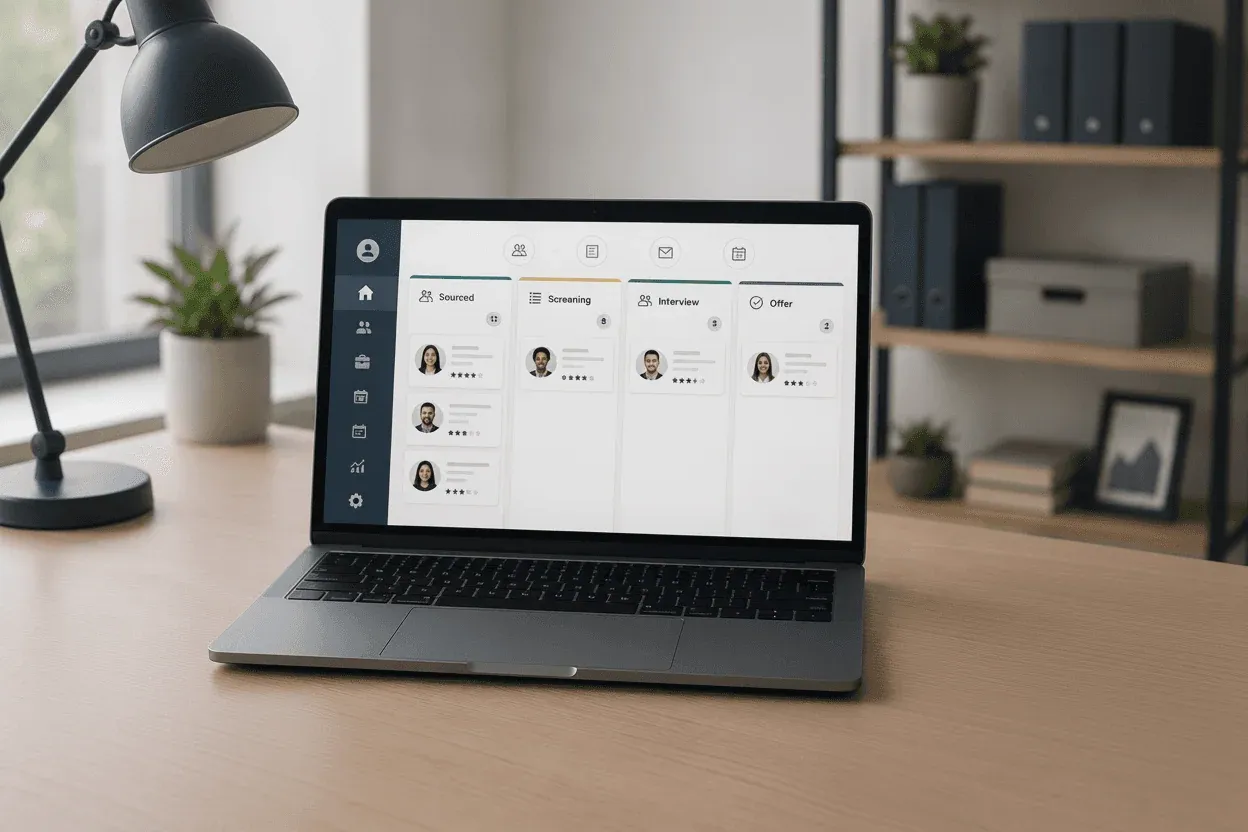
A shared recruiting workflow can keep documentation consistent and handoffs clear. Dover’s free ATS for startups includes candidate tracking, customizable interview plans, feedback forms, and unlimited jobs and users. Fractional recruiters, including fractional recruiting agencies built on Dover, can assist with sourcing, screening, coordination, and offers, and vetted reviews from real founders show how each has performed.
That support covers recruiting execution, not payroll administration, timekeeping, or advice from California employment counsel. Your team retains responsibility for legal compliance.
An ATS handles pipeline tracking, interview plans, and feedback records. A fractional recruiter plugs in on top of it when sourcing gets hard, a role is specialized, or no one on the team has recruiting bandwidth. Low-volume hiring often runs fine on the ATS alone; several open California roles at once may call for added recruiting capacity, with cost per hire averaging near $4,800 across all roles and varying by role complexity and recruiter. When the recruiter and hiring team work in the same ATS, both see the same pipeline in real time, which can reduce duplicate outreach and handoff gaps.
FAQs
What should you check before posting a remote California role?
Confirm the permitted work locations, applicable pay rates, and whether the posting needs a pay scale before publishing. For a role open to Los Angeles residents, check city boundaries and local requirements instead of assuming the statewide minimum covers every candidate. Use the same approved compensation details across all job listings.
Should you send an offer while a California exemption decision is still unresolved?
Resolve classification before sending an offer that labels the role exempt. California labor laws for salaried employees require more than a salary check: actual duties and salary-basis rules also matter. If the review remains uncertain, have California employment counsel assess the role and confirm any nonexempt timekeeping and overtime arrangements with payroll.
How do you hand off a successful hire to payroll without missing California onboarding tasks?
Use a separate onboarding checklist with named owners and deadlines; a candidate’s accepted offer is not proof that payroll and required notices are complete. Transfer the approved compensation, classification, start date, and work location to the payroll owner, while collecting tax and work-authorization documents through the appropriate secure process. Keep payroll, medical, and accommodation records separate from recruiting files, with access limited by role.
Do you need a recruiter if you already use an ATS?
An ATS tracks candidates, interview stages, and feedback, but it does not source, screen, or close candidates on its own. For low-volume hiring where a founder has time to run searches, software alone often covers the need. A fractional recruiter becomes worth considering when roles are hard to fill, several openings run at once, or no one has recruiting bandwidth. Fractional recruiters can work inside the same ATS as your hiring team, as with Dover’s free ATS, the layer fractional recruiting agencies are built on, so both sides see one pipeline and vetted founder reviews help in assessing each recruiter. Neither replaces California employment counsel for compliance decisions.
Final Thoughts on California Hiring Compliance
Your hiring tools support the process, but legal responsibility for California hiring laws stays with you. Keeping legal review separate gives your next hiring decision a clearer foundation. Dover’s model is one example of the split: a free ATS paired with on-demand fractional recruiters in one shared system handles recruiting execution, while employment counsel handles California compliance.