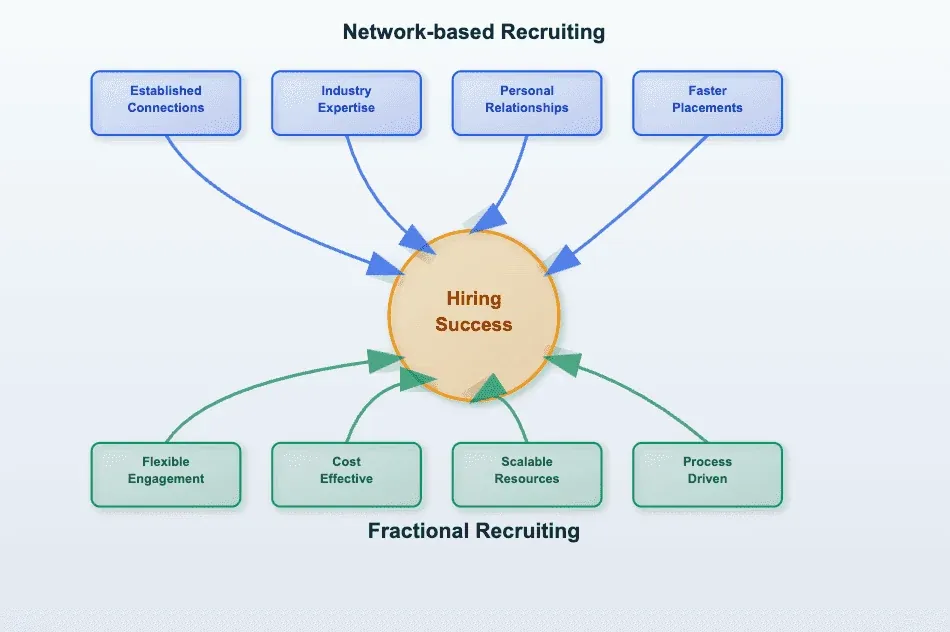

You’ve tried working with traditional recruiting agencies in Austin’s red-hot tech market, only to find they don’t really get the startup world and on top of that, they charge fees that give your CFO nightmares. That’s where connecting with an Austin startup recruiter who specializes in early-stage companies makes all the difference. With over $8.1 billion in venture investments flowing into Austin in 2025 alone, the competition for skilled talent has never been fiercer. Everyone’s fighting for the same talent pool, which means you need recruiters who understand your unique challenges as a startup. Let’s help you choose the right recruiting partner for your startup.
TLDR:
-
Dover leads as the best overall choice: a free ATS built as the infrastructure layer fractional recruiting agencies operate on, with a vetted recruiter network backed by verified startup reviews
-
Austin’s tech boom creates intense competition, requiring specialized recruiting expertise
-
Traditional agencies often don’t align with startup budgets and timeline needs
-
Fractional recruiting models offer cost-effective solutions without long-term contracts
-
The right recruiter should understand both startup culture and Austin’s competitive talent market
What Makes Austin a Tech Recruiting Hub
Austin is one of America’s most active tech ecosystems. The city attracted $8.1 billion in venture investments in 2025, with Austin ranking #1 among the top 50 U.S. metros for job growth that same year. Major companies like Apple, Google, and Meta have built major operations here, while hundreds of startups call Austin home.
But the growth also brings a storm of recruiting challenges.
You’re going head-to-head with tech giants offering massive compensation packages and proven career paths. Every company in town is fishing from the same pool.
Generic recruiting approaches that work in other markets fall flat here because candidates can choose from dozens of opportunities available to them. That’s where specialized startup recruiters help you.
How We Reviewed Austin’s Best Startup Recruiters
Our review focuses on startup-specific experience, tech talent expertise, delivery speed, cost-effectiveness for teams with limited resources, and proven track records with Austin-based startups. We also considered contract flexibility, since startups need recruiting support that scales with their unpredictable growth patterns.
Most traditional agencies don’t fit the bill, as most fail to focus on startups. They’re built for enterprise clients with predictable budgets and lengthy hiring processes. That’s why our top recommendations focus on choosing the right recruiter who understands startup realities.
1. Best Overall: Dover
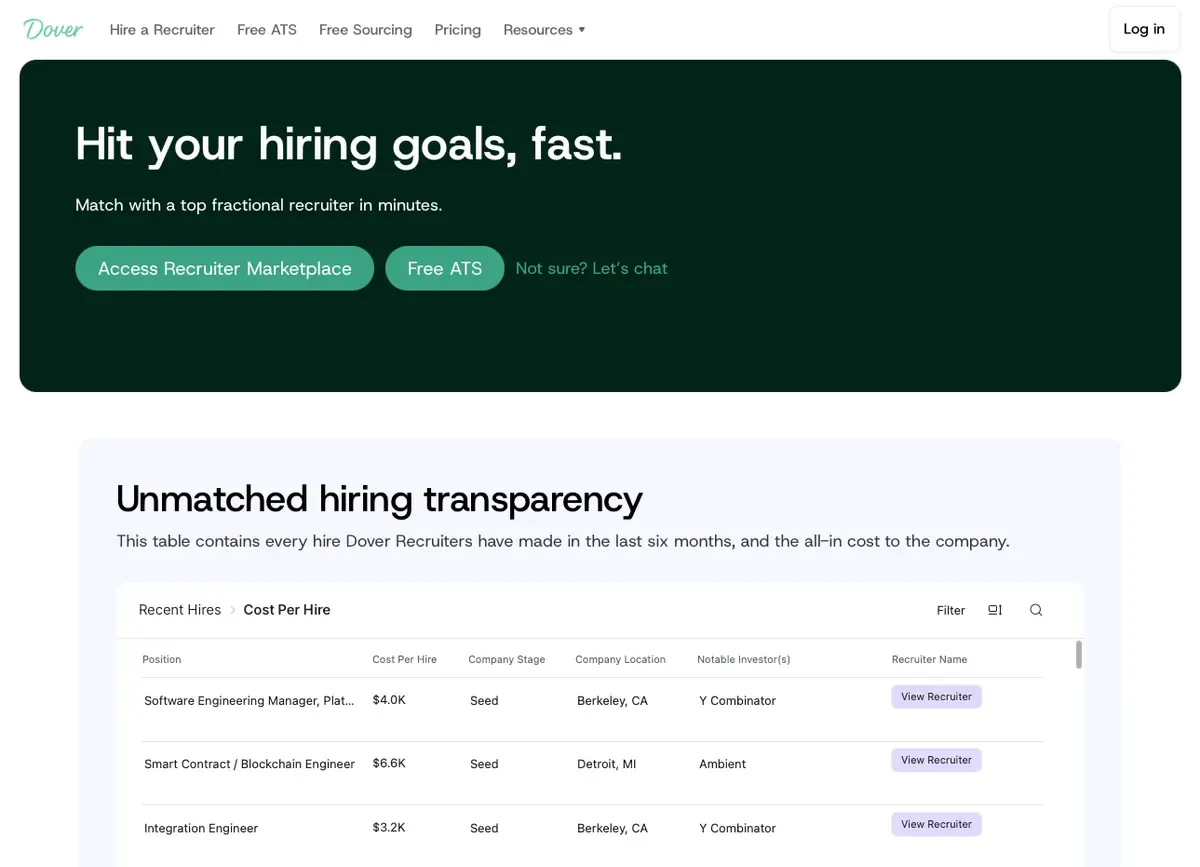
Dover stands out as the first choice for Austin startups seeking tech talent. Built as the infrastructure layer fractional recruiting agencies and independent fractional recruiters operate on, Dover combines a free ATS with a vetted recruiter marketplace, giving startups both the software and the on-demand human expertise in one shared system.
Dover connects startups with vetted fractional recruiters who specialize in tech roles and understand startup culture. These recruiters have worked with multiple early-stage companies and know what candidates are looking for in startup environments.
Dover’s fractional model means startups pay only for the help they need without long-term contracts, making it ideal for companies managing tight budgets and fluctuating hiring needs.
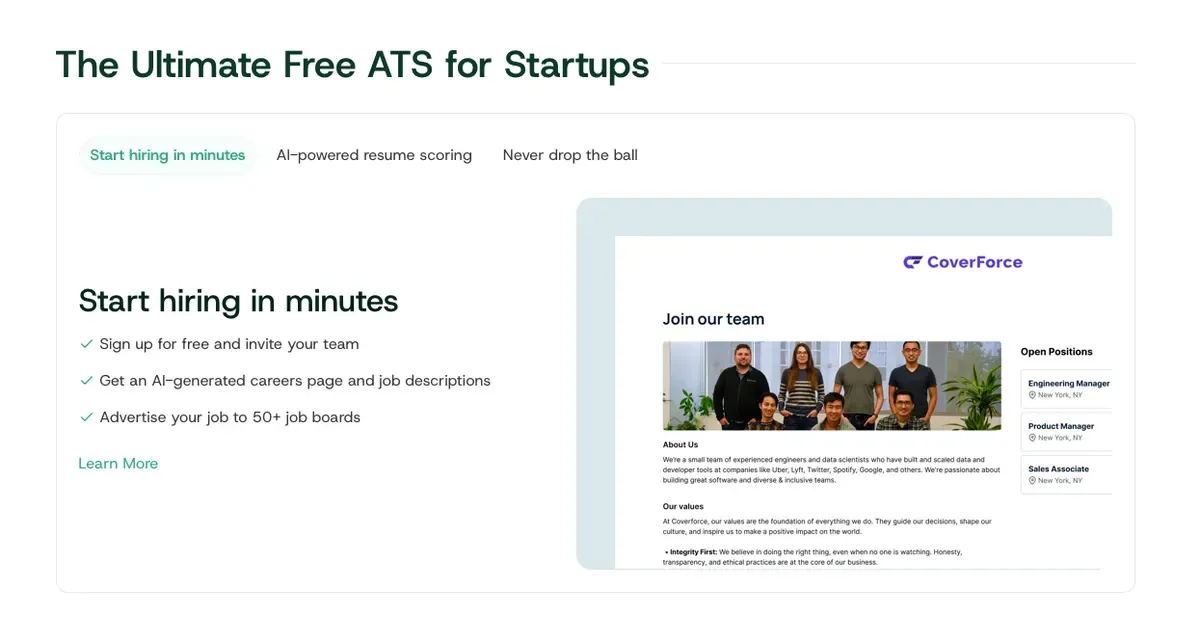
The free ATS removes a major expense that typically costs startups thousands annually. You get AI-powered candidate scoring, one-click job board posting to 100+ boards, and integrated sourcing tools, all without subscription fees. It also serves as the shared infrastructure fractional recruiting agencies operate on, so your internal team and any agency or recruiter you bring in work from the same pipeline from day one.
What makes Dover particularly effective in Austin is their recruiter network’s deep understanding of the local market. They know:
-
What verified reviews from other startups say about each recruiter’s track record
-
Which companies candidates are considering
-
What compensation packages look like
-
How to position startup opportunities against big tech alternatives
You’re not locked into expensive retainer agreements when you hire a fractional recruiter. Need help with a critical engineering hire? Bring in a specialist for a few weeks. Scaling your sales team? Work with someone who knows Austin’s sales talent market.
Hire as you grow, at your pace.
2. Startup-Limited Option: Scion Technology
Scion Technology is an Austin technology staffing and recruitment agency that’s been a leader in tech recruiting for nearly two decades. They offer qualified candidate options and executive searches with an expansive national network of over 350,000 professionals in their talent pool.
Their long-standing relationships provide access to passive candidates who aren’t actively job hunting. This can be valuable when you need specialized skills that are in high demand.
Limitation: their traditional agency model requires higher fees and longer-term commitments that can strain startup budgets. Their approach works best for companies with solid recruiting budgets instead of resource-limited early-stage startups.
3. Enterprise-Focused Option: Redfish Technology
Redfish Technology is a leading IT and tech recruiter in Austin with more than 20 years of experience. They use analytical sourcing methods and maintain relationships with passive candidates throughout the market.
Their detailed screening process finds candidates who excel technically and fit the company culture. Only qualified candidates make it through because of their strict vetting and interview process.
Limitation: They focus on mature companies with developed hiring processes. Their fee structure and approach are designed for larger organizations.
If you’re comparing options, consider how San Francisco startup recruiters handle similar challenges in competitive markets.
4. Geographic-Limited Service: Aldebaran Recruiting

Aldebaran Recruiting has deep understanding of Austin’s job market from both employer and candidate perspectives. They focus on finding candidates who excel technically and fit company culture through detailed screening processes.
Their local expertise can be valuable for understanding Austin-specific salary expectations and candidate motivations. They know the market dynamics that influence hiring decisions.
Limitation: boutique size and regional focus restrict their candidate pool compared to agencies with national reach. This makes them suitable for local hires but less effective for startups needing talent from broader markets.
Many startups find success with Los Angeles recruiters who can source talent willing to relocate to Austin’s attractive market.
5. Traditional-Model Agency: Bulls Eye Recruiting

Bulls Eye Recruiting focuses on building strong relationships between candidates and clients, taking a quality-over-quantity approach. They focus on recruiting qualified candidates in technology, sales, and marketing roles.
Their strength lies in personal attention and relationship building. For certain types of hires where cultural fit is most important, this approach can yield excellent results.
Limitation: their traditional recruiting model involves higher fees (20-30% of first-year salary) and longer search timelines that don’t align well with startup urgency and budget constraints. They work better for mature companies with predictable hiring needs.
Understanding when startups should hire fractional recruiters versus traditional agencies can help you make the right choice for your situation.
Feature Comparison: Key Features
| Feature | Dover | Scion Technology | Redfish Technology | Aldebaran | Bulls Eye |
|---|---|---|---|---|---|
| Pricing Model | Fractional/Hourly | Traditional Fees | Traditional Fees | Traditional Fees | Traditional Fees |
| Startup Experience | High | Medium | Low | Medium | Low |
| Tech Specialization | High | High | High | Medium | Medium |
| Contract Flexibility | High | Low | Low | Medium | Low |
| ATS Integration | Free ATS Included | External | External | External | External |
| Time-to-Hire | Fast | Medium | Medium | Medium | Slow |
The comparison shows why Dover’s model aligns better with startup needs. The combination of flexible pricing, startup expertise, and included tools creates real value for early-stage companies.
How to Choose the Right Startup Recruiter for Your Austin Company
Budget constraints and hiring volume: If you’re making 1-2 hires per quarter, paying monthly retainers to traditional agencies doesn’t make sense. Fractional models let you pay for actual work instead of ongoing relationships.
-
Technical requirements and company stage: Early-stage startups need recruiters who can sell candidates on vision and equity upside. As you grow, you can focus on recruiters with extensive networks in technical areas.
-
Recruiter expertise in startup environments: Ask about their experience with equity negotiations, startup culture fit assessment, and competing against big tech offers.
One practical factor to consider before bringing in a fractional recruiter is pipeline infrastructure. Fractional recruiters and fractional recruiting agencies work most effectively when the recruiter and your internal team share the same candidate pipeline in real time. Without a common system, coordination often means extra check-ins, duplicate outreach, and gaps in visibility between what the recruiter is doing and what your hiring team sees. A shared ATS gives everyone the same view: sourcing activity, candidate status, and interview feedback in one place, so the recruiter or agency can focus on finding and closing talent instead of managing status emails.
The fractional model works well for startups because recruiting is uniquely suited for this approach, you hire an expert when you need it, not ongoing overhead. When comparing options, include fractional recruiting agencies alongside traditional agencies and individual freelancers. They bring agency-level coordination and often run on shared ATS infrastructure, making them a meaningful middle ground worth a close look.
Austin Startup Recruiting Trends in 2026
Remote work has changed Austin’s talent scene. Candidates now compare local opportunities against remote positions from companies worldwide. As a result, your Austin startup competes globally for talent.
Retention is challenging in a place where new tech graduates are constantly offered multiple packages, often including remote opportunities from coastal companies.
Tech professionals are drawn to Austin’s lower cost of living, work-life balance, and collaborative startup culture. However, they’re also more informed about compensation benchmarks and equity structures.
📌 Read more about Startup recruiting trends that show candidates favoring companies with clear growth paths and strong technical cultures over compensation.
Common Recruiting Mistakes Austin Startups Make
The biggest mistake is underestimating the time and effort required for effective recruiting. Founders think they can handle hiring with product development and fundraising. However, without proper hiring systems, they fail, leading to rushed decisions and poor candidate experiences that damage your employer brand.
Another common error is competing purely on compensation without articulating your startup’s unique value proposition. Austin candidates have multiple options, and they need reasons beyond salary to choose your company over existing alternatives.
Many startups also fail to optimize their recruiting process for speed. In Austin’s competitive market, delays between interviews and offers often result in losing candidates to faster-moving companies.
Which is why Dover makes sure you have all the systems in one place. From the hiring tools to a network of vetted fractional recruiters and agencies, you have everything your startup needs to hire on a budget.
FAQs
How much do Austin startup recruiters typically charge?
Traditional agencies charge 20-30% of first-year salary as placement fees, which can cost $20,000-$40,000 per hire for senior tech roles. Fractional recruiters typically charge $75-$125 per hour (up to $250/hour for specialized roles), allowing startups to control costs based on actual work performed instead of successful placements.
How long does it take to fill tech roles in Austin?
Average time-to-hire for tech roles in Austin ranges from 4-8 weeks, depending on role seniority and requirements. Specialized positions like senior engineers or technical leads often take longer due to limited candidate pools and multiple competing offers.
Should early-stage startups work with recruiters?
Early-stage startups benefit from recruiter expertise when they lack internal recruiting resources or need specialized talent. The key is choosing flexible models that align with startup budgets and hiring patterns.
Do I need an ATS before bringing in a fractional recruiter?
An ATS isn’t a hard requirement, but it changes how well fractional recruiting works in practice. When a recruiter (or a fractional recruiting agency) and your team operate from the same pipeline, both sides get real-time visibility into sourcing activity, candidate status, and interview feedback, with no coordination overhead or duplicate outreach to manage. Without a shared system, the recruiter works in one tool while your team tracks progress separately, which often creates gaps in communication and slower decision-making. Some fractional recruiting systems include a free ATS as part of the same infrastructure, so the agency or recruiter and your internal team work from a single source of truth from day one.
Final thoughts on fractional recruiting for Austin startups
You can compete for Austin’s top tech talent without the hefty price tag of traditional agencies. Dover’s fractional recruiters and agencies work hourly with no long-term contracts, giving you flexibility and cost control. Dover’s model is one concrete implementation of this approach: a free ATS built as the infrastructure layer fractional recruiting agencies operate on, paired with on-demand recruiters in one shared system, at $2,000 to $7,000 per hire with no retainer required.