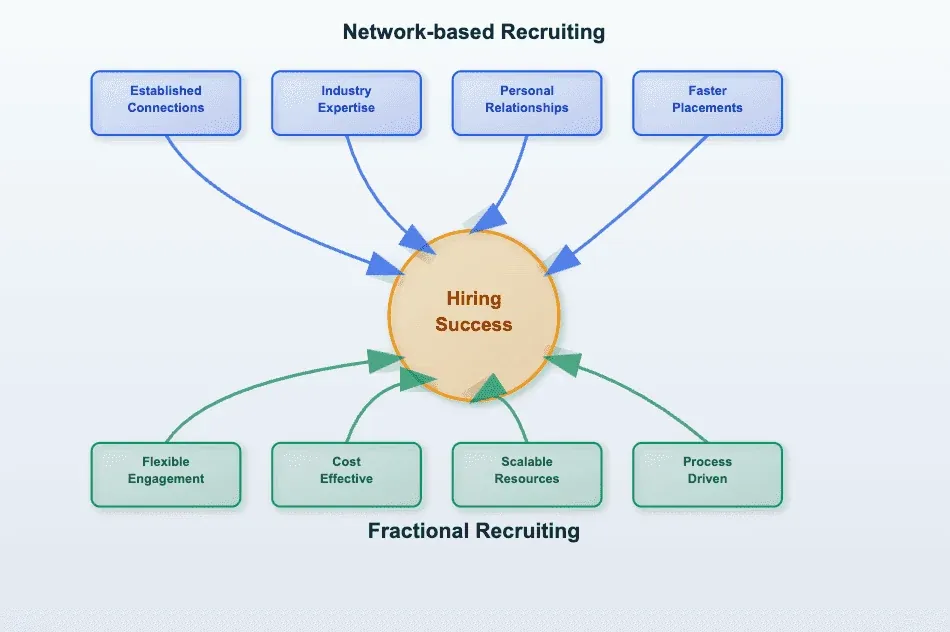

Your startup needs to hire fast, but choosing between traditional recruiting agencies and newer fractional models feels like a tough decision. Robert Half promises broad industry expertise, while newer platforms like Dover represent the shift toward startup-focused fractional recruiting. Both claim they can solve your hiring challenges, but the cost structures and service approaches couldn’t be more different. We’ll break down Dover vs Robert Half in terms of pricing, speed, and startup expertise so you can pick the recruiting approach that matches your growth stage and budget.
TLDR:
-
Traditional agencies use a generalist approach, while startup-focused fractional platforms specialize exclusively in early-stage hiring.
-
Traditional agency models operate outside your systems; newer fractional platforms integrate sourcing, outreach, and interviews into one pipeline.
-
Fractional recruiting provides startup-specific expertise without long-term contracts.
-
Transparent, hourly recruiting models can save startups 65-90% on costs compared to traditional agency placement fees.
-
Speed matters at the startup stage, and fractional recruiters can typically begin sourcing within 48 hours instead of the weeks it takes a traditional agency to ramp up.
What Is Robert Half?
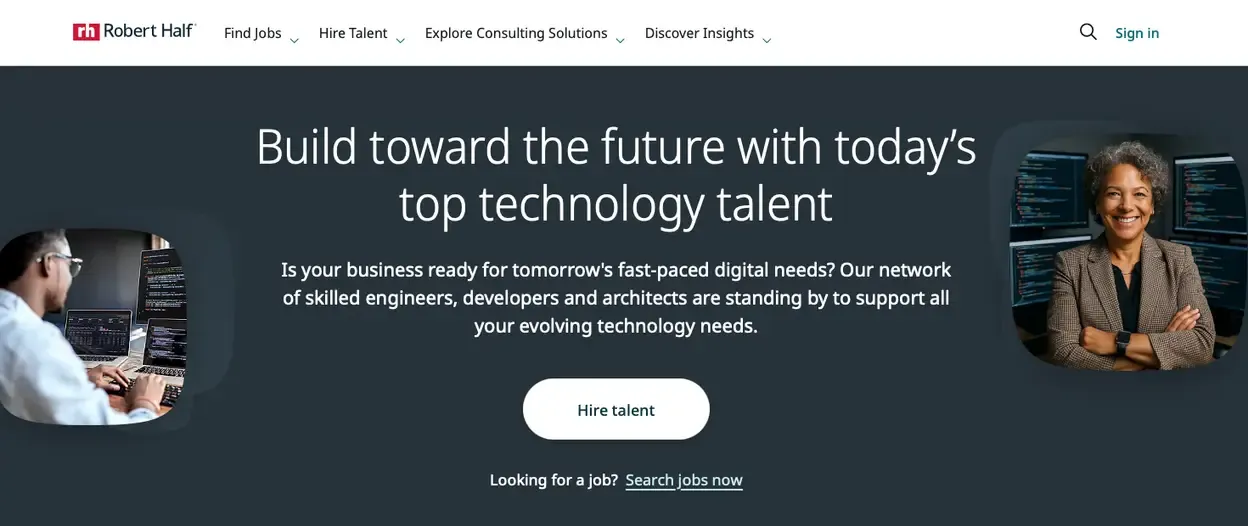
Robert Half operates as one of the largest old-school recruiting agencies in the world. They provide staffing and recruitment services across finance, accounting, technology, administrative roles, legal, and marketing sectors.
Their business model follows the standard agency approach: they use recruiters to match companies with candidates across different industries.
The company positions itself as a full-service staffing solution, handling everything from temporary contract work to permanent placements. Their recruiters specialize in different sectors, but the approach remains broadly generalist with no focus on specific company stages or growth phases.
According to an April 2026 review of Robert Half, placement fees typically run 20-30% of the candidate’s first-year salary. For a $120,000 software engineering role, that translates to $24,000-$36,000 in fees, some of the highest per-hire costs in talent acquisition.
What Is Dover?
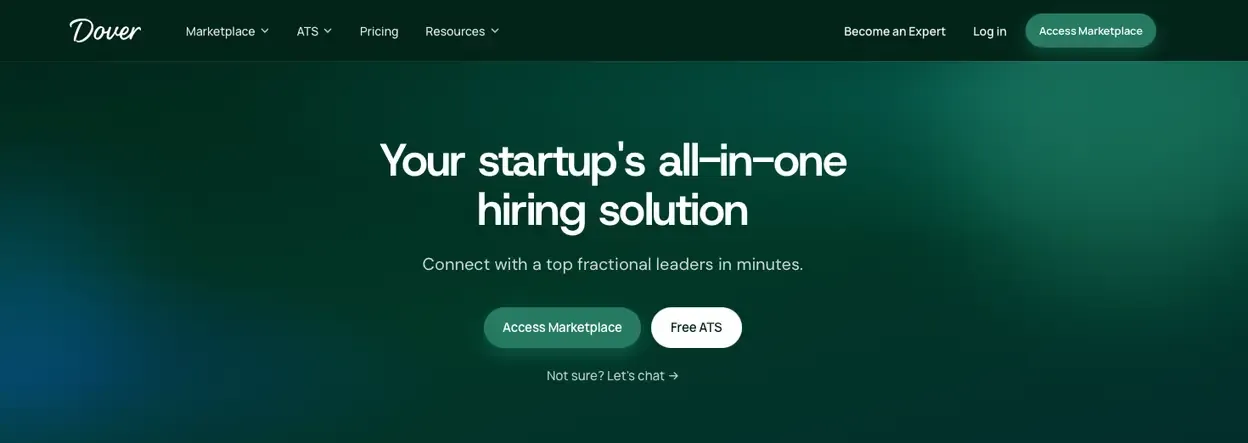
Dover combines a free applicant tracking system with a marketplace of fractional recruiters who specialize in startups. We built our platform after seeing how traditional recruiting agencies failed to serve the unique needs of early-stage companies.
Our fractional recruiting model connects startups with experienced recruiters who work on an hourly basis. These aren’t junior recruiters learning on your dime. They’re seasoned professionals who’ve helped hundreds of startups scale their teams.
The Dover platform integrates everything into one system. Your fractional recruiter sources candidates, manages outreach, and coordinates interviews all within the same ATS your team uses daily. No juggling multiple platforms or losing track of candidates between systems.
What makes Dover different is our startup focus. Our recruiters understand equity conversations, the importance of cultural fit in small teams, and how to sell candidates on the startup opportunity. They know that a Series A company has a completely different set of needs than a Fortune 500 enterprise.
We also don’t lock you into long-term contracts. Need help with a critical engineering hire? Engage a recruiter for a few weeks. Scaling rapidly and need ongoing support? Work with someone monthly. The flexibility matches how startups actually grow.
Cost Structure Comparison
The financial difference between traditional agencies and fractional recruiting is dramatic, especially for startups making multiple hires annually.
Robert Half’s contingency model charges 20-25% of first-year salary. For knowledge workers earning $100,000-150,000, that means $20,000-30,000 per successful hire. A startup making 10 hires annually could spend $200,000-300,000 just on placement fees.
| Annual Hires | Robert Half Cost | Dover Fractional Cost | Savings |
|---|---|---|---|
| 5 hires | $100,000-150,000 | $10,000-35,000 | 65-90% |
| 10 hires | $200,000-300,000 | $20,000-70,000 | 65-90% |
| 15 hires | $300,000-450,000 | $30,000-105,000 | 65-90% |
Dover’s fractional model averages $2,000-$7,000 per hire, based on hourly rates that average $75-$125, depending on recruiter and role across roughly 20-30 hours of dedicated work per role. Most startups can save 65-90% compared to traditional agency fees, with no retainers or long-term contracts required.
The predictability matters too. With agencies, you never know the final cost until after the hire. A $150,000 senior engineer could cost $30,000-37,500 in fees. With fractional recruiting, you know exactly what you’re spending each month.
According to recruiting budget research, startups using fractional models report more predictable hiring costs and better budget control compared to traditional agency relationships.
Fractional recruiter timing depends on your growth stage, but the cost savings make sense for most startups making more than 3-4 hires annually.
Service Model and Startup Focus
Robert Half’s generalist approach creates fundamental mismatches with startup hiring needs. They serve companies across all sectors and sizes, from Fortune 500 enterprises to small businesses. This broad focus means they can’t offer specialized expertise in any single area, particularly tech talent acquisition.
Their recruiters work across multiple industries and company stages. The person helping you to try and hire a senior engineer might also be placing accountants at big corporations. They don’t understand the nuances of startup equity packages, the importance of early employee cultural fit, or how to sell candidates on early stage startup opportunities.
Dover exclusively serves startups from seed through Series C. Our recruiters live and breathe the startup world. They understand that your first 10 employees will shape company culture for years. They know how to have equity conversations and explain why joining a 20-person startup beats a big tech job.
The speed difference is huge too. Traditional agencies often take weeks to understand your needs and start sourcing. Dover recruiters can begin working within 48 hours because they already understand startup hiring patterns.
Our startup recruiters also understand the urgency. When you need a technical co-founder or your first sales hire, waiting 8-12 weeks isn’t an option. Startup recruiting requires different timelines and approaches than enterprise hiring.
According to Boundless HQ’s 2026 recruitment challenges report, startups face unique hiring challenges that generalist agencies struggle to handle well.
Technology and Integration Differences
Robert Half operates largely outside client systems, using their own proprietary tools and databases. You’ll receive candidate profiles via email, coordinate interviews through separate platforms, and manage the hiring process across multiple disconnected systems.
By Robert Half’s own estimates, hiring a developer takes 5-11 weeks depending on seniority level. Senior engineers and up take up to 11 weeks, which is 57% longer than in 2021.
That timeline kills startup momentum. When you’re racing to ship a product or close a funding round, waiting nearly three months for a key hire isn’t realistic.
The free ATS handles the foundational work: job posting, pipeline management, and candidate tracking. When a search calls for active sourcing or more hands-on outreach, a fractional recruiter steps in and works directly inside that same system, giving both your team and your recruiter real-time pipeline visibility with no coordination overhead.
The integration provides real-time transparency. You can see exactly which candidates your recruiter has contacted, response rates, and where each prospect stands in your pipeline. No more wondering what’s happening behind the scenes.
Our platform also includes one-click job board posting to 50+ boards, integrated sourcing tools, and AI-powered candidate scoring on the premium tier. Your fractional recruiter has access to the same powerful tools your internal team uses, creating smooth collaboration.
Customizing your ATS to match your specific workflow takes minutes, not weeks of implementation like traditional agency partnerships.
How Startup Recruiting Has Shifted in 2026
The recruiting market has changed considerably since traditional agencies like Robert Half built their business models. Several trends now favor fractional and startup-focused approaches over the conventional agency model.
Fractional recruiting has moved from a niche workaround to a mainstream hiring strategy. More experienced recruiters have gone independent, raising the quality floor across fractional networks. Where startups once worried about getting junior talent from fractional providers, the pool now includes professionals with 10-15 years of experience who chose the fractional model by choice, not by necessity.
AI-powered sourcing tools have also narrowed the database advantage that large agencies once held. Tools like LinkedIn Recruiter and Gem give any recruiter access to deep candidate pools, which means a fractional recruiter working inside Dover’s free ATS can reach candidates just as effectively as a Robert Half team operating a proprietary database.
Meanwhile, the pace of startup hiring has increased. Ashby’s 2026 State of Startup Hiring report found that startups involving recruiters earlier in the process cut time to hire by nearly a third at the smallest company stages. That kind of speed advantage matters more now, as Series A companies often need to grow headcount 30-60% within six months of closing a round.
The case for generalist agency fees has weakened accordingly. When a fractional recruiter can deliver the same sourcing reach, faster onboarding, and startup-specific expertise at a fraction of the cost, the 20-25% contingency model becomes harder to justify for any early-stage team watching its runway.
Why Dover Is the Best Recruiting Agency for Startups
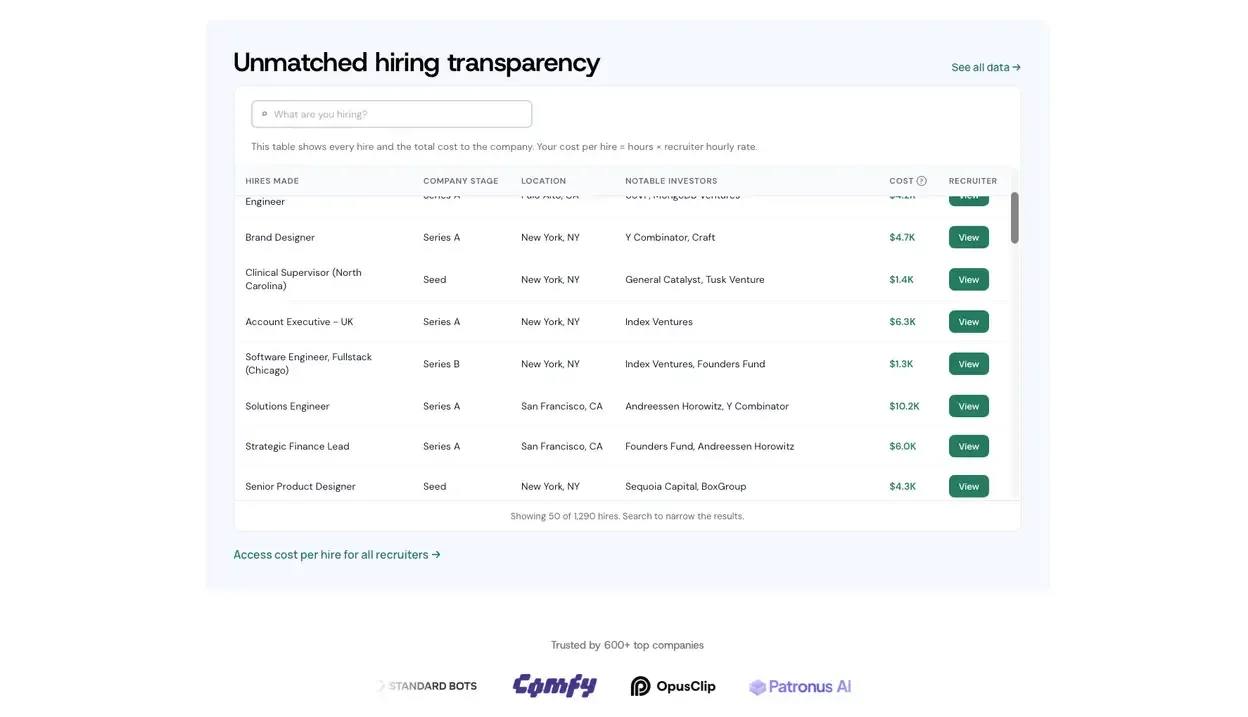
Traditional agencies like Robert Half face structural problems serving startups. Their generalist model means the recruiter handling your engineering search may also be placing accountants at large corporations, with no specialization in startup equity conversations, small-team culture fit, or early-stage hiring dynamics. Once they place a candidate and collect their fee, the relationship often ends, leaving you with no recourse if the hire doesn’t work out.
Dover is built differently. Our network is highly selective: recruiters average 10-15 years of experience and pass reference checks and portfolio reviews before joining, and we remove recruiters who don’t deliver. One matched recruiter integrates with your team and owns the full search, so there’s no duplicated outreach and candidate experience stays consistent from first contact to offer. Every search builds inside your own ATS, meaning sourcing notes, outreach history, and candidate data stay on your side; each new hire benefits from the intelligence gathered in prior searches.
Because fractional recruiters work hourly, their fees are entirely disconnected from the candidate’s accepted salary. There’s no financial reason to push toward higher-compensated candidates or manufacture urgency around competing offers. And since you can see exactly what your recruiter is doing in real time, you can course-correct quickly instead of waiting weeks for updates.
FAQs
How quickly can Dover recruiters start working compared to Robert Half?
Dover recruiters can typically begin sourcing within 48 hours of engagement. Traditional agencies like Robert Half often require 1-2 weeks for intake calls, job description refinement, and internal assignment processes before active recruiting begins.
Do fractional recruiters have access to the same candidate networks as big agencies?
Dover’s fractional recruiters are experienced professionals who’ve built extensive networks over years of recruiting. Many previously worked at top agencies or in-house at successful startups. They often have deeper relationships in startup talent communities than generalist agency recruiters.
What is the best ATS for small teams?
Small teams need an ATS that’s easy to configure, free or low-cost, and built for founders or hiring managers who are handling recruiting alongside other responsibilities. Dover’s free ATS takes under five minutes to set up and posts to 50+ job boards in one click, with AI-powered candidate scoring on the $199/month premium tier. It’s designed for companies managing their first ~100 hires without needing a dedicated recruiting ops person. For a broader look at your options, see our guide to best small business hiring software.
Is there free recruiting software for startups?
Yes. Dover offers a fully free ATS with no limits on jobs or users. It includes one-click posting to 50+ job boards, a no-code careers page builder, and native employee referral tracking. The free tier covers a full hiring process from day one; AI-powered applicant scoring and AI note taking sit on the $199/month premium tier.
Final Thoughts on Fractional Recruiting for Startups
Startups don’t need a cheaper agency; they need a structurally different model. Traditional agencies like Robert Half are built for large companies with broad mandates, and their generalist approach, contingency incentives, and long contract commitments rarely fit early-stage needs. Dover’s fractional model offers startup-focused recruiters with full-cycle capability, faster ramp-up, and predictable costs, so founders can hire the right people without wasting time or capital.