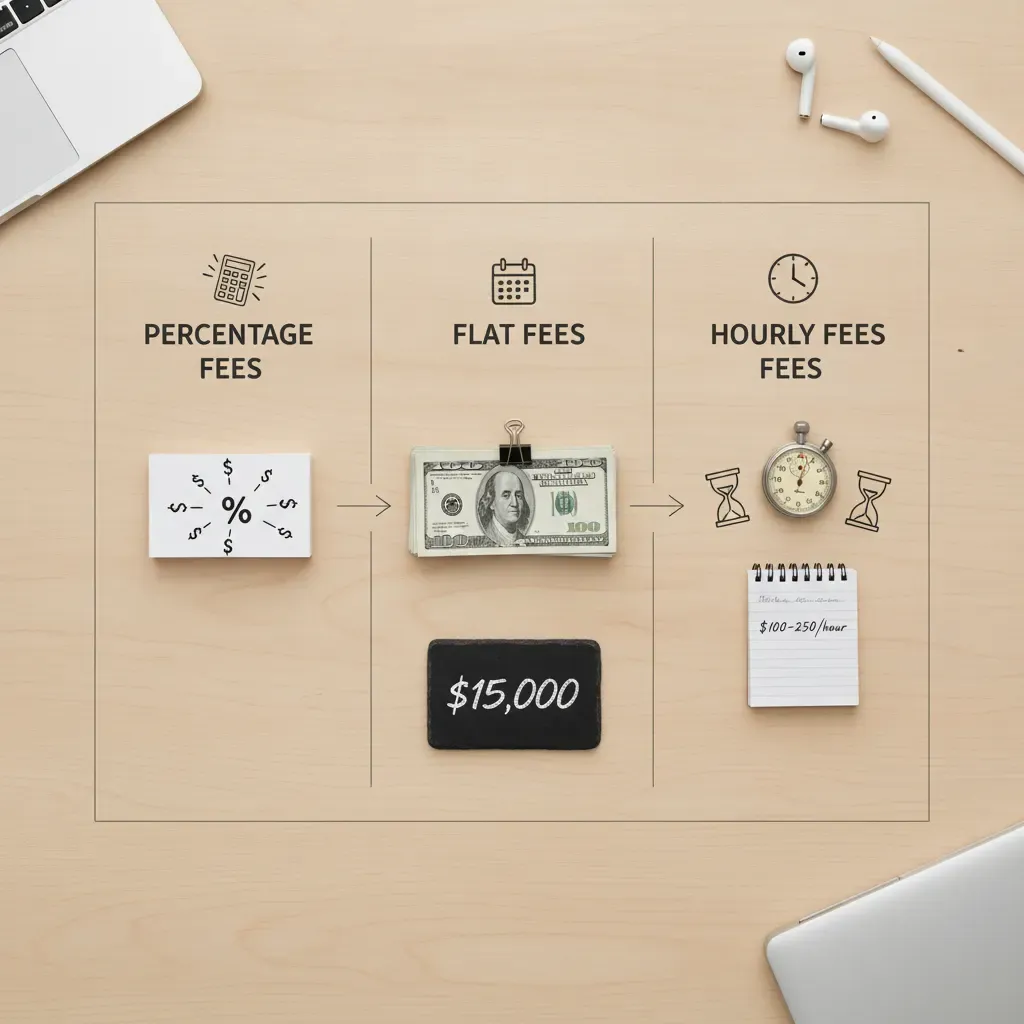

Contingency agencies charge $24,000 to $36,000 for a $120,000 engineer, and the same bill applies whether that hire lasts three months or three years. Fractional recruiting models tie cost to effort and outcomes instead, shifting recruiter focus from rushing offers to finding candidates who can grow with an early-stage team. This guide breaks down the real cost and incentive differences between contingency and hourly recruiting, and why more startups are switching.
TLDR:
-
Contingency agencies charge 15-30% of salary ($18K-$36K for a $120K engineer) vs. $4K-$20K hourly.
-
Roughly 46% of new hires fail within 18 months, a risk associated with recruiting models that focus more on speed than long-term fit.
-
Hourly fractional recruiting uses rates set by each recruiter, with no placement fee or long-term contract.
-
Best for startups hiring 3-6 people annually who need recruiting expertise without full-time headcount.
-
Some solutions act as the infrastructure layer fractional recruiting agencies are built on, with vetted recruiters who have real verified reviews.
The Hidden Economics of Contingency Recruiting
Contingency agencies typically charge a recruiter commission rate range of 15 to 30% of first-year base salary. For a $100,000 engineer, that’s $15,000 to $30,000 per placement.

The misalignment runs deeper than price. Contingency recruiters get paid when a candidate accepts an offer. Their financial incentive ends there. Whether that hire succeeds or quits in three months doesn’t affect their bottom line. They’ve collected the fee and moved on.
| Contingency Agency | Hourly Fractional | |
|---|---|---|
| Typical cost (for a $120K role) | $18,000 to $36,000 | $4,000 to $20,000 |
| Incentive structure | Paid on placement only | Paid for time and effort |
| Visibility into sourcing | Little to none | Full activity transparency |
| Flexibility | Fixed engagement, no pausing | Scale up or down anytime |
| Risk on early departure | Full fee kept by agency | Costs end when hiring pauses |
Why Misaligned Incentives Drive Poor Hiring Outcomes
When you only get paid at the finish line, you run faster. Contingency recruiters face this exact pattern. Their commission arrives when a candidate accepts your offer, creating a race to placement instead of a search for fit.
They cast wide nets across multiple clients at once, submitting candidates who meet basic job requirements but may lack the cultural alignment or long-term potential your startup needs from a fractional recruiter. The goal becomes volume and speed, not precision.
The problem compounds when multiple recruiters compete for the same role. You’ve created a tournament where the prize goes to whoever submits an acceptable candidate first. They’re not looking at who will thrive in your environment two years from now. They’re assessing who can get through your interview process this week.
This is why contingency recruiting placement fee incentives often fail to deliver hires that last. Your long-term retention isn’t part of their success metric. When that engineer or salesperson leaves after six months, the recruiter still keeps the full fee.
The 46% Problem: New Hire Failure Rates Nobody Talks About
Reportedly 46% of new hires fail within 18 months. The real issue: 89% of failures trace back to attitude, specifically coachability, emotional intelligence, and motivation, not lack of technical ability.
Contingency recruiters get paid to move candidates fast. Their focus lands on resume credentials and technical question responses. The questions that predict long-term success get less attention: team communication fit, startup risk tolerance, ability to handle shifting priorities.
Assessing these soft factors takes time. Contingency recruiters racing against competitors for commission don’t have that time built into their incentive structure.
How Hourly Models Realign Recruiter Incentives With Startup Success
Hourly billing changes the game. When fractional recruiters charge for time instead of placement, they stop optimizing for quick closes and start focusing on fit. Their next invoice depends on delivering value, not pushing candidates through your pipeline. A complete fractional recruiting guide covers how to structure these engagements from sourcing through close.
Recruiters set their own rates, with no placement fee or multi-month commitment on hourly work. If a recruiter doesn’t grasp your needs after a few weeks, you walk away. This creates real accountability at every stage.
The relationship becomes collaborative. Your fractional recruiter has skin in the game for long-term success because their reputation and future work depend on it. There’s no incentive to rush a mediocre candidate to offer.
You scale recruiting effort with actual hiring needs. Ramping three engineers this quarter? Add hours. Paused hiring after your last round? Scale back without penalty. The model bends to startup reality instead of locking you into fixed contracts.
Transparency and Control: What You Gain with Hourly Billing
Hourly billing gives you real visibility: who your recruiter contacts, which channels they use, and how candidates respond. If outreach isn’t working, you can adjust mid-search. Real cost-per-hire data by recruiter shows how this plays out in practice.
A shared ATS is what makes that transparency work. When the recruiter and hiring team operate from the same pipeline, the hiring manager sees sourcing activity, candidate stage, and outreach history without chasing status updates. Duplicate outreach gets caught early, and all candidate data stays with the company when the search ends. Fractional recruiting and a shared ATS are not separate decisions. The ATS is the infrastructure that lets the fractional model run cleanly.
Contingency recruiting lacks this visibility entirely. Activity stays hidden until candidates appear in your inbox, and you won’t know which channels failed or why candidates declined until weeks have passed. When multiple contingency recruiters compete for the same role, candidates receive conflicting messages from different people claiming to represent your company. Hourly recruiters work as dedicated extensions of your team, keeping the candidate experience consistent.
When Hourly Models Make the Most Sense for Your Hiring Needs
Hiring volume determines your best recruiting approach. The right model depends on how many people you need to bring on annually and whether you have existing recruitment infrastructure.
If you’re hiring 1 to 2 people per year, you don’t need dedicated recruiting support. Traditional agencies or fractional recruiters both work here since volume stays low enough that even agency fees won’t break your budget. For a side-by-side look at how these options compare structurally, see startup agency vs. marketplace recruiting.

The sweet spot for hourly fractional recruiting hits between 3 to 6 annual hires. At this volume, you need consistent recruiting muscle but can’t support a full-time salary. Fractional recruiters give you expertise when searches are active without burning cash during quiet months. You pay for roughly 40 hours to fill an engineering role, then pause until your next hire.
Above 6 hires annually, the math turns toward building internal capacity. A full-time recruiter costs $80,000 to $120,000+ but provides unlimited bandwidth. Fractional recruiting still works if your hiring comes in concentrated bursts instead of steady flow, but consistent high-volume recruiting eventually demands dedicated headcount.
What Changed in Startup Recruiting in 2026
Flexible and project-based recruiting models have grown faster than contingency or permanent placement in 2026, with startups that engaged recruiters earlier hiring measurably faster, according to Ashby’s 2026 Startup Hiring report, which analyzed 32,000 hires across more than 1,200 venture-backed startups. The same data shows 60% of those startups now use AI features in their recruiting workflows, reflecting a broader move toward treating recruiting as an ongoing function rather than a last-minute response to an open role.
Tighter funding across seed and Series A rounds has pushed early-stage teams toward cost structures that scale down between hiring cycles. Hourly models let teams reduce spend during slow stretches without ending the relationship or starting over with a new partner at the next hiring push.
Two additional pressures have sharpened the economics in 2026. AI-powered sourcing tools have eroded one of the traditional advantages contingency agencies held, exclusive access to passive candidate pools, making the sourcing premium embedded in a 20-25% placement fee harder to justify as startups run targeted outreach through the same platforms. According to LinkedIn data, January 2026 was the slowest month for startup hiring since 2018, down roughly 65% from the 2022 peak, and in a market where each open role carries more weight, both pressures together have reinforced the shift toward billing models where recruiter effort stays visible and costs pause when hiring does.
By September 2026, many early-stage teams have dropped contingency searches entirely for roles under $150K, opting for on-demand fractional support they can pause once a hire closes. For teams on their second or third cycle with the same recruiter, re-engagement takes hours rather than weeks because the context is already shared.
Making the Switch: What to Expect When Moving from Contingency to Hourly
You can test fractional recruiting on a single role while keeping current agency relationships intact. This side-by-side comparison generates real data without disrupting your pipeline.
Onboarding typically takes days. After an initial call covering role specs, candidate profiles, and your interview process, your recruiter often begins sourcing within 48 hours. You’ll see outreach in the first week.
Most startups assess the model on one hire. If your fractional recruiter delivers better candidates at lower cost, expand the relationship. If not, you’ve spent a few thousand dollars learning what works for your team, with no long-term commitment locking you in.
How Dover Supports Incentive-Aligned Recruiting for Startups
Dover serves as the infrastructure layer that fractional recruiting agencies are built on. Whether a startup works with one dedicated recruiter or an agency running multiple searches, the same shared ATS keeps candidate data client-side, searches coordinated, and outreach history visible to the hiring team in real time. Recruiters in Dover’s network carry real, verified reviews so you can assess fit before engaging. Each recruiter sets their own rate and you agree terms directly with them; hires have averaged $4,800, though that is an observed range rather than a quoted price. No long-term contract is required, and hourly, retainer, and pay-per-hire structures are all available.
Combined with Dover’s free applicant tracking system, and a $199/month Premium tier for teams that want AI applicant scoring and AI note taking, teams get full visibility into outreach, candidate quality, and funnel performance without placement fees or excess overhead. Candidate data stays with the company after every search, building a foundation each future hire can draw on instead of starting from zero.
FAQs
Can I test hourly recruiting without dropping my current agency relationships?
Yes. Run a side-by-side comparison on a single role to generate real data without disrupting your pipeline. Onboarding takes days, and you’ll see outreach within the first week with no long-term commitment.
What is the best free ATS for startups in 2026?
The best free ATS for a startup in 2026 handles unlimited jobs and users without a trial clock, keeps candidate data in one place, and connects easily with on-demand recruiting support. Dover’s free tier covers core ATS functionality for unlimited jobs and users. A premium plan at $199/month adds AI candidate scoring for teams that want automated screening without a separate subscription.
Do I need an ATS before bringing in a fractional recruiter?
A shared ATS is not a hard prerequisite, but it makes the engagement considerably cleaner. When the recruiter and hiring team work from the same pipeline, coordination overhead drops, duplicate outreach becomes easy to catch, and all sourcing history stays with the company after the search ends. Without a shared system, status updates tend to happen over email or Slack, and candidate context can get lost when a recruiter rolls off. Some fractional recruiting models pair a free ATS with on-demand recruiter access in one system, so both can be set up at the same time with no extra overhead.
Final Thoughts on Recruiting Models That Actually Align with Startup Success
The real difference between contingency and hourly recruiting comes down to incentives. One model rewards speed at the moment an offer is signed; the other rewards consistent progress toward a hire who can succeed over time. Hourly recruiting creates clearer accountability, better signal on candidate quality, and cost control that matters when runway and headcount flexibility are limited. By working with an incentive-aligned fractional recruiting partner like Dover, startups can test a hiring model where recruiter success tracks directly with team outcomes, not one-time placements. This approach gives founders more visibility into the hiring process and confidence that recruiting effort is spent where it actually moves the business forward.