
You know you need an AI engineer who can build machine learning systems from scratch, but finding someone with both the technical chops and startup mindset feels impossible.
The talent pool is tiny, big tech companies are throwing around $300k+ offers, and most candidates have never worked in a fast-paced, resource-constrained environment. Dover makes startup hiring more strategic by pairing fractional recruiters who understand AI talent with tools that screen for technical skills and cultural fit. Let’s dig into the complete process from defining your AI engineering needs to closing competitive offers against tech giants.
TLDR:
-
AI engineer hiring is tough: tiny talent pool, big tech paying $300k+, few candidates suited for startup pace.
-
Right hire = leverage: accelerates product cycles, avoids technical debt, and enables faster AI feature iteration.
-
What to look for: full ML lifecycle skills, problem-solving in ambiguity, and strong communication with non-technical teams.
-
Hiring pitfalls: vague role definitions, DIY recruiting, and overemphasis on technical skills while ignoring cultural fit.
-
How Dover helps: fractional recruiters + AI screening tools streamline sourcing, evaluation, and closing top AI talent.
Hiring AI Engineers for Startups is one of the hardest recruiting challenges founders face: the talent pool is thin, big tech is offering $300k+, and most candidates have never operated in a resource-limited environment. This guide covers the full process, from writing the role and sourcing candidates to running technical assessments and closing competitive offers.
TLDR:
-
AI engineer hiring is tough: tiny talent pool, big tech paying $300k+, few candidates suited for startup pace.
-
Right hire = real impact: accelerates product cycles, avoids technical debt, and drives faster AI feature iteration.
-
What to look for: full ML lifecycle skills, problem-solving in ambiguity, and strong communication with non-technical teams.
-
Hiring pitfalls: vague role definitions, DIY recruiting, and overemphasis on technical skills while ignoring cultural fit.
-
Some recruiting tools pair AI-assisted screening with on-demand fractional recruiter support to simplify sourcing, evaluation, and closing top AI talent.
Why AI Engineer Hiring Matters for Startups
Demand for AI-related technical talent remains strong. The U.S. Bureau of Labor Statistics projects employment for data scientists to grow 34% from 2024 to 2034, although data scientists and AI engineers are not identical roles. For startups, hiring the right AI talent can determine whether you successfully integrate AI features or fall behind competitors.

Getting this hire right accelerates your product development cycle. A strong AI engineer can prototype features in weeks, validate technical approaches early, and build systems that scale. Startups with experienced AI engineers can iterate faster on LLM features, make data-driven product decisions, and avoid costly technical debt from poorly implemented AI solutions.
Define Your AI Engineering Needs and Role Requirements
Start by clearly defining the role and responsibilities of your future AI engineer, as vague descriptions often attract the wrong candidates and waste valuable time. Be specific about the technologies they’ll work with, expected outcomes, and the types of problems they’ll solve.
Separate generalist AI engineers who can handle multiple tasks from specialists focused on areas like computer vision or language AI. Most early-stage startups benefit from generalists who can adapt as your AI needs evolve.
| Factor | Generalist AI Engineer | Specialist AI Engineer |
|---|---|---|
| Best startup stage | Seed to Series A | Series B and beyond |
| Primary skill focus | Full ML lifecycle: data, modeling, and deployment | Narrow domain (computer vision, audio AI, recommendation systems, etc.) |
| Adaptability | High: can shift focus as product direction changes | Lower: depth in one area, less flexibility across the stack |
| Team size fit | Solo AI hire or small team | Larger AI team with clearly scoped roles |
| Time to value | Fast: covers gaps across the stack from day one | Slower if the domain scope is still being defined |
| Risk if scope changes | Lower: broad skill set offers a buffer | Higher: a scope mismatch wastes deep specialization |
Consider your current technical infrastructure and data maturity. If you’re still collecting and cleaning basic user data, you might need someone with strong data engineering skills. If you already have clean datasets, focus on candidates with model development and deployment experience.
The biggest mistake startups make is writing AI engineer job descriptions that sound like they’re hiring for Google or OpenAI. Your role should reflect startup realities and growth opportunities.
Our guide on choosing the right recruiter includes frameworks for clarifying these requirements before you start the hiring process.
Find and Screen Candidates
Finding top AI engineers requires using professional networks, attending AI conferences and meetups, partnering with universities, and using specialized job boards like AI Jobs, Kaggle, or Data Science Central. Traditional job boards often miss the passive candidates who represent the best talent. If you are working with a recruiter, see what to look for in a technical recruiter for AI startups before you engage one.
Our sourcing tools include a LinkedIn extension that finds candidate email contacts and allows personalized outreach in two clicks. This is particularly valuable for AI engineers who are often passive candidates with multiple opportunities.
The key is a multi-channel sourcing strategy. Academic conferences often yield candidates with cutting-edge knowledge, and open source contributions on GitHub can reveal practical skills that don’t show up on traditional resumes.
We’ve compiled the top engineering job boards with specific recommendations for AI and machine learning roles.
Posting on top AI job boards gives you access to practitioners who may not be active on general hiring platforms.
Conduct Technical Assessments and Interviews
Structure your technical interviews in multiple stages: an initial screen on fundamentals, a take-home project (2-4 hours covering data analysis, model building, or algorithm implementation), an on-site discussion with your engineering team, and a system design round for senior candidates. Present real-world AI problems and ask candidates to walk through their reasoning for developing, deploying, and scaling specific algorithms.
Weight the problem-solving process as heavily as correct answers. How candidates handle incomplete information and explain complex concepts matters as much as the output. Our guide on preventing interview cheating includes specific strategies for AI and machine learning assessments.
Check Cultural Fit and Startup Readiness
While a top university grad knows what OpenAI can pay, your five-person startup might be invisible, so every interaction needs to convey purpose, autonomy, and upside to make their decision easier. AI engineers joining startups need comfort with ambiguity and willingness to wear multiple hats.
Look for candidates who thrive where they can shape product direction. Ask how they’ve handled limited resources or unclear requirements.
Assess learning agility. AI is evolving fast, and startup engineers need to stay current with new techniques while staying focused on business outcomes.

Consider their collaboration style. In startups, AI engineers work closely with product managers, designers, and other engineers. They need to translate between technical possibilities and business requirements.
The best startup AI engineers are energized by the opportunity to shape your AI strategy and build from scratch, not held back by the absence of a defined playbook. They should be energized by the opportunity to shape your AI strategy, not frustrated by the lack of set processes.
Our research on company values shows that cultural alignment greatly affects retention and performance.
Negotiate Offers and Close Hires
Once you’ve identified the right candidate, be prepared to negotiate salary, benefits, and other perks to secure top talent. Candidates need to understand the opportunities behind early-stage companies when you’re asking an experienced AI engineer to leave a big-tech compensation package that may total $500,000 or more when salary, equity, and bonuses are combined.
Startups need to compete on equity, growth opportunities, and meaningful work over cash compensation. Spell out the potential upside of joining early, the scope of impact they’ll have, and the learning opportunities that come with building AI systems from scratch.
Structure your equity offer thoughtfully. Explain the potential value, provide context about the company’s growth path, and be transparent about the risks. Many AI engineers understand startup equity but appreciate clear communication about expectations. AI engineer salary trends show median pay rising steadily, so grounding your offer in current data helps candidates see where your package fits.
Consider non-traditional benefits that appeal to AI engineers: conference attendance budgets, research time, publication opportunities, or access to cutting-edge hardware and tools.
Dover’s fractional recruiters understand current market rates for AI talent and can guide your offer strategy and positioning. They know what competing offers look like and how to position your startup opportunity effectively.
Our guide to startup compensation guide includes specific frameworks for equity and compensation decisions.
Onboard and Retain Your Engineers
A thoughtful onboarding process is critical when building an AI team, including creating a structured 90-day plan with technical environment setup, codebase orientation, team integration, and increasing responsibility with dedicated mentorship.
Set up their development environment before day one. AI engineers need access to data, computing resources, and specialized tools. Having everything ready shows professionalism and respect for their time.
Pair them with a technical mentor, even if it’s the CTO or a senior engineer from another team. AI engineers benefit from understanding your data infrastructure, business context, and technical constraints.
Create early wins by identifying projects they can complete and deploy within their first month. This builds confidence and shows the impact they can have at your startup.
Retention requires providing continuous learning opportunities and clear career progression paths. AI engineers want to stay current with rapidly evolving techniques and see how their role will grow with the company. This guide on engineer onboarding at startups covers how to ramp up new hires quickly while reinforcing culture and values from day one.
The candidate experience you create during hiring sets expectations for their employee experience, so maintain that same level of attention and communication.
How Dover Helps Startups Hire AI Engineers
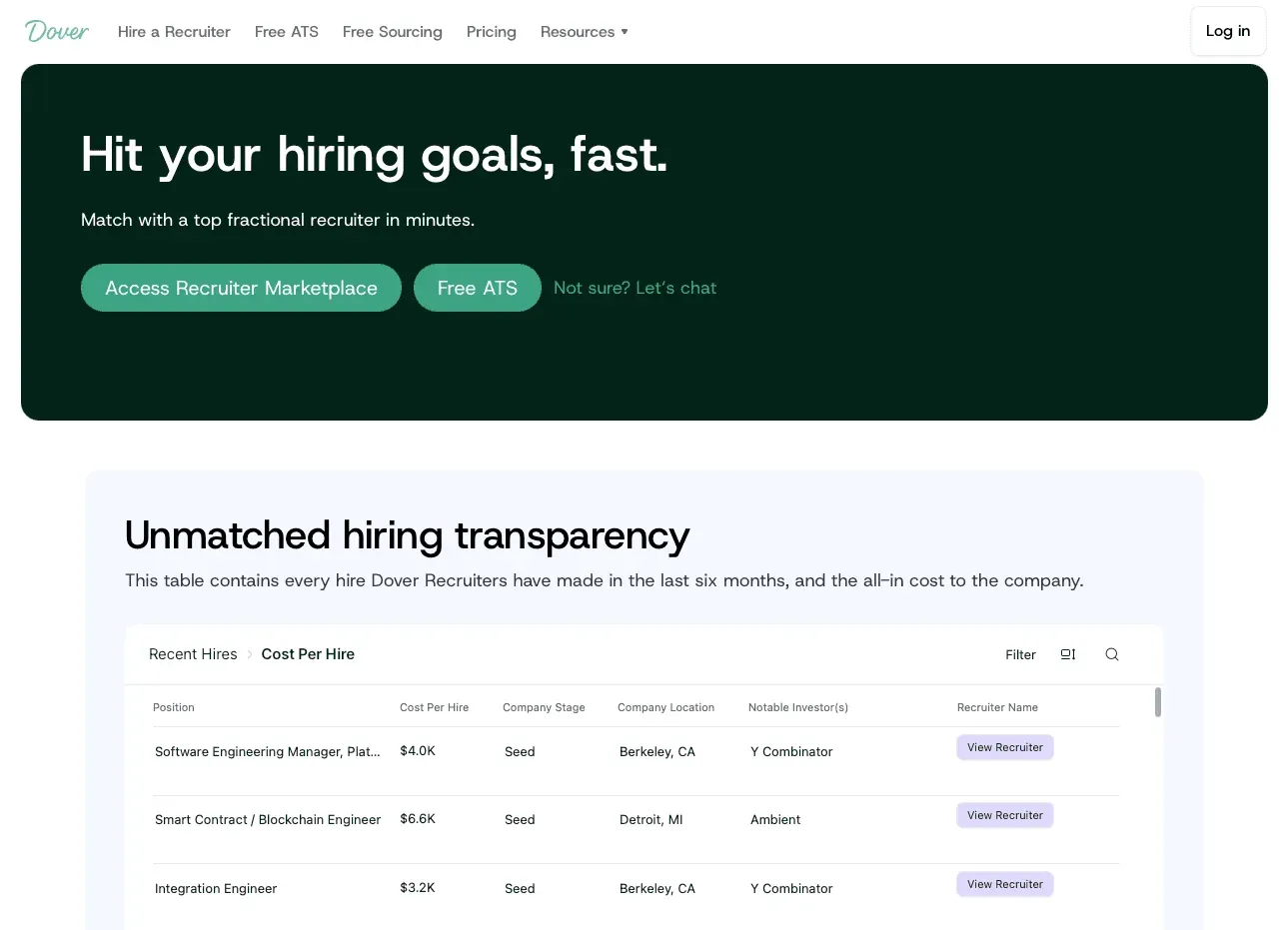
Dover pairs a free ATS with a marketplace of experienced fractional recruiters who have spent years sourcing and closing technical talent for startups. AI resume scoring ranks applicants against your required skills so your team reviews the strongest candidates first. The LinkedIn sourcing extension finds candidate contact information and sends personalized outreach in two clicks, useful because the best AI engineers are rarely applying; they’re being approached.
When a search needs more support, Dover’s fractional recruiters step in as dedicated partners: one recruiter matched to your role, running sourcing, screening, and closing alongside your team. They understand startup hiring, the equity conversations, competing big-tech offers, and what it takes to find someone who can thrive without a defined playbook. Rates run $75 to $125 per hour, with a fully refundable $800 deposit and no long-term contracts.
Most searches fill within 20 to 30 hours of recruiter time, putting the total cost well below the 15 to 25 percent of salary a traditional agency would charge. Because Dover’s fee is hourly and not tied to the candidate’s salary, there’s no incentive to steer toward higher-compensated candidates, the recruiter’s goal is the same as yours.
FAQs
How much should I expect to pay an AI engineer at a startup?
AI engineer salaries vary widely based on experience and location. Dover’s salary benchmarks indicate that mid-level AI engineers at startups may earn base salaries of approximately $120,000 to $200,000, plus equity. Senior engineers with specialized experience may command base salaries of $200,000 or more, depending on location, company stage, and role requirements.
Should I hire a generalist or specialist AI engineer first?
Most early-stage startups benefit from hiring a generalist AI engineer who can handle multiple aspects of machine learning development. Specialists become more valuable as your AI needs become more defined and complex.
What’s the biggest mistake startups make when hiring AI engineers?
The biggest mistake is focusing solely on technical skills while ignoring cultural fit and startup readiness. Many technically excellent AI engineers struggle in startup environments that require adaptability and comfort with ambiguity.
Final Thoughts on Hiring AI Engineers for Startups
Hiring AI engineers for startups is one of the most consequential early decisions a founder can make. The candidates worth closing are usually already in a role, fielding competing offers, and carefully weighing equity upside against big tech salaries. A sharp process, clear positioning, and fast follow-through are what separate startups that land great AI talent from those that don’t. Dover’s free ATS, AI-powered screening, and fractional recruiter network give founders the structure to run a search that competes with larger teams without the agency overhead. Put the same care into your hiring process as you do into your product, and the right engineer will shape your AI roadmap for years to come.
Source and Screen Candidates
Finding top AI engineers requires using professional networks, attending AI conferences and meetups, partnering with universities, and using specialized job boards like AI Jobs, Kaggle, or Data Science Central. Traditional job boards often miss the passive candidates who represent the best talent.
Dover’s AI resume scoring system ranks applicants against your must-have skills, so you start with the top ten instead of the top hundred. This dramatically reduces the time spent on initial screening while making sure you don’t miss qualified candidates.
Our sourcing tools include a LinkedIn extension that finds candidate email contacts and allows personalized outreach in two clicks. This is particularly valuable for AI engineers who are often passive candidates with multiple opportunities.
The key is building a multi-channel sourcing strategy. Academic conferences and research communities often yield candidates with cutting-edge knowledge. Open source contributions on GitHub can reveal practical skills that don’t show up on traditional resumes.
Employee referrals work exceptionally well for AI roles because the technical community is relatively small and well-connected. Dover’s referral system makes it easy to tap into your team’s networks and track referred candidates through the entire process.
We’ve compiled the top engineering job boards with specific recommendations for AI and machine learning roles.
Consider specialized AI recruiting firms that understand the technical nuances and have built relationships with top talent.
Frequently Asked Questions
How much should I expect to pay an AI engineer at a startup?
AI engineer salaries vary widely based on experience and location, but expect to pay $120,000-$200,000 for mid-level engineers, plus meaningful equity. Senior AI engineers with specialized experience can command $200,000+ even at startups.
Should I hire a generalist or specialist AI engineer first?
Most early-stage startups benefit from hiring a generalist AI engineer who can handle multiple aspects of machine learning development. Specialists become more valuable as your AI needs become more defined and complex.
How long does it typically take to hire an AI engineer?
The hiring process for AI engineers typically takes 6-12 weeks from job posting to offer acceptance. This includes sourcing time, multiple interview rounds, and often extended negotiation periods due to competing offers.
What’s the biggest mistake startups make when hiring AI engineers?
The biggest mistake is focusing solely on technical skills while ignoring cultural fit and startup readiness. Many technically excellent AI engineers struggle in startup environments that require adaptability and comfort with ambiguity.
Final thoughts on building your AI engineering team
You can compete for top AI talent by combining the right tools with specialized expertise. Dover’s free ATS and AI-powered screening help you identify qualified candidates efficiently. When you need expert guidance, our startup hiring marketplace connects you with fractional recruiters who understand both technical requirements and startup dynamics.