
Hiring speed often decides whether a top candidate accepts your offer or someone else’s, since they tend to go with whichever company moves first, and most startups lose them in the gaps between the application, the phone screen, and each interview round. In a comparison of 300 companies, five habits around scheduling, follow-ups, interviewer availability, and interview prep separated the startups that hired about 2x faster, and none of them depend on having a dedicated recruiting team.
TLDR:
-
Scheduling phone screens within 24 hours of an application can reduce candidate drop-off and signal genuine interest.
-
Apply the 24-hour rule to every interview round, including the first, to keep momentum and beat competing offers.
-
Send two follow-up messages for each day a candidate hasn’t scheduled to prevent strong prospects from going cold.
-
Interviewers need at least 6 hours of open availability per week to avoid bottlenecks that push candidates toward faster-moving companies.
-
Some tools pair a free ATS with on-demand recruiting support at an average cost per hire of about $4,800, adding sourcing capacity without a full-time hire.
We Ran an Experiment on the Hiring Process and Here’s What We Found
Here at Dover, we know a thing or two about expediting the hiring process. We’ve taken the time to find out what works for startups and what sets a quick and effective hiring process apart from others.
So, we split up 300 companies into two groups to see what works. The group that tightened its interview process hired 2x faster, with 2.5x better conversion. The difference was stark, but it wasn’t complicated. Did these companies have more resources or more funding? No, they just did five things to tighten up their interview process. Here are the five steps they implemented and how you can do the same in your startup.
5 Tips to Speed Up Hiring and Improve Conversions
Here are the five tips we found most effective in speeding up the hiring process and improving conversion rates.
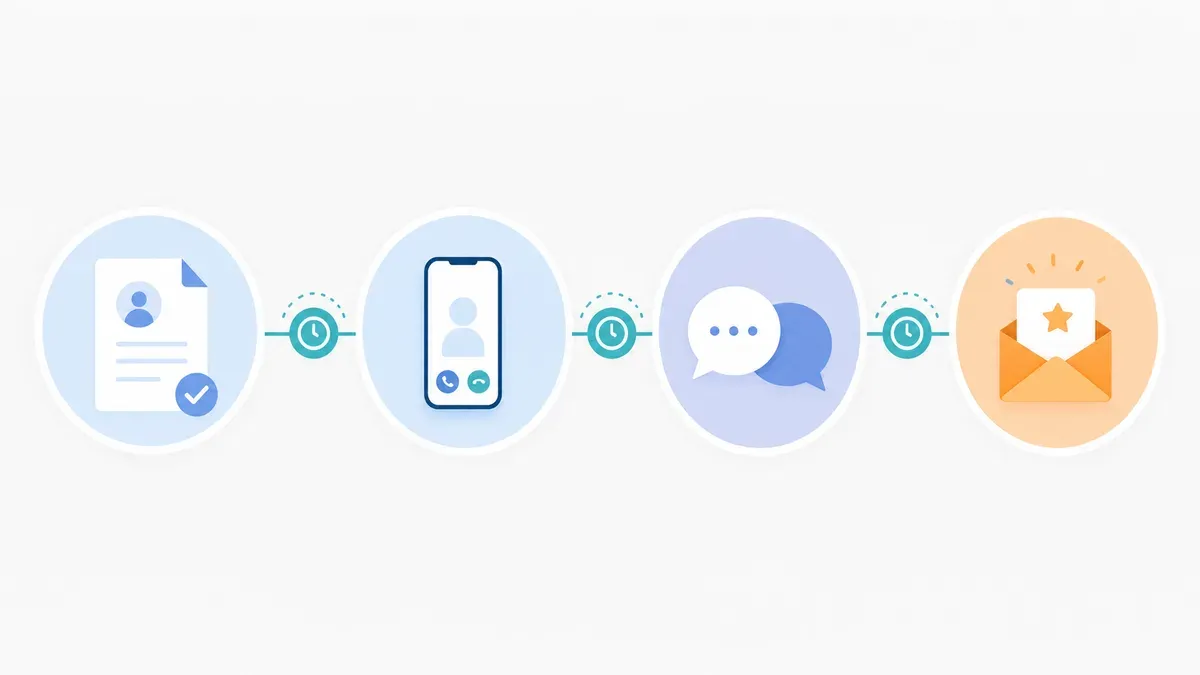
| Tip | The rule | Why it matters |
|---|---|---|
| 1. First phone screen | Schedule within 24 hours of application or outbound reply | Reduces candidate drop-off and signals enthusiasm early |
| 2. Subsequent interviews | Schedule next round within 24 hours of each completed round | Keeps momentum and lets you beat competing offers |
| 3. Follow-ups | Send 2 follow-up messages for each day a candidate hasn’t scheduled | Lifts response rates and prevents strong prospects from going cold |
| 4. Interviewer availability | Make sure interviewers have 6+ hours of open time per week | Eliminates scheduling bottlenecks and gives candidates flexibility |
| 5. Prep notes | Send candidates prep notes before each interview round | Reduces anxiety and produces more natural, useful conversations |
1. Schedule Phone Screens Within 24 Hours of an Application or Outbound Reply
The longer you wait for the first touch, the more time top candidates have to field other offers. Cronofy’s 2024 Candidate Expectations Report found that 42% of surveyed candidates left a recruitment process because scheduling an interview took too long. You should schedule phone screens within 24 hours of receiving an application or a positive response to an outbound message. Top talent wants to know you’re interested. This helps keep the momentum going and your best candidates in the hiring pipeline.
In short, startups that implement 24-hour turnarounds for first-round phone screens can reduce their candidate drop-off rates and give candidates a positive impression from the start.
2. Schedule the Next Interviews Within 24 Hours of Each Round
Keep the momentum going after initial contact. Once you have a group narrowed down from your initial phone screens, don’t let them sit on ice. Schedule the next interviews within 24 hours to keep things moving through the hiring pipeline. It’s a good idea to set this expectation for candidates during the phone screen, so they know the next steps and have a clear schedule for upcoming interviews.
The 24-hour rule should apply for all phases of the interview process, as long as there aren’t any scheduling conflicts on the candidate’s end. If you keep things from slowing down, you can beat out competitors and make offers to top talent before they can receive other offers.
3. Send 2 Follow-Ups for Each Day Candidates Didn’t Schedule
Communication is foundational to an expedient hiring process. Indeed’s ghosting in hiring report describes candidate ghosting as a symptom of larger problems with the hiring experience, which makes steady communication worth the effort. If you notice candidates aren’t scheduling times for interviews or responding promptly to reach-out messages, don’t hesitate to send follow-up reminders. A best practice is to send two follow-up messages for each day a candidate doesn’t schedule an interview.
These reminders can be short and sweet. Make them polite and encouraging to express interest in the candidate’s continued participation in the hiring process. This simple tactic can raise your response rates and keep fewer top prospects from falling through the cracks.
4. Make Sure Interviewers Have 6+ Hours of Availability That Week
If the interviewers in the hiring process have limited availability, it can greatly slow down your hiring process. To avoid bottlenecks and delays, make sure your interviewers have at least six hours, preferably more, of availability each week to interview candidates. The main benefit of this is that it gives top candidates more flexibility for scheduling and keeps the interviews from feeling rushed.
Freeing up this time is easier said than done for startups if those involved in the interview process are busy or wearing a lot of hats. That’s why it’s a good idea to touch base with interviewers and see what kind of support and coverage they need to help free up their schedules. The previous tips, like the 24-hour rule, should also help with this as it means interviews aren’t dragged out over weeks and interviewers only need to have the additional availability until the positions are filled.
When the constraint is bandwidth instead of process, software only goes so far. An ATS can handle scheduling links, email templates and reminders, but it doesn’t source candidates, run first screens or chase unresponsive prospects. For teams hiring a few roles a year, founders can often cover that work themselves inside the ATS. For senior or specialized roles, or when interviewers can’t find six open hours a week, a fractional recruiter can take on sourcing, outreach and phone screens on top of the same system, usually billed hourly instead of as a percentage of salary.
5. Send Candidates Prep Notes Before Each Interview Round
The actual interview should be as smooth and pain-free as possible, for both the candidates and the interviewers. One way to keep each interview going smoothly is to provide candidates with prep notes ahead of time. These prep notes can provide a timeline and clear expectations for the interview.
Also, even the most experienced candidates can get a bit nervous for interviews where they have no idea what to expect. Prep notes are one of the simplest candidate experience best practices, since they can help reduce anxiety and allow for a more natural, confident conversation. Prep notes can include information like the interview format, key topics you’ll cover, how long the interview will take and any other information you think is relevant for candidates to know.
Why Speed Matters Even More in 2026
The competitive pressure behind these five steps has only intensified. Research compiled in 2026 finds that the best candidates are typically hired within 10 days, while SHRM’s 2025 benchmarking data places average time-to-fill at roughly 42 days. That gap is where top talent disappears. The same research shows 42% of candidates say a poor interview experience led them to decline an offer, and 72% expect the entire process to wrap up within three weeks. The structural levers haven’t changed. Responsiveness, scheduling discipline, and candidate communication still drive outcomes. What has changed is the cost of ignoring them.
How Dover Fits Into a Faster Hiring Process
The five habits above rely on scheduling links, reminders, and templated follow-ups, which a free ATS can cover. Dover’s free ATS includes customizable scheduling links, interviewer blocks and daily or weekly interview limits, a limited set of email templates, and reminders for candidates and interviewers, with unlimited jobs and users. That lets a small team run the 24-hour and follow-up rules from one system.
Software does not source candidates, run first screens, or chase unresponsive prospects, and that is usually where interviewer bandwidth breaks down. Dover also runs a marketplace of fractional recruiters who work inside the same ATS and can take on sourcing, outreach, and phone screens, averaging about $4,800 per hire across all roles. Costs vary by recruiter seniority and hiring complexity.
Because recruiters and the hiring team share one pipeline, founders can see sourcing activity and candidate flow in real time. Cost per hire through the marketplace averages about $4,800 across all roles, though it varies by role. There are no long-term contracts, so a team can add recruiter hours for a senior search and pause them once the pipeline is full.
FAQs
How quickly should a startup schedule a first phone screen?
Within 24 hours of receiving an application or a positive reply to an outbound message. Top candidates are actively fielding other offers, and a same-day or next-day response signals genuine enthusiasm. Startups that implement this 24-hour rule tend to see lower candidate drop-off rates and set a stronger first impression from the start.
How many follow-ups should you send if a candidate hasn’t scheduled?
Send two follow-up messages for each day a candidate hasn’t booked their interview slot. Keep them short, polite, and encouraging. This cadence lifts response rates and prevents strong prospects from going cold without requiring much extra effort.
How much interviewer availability is needed to avoid scheduling bottlenecks?
Interviewers should have at least six hours of open time per week dedicated to candidate interviews. When interviewers are overextended, scheduling delays compound across every round and push top candidates toward offers from faster-moving companies. Checking in with interviewers about their workload, and providing coverage where needed, is what keeps the bandwidth manageable over time.
What should prep notes for candidates include?
Prep notes should cover the interview format, the key topics or competencies that will be discussed, the expected duration of the interview, and any other logistical details candidates need to know ahead of time. Giving candidates this context reduces anxiety, produces more natural conversations, and makes the overall interview more useful for both sides.
Do you need a recruiter if you already use an ATS?
An ATS tracks candidates, sends templated messages and schedules interviews, but it doesn’t source candidates, write outreach or run screens. Teams with a few hires a year and founder time to spare can often keep the 24-hour rules in place with an ATS alone. When roles are senior or specialized, or interviewers lack open hours, a fractional recruiter can add capacity on top of the ATS. Dover pairs a free ATS with on-demand fractional recruiters in one shared system, with an average cost per hire of about $4,800 across all roles, though costs vary by role seniority and hiring complexity.
Final Thoughts on Hiring Top Talent Faster Without a Dedicated Recruiting Team
Hiring speed at a startup usually comes down to how quickly each handoff happens, from the first reply to the final interview round, and the five habits above mostly remove idle time between those handoffs. Teams hiring a few roles a year can often keep them in place with an ATS and founder time, while teams running senior searches or working with thin interviewer calendars may need added recruiting hours to hold the same pace. Dover’s free ATS paired with on-demand fractional recruiters is one example of how both setups can run in a single system, and the right mix tends to depend on how many roles are open and how much interviewer time is available.