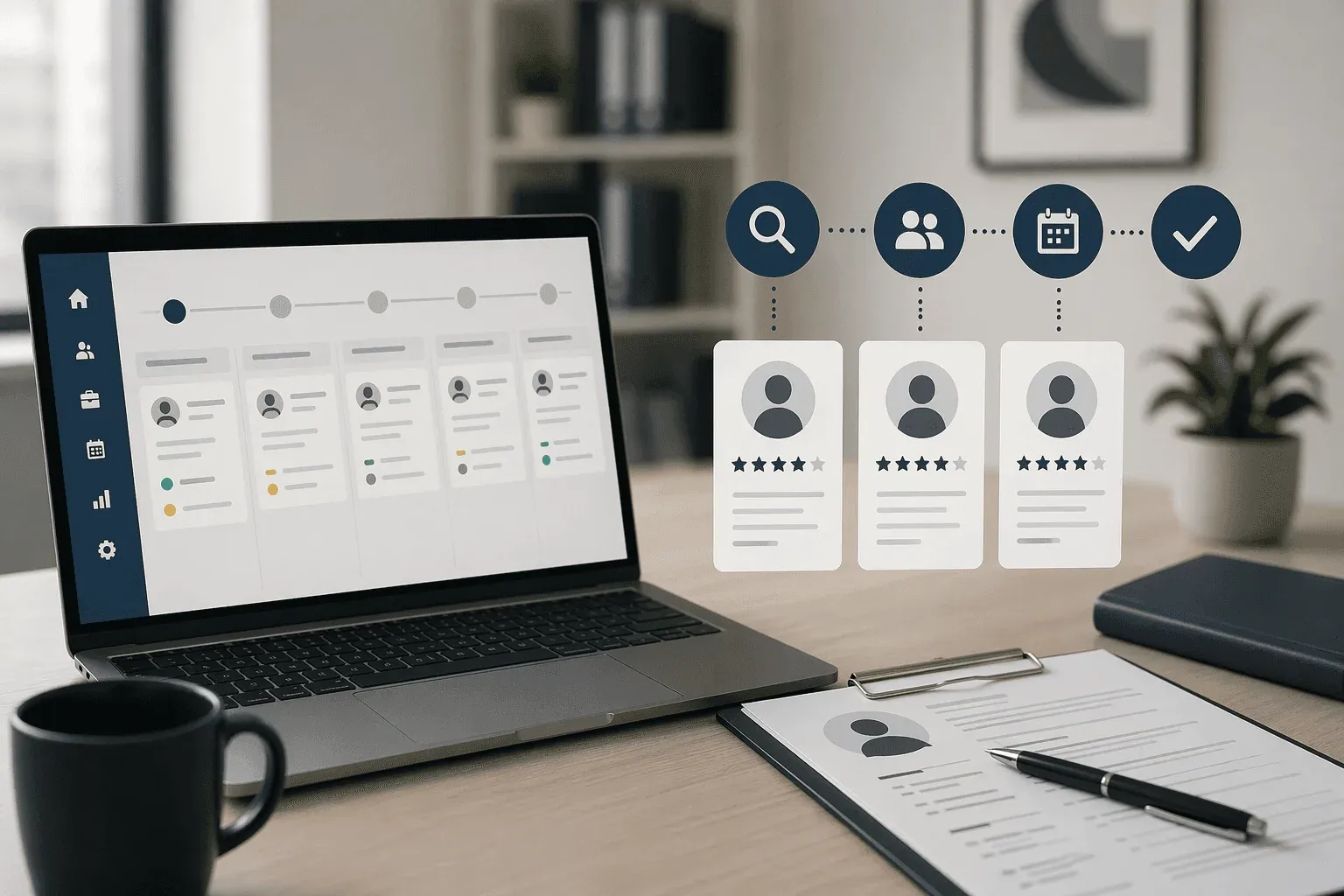

Most hiring teams don’t recognize candidate experience issues until measurable impacts appear across their funnel. Data shows that one in four candidates decline offers due to negative interactions, a lot receive no response after applying, and nearly half withdraw because of communication gaps. When time-to-hire increases and offer acceptance rates fall, the candidate experience warrants closer evaluation, and this guide outlines the factors to review and the improvements that drive better outcomes.
TLDR:
-
Candidate experience covers every interaction from job posting to final decision.
-
42% of candidates decline offers due to negative hiring experiences.
-
A large proportion of applicants never hear back after applying, damaging your employer brand.
-
AI automates scheduling and screening while recruiters focus on relationships.
-
Some of the top software tools offer a free ATS with AI screening and access to vetted startup recruiters.
What Candidate Experience Really Means for Modern Hiring
Candidate experience is how job seekers perceive your company throughout the hiring process. It shapes whether top talent accepts your offer, refers others, or becomes a customer.

This experience spans every interaction a candidate has with your organization, from seeing your job posting through application submission, interview scheduling, and the final hiring decision. Even rejected candidates carry impressions that influence your reputation.
The current state is concerning. Only 26% of North American job seekers report having a great candidate experience.
When three-quarters of candidates aren’t having great experiences, companies that focus on this area gain immediate advantages in attracting talent and reducing time-to-hire.
How Poor Candidate Experience Damages Your Business
Poor candidate experiences directly affect your ability to hire. 42% of candidates say negative interview experiences led them to decline offers, according to 2026 hiring data. That is nearly half the candidates you wanted to hire walking away because of problems you could control.
The inverse matters just as much. 66% of candidates said a positive experience influenced their decision to accept a job offer. You’re losing candidates through poor experiences and missing opportunities to convert undecided talent.
The damage extends beyond individual hires. Rejected candidates share negative experiences on Glassdoor, social media, and within their professional networks. Each poor interaction creates a ripple effect that discourages future applicants and damages your employer brand with people who’ve never applied.
The financial impact compounds quickly. Extended time-to-hire from reduced candidate pools increases costs. You lose productivity from unfilled roles. Your team burns out covering empty positions. Competitors with better candidate experiences are hiring the same talent pool faster and more effectively.
The Five Critical Stages Where Candidate Experience Breaks Down
The candidate journey breaks down at five critical stages, each creating friction that drives away qualified talent.
Job Discovery and Application
Applications that ask candidates to manually re-enter résumé information increase abandonment rates. Requiring account creation before applying adds unnecessary barriers. Job descriptions without salary ranges cause qualified candidates to self-select out, assuming compensation doesn’t match their expectations.
Post-Application Silence
A lot of candidates never hear back after applying. Automated confirmations that promise updates within specific timeframes but fail to deliver create worse impressions than no response.
Interview Scheduling Chaos
Email threads to coordinate schedules waste time and test patience. Last-minute reschedules without explanation signal the role lacks priority. Missing details about interview format, duration, or participants leave candidates underprepared.
Interview Execution Gaps
Interviewers who haven’t reviewed résumés or ask questions already answered in applications reveal internal disorganization. Multiple rounds without clear progression criteria feel aimless and disrespectful of candidate time.
Post-Interview Limbo
62% of candidates lose interest in a role after two weeks with no post-interview update. Generic rejection emails that arrive weeks late provide no closure. Ghosting candidates damages employer reputation and discourages future applications.
Communication Gaps That Drive Candidates Away
Communication breakdowns at every hiring stage create candidate anxiety and damage trust. 65% of job seekers report inconsistent communication throughout recruitment, leaving them uncertain about their status.
Common failures include immediate application confirmations followed by weeks of silence, missed callback commitments, and unexplained delays in interview feedback. Candidates submit requested materials and receive no acknowledgment.
The cost is substantial: 47% of candidates withdraw from processes due to poor communication. You’re losing half your pipeline because candidates lack basic information about where they stand.
The fix requires predictability, not constant updates. Set clear timeline expectations upfront, send brief status updates when timelines shift, and acknowledge receipt of submitted materials. These basic practices separate employers that candidates recommend from those they actively avoid.
AI and Technology’s Role in Enhancing Candidate Experience
AI removes administrative friction that delays hiring and frustrates candidates. AI recruiting tools inside an ATS surface qualified applicants in hours instead of weeks. Automated scheduling eliminates email chains that postpone interviews. Interview notetakers capture details so recruiters can focus on conversation instead of typing.
Success depends on applying AI where it adds value. Automation works for administrative tasks like parsing applications, sending confirmations, coordinating calendars, and transcribing interviews. These changes benefit candidates through faster responses and less friction.
AI fails when replacing human judgment. Generic chatbot responses feel cold. Algorithmic rejections without explanation frustrate applicants who invested time. The goal is freeing recruiters from busywork to spend time on meaningful candidate conversations, not removing humans from hiring.
Strong candidate experiences combine automated logistics with personal attention. Tech handles coordination while recruiters explain roles, answer questions, and build relationships.
An ATS handles the logistics: posting jobs, tracking applicants, scheduling interviews, and documenting decisions. For many roles, that coverage is enough. But when a role is senior, highly specialized, or time-sensitive, the gap is usually sourcing capacity and recruiting judgment, not missing software features. A fractional recruiter or recruiting agency can plug in at that point, working directly inside the same ATS pipeline so the hiring team has full visibility: active outreach, candidate conversations, and closing work all happen in one shared system rather than across disconnected tools.
Building Effective Candidate Experience Surveys
Candidate feedback shows where your hiring process fails and what matters to applicants. Without structured surveys, you’re making changes based on assumptions instead of data.
When to Send Surveys
Send surveys within 24-48 hours after interviews or decisions while experiences are fresh. Delayed surveys get fewer responses and vaguer feedback.
Collect input after application submission, each interview round, and final decisions. Multiple touchpoints identify problem stages without overwhelming candidates.
Important Questions to Include
Limit surveys to 5-8 questions. Ask candidates to rate application ease, interview preparedness, communication clarity, and timeline accuracy on numeric scales. Add one open-ended question for context.
Questions like “How clear were we about next steps?” and “Did interviewers seem prepared?” produce specific improvement areas.
Creating Smooth Application Processes
Application abandonment happens when processes create unnecessary friction. Allowing résumé uploads instead of manual data entry reduces drop-off rates. Removing account creation requirements before submission eliminates barriers that discourage applicants.
Mobile-responsive applications are critical since a majority of job seekers use phones to search for jobs. Forms that don’t display properly on mobile screens lose qualified candidates.
Using an ATS for candidate experience that consolidates applications from multiple job boards into one system prevents candidates from slipping through while simplifying your team’s workflow and response times.
Interview Experience Best Practices
Prepare interviewers before every conversation. Share candidate résumés, application responses, and interview guides for your hiring team 24 hours ahead. Unprepared interviewers who ask questions already answered in applications signal disorganization and waste candidate time.
Standardize interview questions across candidates for the same role. Consistent questions create fair comparisons and reduce bias. Structured feedback forms with specific evaluation criteria prevent vague assessments like “not a culture fit” that don’t help decision-making or protect against discrimination claims.
Explain the interview format, timeline, and next steps at the beginning of each conversation. Tell candidates who they’ll meet, how many rounds remain, and when they’ll hear back. This context reduces anxiety and shows respect for their time.
Use AI notetakers to capture interview details accurately while maintaining eye contact and natural conversation flow. Automated transcription creates consistent documentation across all candidates and frees interviewers to engage fully instead of frantically typing.
Deliver decisions within promised timeframes. When delays occur, send brief updates explaining the holdup and revised timelines. Candidates accept reasonable delays but lose trust when you miss commitments without explanation.
Measuring and Improving Your Candidate Experience
Start with three core metrics: time-to-hire, application completion rate, and offer acceptance rate. Track each monthly to identify trends. Applications taking 15+ minutes to complete signal friction. Offer acceptance rates below 70% indicate problems throughout your process.
Net Promoter Score (NPS) measures whether candidates would recommend your company. Ask: “On a scale of 0-10, how likely are you to recommend our hiring process?” Scores above 50 indicate strong performance; below 0 requires immediate attention.
| Metric | Benchmark (2026) | What It Signals |
|---|---|---|
| Candidates reporting a great experience | 26% of North American job seekers | Most applicants leave with a negative impression of your process |
| Offer decline rate tied to poor experience | 42% of candidates | Nearly half of desired hires walk away because of controllable problems |
| Positive experience influencing offer acceptance | 66% of candidates | A good process converts undecided talent more often than compensation alone |
| Candidates who withdraw due to poor communication | 47% | Half your pipeline can be lost to basic information gaps |
| Candidates who lose interest after 2 weeks with no update | 62% | Long waits signal disorganization and cost you offers |
| Average time-to-hire | 41 days | Top teams close faster through tighter communication and organized processes |
| Healthy offer acceptance rate | 70% or above | Below this threshold, process problems are likely driving drop-off |
Compare your metrics against industry benchmarks. The average time-to-hire is 41 days in 2026, up from 36 days in prior years. Top-performing companies still close hires faster through tighter communication and more organized processes.
Dover Is a Modern Recruiting Solution Built for Startups
For early-stage companies and small teams that need to hire quickly, having the right tools can make daily recruiting much easier. Dover offers a free ATS with unlimited jobs and users, along with access to experienced startup recruiters who can support sourcing, interviewing, or closing candidates whenever help is needed.
For teams considering tools like SmartRecruiters, Greenhouse, Lever, or Workable, Dover offers a cost-friendly option built for young companies. Fractional recruiting agencies also run on Dover’s platform, and every recruiter in the marketplace carries verified reviews so teams can evaluate fit before a search starts.
If your focus is faster responses, clearer communication, and more organized hiring, Dover provides a practical way to support those goals while helping your team stay focused on candidates.
FAQs
What’s the biggest mistake companies make with candidate communication?
Setting timeline expectations and then missing them without explanation. Approximately 47% of candidates withdraw from processes due to poor communication. The fix is simple: tell candidates when they’ll hear back, send brief updates if timelines change, and acknowledge receipt of materials they submit.
Can AI improve candidate experience without making hiring feel impersonal?
Yes, when applied to administrative tasks instead of human judgment. Use AI for résumé screening, interview scheduling, and transcription to speed up responses and reduce friction. Keep humans involved for explaining roles, answering questions, and building relationships so candidates get both fast logistics and personal attention.
Do I need a recruiter if I’m already using an ATS?
An ATS and a recruiter solve different problems. An ATS organizes candidates who find their way to you. A recruiter actively builds the pool by sourcing passive candidates and closing offers on complex searches. For roles where applicants apply readily, self-serve hiring may be enough. For senior or hard-to-source roles, some teams bring in a fractional recruiting agency; Dover is the platform those agencies run on, with verified recruiter reviews available before any search begins.
Final Thoughts on Building Stronger Hiring Processes
Improving candidate experience doesn’t require a large budget or a full redesign of your hiring approach. Steady communication, quicker follow-ups, and interviewers who arrive prepared already create a stronger impression for applicants. These simple habits raise the quality of your hiring outcomes and help more candidates feel confident moving forward. For teams that want a more complete setup, Dover pairs a free ATS with on-demand fractional recruiters who work inside the same shared pipeline, with no separate systems or coordination overhead. The free ATS handles tracking and scheduling; fractional recruiters can take on sourcing and closing for roles that need more hands-on work, at an average of $4,800 per hire (rates can vary higher or lower depending on the role) with no long-term contracts required.