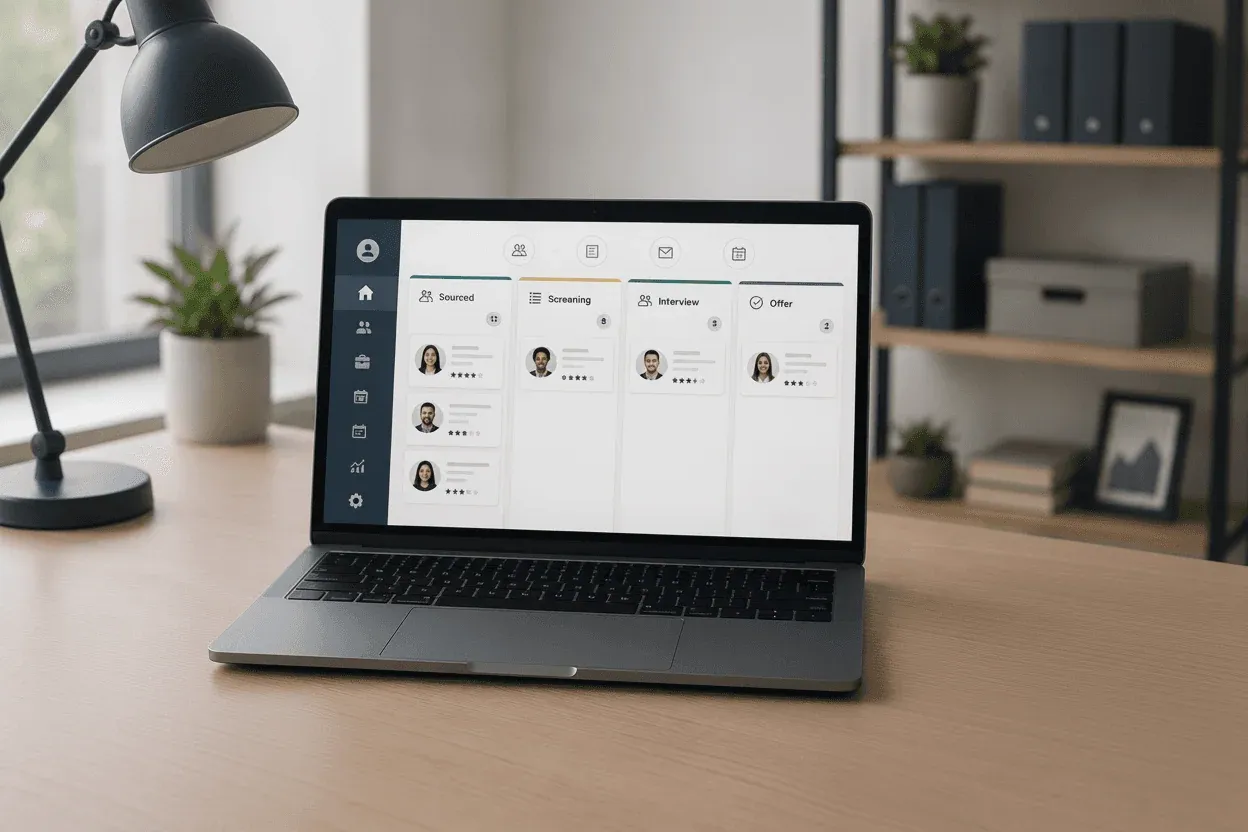

Most startups have recruitment software in place, but those tools tend to handle isolated tasks without connecting into a real workflow. The result is a hiring process that still depends on manual coordination at every handoff, even when software is involved. This guide covers recruiting process automation in practice: which steps to automate, which tools to look for, and how to build it without breaking what already works.
TLDR:
-
Recruiting process automation connects separate tools into a linked funnel so candidates move forward without manual prompting at each stage.
-
Rule-based tasks like job posting, resume screening, and scheduling can be automated; final hiring decisions cannot.
-
Audit your process and set measurable goals before selecting any tool, starting with one high-friction point instead of the full workflow.
-
AI screening can carry disparate impact risk and data privacy obligations under GDPR and CCPA, so keep humans in the loop for candidate elimination decisions.
-
Some tools combine a free ATS with on-demand recruiting support, letting startups scale from self-serve to fractional help inside one shared system.
What Recruiting Process Automation Actually Means
Most hiring teams already have at least one automation running: a scheduling link, auto-rejection emails, or a resume filter. Those tools help at isolated moments, but they stop there.
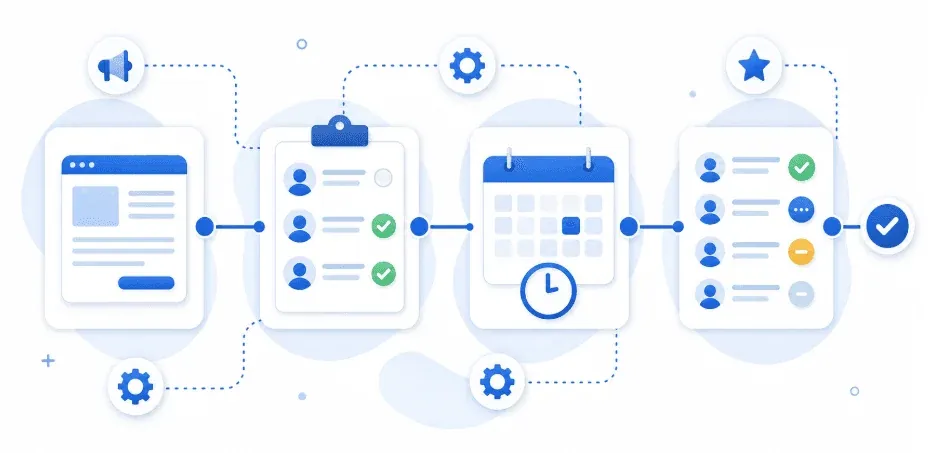
The distinction worth drawing is connectivity. When tools handle separate tasks without shared logic, someone still has to manually move candidates between stages, chase down feedback, and decide what happens next. Process automation connects those stages so the funnel advances without manual prompting between each step. A resume screener that scores applicants but never triggers outreach is a task tool. When that score triggers outreach, which triggers scheduling, which logs interview feedback automatically, that’s a process.
Which Recruiting Tasks Are Worth Automating
Some tasks have a clear handoff point. The work is repetitive, rule-based, and doesn’t require reading a room. Others depend on judgment that no scoring rubric fully captures.
| Task | Automatable? | Notes |
|---|---|---|
| Job posting distribution | Yes | Pushing to dozens of boards is mechanical; automation saves hours with no real trade-off |
| Resume screening and scoring | Yes | Rules-based ranking against set criteria works well at volume |
| Interview scheduling | Yes | Calendar coordination is overhead; scheduling tools handle it cleanly |
| Candidate status updates and rejections | Yes | Templated communications follow predictable logic |
| Offer letter generation | Partially | Templates automate drafting, but final terms require human review |
| Reference checks | Partially | Automated surveys collect responses, but interpreting them still needs judgment |
| Final hiring decisions | No | Compensation negotiation, culture fit, and tradeoff calls belong to a person |
How to Automate Your Recruitment Process: A Step-by-Step Approach
Recruiting automation best practices consistently point to process mapping as the step most teams skip, and the one most likely to determine whether a tool actually gets used.
-
Audit your current process first. Map every manual step from job posting to offer letter, noting where work stalls and where candidates go quiet.
-
Set specific goals before selecting any tool, whether that means fewer scheduling hours, faster time to first interview, or lower application drop-off rates.
-
Start with one high-friction point. Adding everything at once creates configuration problems you won’t catch until a real candidate is affected.
-
Test before going live. Run a practice role through the system before real applications arrive so surprises surface in a low-stakes environment.
-
Train the hiring team. Automation breaks when interviewers don’t know how to log feedback or what triggers next steps in the pipeline.
-
Measure against your original goals after the first few hires, then adjust based on what the data actually shows.
Key Features to Look For in Recruitment Automation Tools
When comparing recruitment automation tools, a few functional areas tend to separate tools that genuinely reduce manual work from those that just add another dashboard to check.
Automated Screening and Scoring
Resume parsing and candidate scoring are table stakes at this point. Look for tools that can screen applicants against job-specific criteria and surface the strongest candidates without requiring a recruiter to read every submission. AI-assisted scoring can work well here, though results depend heavily on how clearly you’ve defined the criteria upfront.
Pipeline Visibility and Stage Tracking
A good applicant tracking system gives hiring managers a clear view of where every candidate stands at any given moment. This matters most when multiple people are involved in a search and handoffs between stages tend to get dropped.
Integrations With Job Boards and Communication Tools
Tools that post to multiple job boards from a single interface, and that sync with email or Slack for candidate communication, cut down on context-switching. The wider the job board coverage, the more applicant volume you can generate without extra manual effort.
The Measurable Benefits of Recruiting Process Automation
SHRM’s 2025 cost-per-hire benchmarks put the nonexecutive average at $5,475, giving teams a concrete reference point for measuring what process improvements are worth.
Time savings tend to show up first. Resume screening that once took hours per role can be completed in minutes when automated scoring filters are applied, which is a key way to reduce time-to-hire as a startup. Scheduling coordination, which research on hiring workflows identifies as one of the most time-intensive manual tasks, drops considerably when candidates self-book through calendar integrations.
Cost reductions follow. Reducing time-to-fill lowers the downstream recruiting costs that accumulate when roles stay open, including lost productivity and the risk of a rushed hire made under pressure.
The gains worth tracking closely:
-
Screening throughput increases when AI recruiting tools handle volume triage, freeing up recruiter time for conversations that actually require judgment.
-
Candidate drop-off rates often fall when you automate candidate outreach at each stage, since candidates tend to disengage when they go too long without an update.
Compliance and Bias Risks to Understand Before You Automate
Two compliance areas deserve attention before building out any automated workflow.
The first is disparate impact. AI screening tools trained on historical hiring data can inadvertently filter out candidates from protected groups if that historical data reflects past biases. The tool does not need discriminatory intent to produce discriminatory outcomes. The EEOC’s guidance on AI in hiring notes that automated decision systems are not inevitably discriminatory, but employers remain responsible for auditing outcomes. Before deploying any AI-assisted screening, audit the criteria the tool uses and check whether those criteria are genuinely job-relevant.

The second is data privacy. Collecting and storing candidate data triggers obligations under regulations like GDPR and California’s CCPA, depending on where your applicants are located. Automated systems that log communications, store resume data, or track applicant behavior at scale can expose you to compliance liability if retention policies and consent frameworks are not in place.
A few practical guardrails worth building in from the start:
-
Keep a human in the loop on any screening decision that eliminates a candidate. Automated filters should flag and sort, not make final calls.
-
Document what criteria your screening tools use and why those criteria are job-related. This creates an audit trail if a hiring decision is ever challenged.
-
Set data retention limits. Candidate data collected during a search should not sit in your system indefinitely without a clear policy governing how long it stays and who can access it.
-
Review rejection patterns periodically. If a particular screening stage is consistently filtering out candidates from a specific demographic group, that pattern warrants a closer look at the underlying criteria.
Best Practices for Sustainable Recruiting Automation
Before configuring any workflow, get recruiters and hiring managers in the same conversation. They know which manual steps exist for good reason and which scoring criteria produce false positives, that alignment is part of how an ATS can scale your startup’s hiring process.
Three practices worth building in from the start:
-
Automate selectively. Cover rule-based, repetitive work first, and leave room for human judgment at stages where context changes the right answer.
-
Treat AI scoring as a filter, not a verdict. It surfaces candidates worth a closer look, but the decision to move someone forward or pass should stay with a person who understands the role’s full context.
-
Review your workflows regularly. Hiring needs shift, and an automation that worked well for one role type can quietly create problems when applied to another.
How Dover Fits Into Recruiting Process Automation for Startups
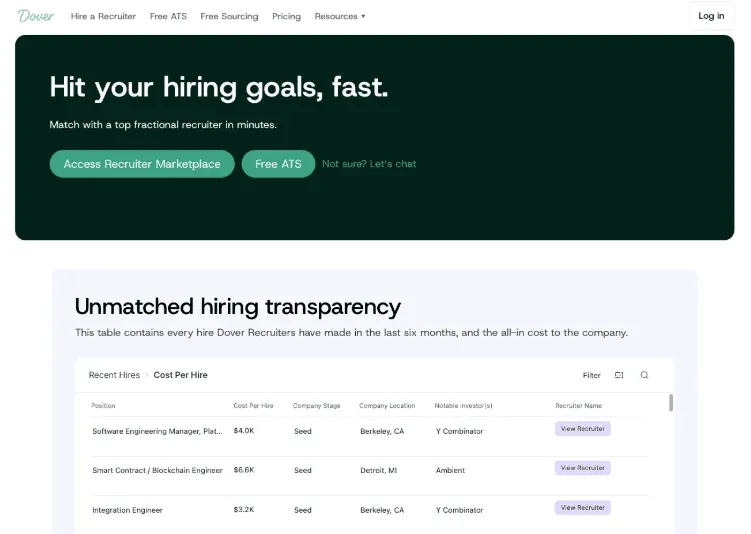
Most recruitment software leaves a predictable gap: when a search stalls on a senior or specialized role, teams are left choosing between running it themselves or paying a contingency agency a fee typically equal to 15% to 25% of the candidate’s first-year salary.
Dover’s free ATS covers that automation layer: 50+ job board integrations, candidate tracking, scheduling and rejection workflows, and a no-code careers page. Setup takes under five minutes with no per-seat pricing or contracts.
When a search stalls despite solid automation, layering in a fractional recruiter who works inside the same ATS keeps the hiring team in full control of the pipeline. Fractional recruiting through Dover typically costs $2,000 to $7,000 per hire, with recruiters setting their own rates. There are no contracts, allowing teams to combine ATS automation with fractional recruiting support when active sourcing is needed.
Frequently Asked Questions
What’s the difference between a recruitment task tool and actual recruiting process automation?
A task tool handles one isolated step without connecting to what comes next. Recruiting process automation links those steps so a completed action triggers the next stage automatically, removing the manual coordination that sits between them.
Can I use a free applicant tracking system and still access recruiter support when I need it?
Yes. Some tools pair a free ATS with an on-demand recruiter marketplace so you can start self-serve and layer in fractional support for harder searches. Dover’s free ATS covers job posting to 50+ job boards, candidate tracking, and scheduling workflows, with fractional recruiters available when a role requires it.
What compliance risks should I understand before deploying AI screening tools in my recruitment process?
Two areas matter most: disparate impact and data privacy. AI screening tools can filter out candidates from protected groups if scoring criteria reflect past biases, so audit those criteria for genuine job relevance first. Collecting candidate data at scale also triggers GDPR and CCPA obligations, so retention policies and consent frameworks need to be in place before the system runs.
Final Thoughts on Recruiting Process Automation
Recruiting process automation handles the mechanical parts of hiring well, but it does not replace the judgment calls that determine whether a hire works out. Mapping which steps in your process are rule-based and which depend on reading a specific situation is worth doing before you configure anything. Dover is one concrete way to put that framework into practice: a free ATS covering job posting to 50+ job boards, candidate tracking, scheduling workflows, and pipeline tracking, paired with a recruiter marketplace for searches that need more than software can provide, all inside a single shared system.