
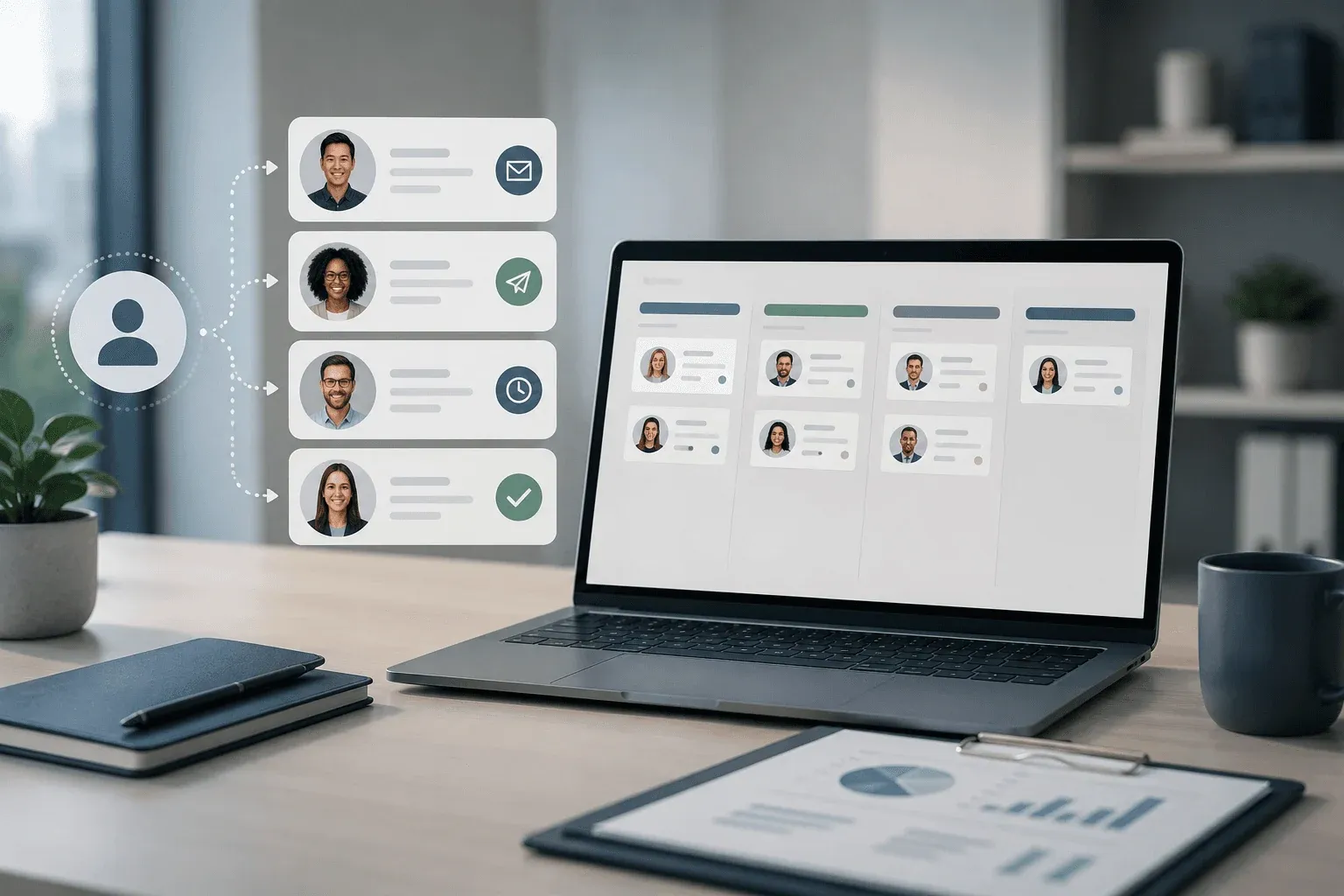
Most early-stage founders figure out how to use an ATS to automate candidate outreach as a startup only after they’ve already burned time managing searches by hand. By then, candidates have gone cold, follow-ups have been missed, and a hiring manager has spent hours on coordination that a configured outreach sequence would have handled in minutes.
TLDR:
-
ATS automation lets you build repeatable outreach sequences that run without manual intervention.
-
Stage-based triggers and automated follow-ups keep candidates moving through your pipeline.
-
Track reply rates at the template level to identify which messages convert and swap out low performers.
-
Fractional recruiters can close gaps when your response rates are healthy but interview conversion stalls.
-
Free ATS tools with built-in outreach and job board distribution can bridge the gap before full-time recruiting headcount.
Why Startups Use an ATS to Automate Candidate Outreach
Hiring at an early-stage startup moves fast, and the competition for qualified talent means the window to reach a candidate before a competitor does can be short.
An applicant tracking system with built-in outreach automation changes the mechanics of that process. Instead of treating candidate communication as a series of one-off tasks, it lets you build repeatable sequences that run in the background while your team focuses elsewhere. ATS adoption has grown steadily as more startups recognize the cost of manual coordination at scale.
There are a few specific reasons why startups find this worthwhile:
-
Sourced candidates move faster when they hear back the same day they’re identified.
-
Consistent follow-up sequences mean candidates don’t fall through the cracks during a busy sprint.
-
Response data across outreach campaigns tells you which messages, roles, and channels are converting.
-
Automated scheduling links and stage-based triggers cut the back-and-forth that adds days to a process.
| Outreach Approach | Coordination Method | Follow-Up Timing | Response Tracking |
|---|---|---|---|
| Manual outreach by founder or hiring manager | Spreadsheet tracking with calendar reminders for each candidate touchpoint | Delayed by hours or days based on founder availability and memory | Gmail drafts and spreadsheet cells updated by hand after each reply |
| ATS-automated outreach sequences | Stage-based triggers fire messages when candidates move between pipeline stages | Sends within minutes of stage change or on predefined schedule without human intervention | Reply rates logged at template level with automatic candidate record updates |
What to Look for in an ATS Before You Automate Candidate Outreach
Not every ATS handles automated outreach well. Before you build any outreach workflow, check whether your system can trigger email sequences, sync with sourcing channels, and log touchpoints without manual input.
A few capabilities matter more than others here:
-
Automated email sequences tied to candidate stage: When a candidate moves from “sourced” to “contacted,” the system should fire a follow-up without you touching it.
-
Multi-channel source tracking: You need to know which candidates came from a job board, a LinkedIn InMail, or a referral, so you can assess what’s working and reallocate time accordingly.
-
Customizable templates by role or team: Look for a system where templates can be scoped by job type or hiring manager, so sequences stay relevant without requiring rewrites each time.
-
CRM-style candidate profiles: A system that stores prior interactions, notes, and stage history lets you personalize follow-ups based on what’s already happened in the relationship.
-
Integration with sourcing tools: If your ATS sits in isolation from LinkedIn, your job boards, or your referral tracking, you’ll spend time manually importing candidates instead of reaching out to them.
The bar here isn’t perfection. For most early-stage teams, the right ATS is one that covers these basics without requiring a dedicated ops person to configure it.
How to Automate Candidate Outreach Using Your ATS
Once your ATS is configured, the outreach layer is where most startups lose time. Manually writing personalized messages, tracking who responded, and following up on the right schedule are tasks that compound quickly across a pipeline of even 20 or 30 candidates.
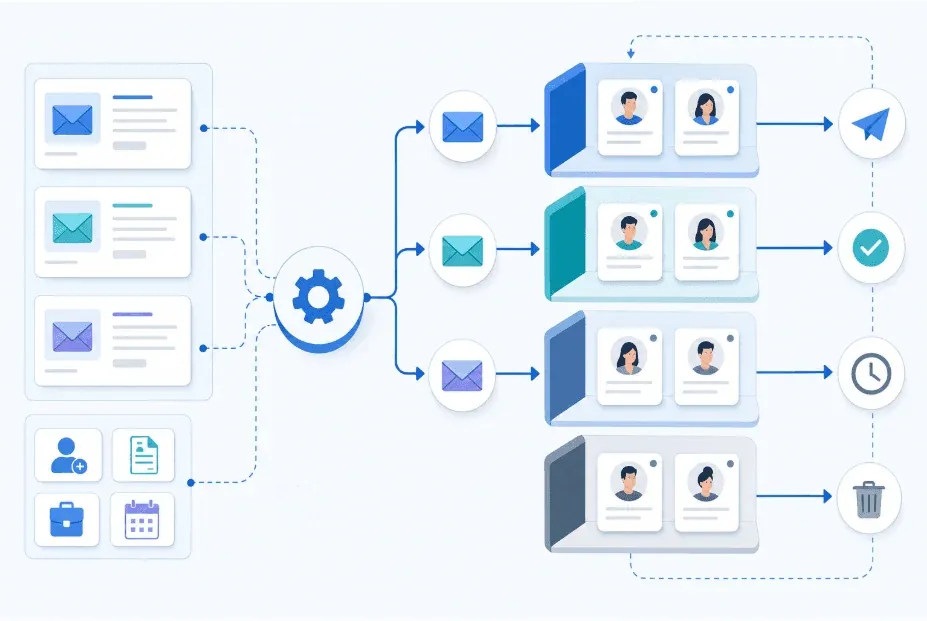
Most ATS tools give you the building blocks to automate this work without sacrificing the personal touch that gets responses. Here is how to approach it.
Build a Message Library Before You Send Anything
The foundation of automated outreach is reusable templates. Write a small set of messages covering your core outreach moments: the initial reach out, a follow-up for non-responders, an interview confirmation, and a post-interview status update. Keep each one short and anchored to something specific about the role or the candidate’s background, so the automation does not read like a broadcast.
Set Triggers Based on Pipeline Stage
Instead of sending outreach manually, configure your ATS to fire messages when a candidate moves into a specific stage. Common trigger points include:
-
When a sourced candidate is added to the pipeline, an introduction email goes out automatically within a set window.
-
When a candidate does not respond after a few days, a single follow-up sends without you touching it.
-
When an interview is scheduled, a confirmation with logistics and a prep note sends on its own.
Track Response Rates to Improve Over Time
Automated outreach only compounds in value if you are measuring what works. Most ATS tools log open rates and reply rates at the template level. Check these periodically and swap out messages with low response rates.
How Automating Candidate Outreach Fits Into Your Full Hiring Pipeline
Automated outreach works best when it connects to every other part of how you hire, beyond the moment a message goes out. A well-configured ATS ties sourcing, screening, scheduling, and follow-up into a single repeatable sequence, so candidates move through your pipeline without requiring a manual nudge at each step.
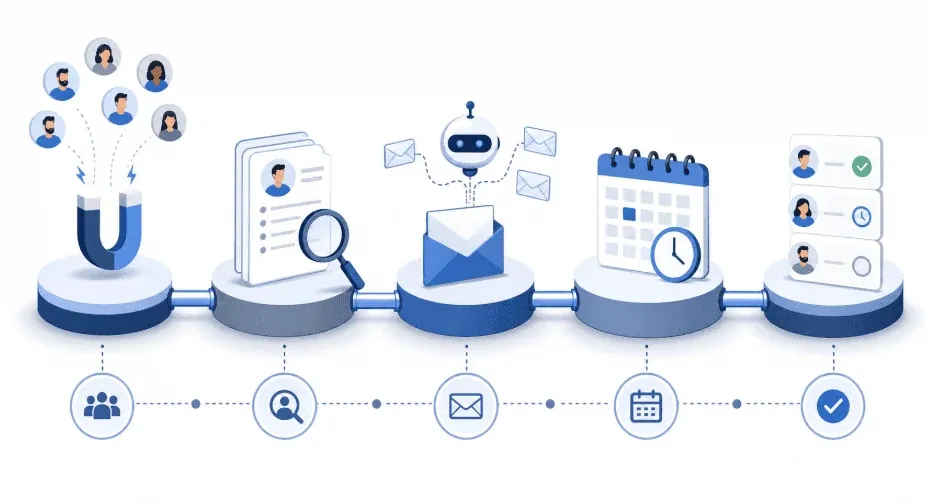
The practical flow looks something like this:
-
Sourcing feeds candidates into your ATS from job boards, referrals, or LinkedIn, tagged by role so outreach sequences fire automatically.
-
Screening filters score candidates against your criteria in the background so your team focuses on the people most worth contacting first.
-
Automated outreach sends your first touchpoint, follow-ups, and rejection notices on a schedule you set once.
-
Scheduling tools let candidates book directly into a calendar slot after they respond.
-
Status updates and offer communications can be templated and triggered by pipeline stage changes.
When to Bring in a Fractional Recruiter to Support Candidate Outreach Automation
Even with a well-configured ATS handling sequences and scheduling, there are hiring situations where automation alone won’t move the needle. A fractional recruiter can fill that gap without the overhead of a full-time hire. The clearest signal is when your response rates are healthy but conversion into interviews is stalling. Automated outreach can surface interested candidates, but closing them often requires someone who can run a structured process and negotiate offers.
A few scenarios where fractional recruiting support tends to make the most difference:
-
You’re hiring for a senior or specialized role where candidates expect a more tailored process than a templated sequence can provide.
-
Your ATS is generating replies but your team lacks the bandwidth to follow up quickly, and slow response times are costing you candidates.
-
You’re opening multiple roles at once and the coordination overhead is pulling a founder or engineering lead from their core work.
-
You’re getting ghosted after initial interest, which often points to gaps in how the process is being run, not in the outreach itself.
Fractional recruiters typically work on an hourly or per-hire basis, which keeps costs variable and tied to actual hiring activity. Some services can bring total cost per hire into the range of a few thousand dollars depending on role complexity, though that number will shift based on seniority and search difficulty. The arrangement works best when the ATS is already set up and running, so the recruiter can focus on the high-judgment work instead of rebuilding process from scratch.
The Cost of Getting Candidate Outreach Automation Wrong as a Startup
Getting candidate outreach automation wrong costs more than time. Startups without a structured process recycle the same inbound pool, miss qualified candidates, and send inconsistent messages that damage how the company is perceived by potential hires.
The downstream recruiting costs can add up quickly. A mis-timed follow-up, a sequence that stops too early, or an ATS that isn’t connected to your sourcing channels means candidates fall through the gaps before you ever have a real conversation with them.
There are a few specific failure modes worth watching for:
-
Manually tracking outreach in spreadsheets creates version control problems fast. When multiple people are hiring, messages get duplicated or missed entirely, and there’s no reliable record of who heard what.
-
Outreach without personalization tends to get ignored. Candidates receiving generic blasts from early-stage companies have little reason to respond, especially when they’re fielding messages from larger, better-known organizations.
-
Delayed follow-ups lose candidates to faster-moving companies. Qualified candidates are typically in conversations with multiple employers at once, and slow response cycles often mean losing them before you’ve had a chance to make your case.
How Dover Helps Startups Automate Candidate Outreach Without the Overhead
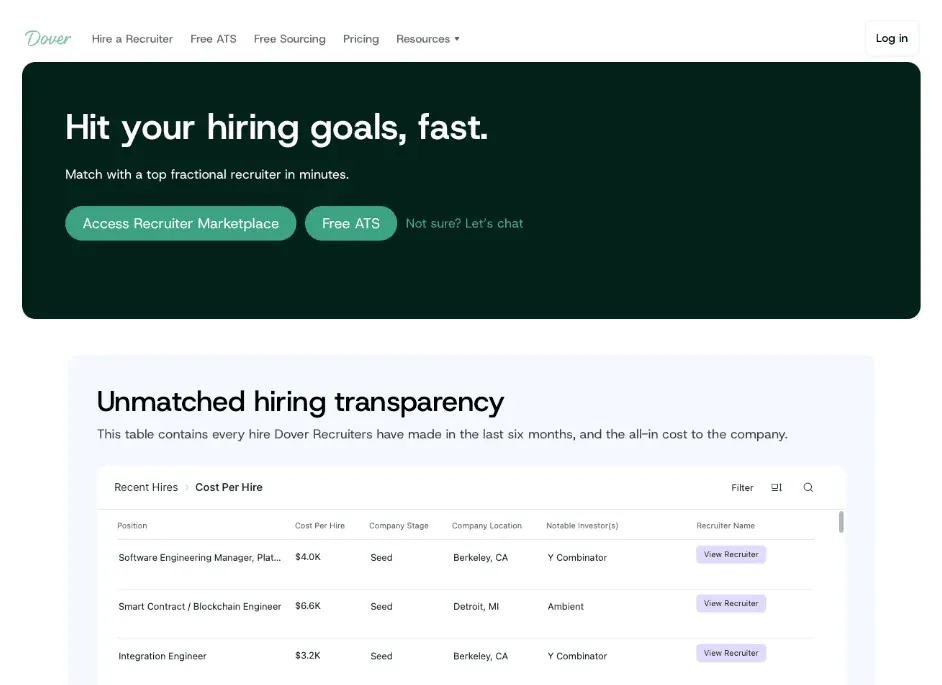
Dover’s free ATS is built with the kind of outreach tooling that early-stage teams actually need. Instead of patching together a spreadsheet, a Gmail draft, and a calendar reminder, you get a single place where candidate sourcing, outreach sequences, and application tracking live together.
The sourcing side pulls from a broad candidate database, so you have an existing pool of candidates to draw from each time you open a new role. From there, you can set up automated follow-up sequences that go out at defined intervals without requiring someone to manually track who heard back and who didn’t.
Dover also connects to 50+ job boards, so a role you post once gets distributed broadly instead of requiring manual submissions across multiple sites.
Where Dover fits well is the gap between “founder doing all recruiting manually” and “company ready to hire a full-time recruiter.” If you’re trying to keep hiring moving without adding headcount to manage the process itself, having outreach and tracking in one place removes a real process bottleneck.
Frequently Asked Questions
Can you automate candidate outreach without losing the personal touch?
Yes. An ATS with template customization and stage-based triggers lets you personalize messages by role and candidate background while automating the send timing and follow-up schedule. The key is building message templates anchored to something specific about the role or the candidate’s experience, so automated sequences still feel relevant instead of generic.
What’s the best ATS for automating candidate outreach as a startup?
The best fit is an ATS that combines automated email sequences tied to pipeline stages, multi-channel source tracking, and integration with your sourcing tools; without requiring dedicated ops headcount to configure it. Dover’s free ATS covers these basics with setup under five minutes, making it practical for founder-led hiring teams.
How much does it cost to automate candidate outreach using an ATS?
Dover’s ATS with built-in outreach automation is free. If you add fractional recruiter support on top of the automation, most companies spend about $4,800 per hire. Recruiters set their own rates, and you only pay for time worked.
Final Thoughts on How to Use an ATS to Automate Candidate Outreach as a Startup
Getting a handle on how to use an ATS to automate candidate outreach as a startup is one of the more practical steps you can take to keep hiring moving without adding headcount. Dover’s free ATS is built with this kind of setup in mind, giving early-stage teams a single place to run sourcing, outreach, and application tracking from day one. If recruiting is starting to compete with everything else on your plate, having the right system in place makes the whole process much easier to manage.