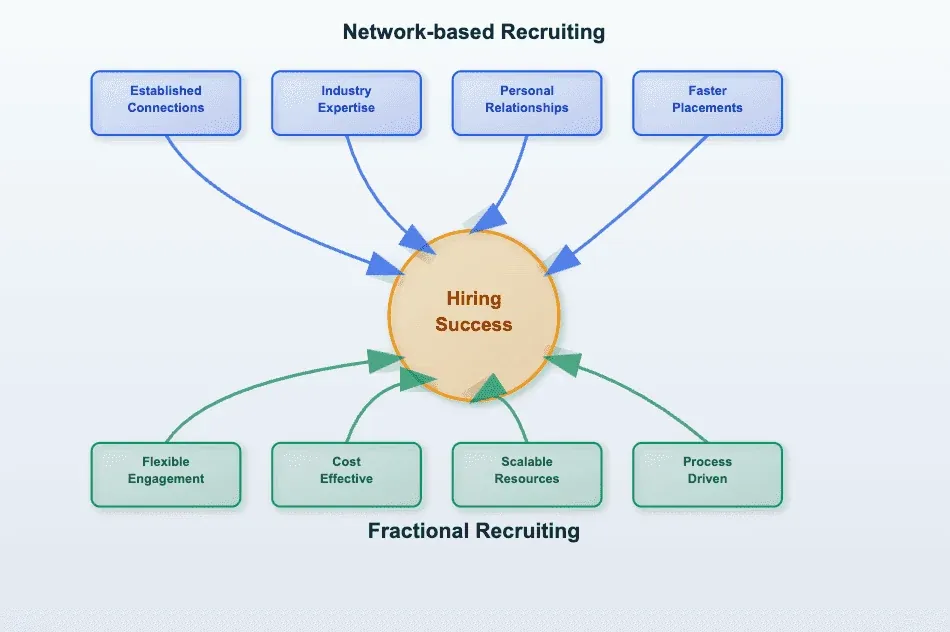

Finding recruiting software that fits a small business budget is harder than it should be. Traditional IT staffing agencies charge 20-25% of first-year salary per hire, which can run $15,000-$30,000 for a single role. For a startup with limited runway, that cost structure makes scaling a team expensive before you’ve even validated product-market fit. Motion Recruitment is one of the larger IT staffing agencies in North America, operating across 16 cities with a focus on tech roles. Whether it makes sense for a small business depends on hiring volume, budget, and how much flexibility you need when priorities shift. This guide breaks down where the tool falls short for startups and which Motion Recruitment alternatives give you more control over cost and process.
TLDR:
-
Motion Recruitment charges 20-25% of first-year salary per hire, running $15,000-$30,000 for most tech roles.
-
Some users report high turnover among account executives, meaning you may lose recruiter continuity mid-search.
-
Motion Recruitment fits enterprises hiring 10+ technical roles per quarter across multiple locations, not early-stage teams.
-
Fractional recruiting can bring per-hire costs down to $4,800, with no long-term contract required.
-
Some tools pair free ATS software with on-demand recruiting support, giving startups pipeline tracking and sourcing in one system.
What Motion Recruitment Is and How It Works
Motion Recruitment operates as an IT staffing agency that focuses on tech recruitment across 16 North American cities. They deliver IT talent solutions through four main service areas: contract staffing, direct hire placements, managed solutions, and statement of work projects.
The company targets tech companies of all sizes, from startups to enterprises, focusing on specialized roles in software development, data science, cybersecurity, and product/UX design.
Team-Based Recruiting Approach
Their team-based recruitment model is designed to handle challenging IT positions that require deep technical knowledge. They assign specialized teams to understand both the technical requirements and cultural fit needed for each role.
If you’re trying to understand the broader world of startup recruiting, we’ve written a detailed guide on startup recruiting guide that covers the different types of recruiting support available to early-stage companies.
Motion Recruitment Features
Core Service Categories
Motion Recruitment’s core offering revolves around four main service categories that cover all IT staffing needs, as listed below:
-
Contract staffing service places temporary IT professionals for project-based work or to fill gaps during busy periods.
-
Direct-hire placements focus on permanent positions where Motion Recruitment handles the entire recruiting process from sourcing to final offer negotiation.
-
Managed solutions offering outsources your entire recruiting function to their team.
-
Statement of work service focuses on hiring complete project teams for companies that need an entire development team.
-
Their consulting arm provides additional services like market analysis, compensation benchmarking, and hiring strategy development for larger clients who need more strategic support.
Technical Specializations Covered
Motion Recruitment covers several key technical areas including software development (full-stack, frontend, backend), mobile development (iOS, Android, React Native), data roles (engineers, scientists, analysts), infrastructure and DevOps, cybersecurity, and product/UX design.
Key Limitations and Gaps
Motion Recruitment faces several major challenges based on employee reviews and client feedback that directly impact their service quality.
Work Culture Problems
The work culture receives consistently negative reviews, with employees describing it as toxic and management having unrealistic expectations. Multiple reviews on Glassdoor mention that new hires receive minimal training but are expected to deliver stellar performance immediately.
Compensation and Pay Structure
The compensation structure presents another major issue. Starting salaries are reportedly low compared to industry standards, and the commission structure is below average for recruiting agencies.
Leadership and Management Issues
Upper management is frequently described as out of touch with market trends, which affects their ability to give clients accurate intelligence. For startups, the consequences are direct: slower decisions, less flexibility mid-hire, and communication gaps between clients and the recruiters on their roles. When account executives leave mid-engagement, startups lose the context that recruiter had already built. Their 20-25% placement fee, consistent with broader IT staffing agency pricing, compounds this further; fractional models avoid it by charging hourly with no long-term contract. See our guides on fractional recruiting and vetting external recruiters for a side-by-side comparison.
Who Should Use Motion Recruitment
Motion Recruitment fits larger tech companies and enterprises that are consistently hiring 10+ technical roles per quarter across multiple locations. Enterprises with existing HR departments, dedicated vendor management processes, and budget flexibility for traditional agency fees get the most out of their model. Organizations that need deep specialization in areas like cybersecurity or data science also benefit from their team-based approach.
The fit breaks down quickly for early-stage companies. Their fee structure runs 20-25% of first-year salary per hire, which is difficult to absorb when hiring multiple roles on a tight runway. Startups that need to adjust requirements, pause searches, or reprioritize mid-quarter will run into the slower decision-making that larger agencies tend to have.
Companies that value continuity and close collaboration may also find the model frustrating. With only 43% of employees recommending Motion Recruitment based on 495 reviews, account executive turnover is a real concern. Losing your recruiter mid-search means rebuilding context around the role from scratch.
Best Startup Recruiting Alternatives
Dover (Best Overall)
Built for startups that need to hire without a dedicated recruiting team, Dover pairs a completely free ATS with on-demand fractional recruiters in one shared system. The core software costs nothing; fractional recruiting runs on an hourly model with no long-term contract or placement fee.
Recruiters set their own rates, with most companies spending $4,800 per hire. That is a considerable reduction from the $15,000-$30,000 typical of traditional agency fees.
Dover’s fractional recruiters work part-time or project-based, giving you senior recruiting expertise without full-time costs. Each recruiter in the network has verified performance data and real client reviews, making it easier to assess fit before committing hours. They integrate directly with your team and adjust alongside your priorities, which matters when hiring plans change between quarters.
The platform includes AI-powered candidate scoring on the premium plan, one-click job posting to 50+ boards, integrated sourcing tools, and analytics dashboards. Fractional recruiters and internal teams work from the same pipeline view, so there is no coordination overhead or duplicate outreach between them. Dover is also the system many fractional recruiting agencies are built on, giving companies agency-grade support at hourly rates instead of placement fees.
BambooHR (Best for HR and Hiring Combined)
BambooHR is a people management tool that bundles an ATS with core HR features like onboarding, time-off tracking, and performance management. Pricing starts around $6/employee/month, making it a reasonable option for small businesses that want HR software and applicant tracking in one subscription instead of managing separate tools.
The tradeoff is recruiting depth. BambooHR’s ATS module is more limited than dedicated hiring tools, with fewer sourcing integrations and less automation. It fits teams doing low-volume hiring who already need HR features, not teams whose primary challenge is sourcing and filling open roles quickly.
Zoho Recruit (Best Free Option for Small Internal Teams)
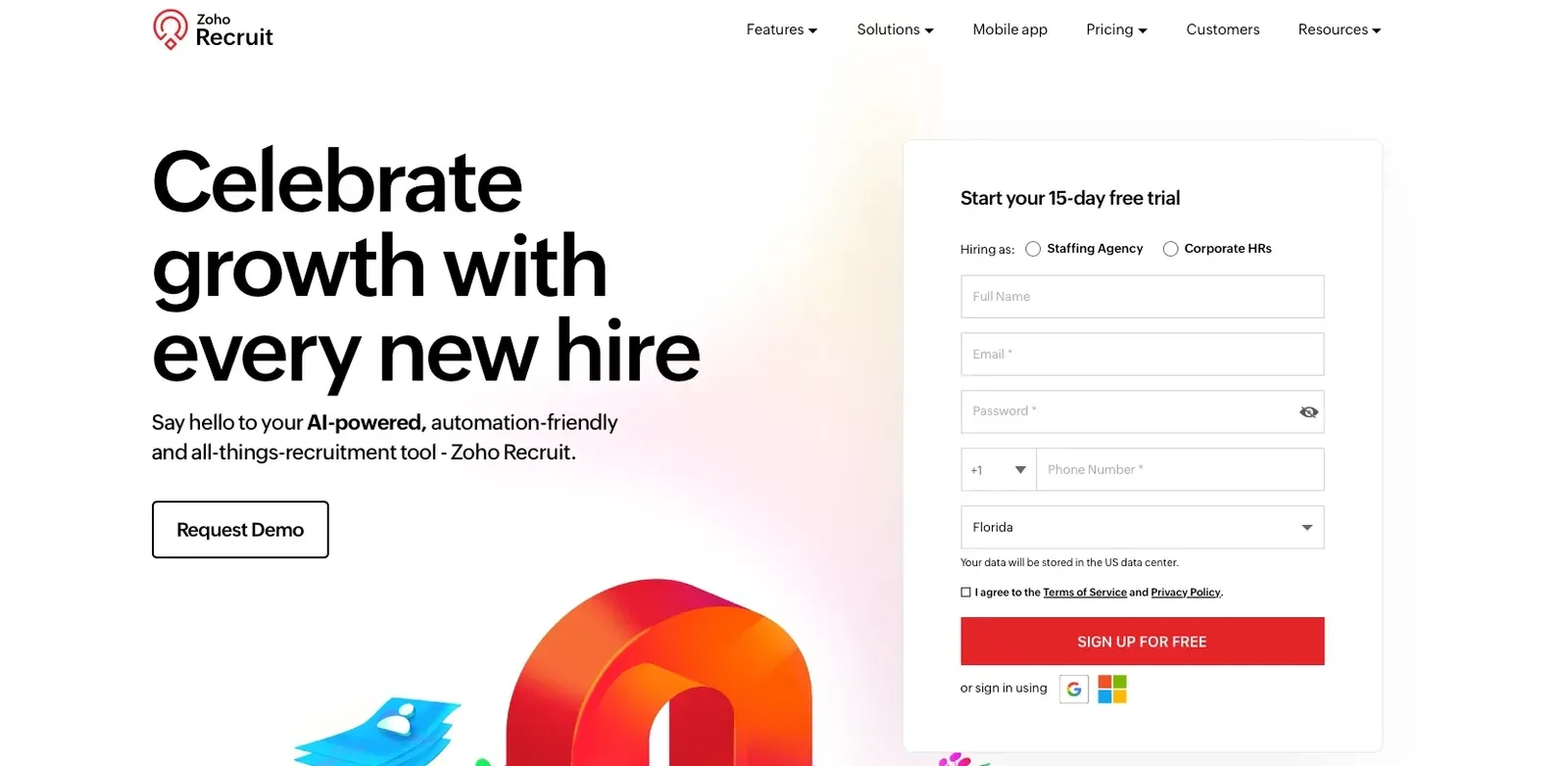
Zoho Recruit offers a free plan for a single recruiter, making it one of the few true free ATS options alongside Dover’s free tier. Paid plans start around $30/recruiter/month and include resume parsing, job board posting, and candidate scoring.
For small businesses running their own recruiting internally, Zoho Recruit covers the basics at a low cost. The free tier is limited to one recruiter and lacks some automation features found in paid tiers, so teams that scale their recruiting function will hit the limits of the free plan fairly quickly.
Breezy HR (Best for Simple Visual Pipelines)
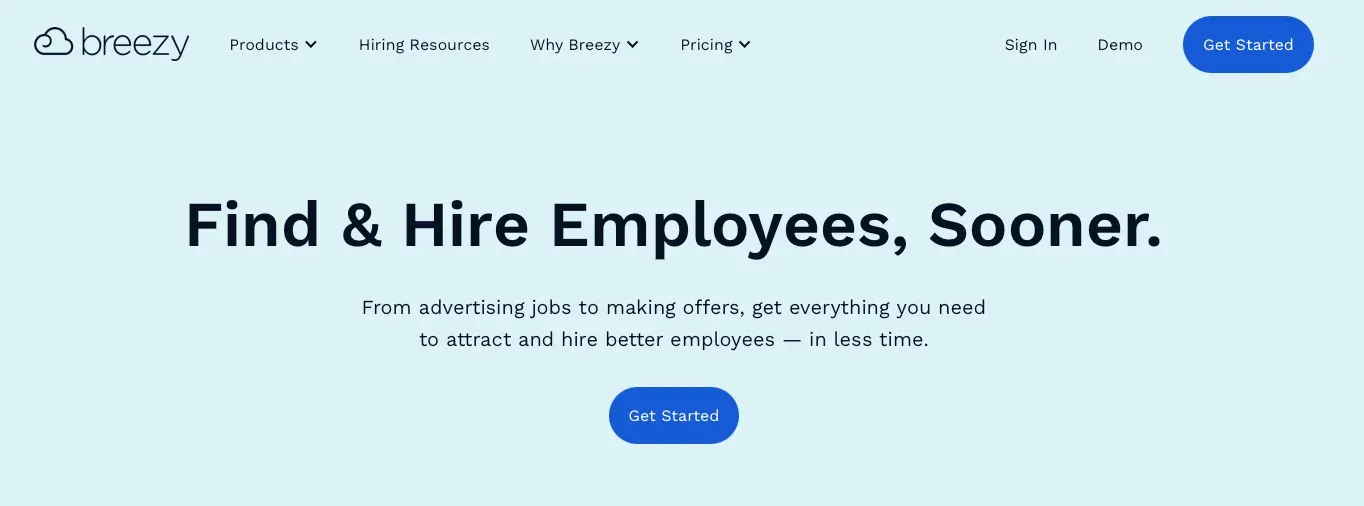
Breezy HR uses a kanban-style pipeline that makes it easy for non-technical users to manage candidates visually. A limited free plan supports one active position at a time; paid plans start around $157/month and unlock multiple positions, video interviews, and additional automation.
Breezy works well for small businesses hiring for a few roles at a time and wanting a clean, simple interface. It does not offer recruiting services or sourcing tools, so it works best for teams that can generate their own applicant flow through job boards.
Traditional ATS Competitors
Ashby and Lever represent more traditional recruiting software options, but they come with major cost differences. Ashby ranges from $50 to $150 per user per month, making Dover’s free model much more attractive for startups with tight budgets.
These platforms offer strong features but require you to handle recruiting internally or hire additional staff. For startups that need both software and recruiting expertise, Dover’s combined approach provides better value.
| Solution | Cost Structure | Best For | Key Limitation |
|---|---|---|---|
| Dover | Free ATS + fractional (avg. ~$4,800 per hire) | Startups needing flexibility | Newer in market |
| Motion Recruitment | 20-25% of salary | Large enterprises | High cost, inflexible |
| Paraform | Variable by recruiter | Companies wanting choice | Quality varies by recruiter |
| Ashby | $50-150/user/month | Companies with internal recruiting | Software only, no recruiting help |
| BambooHR | ~$6/employee/month | Small businesses needing HR + ATS | Limited recruiting depth |
| Zoho Recruit | Free (1 recruiter) / $30+/month | Internal teams on tight budgets | Free tier caps at one recruiter |
| Breezy HR | Free (1 job) / $157+/month | Small teams, simple visual hiring | No sourcing support |
For deeper context on fractional recruiting, read our guide on fractional recruiting guide. You can also check out broader startup recruiting trends at YC recruiting directory.
Why Dover Works for Most Startups
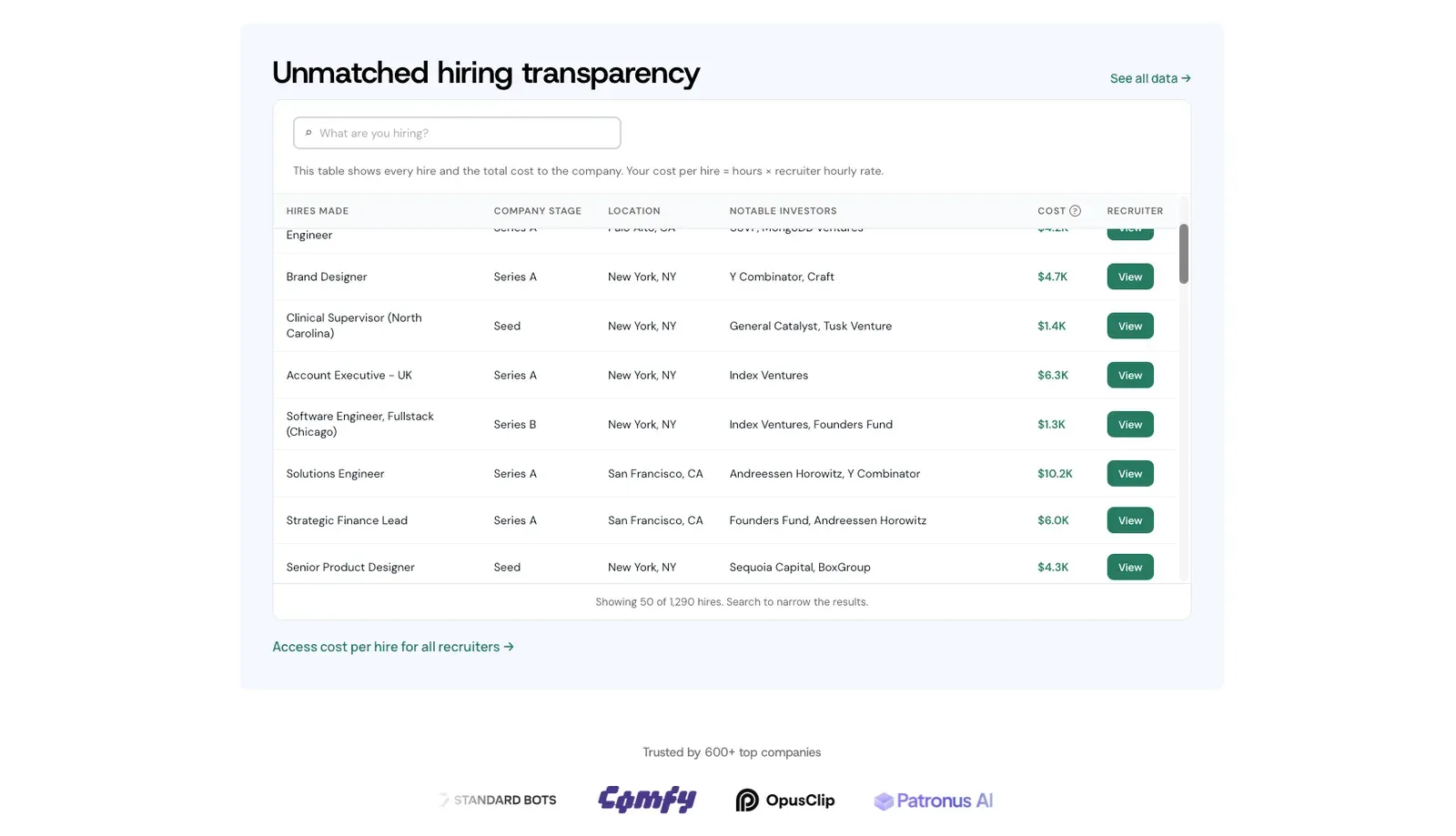
Motion Recruitment’s fee structure runs 20-25% of first-year salary, or $15,000-$30,000 for a typical tech hire. For a startup filling three to five roles in a year, that cost compounds against runway before any of those people start. The model fits enterprises with consistent, high-volume IT hiring across multiple locations. For most early-stage teams, those conditions don’t apply in the first few years.
Dover pairs a free ATS with on-demand fractional recruiters in one shared system. The ATS covers job posting to 50+ boards, pipeline tracking, and candidate management at no cost. Recruiters set their own rates with no long-term contract required, bringing most hires to $4,800. The ATS is the Day 1 foundation: fractional recruiters step into the same pipeline when sourcing gets harder, keeping all activity and candidate data in one place. For more on how fractional recruiting fits startup hiring, see our guides on fractional recruiting benefits and why startups hire recruiters.
If you’re a well-funded enterprise running consistent hiring across multiple cities, Motion Recruitment can handle that scale. For teams that need to start quickly, adjust mid-search, or keep cost tied to actual work done instead of placement fees, Dover fits better. You can also compare fractional and traditional recruiting models at RemotelyTalents’ fractional recruiting guide.
FAQs
How much does Motion Recruitment cost compared to alternatives?
Motion Recruitment typically charges 20-25% of the first-year salary per hire, which can range from $15k-$30k for most tech roles. Dover’s fractional recruiters average about $4,800 per hire, making it much more cost-effective for startups.
Do I need a recruiter if I’m already using an ATS?
An ATS organizes your pipeline: it tracks applications, manages candidate stages, and distributes job postings. It does not source candidates, run outreach, or close offers. If inbound applicants are already coming in and you need to move them through a process, a standalone ATS usually covers it. If the bottleneck is getting qualified candidates into the funnel, especially for senior or hard-to-fill roles, a fractional recruiter can handle sourcing and outreach within that same system. The two work well together when hiring demand outpaces what the founding team can manage through inbound alone.
Are there any free alternatives to Motion Recruitment?
Dover offers a completely free ATS and recruiting platform with unlimited jobs and users. While the fractional recruiting service has costs, the core software is free, unlike competitors that charge $50-150 per user monthly.
Final Thoughts on Motion Recruitment Alternatives
The right model depends on volume, budget, and how much flexibility the team needs mid-search. Large agencies fit enterprises running consistent, high-volume IT hiring across multiple locations. For early-stage companies, that profile rarely applies. Startups tend to need tools that start quickly, adjust when priorities change, and charge based on work done instead of placement fees. If you’re weighing Motion Recruitment alternatives, Dover is one option worth looking at: free ATS software paired with on-demand fractional recruiters who set their own rates, no long-term contract required.