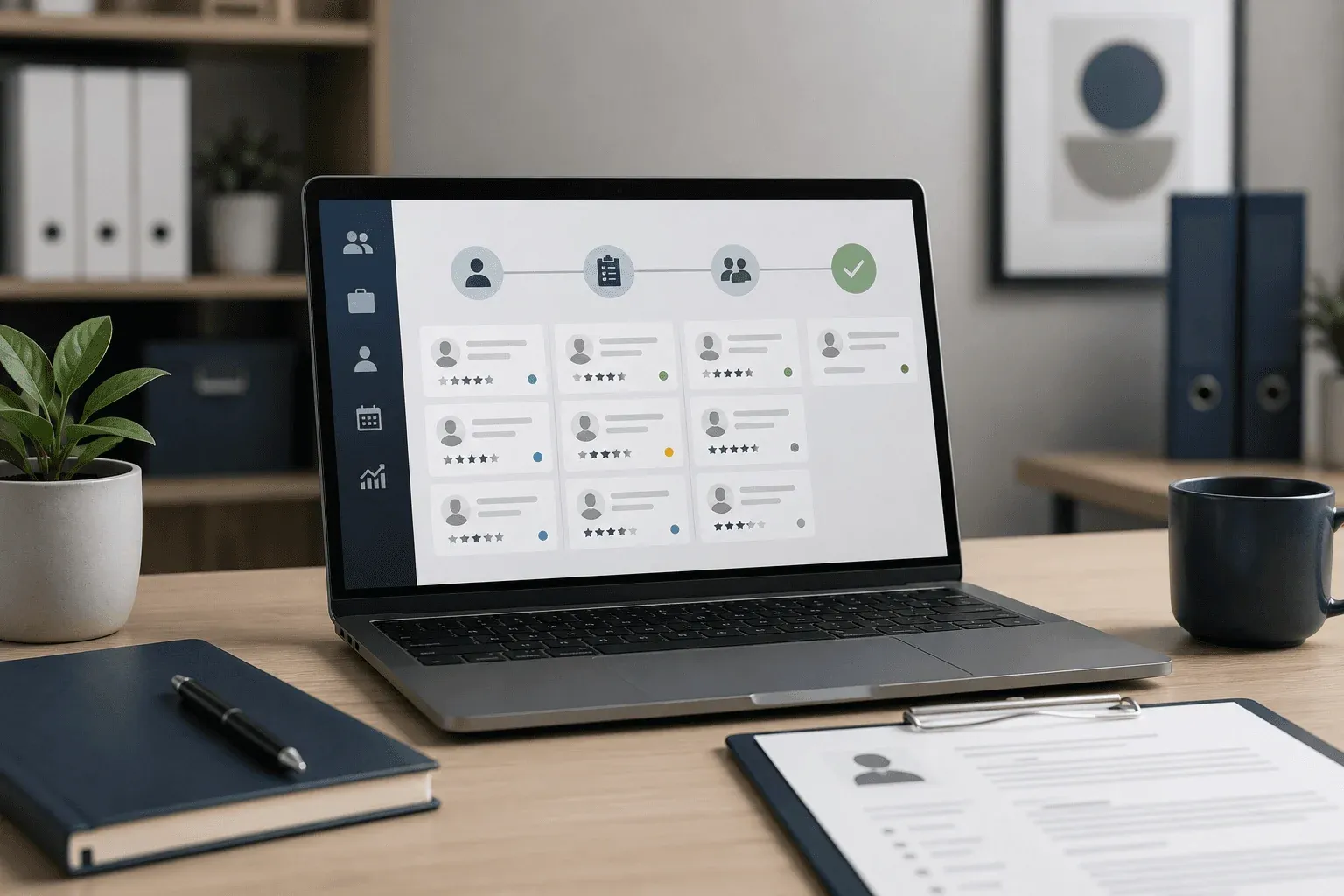

Yes, hiring managers can view candidates, leave structured feedback, and move candidates through stages alongside recruiters and founders inside a shared ATS. With the right permissions and a plan that includes unlimited users, they can collaborate without separate tools or licenses. When a startup is hiring across multiple functions at once, coordination can break down: feedback lands in inboxes, interviewers lack context, and decisions stall. This guide covers how to use an ATS to collaborate across a dispersed hiring team, from initial setup to the features that keep small teams aligned.
TLDR:
-
An ATS can keep startup hiring teams in sync through shared candidate pipelines, role-based access, and structured scorecards when teammates keep records current, reducing the misalignment and bad hires that come from decisions made across scattered Slack threads.
-
Look for permission controls, structured feedback forms, shared candidate visibility, and smart notification settings before committing to a tool.
-
Set up clear roles and scorecards early so hiring managers, interviewers, and founders can leave consistent feedback and advance candidates without bottlenecks.
-
Some tools pair a free ATS with on-demand recruiting support, so small teams can self-serve on straightforward roles and bring in a recruiter for harder searches, all inside one shared system.
-
Check whether outside recruiters and advisors can work inside the same ATS, since access for people beyond your company email domain varies by tool and plan.
Why Startups Use an ATS to Collaborate with Their Hiring Teams
Hiring at a startup moves fast, and the people making decisions are rarely in the same room. A founder might screen resumes while an engineering lead sits in back-to-back meetings and a future teammate travels. Without a shared system, feedback gets lost in Slack threads, email chains go stale, and candidates fall through the cracks.
An applicant tracking system gives everyone a single place to see where candidates stand, leave structured feedback, and move things forward without chasing each other down. For small teams, that coordination layer matters more than it seems.
What Collaboration Inside an ATS Actually Looks Like
A few capabilities tend to make the biggest difference for early-stage teams:
-
Shared candidate pipelines let everyone see the same stage, notes, and history without a status update meeting.
-
Role-based access lets a hiring manager or technical reviewer join without exposing every open role or compensation detail.
-
Structured scorecards collect feedback in a consistent format, making it easier to compare candidates across interviewers.
-
Async comments tied to specific candidates keep the conversation contextual and searchable instead of scattered across tools.
-
Scheduling coordination with calendar integrations shows interviewer availability so panels get arranged without back-and-forth emails.
For a small team, these features can turn a repeatable process into one that works.
What to Look for in an ATS Before You Collaborate with Your Hiring Team
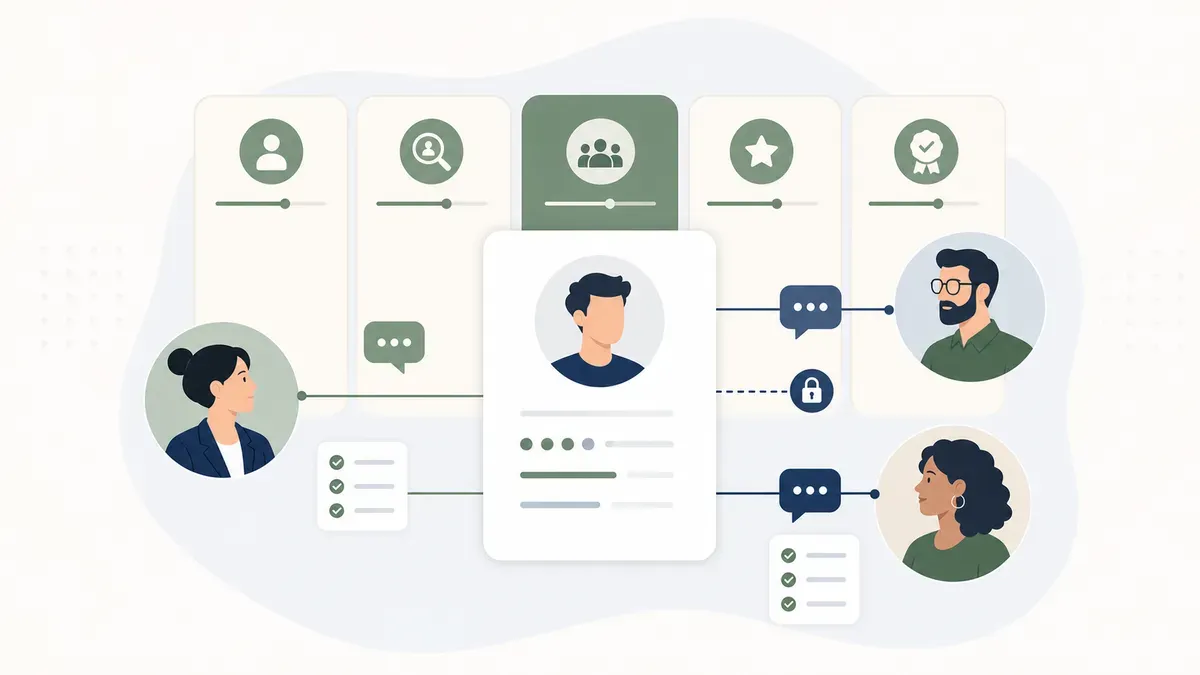
For your team to collaborate well, the tool itself needs to support the way early-stage teams actually work: a founder, maybe a hiring manager, and a few interviewers who are also doing their actual jobs, with no dedicated recruiter running the process. A few things are worth checking before you commit to a tool:
-
Permission and role controls. Hiring managers should leave feedback and advance candidates, while interviewers shouldn’t see offer details or edit job descriptions.
-
Structured feedback collection. A good ATS gives interviewers a place to submit scorecards tied to the role instead of scattering notes across Slack threads.
-
Shared candidate visibility. Every member of the hiring team should see a candidate’s current stage, recent notes, and who owns the next step.
-
Configurable notifications. Tools that email everyone about every update may get ignored, so look for options that let you set who gets notified and when.
Permission Models: Pros and Cons
Granular, job-level permissions protect sensitive data but take more setup and upkeep. Preset roles are faster to assign but can bundle access a teammate does not need. Take an engineering lead who manages technical hiring and occasionally interviews sales candidates: a preset manager role might expose sales offer details, while job-level access keeps that data private. For a small team, the test is whether preset roles plus job-level access cover these boundaries without a custom set for every person.
How to Collaborate with Your Hiring Team Using Your ATS
Hiring breaks down when feedback sits in someone’s inbox, a recruiter doesn’t know a candidate was already rejected, or the hiring manager and interviewer have different reads on the same person with no shared record. An ATS gives the team one workspace to fix that.
Assign Clear Roles and Permissions
Set this up early: hiring managers advance candidates and leave feedback, interviewers submit notes after each call, and founders or recruiting leads hold admin rights, so candidates move through the funnel without bottlenecks. When everyone operates within a defined role, the team can reduce time-to-hire by moving candidates through the funnel without bottlenecks.
Use Structured Scorecards
Free-form feedback like “seemed smart, liked her” is hard to act on and impossible to compare across candidates. Scorecards give interviewers a consistent set of criteria tied to the role: skill ratings, culture-fit observations, open questions, and a clear hire or no-hire call. Research suggests structured interviews with scoring frameworks can be more effective at predicting job performance, and HBR also recommends quantitative interview scorecards. Everyone reacts to the same inputs instead of reconstructing impressions from memory.
Centralize All Candidate Notes
Side conversations get lost. If a recruiter learns during a phone screen that a candidate has a competing offer, that context belongs in the ATS, not a Slack thread that disappears in a week. Log notes in the candidate record within 24 hours of each touchpoint, using short bullets for evidence, concerns, and follow-up questions, and keep tags consistent so teammates can search the pipeline later.
Consider a 6-person seed-stage startup hiring a founding engineer and a head of growth at once. The CEO is the hiring manager for both roles, two engineers interview the technical candidate, and a marketing advisor reviews the growth candidate. In Dover’s ATS, the team can set role-specific feedback forms and job access, though external team members like the advisor require Dover’s paid Premium plan to access candidate records. When interviewers submit notes before the decision meeting, the CEO can review them in one place.
Where the ATS Ends and Recruiting Capacity Begins
An ATS records and routes hiring work, but it does not source candidates, run outreach, or close offers. For a team making a handful of hires a year, founders and hiring managers can often cover those tasks themselves while the ATS keeps stages, notes, and scorecards in one place. The balance can shift for a senior or specialized role, or when several searches open at once.
A fractional recruiter can plug in on top of the ATS to cover that gap. Working in the same pipeline, the recruiter logs outreach, screens, and scorecards where the hiring manager already looks, and candidate history stays in the company’s records after the engagement ends.
The Cost of Getting Collaboration with Your Hiring Team Wrong as a Startup
The problem usually starts before any offer goes out.
| Without an ATS | With an ATS |
|---|---|
| Feedback lives in inboxes and Slack threads | All notes tied to the candidate record, visible to everyone |
| Interviewers repeat questions across rounds | Prior feedback is visible before each call, depending on each interviewer’s permissions |
| Hiring decisions made without full context | Stage history and scorecard data can inform decisions when teammates record and review them |
| Offer timing stalls while opinions get collected | Clear pipeline stages show who owns the next step |
In GoodTime’s HelloFresh case study, the team reports less scheduling time and a shorter time-to-fill after adding coordination software. These are vendor-reported outcomes, not startup benchmarks.
A few patterns show up repeatedly:
-
Interviewers skip prior feedback, so candidates get asked the same questions twice, which can leave candidates with the impression of a disorganized process.
-
Decisions get made in ad hoc Slack threads, so context disappears and people outside the conversation can’t reconstruct the reasoning later.
-
Offer decisions stall with no clear record of candidate status, forcing founders to chase opinions from busy teammates at the last minute.
An ATS can give the hiring team a single source of truth, reducing this friction when teammates keep records current.
How Dover Helps Startups Collaborate with Their Hiring Teams without the Overhead
Dover’s free ATS is built for early-stage teams making decisions quickly, without a dedicated recruiting coordinator. Hiring managers, founders, and interviewers share one candidate record with structured scorecards, stage history, and role-based permissions. The ATS includes job board distribution, which can reduce manual reposting to supported boards when a role opens. The free tier includes these features with limits on feedback forms and candidate history; a $199/month Premium plan adds AI applicant scoring and AI note taking.
In an ATS that supports offer letters and approvals, founders or hiring leads can set simple steps that route offers for compensation sign-off before sending them to candidates. Requisition approvals can apply the same process to headcount and budget before a role opens, where supported. Named approvers and visible pending requests can keep offers from stalling while teammates chase approvals manually. In Dover, a fractional recruiter can handle sourcing and candidate development alongside the hiring team in a shared ATS, with candidate records staying with the company after the engagement. For teams hiring their first few employees, this shared record can reduce handoff gaps between recruiters and hiring managers.
Recruiters in Dover’s marketplace carry founder reviews from past clients, and every marketplace hire is listed with its all-in cost in a public cost-per-hire table, so hiring teams can assess fit against recorded outcomes before committing. That visibility carries the same data-driven approach the ATS brings to pipeline management into the recruiter selection decision itself.
FAQs
Can a startup team post jobs to multiple boards without paying per listing?
An ATS with included job distribution can publish a role to multiple boards while keeping applications in one hiring workflow, but included distribution does not mean every board or sponsored placement is free. Dover’s free ATS plan includes unlimited jobs and users plus job board distribution, though LinkedIn basic posting through Dover requires Premium. Before choosing a tool, check which boards are included and whether applications return to one pipeline for team review.
Who handles sourcing when a startup uses an ATS?
An ATS organizes pipeline stages, feedback, and candidate records, but sourcing still needs a named owner, such as a founder, hiring manager, or recruiter. Software-only tools can suit teams that already have sourcing capacity. When an outside recruiter is involved, agree on who records outreach and candidate notes to help prevent duplicate work.
What is the difference between an ATS and full recruiting support?
An ATS tracks candidates, routes feedback, and shows pipeline stages, but it does not source candidates, run outreach, or negotiate offers. A person, either in-house or outside, covers that work. Startups below the volume that justifies a full-time recruiter often self-serve straightforward roles in the ATS and bring in outside help for senior searches. Dover’s marketplace is one example, with an average cost per hire of $4,800 across all roles, though individual costs vary by role complexity and the recruiter.
Can an outside recruiter work inside a startup’s existing ATS?
It depends on whether the ATS allows users outside the company’s email domain, and that rule varies by tool and plan. When access is allowed, job-level permissions can limit a recruiter to the searches they are running, while scorecards and notes stay in the company’s own records. When it is not, outreach history and screening notes end up in a separate system and have to be copied back by hand, which is where context tends to get lost. Before engaging a recruiter, confirm which plan covers outside users and who logs notes after each candidate touchpoint.
Final Thoughts on Using an ATS to Collaborate with Your Startup Hiring Team
Knowing how to use an ATS to collaborate across a dispersed hiring team matters whether you’re filling senior engineering roles, marketing positions, or anything in between. The coordination problems look the same: feedback scattered across inboxes, interviewers without context, and decisions that stall because no single source of truth exists. Dover’s model pairs a free ATS with on-demand fractional recruiters operating in the same shared system. Recruiters set their own rates and you agree terms directly with them, choosing hourly, retainer, or pay-per-hire, with no long-term contract required to start.