
For early-stage startups, hiring decisions often happen fast and without much supporting data. A founder reviews a handful of resumes, runs a few calls, and makes an offer based on instinct. Learning how to use an ATS is one of the most direct ways to move toward data-driven hiring: a structured record of where candidates come from, where they drop off, and what’s working. This guide covers what to track and how to build a hiring process that gets sharper with each role you fill.
TLDR:
-
An ATS turns hiring activity into structured data that shows where candidates drop off and which sources produce actual hires.
-
Track source of hire, time in stage, offer acceptance rate, and pipeline conversion to spot process breakdowns before they compound.
-
A weekly review of pipeline metrics can give early teams enough signal to catch bottlenecks, when hiring activity is recorded consistently.
-
Free ATS plans can offer useful pipeline data, but history, exports, and reporting limits are worth checking before you rely on them.
Why Startups Use an ATS to Make Data-Driven Hiring Decisions
Startups often hire under pressure: the team is small, there’s no dedicated recruiter, and gut-feel tends to be the default. An ATS can capture applications, stage movements, and interview outcomes in one place, building a record of where your process works and where it breaks down.
-
A bad hire can cost a small team more than it would a larger one, since a single wrong fit can stall output across the whole group.
-
Without source data, patterns stay invisible. If a channel consistently produces candidates who drop after the first interview, you won’t know unless you’re tracking conversion rates by source.
-
Speed and quality are both measurable. Time to fill and offer acceptance rates show whether your process is competitive instead of just busy.
What to Look for in an ATS Before You Make Data-Driven Hiring Decisions
Not every ATS supports data-driven decisions. Some tools track applications with little reporting depth. A few capabilities matter most for startups hiring on evidence instead of instinct.
Pipeline Visibility and Stage-Level Metrics
An ATS should show how candidates move through each stage and where drop-off happens. Without this, process decisions rely on memory instead of patterns.
Source Tracking
Knowing which channels produce candidates who get hired changes where you spend budget. Look for an ATS that logs source at the application level through to hire.
Structured Data Capture
Free-text notes are hard to compare at scale. Research on structured versus unstructured interviews generally favors structured formats for predicting job performance.
Reporting and Export Flexibility
Locked metrics or cumbersome exports limit your ability to act on the data. A free plan may cover day-to-day tracking, and Dover’s current plan comparison includes reporting on Free but limits analytics history and reserves data export for Premium.
How to Make Data-Driven Hiring Decisions Using Your ATS
Your ATS becomes genuinely useful when you treat it as a data source instead of a filing system. The recruiting metrics it generates show where candidates drop off, which sources produce hires, and how long each stage takes.
A few areas worth tracking:
-
Source of hire shows which job boards, referral channels, or outreach efforts produce candidates who actually advance. A channel with volume but zero offers is worth questioning before renewal.
-
Time in stage reveals where your process slows down. A stall at the technical screen usually points to a scheduling or feedback bottleneck, and SHRM time-to-fill benchmarks can show whether your overall pace is competitive.
-
Offer acceptance rate reflects how offers land relative to candidate expectations. A low rate often signals misalignment on compensation or role scope worth catching earlier.
-
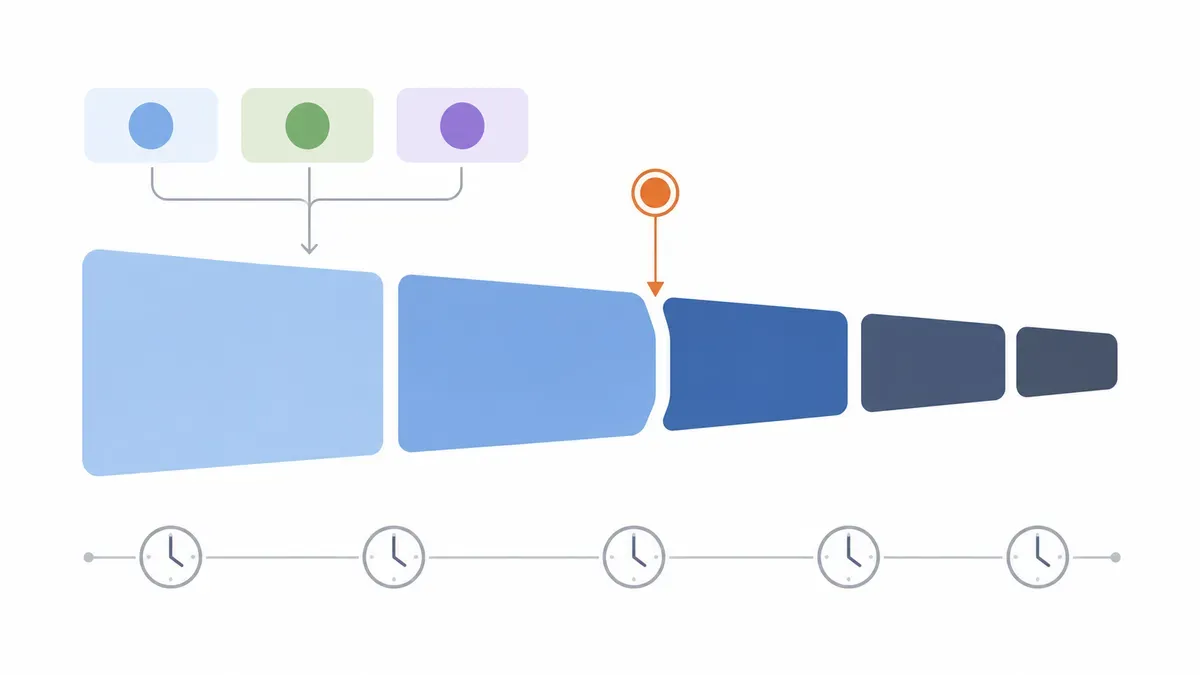
Pipeline conversion rate shows how many candidates move from one stage to the next, with sharp drop-offs pointing to screening criteria or candidate experience. SeekOut’s 2026 recruiting metrics guide suggests reviewing it by role family or hiring manager instead of relying on one blended average, so compare stage conversion within similar roles before calling a drop-off a problem.
| Metric | What It Reveals | Hypothetical Warning Signal (Not an Industry Benchmark) | Action to Take |
|---|---|---|---|
| Source of hire | Which channels produce candidates who reach later stages and accept offers | A job board generating 50+ applications but zero interviews after two months | Reallocate budget to channels with better stage-progression rates or refine targeting on underperforming sources |
| Time in stage | Where bottlenecks occur in your hiring process and which stages create candidate drop-off due to delays | Candidates waiting three weeks between technical screen and hiring manager interview | Audit interviewer availability, set internal SLAs for feedback turnaround, or add backup interviewers to prevent scheduling delays |
| Offer acceptance rate | How competitive your offers are relative to candidate expectations and market conditions | Acceptance rate below 70% across multiple roles or candidate segments | Surface compensation expectations earlier in the process, benchmark your offers against market data, or revisit role scope and leveling |
| Pipeline conversion rate | How effectively each stage filters candidates and whether criteria are too strict or too loose at specific points | 80% of candidates dropping off after the take-home assignment or phone screen | Review screening criteria for alignment with role requirements, shorten or restructure assessments, or improve communication about what to expect |
Using This Data to Adjust in Real Time
Metrics only help if reviewed often enough to act on. For lean early-stage teams, a weekly check on stage velocity and source quality can catch issues before they compound. When running multiple roles, tracking by role type also shows whether engineering and ops pipelines behave differently, which they usually do.
The Cost of Getting Data-Driven Hiring Decisions Wrong as a Startup
Hiring mistakes are expensive at any stage, but for a startup, the downstream costs can compound quickly. For a five-person team, a single bad hire in a core role can affect team output and trigger a costly restart of the search before the team has the bandwidth to absorb it.
Often the problem is not a lack of effort but a lack of visibility: without a structured way to track where candidates come from and where qualified people drop off, decisions get made on instinct, which is not repeatable. An ATS surfaces source attribution, stage timing, and drop-off data, pointing to one of two problems. Slow stages and weak conversion are usually process issues a team can fix on its own. A thin pipeline or a senior, specialized role is a capacity problem, and a fractional recruiter can work inside the same pipeline to own sourcing, screening, and closing.
-
Sourcing spend with no return signal: teams pay for job boards or recruiter time without knowing which sources produce interviews or hires.
-
Invisible bottlenecks: a slow interview loop or delayed offer can cost candidate interest while staying hidden without stage-level timing data.
-
Inconsistent candidate assessment: feedback scattered across inboxes and Slack threads makes it hard to compare candidates fairly.
What’s Shifting in Startup Hiring Data Practices in Late 2026
For a startup, the useful comparison is which sources produce candidates who pass screening, not simply which sources produce the most applications. AI-assisted screening depends on the tool and subscription; Dover’s plan comparison places AI resume review on Premium, not Free, and a score can assist review but does not replace judgment about a candidate’s fit. For teams comparing sourcing channels, verified qualifications and stage progression are more useful checks than application volume alone.
October 2026: Keeping a Record of AI-Assisted Hiring Decisions
An AI screening score does not explain why a candidate advanced or was rejected, which matters for teams reviewing hiring practices this October. Ogletree Deakins’ June 2026 Illinois AI-law update notes that the amendment took effect on January 1, 2026, banning discriminatory AI use in covered hiring decisions and creating an AI-use notice obligation, and that proposed rules clarifying notice requirements were postponed in June without removing those obligations. Seyfarth’s HB 3773 notice analysis adds that the statutory obligations have been in effect since January 1, 2026, even though the proposed rules were temporarily withdrawn. These are jurisdiction-specific requirements, not a universal rule for every startup, and legal counsel can confirm current notice requirements.
For teams using AI-assisted screening, a useful ATS record can include the criteria applied, the tool’s recommendation, and the human reviewer’s reason for the final decision, with criteria changes dated so a shift in conversion can be traced to the candidate pool or a new screening rule rather than treated as unexplained. Recordkeeping alone does not prove compliance; legal counsel can confirm which notice and retention requirements apply to the team’s hiring locations.
How Dover Fits Into a Data-Driven Hiring Process

Dover’s free ATS includes unlimited users, jobs, and candidates, along with reporting on pipelines, sources, and hires. Candidate history, analytics history, and interview feedback forms are limited on Free. Premium costs $199 per month and adds full history, data export, and AI resume review. Setup takes minutes, so a team can start logging structured data early rather than reconstructing it later.
When a search needs more sourcing or screening capacity, Dover’s marketplace connects teams with fractional recruiters who work inside the shared ATS. The average cost per hire across all roles is $4,800, not a fixed fee or a quote for a particular search. Recruiters set their own rates, and terms can be hourly, retainer, or pay-per-hire, with no long-term contracts. Actual costs often vary by recruiter and search requirements.
Source-of-hire and stage-conversion data can point to where a search needs outside help. When candidates who apply convert well but too few arrive, the gap is often sourcing, and a recruiter’s outreach can fill it. When candidates stall between stages, the gap is usually scheduling or feedback, and added recruiting hours may not fix it.
FAQs
How does a permanent free ATS plan differ from a free trial?
A permanent free plan has no deadline but may limit history, reporting, or exports. A trial gives temporary access and usually requires a paid plan afterward. The better fit depends on whether the ongoing plan covers the reports and history your team needs.
What hiring tools do most YC startups use?
The sources reviewed for this guide do not provide a representative ranking of ATS usage across YC startups, and vendor customer lists cannot show what most companies use. A more useful test is whether a tool fits your hiring volume, reporting needs, and recruiting capacity, including its plan limits on history and exports.
Does included job-board distribution cover paid promotion?
Job-board distribution and paid promotion are different costs. Included distribution does not make sponsored placements free. Check which boards are included and how many active roles the plan supports.
Do you need a recruiter if you already use an ATS?
An ATS records and organizes hiring activity, but it does not source candidates, run outreach, or negotiate offers. Teams with steady qualified applicants and a hiring manager who has interview time can often run a search from the ATS alone. Added capacity tends to matter for senior or specialized roles, thin applications, or when no one has hours for outreach. A fractional recruiter can work inside the same ATS, sharing one view of the pipeline.
Final Thoughts on How to Use an ATS to Make Data-Driven Hiring Decisions as a Startup
Knowing how to use an ATS gives an early-stage team a foundation for data-driven hiring, provided records stay current. The useful distinction is whether a search needs a process change or more recruiting capacity. Dover pairs free tracking and reporting, subject to plan limits, with paid fractional recruiting support for the gaps a process fix alone cannot close.