Choosing an applicant tracking system is harder than it should be. A cloud-based ATS runs on remote servers, accessed from any browser, with the vendor managing maintenance, updates, and security. For startups hiring without dedicated IT support, that structure removes a real constraint. What separates one system from another is how well it handles resume parsing, candidate scoring, and pipeline management, and whether the pricing fits a team that is not yet running a full recruiting operation.
TLDR:
-
Cloud-based ATS runs on remote servers, accessed via browser, with vendor-managed updates and security.
-
88% of ATS market revenue comes from cloud deployments due to lower upfront costs and faster setup.
-
AI in most systems assists with resume parsing and candidate scoring, not autonomous hiring decisions.
-
Some free-tier tools post to 50+ job boards and track unlimited jobs without seat caps or user limits.
-
Some tools pair free ATS software with on-demand recruiting support at $2,000 to $7,000 per hire.
What Is a Cloud-Based ATS?
A cloud-based ATS is applicant tracking software that runs on remote servers and is accessed through a web browser, with no local installation required. Hiring data, candidate profiles, job postings, and communication logs all live in the vendor’s infrastructure instead of on a company’s own machines.
The practical difference from on-premise software is access and maintenance. Anyone with credentials can pull up the system from any device, and the vendor handles updates, security patches, and uptime. For a startup without a dedicated IT team, that matters, which is why the best applicant tracking systems for startups typically follow this deployment model.
How Cloud-Based ATS Technology Works
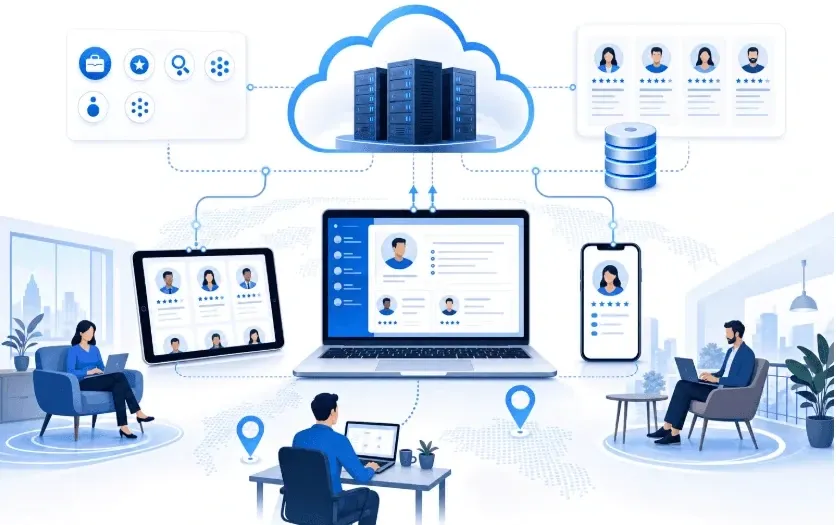
Here’s how the core workflow typically moves:
-
Job postings go out to multiple boards simultaneously from a single submission, so a role published in the ATS appears on Indeed, LinkedIn, and dozens of other sites without manual re-entry.
-
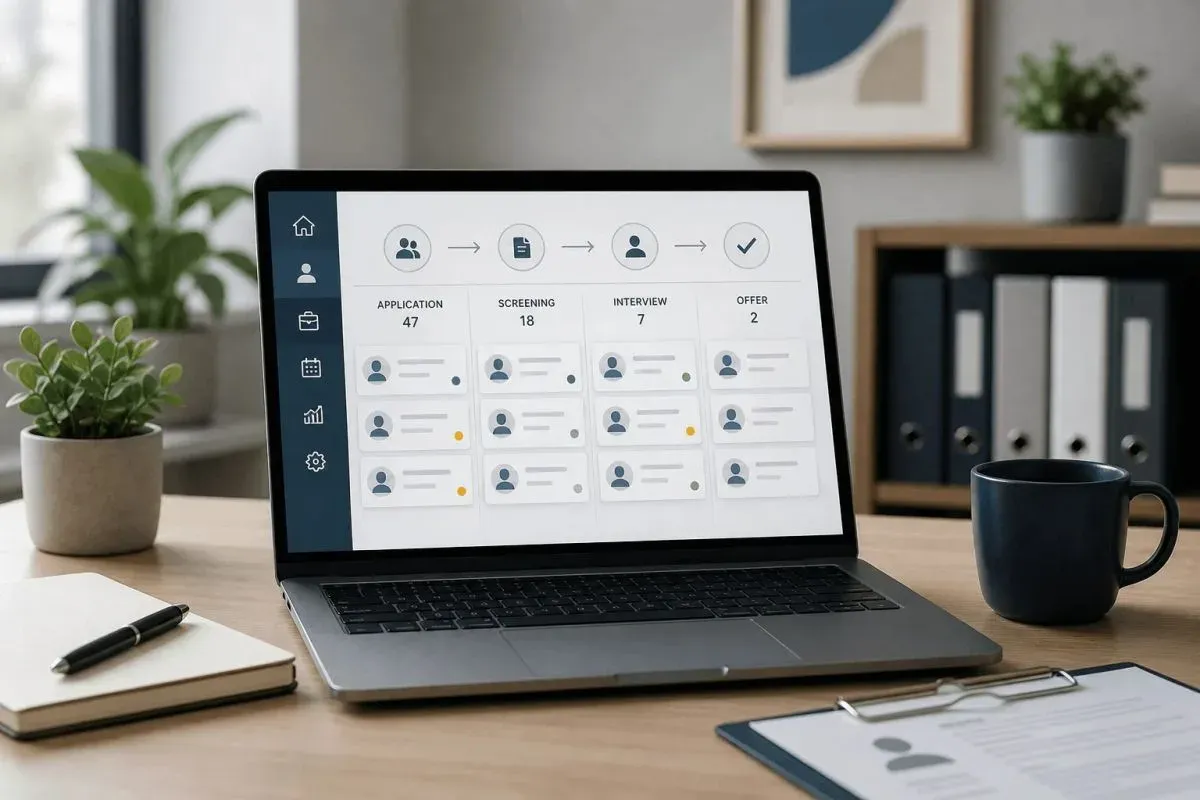
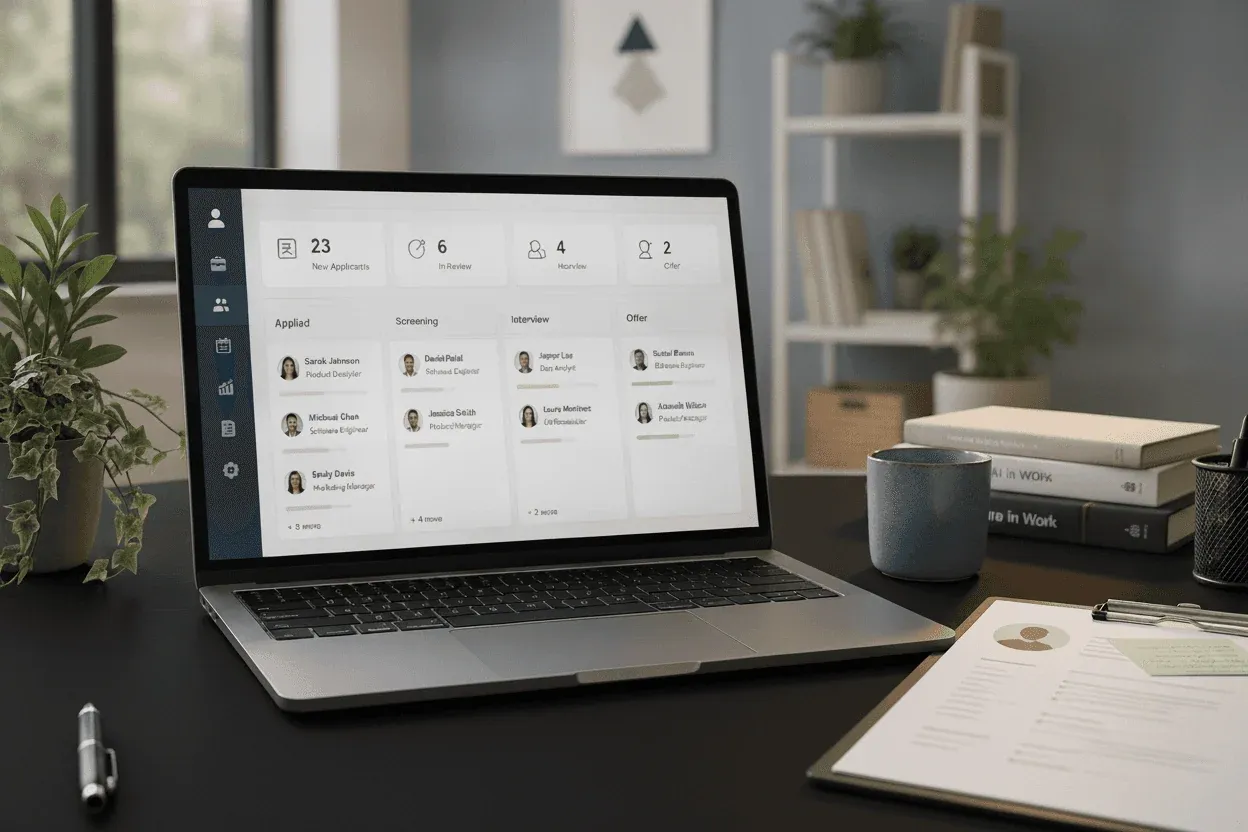
Applications flow back into a centralized database where candidates are organized by role, stage, and status.
-
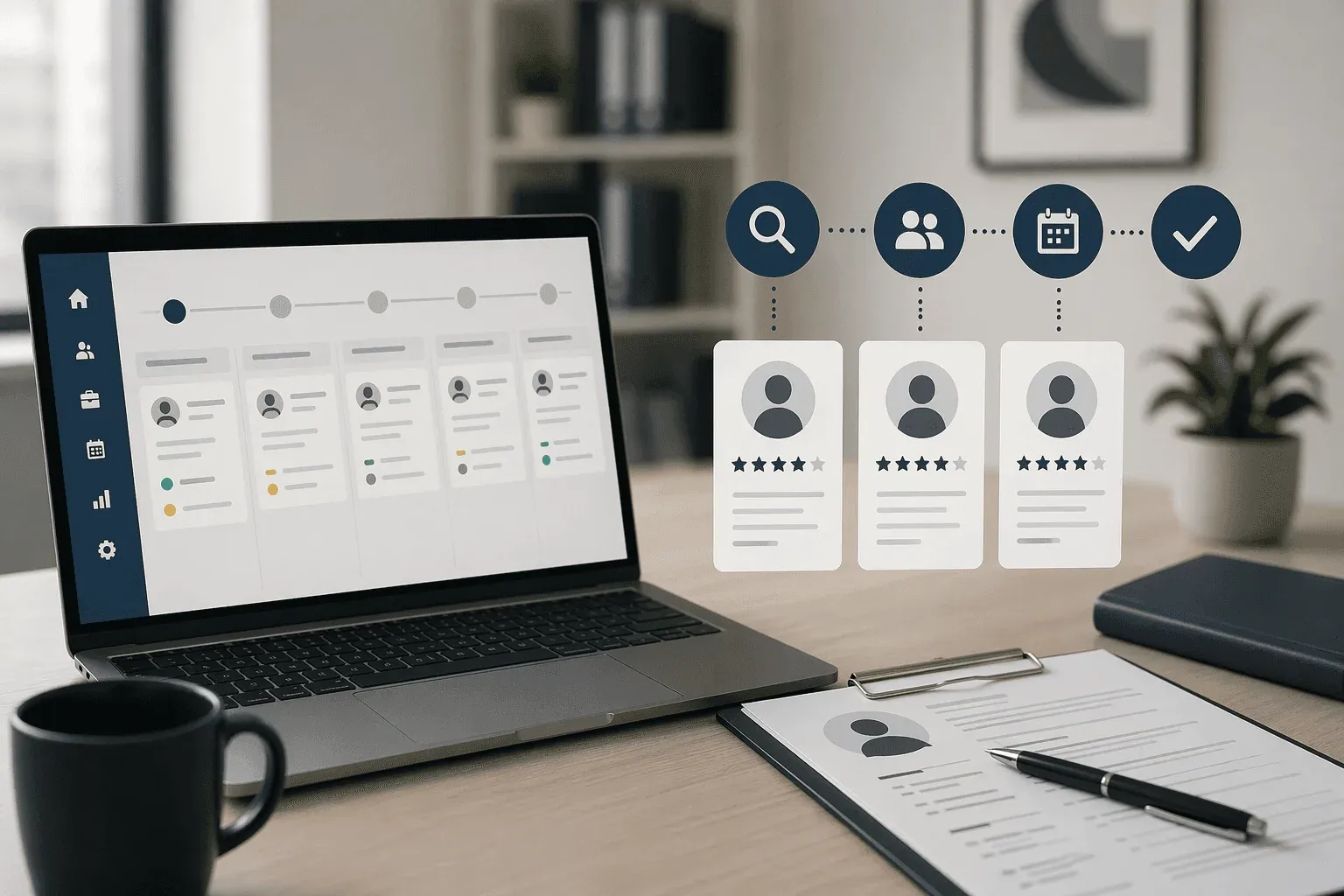
AI screening tools can parse resumes and score applicants against defined criteria, surfacing the strongest matches before a recruiter has read a single file.
-
Interview scheduling, offer letters, and candidate communications can be triggered or automated from within the same system, keeping the full record in one place.
Cloud vs On-Premise ATS: Deployment Models Compared
The choice between deployment models comes down to control versus convenience, and for most companies, the tradeoffs aren’t close.
| Factor | Cloud | On-Premise |
|---|---|---|
| Upfront cost | Low (subscription) | High (licenses + hardware) |
| Implementation | Days to weeks | Months |
| Maintenance | Vendor-managed | Internal IT required |
| Scalability | Elastic, instant | Hardware procurement needed |
| Data control | Shared infrastructure | Full physical control |
| Remote access | Built-in | Requires VPN or custom config |
Cloud deployments captured 88.12% of ATS market revenue in 2025, driven by lower upfront costs and faster feature releases. On-premise still holds ground in one specific context: about 24% of Fortune 1000 companies in compliance-intensive industries opt for it when regulatory frameworks demand physical control over servers. Hardware procurement cycles, dedicated IT staffing, and slower update cadence make on-premise a poor fit for most early-stage teams.
Key Features That Define Cloud-Based ATS Solutions
Cloud-based ATS solutions share a set of defining characteristics that separate them from legacy on-premise systems, and understanding those features helps clarify why so many early-stage teams gravitate toward them.
Resume Parsing and Candidate Profiles
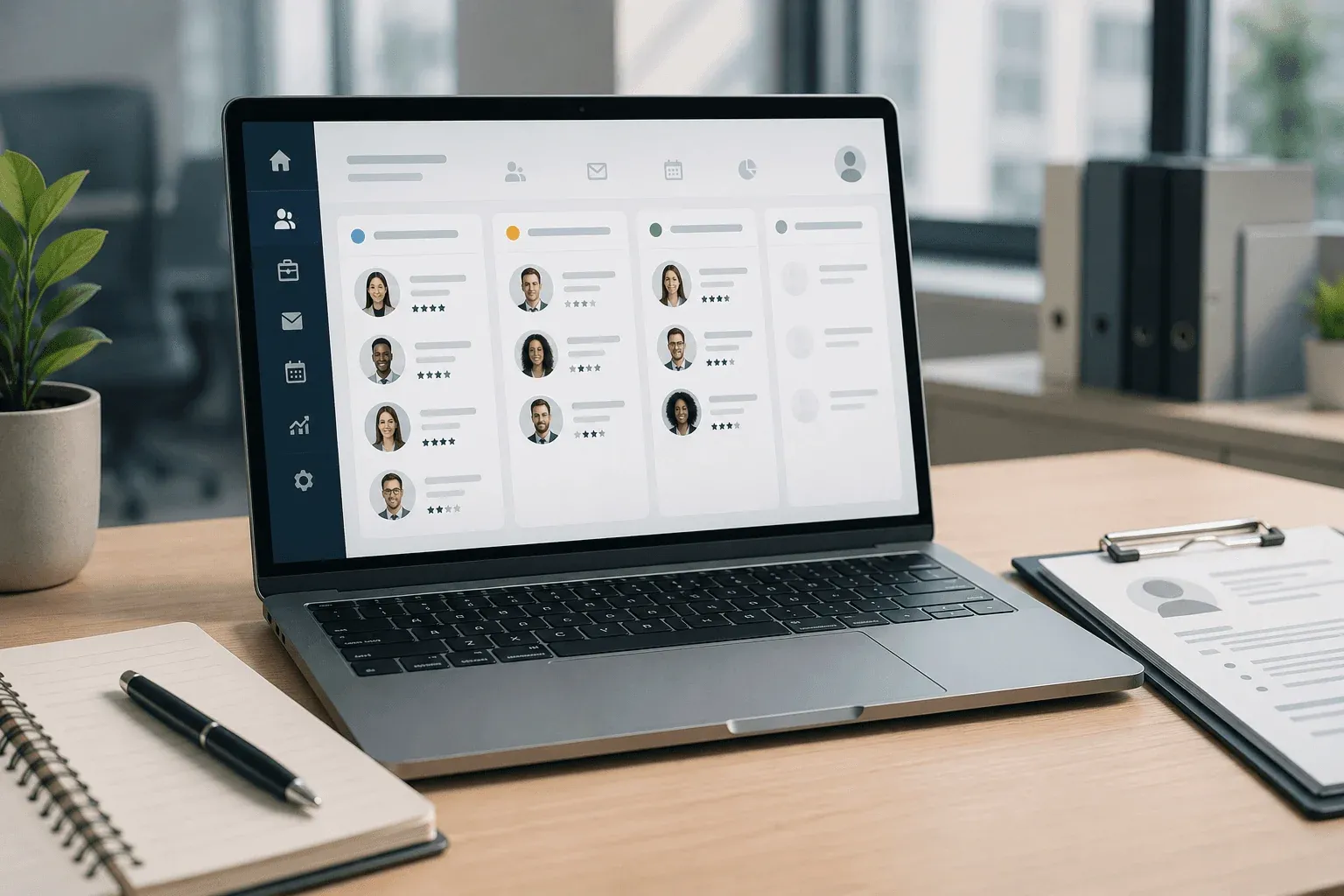
When a candidate submits an application, the system pulls structured data from their resume automatically, populating fields like work history, education, and skills without manual entry. The quality of parsing varies across vendors, but most cloud-based systems today handle standard resume formats reliably and consolidate each candidate into a searchable profile.
Integration Capabilities: Connecting ATS to Your Tech Stack
A cloud-based ATS rarely operates in isolation. Most recruiting workflows touch a half-dozen other tools, and how well an ATS connects to those tools determines whether the system saves time or creates friction.

Calendar sync with Google or Outlook lets candidates self-schedule without back-and-forth. HRIS connections to tools like BambooHR or Rippling carry new hire records into onboarding automatically. Job board distribution pushes listings across configured boards from a single posting action. Slack integrations surface candidate movement notifications without requiring a login to check.
The practical question is whether an ATS connects to the specific tools already in use. Mapping your existing stack against a system’s native connections, and checking whether gaps require a paid middleware layer like Zapier, is worth doing before committing.
Free and Low-Cost Cloud ATS Options for Startups
Budget is one of the first filters early-stage teams apply when assessing ATS options, and the cloud-based market has enough free and low-cost tiers that most startups can get meaningful functionality without committing to enterprise contracts.
Dover offers a free ATS built for startups that need to manage a hiring pipeline without dedicated recruiting headcount. It posts to 50+ job boards, tracks candidates across stages, and includes referral tracking as a first-class feature instead of an add-on. Setup takes under five minutes, and the free tier carries no artificial cap on active jobs or users.
Other Free and Low-Cost Options Worth Knowing
Several other cloud ATS tools offer free tiers that work well for low-volume hiring:
-
Breezy HR has a free plan that covers one active job and basic pipeline management, making it a reasonable starting point for teams hiring one role at a time.
-
Zoho Recruit offers a free tier for a single recruiter with limited job postings, though teams that need multi-user access or deeper integrations will hit the ceiling quickly.
-
Freshteam (by Freshworks) includes a free plan for small teams, with job posting, candidate tracking, and interview scheduling covered at no cost up to a low headcount threshold.
-
Recruitee, Workable, and Greenhouse all offer trial periods but move to paid plans fairly quickly, with pricing that can become considerable for teams running multiple searches simultaneously.
Common Cloud ATS Systems Used by Employers
Employers across industries rely on a mix of well-known systems, and understanding which names appear most often helps job seekers and hiring teams alike assess the market. The most frequently encountered cloud-based ATS tools include Workday, Greenhouse, Lever, iCIMS, Taleo (Oracle), Jobvite, BambooHR, Rippling, and Ashby. Larger enterprises tend to gravitate toward Workday and Taleo, while growth-stage startups more commonly use Greenhouse, Lever, or Ashby.
How These Systems Differ in Practice
The names on any list of ATS systems can look interchangeable, but the products vary considerably in scope and target buyer.
-
Workday is an enterprise HR suite where the ATS is one module inside a much larger system. It carries a steep configuration cost and is typically managed by a dedicated HR ops team, which makes it rare for companies below a few hundred employees.
-
Greenhouse is widely used at mid-size tech companies. It offers structured hiring workflows and strong integration support, though its pricing scales up quickly as headcount grows.
-
Lever combines ATS functionality with candidate relationship management, which means recruiters can track passive candidates alongside active applicants in a single view.
-
Ashby has gained traction with technical startups for its reporting depth and cleaner interface, often appearing in hiring discussions on forums where recruiters compare tools.
-
BambooHR and Rippling package applicant tracking inside broader HR software, making them appealing when a small team wants to consolidate HR administration and recruiting into one system.
-
iCIMS and Jobvite sit closer to the enterprise end, with configurable workflows suited to high-volume recruiting operations.
How AI and Automation Function in Cloud ATS Platforms
Most cloud ATS products include AI-assisted resume screening: the system parses a candidate’s resume on submission and scores them against the criteria you have defined. Keyword and skills matching compares profiles against job descriptions, which is why resumes that do not mirror job description language can score lower regardless of actual fit. That gap is the basis for most “how to beat ATS” advice circulating online.
Automated communication sends status updates and rejection notices without recruiter involvement. Interview scheduling tools let candidates self-select from available times, cutting coordination overhead on both sides.
Whether ATS is itself AI depends on the product. Older systems applied manual filters; newer cloud systems layer in scoring models, but the criteria still come from the hiring team. AI assists; it does not decide. On AI-generated resume detection: most systems currently lack reliable mechanisms for this, and few serious ATS products market it as a core capability.
Limitations and Challenges of Cloud-Based ATS
Cloud-based ATS tools solve real problems for small hiring teams, but they come with constraints worth understanding before committing to one.
Data security and compliance exposure
Because candidate data lives on a vendor’s servers, your organization’s compliance posture depends heavily on how that vendor handles storage, access controls, and breach response. Teams hiring across multiple states or countries need to confirm that their ATS vendor meets relevant data privacy requirements. This is worth verifying during the procurement process, not after signing.
Customization ceilings
Most cloud ATS tools are built around standardized workflows. Highly specialized recruiting processes sometimes run into the limits of what a given system allows without purchasing add-ons or requesting custom configurations that can be slow and expensive to implement.
How Dover’s Cloud-Based ATS Supports Startup Hiring
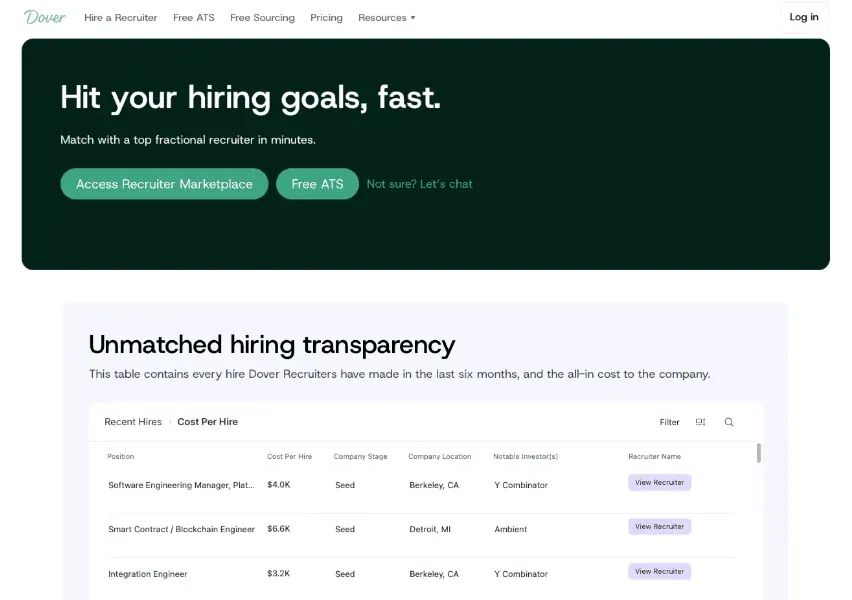
Dover’s free ATS is built around the same principles that make cloud-based systems appealing for early-stage teams: fast setup, no infrastructure overhead, and access from anywhere. The whole system is running in under five minutes, with a no-code careers page, one-click posting to 50+ job boards, and candidate tracking across unlimited jobs and users at no cost.
The feature set covers what most small teams need from day one. AI resume screening scores and ranks applicants against the criteria you define. Native employee referral tracking is built in instead of bolted on as a third-party add-on. Automated scheduling and an AI interview notetaker handle coordination and documentation without requiring a dedicated recruiting coordinator.
What separates Dover’s implementation is the shared-system architecture. When a startup adds a fractional recruiter from Dover’s marketplace, that recruiter works from the same ATS the internal team uses. Sourcing activity, candidate status, and pipeline metrics are visible to both sides in real time, which removes the coordination friction that comes from external vendors operating in separate tools.
Frequently Asked Questions
Cloud-based ATS vs on-premise: which one should I choose?
Choose cloud-based unless you’re a Fortune 1000 company in a compliance-intensive industry with strict data residency requirements. Cloud systems cost less upfront, require no IT team to maintain, and give your hiring team access from anywhere without VPN workarounds.
Can I use a free applicant tracking system without hitting limits on jobs or users?
Yes. Dover’s free ATS lets you post unlimited jobs, add unlimited users, and distribute listings to 50+ boards without artificial caps or subscription costs, making it a viable long-term option for early-stage teams.
How does ATS read resume data without manual entry?
Cloud-based ATS tools use AI-powered resume parsing to extract structured data like job titles, work history, and skills from uploaded documents automatically. The quality varies by vendor, but most modern systems handle standard resume formats reliably and populate candidate profiles without manual data entry.
Final Thoughts on Cloud-Based Recruiting Software
Cloud-based ATS adoption keeps growing because the model removes barriers that used to keep small teams on spreadsheets or shared inboxes. You get structure without upfront cost, access without infrastructure, and updates without intervention. If you’re comparing systems, Dover is one place to start: free software that handles your pipeline paired with on-demand recruiters when searches need more support. The right choice depends on your hiring volume, budget constraints, and whether you need just tracking or full recruiting assistance built in.