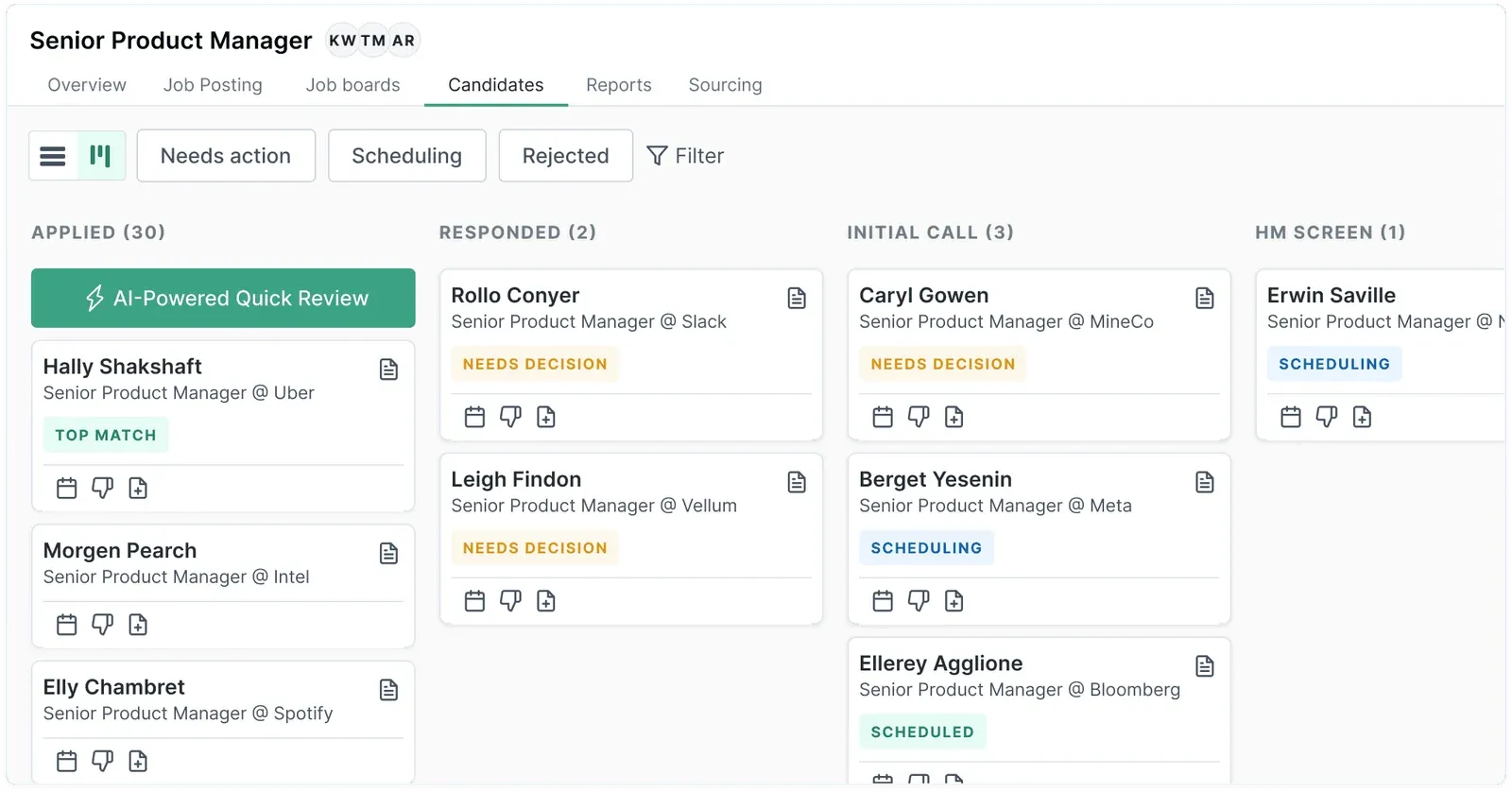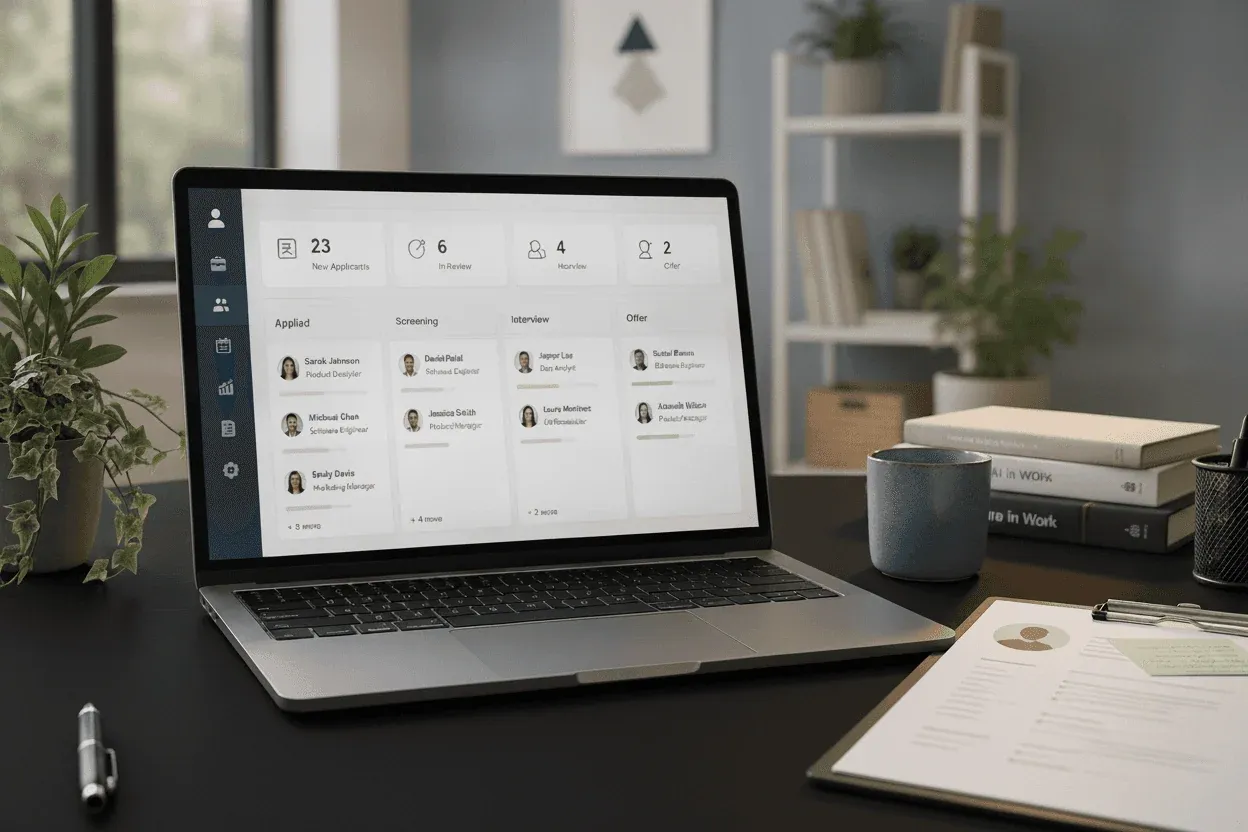
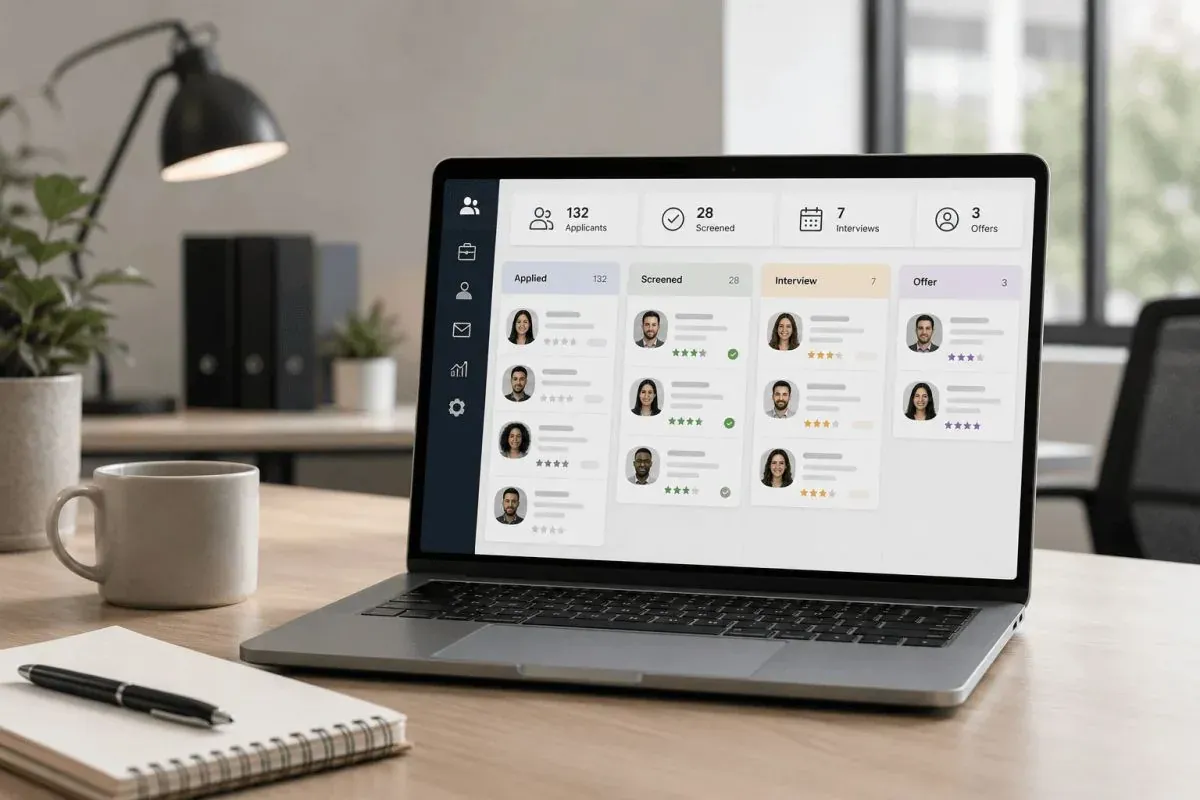
Knowing how to manage inbound applications as a startup can mean the difference between a hiring process that runs smoothly and one that loses strong candidates to slow reviews and scattered communication. This guide covers what to look for in an ATS, how to set one up for inbound volume, and when to bring in extra support so your team can move fast without sacrificing quality.
TLDR:
-
An ATS centralizes applications from job boards and career pages into one shared view for your team.
-
AI scoring helps focus on candidates based on role-specific criteria, reducing the amount of manual resume review needed each week.
-
Slow review processes cost you top candidates who often accept other offers within 10 days of searching.
-
Some recruiting platforms offer a free ATS with AI-powered scoring on paid tiers, 50+ job board distribution, and scheduling tools.
-
Fractional recruiters can step in during hiring surges to keep screening consistent without the cost of a full-time hire.
Why Startups Use an ATS to Manage Inbound Applications
Without a structured way to track applicants, strong candidates get lost in email threads, spreadsheets, or Slack messages. Corporate job postings attract an average of 250 applicants per role, and for startups without dedicated recruiting staff, that volume can easily overwhelm an inbox-based process. An ATS brings order to that chaos by giving your team one place to receive, review, and move candidates forward, which is important when every open role competes for attention with product, sales, and operations.
-
Centralizes applications from job boards and career pages into one shared view.
-
Creates a shared record for hiring managers and founders so no one decides in a silo.
-
Sets consistent review criteria across roles when you’re hiring for multiple positions at once.
-
Keeps candidates from falling through the cracks during busy stretches.

What to Look for in an ATS Before You Manage Inbound Applications
Not every ATS fits early-stage teams. Before you commit to a tool, a few features will determine whether it actually helps you manage inbound volume or just adds another layer of admin work.
Core Features to Consider
Look for these capabilities when assessing any ATS for inbound application management:
-
Automated scoring that flags candidates who don’t meet baseline requirements without reviewing every submission.
-
Customizable stages for your hiring pipeline, not a generic workflow built for enterprise recruiting.
-
Email and calendar integrations that reduce context switching when scheduling screens or sending status updates.
-
Reporting on applicant drop-off, time roles stay open, and which sources send the most qualified candidates.
Questions Worth Asking Before You Commit
-
Can you set up disqualification triggers based on specific responses to application questions?
-
How many team members can review and leave feedback without a paid seat upgrade?
-
Does the tool connect with your existing job board postings, or will you be managing two systems at once?
Startups rarely need every feature an enterprise ATS offers. Focus on the ones that reduce repetitive review work.
| Feature Category | What to Look For | Why It Matters for Startups |
|---|---|---|
| Application Filtering | Automated scoring based on knockout questions, resume parsing that flags missing qualifications, customizable disqualification triggers tied to specific application responses | Saves 5-10 hours per week on manual resume review for high-volume roles, allowing small teams to focus on qualified candidates instead of sorting through every submission |
| Pipeline Customization | Adjustable stage names and workflows that reflect your actual hiring process, ability to set different pipelines per role or department without rigid templates | Generic enterprise workflows create friction when your process differs from the default, slowing down reviews and creating confusion across hiring managers |
| Team Collaboration | Unlimited reviewer seats without per-user fees, in-app feedback and scoring from multiple team members, shared candidate visibility across all stakeholders | Per-seat pricing models for entry-level tools can run $15 to $75 per user per month, rising higher on mid-market plans, making it expensive to include founders, hiring managers, and team members in the review process |
| Job Board Integration | One-click distribution to 50+ job boards from a single posting, automatic syncing of applications back to your ATS without manual imports | Managing postings across multiple boards separately creates duplicate work and increases the chance that applications get lost between systems |
| Scheduling and Communication | Calendar integrations that show interviewer availability in real time, email templates for common candidate touchpoints, automated status update triggers at each stage transition | Manual back-and-forth scheduling can add days to your response time, causing top candidates to accept other offers before you reach the interview stage |
| Reporting and Analytics | Data on source quality showing which job boards send qualified applicants, time-to-fill metrics per role, drop-off analysis at each pipeline stage | Without visibility into where candidates stall or which sources perform best, you cannot improve your process or allocate sourcing budget effectively over time |
How to Manage Inbound Applications Using Your ATS
Once your ATS is set up, managing inbound applications well means building a repeatable process that keeps candidates moving, your team aligned, and nothing slipping through the cracks.
-
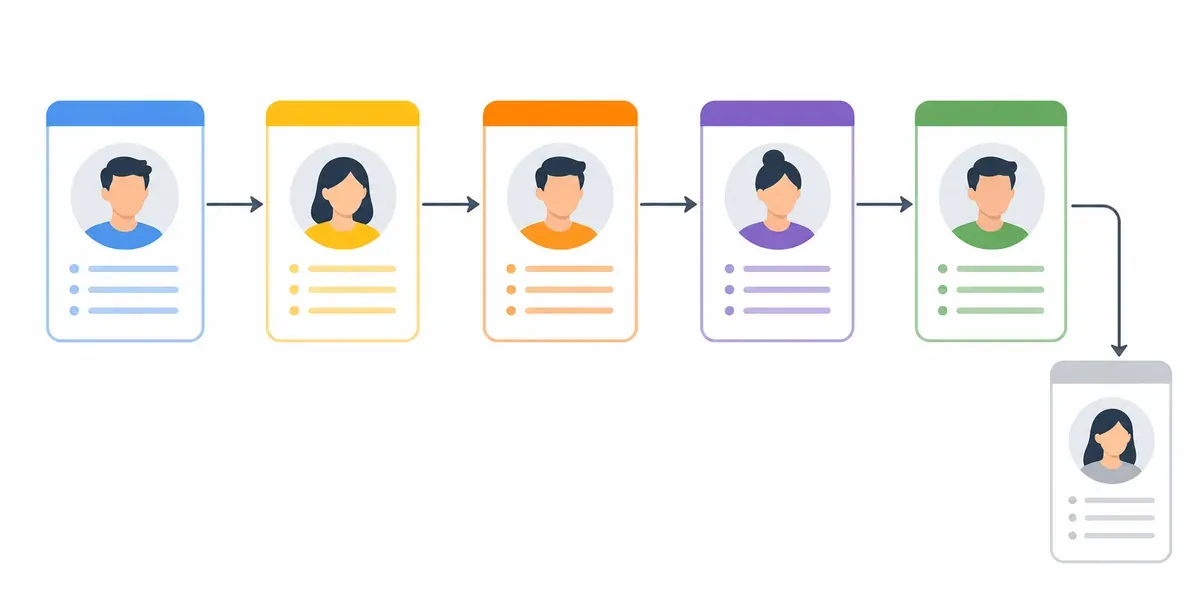
Set up a clear pipeline with defined stages before applications start rolling in. Common stages include Applied, Screened, Phone Interview, Technical or Skills Assessment, Final Round, Offer, and Rejected. Tailor these to your actual hiring process so the pipeline reflects reality.
-
Write screening questions into the application form itself. Knock-out questions tied to must-have criteria let you filter unqualified applicants automatically, saving hours of resume triage each week.
-
Assign reviewers and set response SLAs. Candidates left waiting too long drop out. Many recruiting teams aim to review new applications within 48 to 72 hours of submission to keep time-to-hire down.
-
Use tags and dispositions consistently. When every reviewer follows the same conventions, your pipeline data stays clean and hiring decisions become more reliable.
-
Send timely status updates to all applicants. Most ATS tools support automated email triggers at each stage transition, so candidates stay informed without manual effort from your team.
How Managing Inbound Applications Fits Into Your Full Hiring Pipeline
Inbound application management is one piece of a larger hiring system. Even with a well-configured ATS, startups still need to think about where applicants are coming from and how quickly they’re being reviewed.
-
Sourcing and inbound work together: If your postings aren’t attracting qualified candidates, a well-organized ATS won’t solve the problem.
-
Screening connects to interviewing: How you disposition candidates in the ATS directly affects your interview pipeline. Inconsistent criteria leads to wasted time and poor signal.
-
Time-to-review affects offer acceptance: Delays can cost you strong applicants who accept elsewhere before you reach them.
-
Reporting feeds future decisions: ATS data on inbound candidates shows which channels produce quality hires, so you can spend your sourcing budget more wisely.
Treating inbound management as an isolated task often creates gaps between ATS activity and actual hiring outcomes.
An ATS can handle the first layer on its own: triaging inbound applications, organizing the pipeline, and keeping reviewers aligned. The question is when that layer needs backup. If sourcing has gone quiet, a role calls for specialized or senior-level screening, or your team simply doesn’t have the hours to review every applicant closely, those are signs a fractional recruiter, or a fractional recruiting agency during a hiring surge, can plug into the existing pipeline instead of replacing it.
What’s Changed About Inbound Volume In 2026
Inbound volume keeps climbing for startup roles, and its makeup has shifted too. According to Ashby’s self-reported 2026 State of Startup Hiring data, drawing on 11 million startup job applications, remote roles may get around 42% more inbound applications than in-office roles, and over half of startup talent teams now use AI across hiring workflows. Some hiring managers also report a growing share of AI-generated applications adding noise alongside genuine candidates. For many remote-friendly startups, knockout questions and automated scoring have become the main way to surface qualified candidates from a larger pool.
When to Bring in a Fractional Recruiter to Support Managing Inbound Applications
An ATS is the foundation for managing inbound applications, but it has a natural capacity ceiling. It can organize submissions, filter out unqualified candidates, and keep your pipeline visible to the team, but it cannot add hours for reviewing resumes or sourcing passive candidates. When volume outpaces that capacity, a fractional recruiter is the layer you add on top of the ATS.
A few concrete triggers point to when that addition makes sense:
-
If qualified applicants are sitting in your ATS with no one available to move them forward, a fractional recruiter may be the right addition to clear that backlog.
-
If your rejection rate is high and you’re unsure whether your screening criteria are calibrated correctly, a fractional recruiter may be the right addition to recalibrate your filters.
-
If you’re hiring for a role outside your own expertise and struggle to assess fit from applications alone, a fractional recruiter may be the right addition to bring that judgment.
Fractional recruiters and an ATS work best together because the recruiter operates inside the same pipeline your team already uses. There’s no handoff friction, no duplicate outreach, and no separate system to reconcile.
Dover’s marketplace lets companies review vetted recruiter profiles alongside real client reviews before matching with one. That means the quality of the recruiter is visible upfront, rather than something you discover after the engagement has already started.
The Cost of Getting Inbound Application Management Wrong as a Startup
When applications pile up without a clear system, the cost goes beyond admin overhead. A slow review process causes qualified candidates to drop off before you reach them. The average cost-per-hire sits around $4,700, and for senior roles, that figure can climb considerably higher. Top candidates are often off the market within 10 days of starting their search, so a sluggish process can quietly cost you your best applicants.
Without a structured way to screen and compare applicants, decisions get made on gut feel. A mis-hire at the early stage can cost 30% to 150% of that employee’s annual salary when you factor in lost productivity, re-hiring time, and onboarding overhead. Getting inbound management right from the start avoids these setbacks before they take root.
How Dover Helps Startups Manage Inbound Applications Without the Overhead
Dover’s free ATS was built for exactly this situation. Setup takes minutes, and one-click distribution pushes job postings to 50+ boards so inbound volume flows into a single view. Interview scheduling and email templates remove manual coordination from your team’s plate. No per-seat fees mean everyone involved in hiring can collaborate without cost creep as your headcount grows.
On the premium plan ($199/month), Dover’s AI Scoring goes a step further: you can set the scoring criteria for each role, connect your own OpenAI, Anthropic, or Gemini API key, or use Dover’s built-in scoring without any API key at all (up to 2,000 scored applicants per month). That means your scoring criteria reflect the actual requirements of each role instead of a generic checklist, and the system can handle high-volume inbound without turning resume review into a full-time job.
Where Dover goes further: it also serves as the infrastructure layer that fractional recruiting agencies and recruiters in the marketplace are built on, so fractional recruiters work inside the same ATS pipeline your hiring managers already use instead of a separate agency system. That means no handoff friction, no duplicate outreach, and real-time visibility into recruiter activity for your team.
For startups weighing their options, a free ATS paired with on-demand fractional recruiters is one way to keep inbound volume manageable as hiring needs change. Sign up free and have your ATS running in minutes. For high-volume roles, matching with a fractional recruiter is just as quick to get started.
FAQs
What is the best free ATS for startups in 2026?
For most early-stage teams, the best free ATS handles job board distribution, automated scoring, and collaborative review without per-seat fees. Dover’s free ATS covers distribution and collaborative review, with setup in minutes and one-click posting to 50+ boards, and AI applicant scoring is available on the $199/month Premium plan. Paid options like Workable and Ashby offer trials but shift to per-seat or per-role pricing at scale. Zoho Recruit has a free plan with caps on active jobs and board integrations. For teams running fewer than 20 roles per year, no seat fees and built-in scoring tend to matter more than trial-to-paid flexibility.
What tools let me post jobs to multiple boards at once without paying per listing?
Several ATS platforms bundle multi-board distribution at no per-listing cost. Dover posts to 50+ boards from a single form at no listing fee, and the ATS is free. Zoho Recruit includes select boards on free and paid plans, though active job counts are capped on lower tiers. Breezy HR and Workable include syndication on paid plans, priced per role or per month rather than per board. The key question is whether distribution is bundled into a flat or free tier.
Do I need a recruiter if I’m already using an ATS?
For roles with strong inbound volume and clear criteria, many teams manage the process with an ATS alone. A recruiter adds value when sourcing needs to be active, a role is senior or specialized, or volume outpaces what the team can review. The two work alongside each other rather than competing. Many startups run the ATS themselves for straightforward roles and bring in a fractional recruiter for harder searches.
Final Thoughts on How to Use an ATS to Manage Inbound Applications as a Startup
Getting this right does not require a large recruiting team or expensive software. Knowing managing inbound applications as a startup comes down to having the right system in place before volume picks up. Dover’s free ATS gives early-stage teams a straightforward starting point, with setup in minutes, and the Premium plan adds AI-powered scoring that surfaces qualified candidates automatically. When application volume outpaces your team’s bandwidth, fractional recruiters through Dover step into the same pipeline, keeping screening consistent and the candidate experience intact.