
The cost of replacing an employee just hit $45,236 on average, up nearly 25% from last year. Many hiring leaders expect turnover to remain high in the coming years. You’re probably already seeing it on your team, people feeling stuck, disengaged, or quietly interviewing elsewhere. Talent retention strategies that actually work focus on the specific reasons people leave, not generic perks. The tactics below cover pay, career growth, flexibility, recognition, and management. These are the areas where small fixes prevent expensive turnover down the line.
TLDR:
-
Turnover now costs $45,236 per employee, and over half of U.S. employees are actively watching for or seeking new jobs.
-
Retention breaks down when managers lack training, onboarding feels rushed, or career growth stalls.
-
Stay conversations surface problems before employees start job hunting elsewhere.
-
Employees who feel regularly recognized are 45% less likely to leave within two years.
-
Strong hiring reduces early turnover, and fractional recruiting firms can help startups find quality matches at a fraction of traditional agency costs.
What Talent Retention Is and Why It Matters in 2026
Talent retention is the practice of keeping your existing employees engaged and committed long-term. It sounds simple, until the numbers get involved.
The average cost of turnover has climbed to $45,236 per employee, up from $36,723 just a year prior. Worse, Gallup finds 51% of U.S. employees are currently watching for or actively seeking a new job, the highest rate since 2015. The trend is moving in the wrong direction.
Companies gaining ground are treating retention as a strategic priority, not an HR afterthought. Replacing someone after they leave costs far more than investing in keeping them. Pay matters, but so do career growth, flexibility, recognition, and culture. The strategies below cover all of it.
| Retention Area | Common Failure | What Works | Key Data Point |
|---|---|---|---|
| Pay and Benefits | Reacting only after a competing offer surfaces | Annual benchmarking against market rates before someone considers leaving | Turnover costs $45,236 per employee on average |
| Career Growth | No visible promotion criteria or advancement path | Skill-building programs, mentorship, and role expansion | Career development gaps are a leading driver of turnover, according to SHRM research |
| Flexibility | Written policies that managers quietly ignore | Protecting PTO, respecting off-hours, and rewarding output over visibility | Flexibility is now a baseline expectation, not a perk |
| Recognition | Annual awards instead of consistent day-to-day acknowledgment | Specific, timely feedback and peer-to-peer recognition channels | Well-recognized employees are 45% less likely to leave within two years |
| Onboarding | One-day paperwork sessions followed by sink-or-swim independence | Pre-day-one setup, buddy pairing, and early real-task wins | The first 90 days set the course for long-term retention |
| Manager Quality | Managers who only assess instead of develop their teams | Stay conversations and coaching-focused feedback habits | Manager quality is a major factor in why employees choose to leave |
| Culture and Wellbeing | Stated values that contradict daily management behavior | Aligning how managers act with what the company publicly stands for | 85% of Gen Z and millennial workers would leave a company that ignores wellbeing |
| Communication | Running pulse surveys without acting on the results | Closing the feedback loop and holding stay interviews alongside surveys | Trust compounds when employees see concerns raised and then resolved |
Competitive Compensation and Benefits Packages
Pay is usually the first thing employees cite when leaving, and the last thing companies fix reactively. Benchmarking against market rates with tools like Levels.fyi, then adjusting before someone gives notice, prevents the most common version of this problem.
Total rewards thinking bundles salary with equity, healthcare, PTO, and retirement contributions into one picture. Seeing the full package often changes how employees assess their situation. The biggest retention impact from compensation tends to come at annual reviews; waiting for a competing offer surfaces is almost always too late.
Professional Development and Career Growth Opportunities
Career stagnation pushes people out the door faster than almost anything else. Career development gaps drive turnover more than pay or flexibility, per SHRM research, yet most organizations treat training as a budget line to cut first.
Skill-building programs, mentorship pairings, and clear promotion criteria don’t require a massive L&D budget. Smaller teams can create advancement by expanding roles, rotating people across functions, or building a visible path from junior to senior. The key is making growth feel possible, not promised.
Work-Life Balance and Flexible Work Arrangements

Flexibility stopped being a differentiator somewhere around 2022. Employees now expect some version of it, and companies that treat remote or hybrid options as a generous perk are losing people to those that treat it as table stakes.
What actually matters is implementation. A written flexible work policy that managers quietly ignore creates more resentment than no policy at all. The real work is cultural: respecting off-hours, protecting PTO, and not rewarding visibility over output.
Flexibility also looks different depending on the role. A warehouse coordinator and a software engineer have different constraints. Just as candidate experience best practices vary by role, so does flexibility. Forcing a one-size approach on every team signals that leadership hasn’t thought it through. Where full flexibility isn’t feasible, even small adjustments like compressed schedules or asynchronous meeting options can make a measurable difference in how supported people feel.
Employee Recognition and Appreciation Programs

Recognition has a measurable effect on whether people stay. Employees who don’t feel recognized are twice as likely to say they plan to quit, and well-recognized employees are 45% less likely to have turned over after two years.
The mistake most teams make is treating recognition as a formal event: an annual award, a quarterly spotlight, a birthday shoutout in Slack. What actually moves the needle is consistent, specific acknowledgment in the flow of everyday work. A manager who says “I noticed how you handled that client call” lands differently than a generic employee-of-the-month trophy.
Peer-to-peer recognition fills gaps that top-down programs miss. Tools like Bonusly or a dedicated Slack channel can make this frictionless. The structure matters less than the habit. Timing and specificity are what separate recognition that retains from recognition that gets ignored; calling out a specific behavior within days of it occurring tells people their contributions are actually seen.
Strong Onboarding Experiences
The first 90 days determine more about retention than most hiring managers expect. Many companies still treat onboarding as a one-day paperwork exercise followed by sink-or-swim independence.
Getting equipment, access, and team introductions sorted before day one removes the friction that quietly erodes early confidence. Role clarity matters just as much: vague expectations in the first weeks create anxiety that compounds fast. Pairing new hires with a buddy builds social ties that formal programs rarely replicate on their own. Small early wins, a real task completed, a decision made, give people a foothold before they actually need one.
Manager Training and Leadership Development
The “people leave managers” cliche exists because it’s largely true. Managers who avoid hard conversations, give vague feedback, or create tense team environments drive exits that surveys rarely capture honestly. Investing in manager training is a retention investment.
Stay conversations are among the most underused tools available. These are proactive check-ins where a manager simply asks what would make an employee want to stay, before they’ve already decided to leave. They cost nothing and surface problems while action is still possible.
Coaching Over Assessment
When employees feel safe raising concerns without fear of judgment, problems get solved early instead of quietly festering. The same accountability applies to Dover’s recruiting model. A manager who only assesses instead of develops creates a team perpetually scanning for the next opportunity elsewhere.
Positive Company Culture and Employee Wellbeing
85% of Gen Z and millennial workers would consider leaving a company that ignores wellbeing. Culture that retains employees is built on trust, belonging, and genuine mental health support. Stated values printed on a wall mean nothing if the day-to-day experience contradicts them. This authenticity matters when vetting external recruiters too. Align what you say with how managers actually behave, and retention follows.
Transparent Communication and Employee Feedback Systems
Feedback tools only work if employees believe their input leads somewhere. Pulse surveys, anonymous or otherwise, surface early warning signs before disengagement becomes a decision. But running them without acting on results trains people to stop responding honestly.
Town halls give leadership a chance to share context employees rarely get otherwise. Decisions feel less arbitrary when the reasoning behind them is visible. Closing the loop matters most here: when employees see a concern raised and then resolved, trust compounds.
“The single biggest problem in communication is the illusion that it has taken place.” - George Bernard Shaw
Stay interviews pair well with pulse surveys because they go deeper. A survey tells you what people feel. A stay conversation tells you why, and what it would take to change it. Understanding fractional recruiter costs can help budget for better hiring upfront. Collecting that information proactively, before exit interviews become necessary, is where transparent communication actually pays off in retention numbers.
Measuring and Tracking Your Retention Efforts
A basic retention rate can be calculated by comparing employees who stayed over a period to the starting headcount, though more detailed methods account for new hires during that time. But the number alone rarely tells you much. A healthy company-wide rate can hide a crisis inside one department or under one manager. Segment by role, tenure, and team to find where retention is actually breaking down.
Exit interviews capture the “why” in hindsight. Leading indicators get there earlier: dipping engagement scores, internal transfer requests, and sudden output changes often flag flight risk weeks before a resignation arrives. Gut feel about who might leave is unreliable. The data usually tells a clearer story.
How Strategic Hiring Reduces Turnover before It Starts
Retention starts before the offer letter. Misaligned hires, people oversold on culture or unclear on role expectations, tend to leave within the first year regardless of how strong the retention programs around them are.
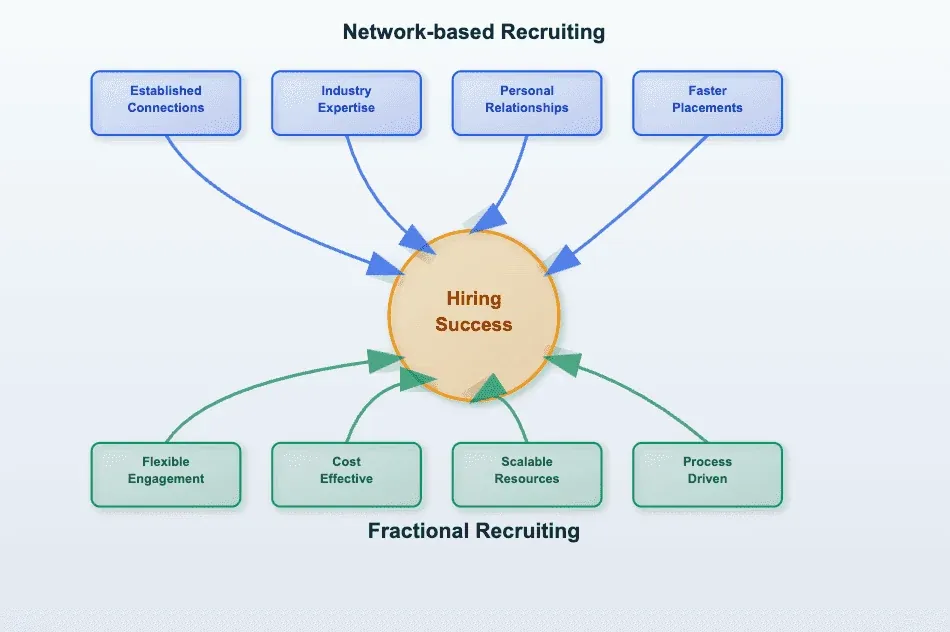
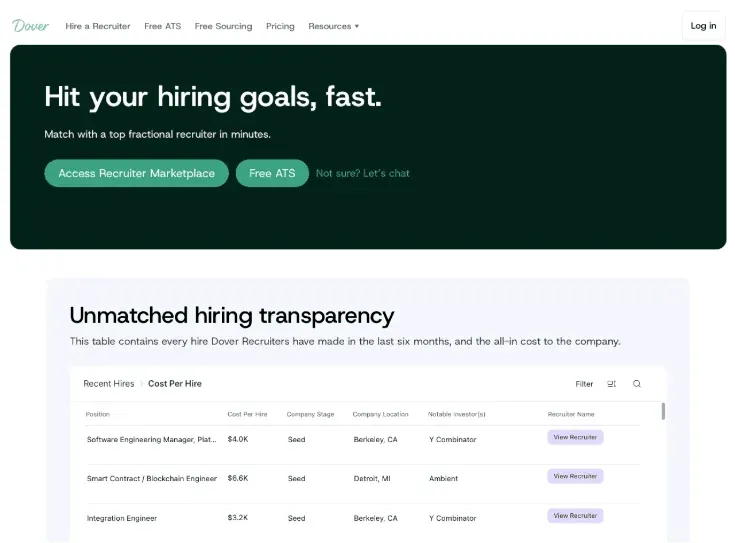
Dover’s fractional recruiters work as an extension of your team, focusing on quality matches instead of speed-to-fill. They understand startup culture and surface candidates who genuinely fit the role, going beyond the skills checklist.
Most Dover customers spend between $2,000 and $7,000 per hire, compared to the $18,000 to $30,000 traditional agencies typically charge for a $120,000 role. Learn more about fractional recruiter cost considerations.
Feedback tools only work if employees believe their input leads somewhere. Pulse surveys, anonymous or otherwise, surface early warning signs before disengagement becomes a decision. But running them without acting on results trains people to stop responding honestly.
Town halls give leadership a chance to share context employees rarely get otherwise. Decisions feel less arbitrary when the reasoning behind them is visible. Closing the loop matters most here: when employees see a concern raised and then resolved, trust compounds.
“The single biggest problem in communication is the illusion that it has taken place.” - George Bernard Shaw
Stay interviews pair well with pulse surveys because they go deeper. A survey tells you what people feel. A stay conversation tells you why, and what it would take to change it. Understanding fractional recruiter costs can help budget for better hiring upfront. Collecting that information proactively, before exit interviews become necessary, is where transparent communication actually pays off in retention numbers.
Frequently Asked Questions
What’s the best way to retain employees without increasing salaries?
Focus on career development, recognition, and flexibility first. Employees who see a clear growth path, feel appreciated regularly, and have control over their schedule are 45% less likely to leave within two years, even when base pay remains static.
How do I build a talent retention strategy from scratch?
Start with the highest-impact areas: fix manager training, implement stay conversations, and make recognition a weekly habit instead of an annual event. Most retention problems surface in exit interviews months too late - stay conversations catch them while you can still act.
Competitive compensation vs career growth opportunities for retention?
Both matter, but timing differs. Pay dissatisfaction drives immediate exits, while lack of growth causes slow disengagement over 6-12 months. Benchmark compensation annually to avoid the first problem, then build visible advancement paths to prevent the second.
Final Thoughts on Retention Strategy
The gap between stated talent retention strategies and actual retention outcomes usually comes down to hiring. You can invest in development, benefits, and culture, but if the person was oversold or mismatched from the start, they leave anyway. Retention compounds when you pair the right hire with the right support at the right time. Talk to us if you want to see how fractional recruiting changes who you bring in and how long they stay.