


Your first engineer wants the title “VP of Engineering,” and you’re wondering if it actually matters. It does, but not for the reasons most founders assume. Titles influence how candidates find your roles in search, how they interpret the level of the job, and whether you’ll run into awkward hiring problems later when you bring in real executives. Understanding how to determine titles for employees at your startup helps you avoid inflated titles, improve candidate discovery on job boards, and build an org structure that can grow without constant cleanup. This guide walks through the practical rules founders use to set titles that attract the right candidates, manage expectations, and support hiring as the team scales.
TLDR:
-
Use standard job titles like “Software Engineer” or “Product Manager” so candidates can find your postings in search results.
-
Avoid title inflation by matching titles to actual responsibilities, not aspirational scope you hope the role becomes.
-
“Founding” titles work well for your first 5-10 hires, recognizing early risk without creating rigid hierarchy.
-
Title mismatches waste recruiting time and drive early turnover when new hires realize the role doesn’t match expectations.
-
Some solutions offer a free ATS and fractional recruiters who work hourly to help startups hire without agency fees or long contracts.
Why Job Titles Matter More Than Founders Think
Job titles at early-stage startups often feel like an afterthought. You’re trying to close funding, ship product, and keep the team moving. But titles are one of the most underrated tools in your recruiting toolkit.

Candidates use job titles to decide whether to even click on your job posting. They’re filtering through dozens of opportunities, and titles signal where the role sits in your org, what level of impact they can expect, and whether the position aligns with their career goals. A confusing or mismatched title means qualified people scroll right past your opening.
Search visibility matters too. Job boards and LinkedIn rely on title keywords to surface roles to the right candidates. If you’re calling your first sales hire a “Revenue Ninja,” you’re making it harder for experienced Account Executives to find you.
How Titles Impact Recruiting Success
The mechanics of title searchability matter for visibility. Job boards index roles by title text, and most candidates search using standard terms like “Product Manager,” “Software Engineer,” or “Sales Development Representative.” If your title doesn’t match these search patterns, your posting is much less likely to appear in relevant search results.
LinkedIn’s algorithm works the same way. Candidates set job alerts based on specific titles and seniority levels. When you post a “Growth Hacker” role instead of “Marketing Manager,” you exclude yourself from thousands of relevant alert notifications and make it harder for passive candidates to recognize the opportunity.
ATS systems at larger companies can create another filter. Many experienced candidates have internal title structures. If they’re searching for their next move as a “Senior Product Designer” and you’re hiring a “Design Guru,” the mismatch creates friction about whether the role maps to their experience level.
The Three Most Common Title Mistakes Startups Make
The first mistake is handing out inflated senior or executive titles too early. When your third hire gets labeled “VP of Engineering” or you assign “Senior” titles to first-time employees, you create expectations that don’t match their scope. The short-term win of closing a candidate feels good until you need to hire actual senior leaders. Title inflation creates downstream problems like limited room for growth and awkward leveling conversations.
The second mistake is picking creative titles that hurt recruiting. “Happiness Hero” or “Code Wizard” might fit your brand, but candidates search job boards using standard role names. These quirky titles make your roles invisible in searches and complicate reference checks.
The third mistake is mismatching titles with actual responsibilities. Calling a project coordinator a “Product Manager” or labeling an SDR as “Account Executive” sets false expectations, frustrates new hires when reality hits, and drives early turnover.
Understanding Title Inflation and Its Long-Term Costs
Title inflation happens when you assign titles that overstate someone’s actual seniority or scope. Your first engineer becomes “VP of Engineering,” or someone managing two people gets labeled “Director.” It feels harmless in the moment, but 92% of workers believe inflated titles create the illusion of career growth instead of real advancement.
The real cost shows up when you need to hire actual senior talent. If your team lead carries a VP title, where do you slot an executive with 15 years of experience leading 50-person orgs? You end up offering titles like “SVP” or “Chief” to maintain the hierarchy, which pushes your org chart into enterprise territory while you’re still 12 people.
Internal leveling gets messy too. When early employees hold senior titles without matching scope, new hires at the same level expect similar responsibility and compensation. You’re forced into awkward conversations explaining why two “Directors” have completely different roles, team sizes, and pay bands.
Title inflation also hurts your team when they look for their next opportunity. Recruiters and hiring managers at other companies will see a “VP” title and expect a certain track record. When the experience doesn’t match, it raises questions about credibility.
When to Use Founding Engineer and Early Employee Titles
“Founding Engineer” or “Founding Designer” titles work well for your first five to ten hires. They acknowledge early risk and contribution without creating a rigid hierarchy. A Founding Engineer title shows the candidate will shape core architecture and company culture, not that they’ll manage a team or lead a department.
These titles carry a built-in expiration date. Everyone understands that a Founding Engineer joined before product-market fit when every decision mattered more. You can bring on a VP of Engineering or Engineering Manager later without awkward conversations about reorganizing or demoting anyone.
The modifier applies across functions: Founding Product Manager, Founding Sales Lead, or Founding Operations Manager. It recognizes both contribution and timing while preserving flexibility as you grow.
Choosing Titles That Support Career Growth
Good titles show where someone can go next and where they are now. Structured career paths matter for recruiting because candidates want to see progression without changing companies every 18 months.
A clean leveling system uses consistent modifiers: Associate, Mid-level (often unlabeled), Senior, Staff, and Principal for individual contributors. For management tracks, it’s Manager, Senior Manager, and Director. This structure lets candidates picture their next two to three years at your company.
| Level | Engineering | Product | Sales | Marketing |
|---|---|---|---|---|
| Entry | Software Engineer | Associate Product Manager | Sales Development Rep | Marketing Associate |
| Mid | Software Engineer II | Product Manager | Account Executive | Marketing Manager |
| Senior IC | Staff Engineer | Senior Product Manager | Senior Account Executive | Senior Marketing Manager |
| Management | Engineering Manager | Product Lead | Sales Manager | Marketing Director |
Skip fake middle layers just to show movement. Titles like “Junior Growth Marketing Specialist II” add complexity without clarity. Keep it simple: Marketing Associate to Marketing Manager to Senior Marketing Manager maps cleanly to increasing scope and responsibility.

Match title changes to actual role expansion. A promotion from Engineer to Senior Engineer should come with materially different expectations around technical decisions, mentorship, or project ownership. When title changes reflect real growth, your team stays motivated and external candidates see you take career development seriously.
How to Match Titles to Actual Responsibilities
Start with what the person will actually do in their first 90 days, not what the role could become in year two. If someone will spend most of their time executing tasks set by others, they’re not a manager. If they’re not making strategic decisions that affect company direction, they’re not a director.
Write out the core responsibilities and compare them to industry benchmarks for that title. A Product Manager typically owns roadmap decisions, works cross-functionally, and ships features. If your hire will mostly gather requirements and support engineering, the accurate title is Product Coordinator or Associate Product Manager.
Candidates figure out title mismatches during interviews. When they ask about team size, decision-making authority, or day-to-day work and the answers don’t align with the posted title, they lose trust. That friction kills offers and wastes recruiting time on candidates who were never going to accept.
Dos and Don’ts for Startup Job Titles
Here’s a quick reference guide for getting titles right from the start.
Do
-
Use “Founding” titles for your first 5-10 hires across any function. This acknowledges early risk and contribution without locking you into a rigid hierarchy that’s hard to unwind later.
-
Pick industry-standard titles that candidates actually search for. Software Engineer, Product Manager, and Account Executive show up in job alerts. “Code Ninja” and “Sales Rockstar” don’t.
-
Introduce “Lead” titles when someone takes on informal leadership without direct reports. Engineering Lead or Design Lead works for individual contributors who guide direction and mentor others.
-
Keep titles straightforward and tied to what the person does daily. If they’re writing code, they’re an engineer. If they’re managing campaigns, they’re in marketing.
Don’t
-
Negotiate titles with candidates who push hard for inflated seniority before discussing scope. People fixated on title prestige over impact usually struggle with early-stage ambiguity.
-
Hand out VP or C-suite titles very early in the company’s growth. You need room to grow your leadership team without creating awkward title compression.
-
Add hierarchy layers to make people feel important. Every new level you create becomes a permanent fixture that complicates future hiring and compensation decisions.
-
Use unusual or branded titles that candidates may not search for. They confuse external candidates about scope and make internal career progression unclear.
Simplify Your Startup Hiring with the Right Support
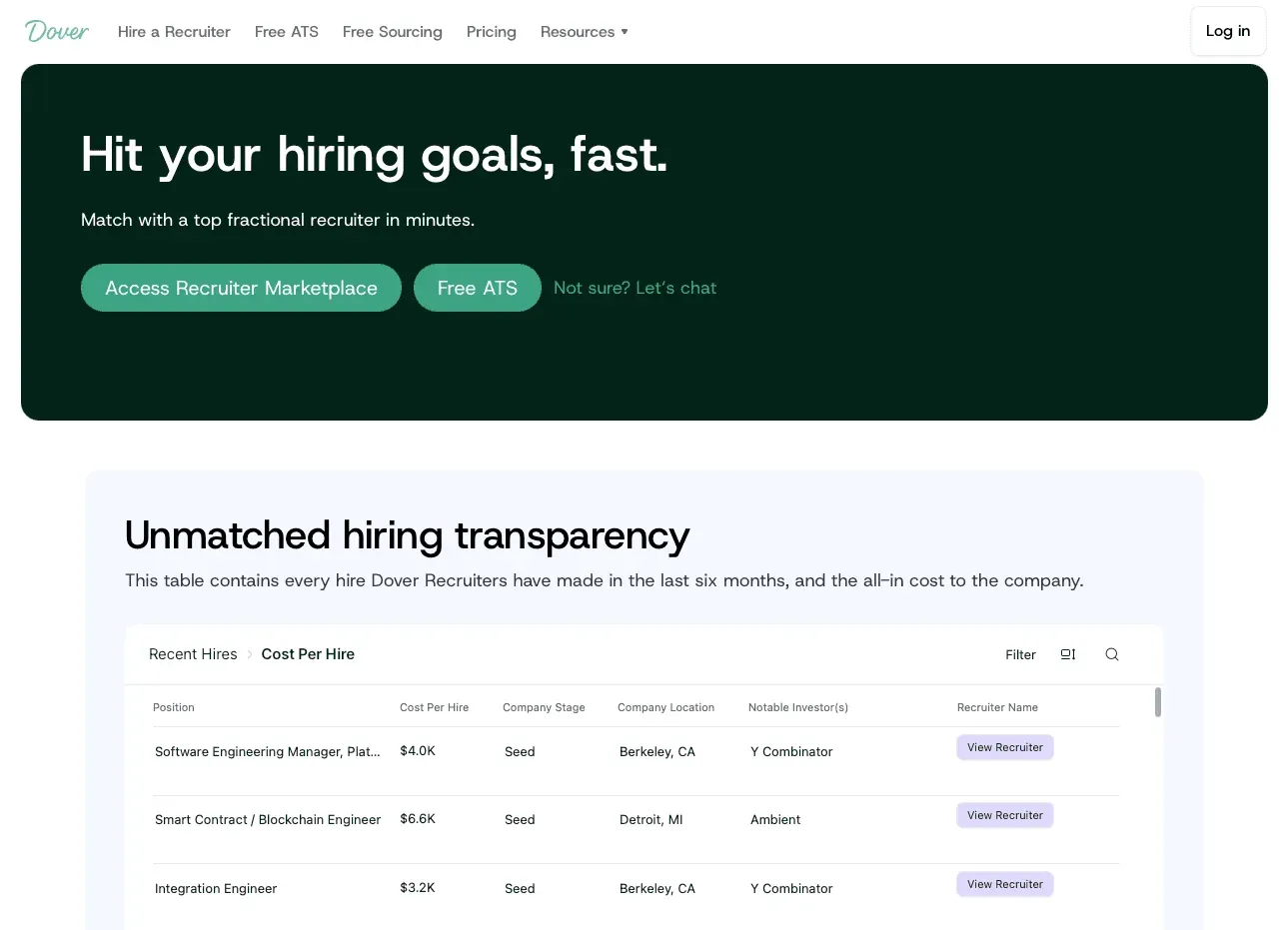
Getting job titles right sets you up for better recruiting outcomes, but titles alone won’t fill your pipeline. You still need to manage the full recruiting process. Many founders end up spending considerable time each week on these tasks, which adds up quickly.
We built Dover to give startups the recruiting infrastructure they need without the overhead. Our free ATS handles job posting, candidate tracking, and AI-powered resume screening in one place. Set it up in under five minutes and start collecting applications immediately.
When you need extra help, our recruiter marketplace connects you with experienced fractional recruiters who work hourly. They handle sourcing and outreach while you stay focused on interviews and closing. No placement fees, no long contracts, just flexible support that scales with your hiring needs.
Frequently Asked Questions
How do I know if a job title matches the actual work someone will do?
Write out the core responsibilities for the first 90 days and compare them to industry benchmarks. If someone executes tasks set by others instead of making strategic decisions, they’re not a director or manager regardless of what title you want to give them.
Can creative job titles hurt my recruiting results?
Yes. Candidates search job boards using standard terms like “Product Manager” or “Account Executive,” so creative titles like “Growth Hacker” or “Code Wizard” make your roles invisible in search results and exclude you from thousands of job alert notifications.
When should I add “Senior” or “Lead” to someone’s title?
Use “Lead” when someone guides direction and mentors others without direct reports, and reserve “Senior” for when the role expansion includes materially different expectations around technical decisions, mentorship, or project ownership instead of using it as a retention tool.
Final Thoughts on Startup Employee Titles
Getting titles right early affects how candidates interpret your roles, how easily they find your job posts, and how smoothly your team structure grows over time. Founders who learn how to determine titles for employees at your startup set clearer expectations for new hires, avoid awkward hierarchy problems later, and make their openings easier for the right candidates to find. Simple, industry-standard titles keep recruiting straightforward and help your org chart scale without constant rework. When it’s time to hire for those roles, tools like Dover can help you manage job postings, candidate tracking, and recruiter support so you can focus on closing the right people.
How do I know if a job title matches the actual work someone will do?
Write out the core responsibilities for the first 90 days and compare them to industry benchmarks. If someone executes tasks set by others instead of making strategic decisions, they’re not a director or manager regardless of what title you want to give them.
Can creative job titles hurt my recruiting results?
Yes. Candidates search job boards using standard terms like “Product Manager” or “Account Executive,” so creative titles like “Growth Hacker” or “Code Wizard” make your roles invisible in search results and exclude you from thousands of job alert notifications.
When should I add “Senior” or “Lead” to someone’s title?
Use “Lead” when someone guides direction and mentors others without direct reports, and reserve “Senior” for when the role expansion includes materially different expectations around technical decisions, mentorship, or project ownership instead of using it as a retention tool.