
Hidden Costs of Hiring Platforms: Paraform vs. Dover (February 2026)

Dover
•
3 mins

Paraform operates on a contingency fee structure, typically charging 15-25% of a hire's first-year salary. That means if you're hiring a $150K engineer, you will pay $22,500 to $37,500 after the first successful hire. For a startup burning through cash, that's a big chunk of your runway.
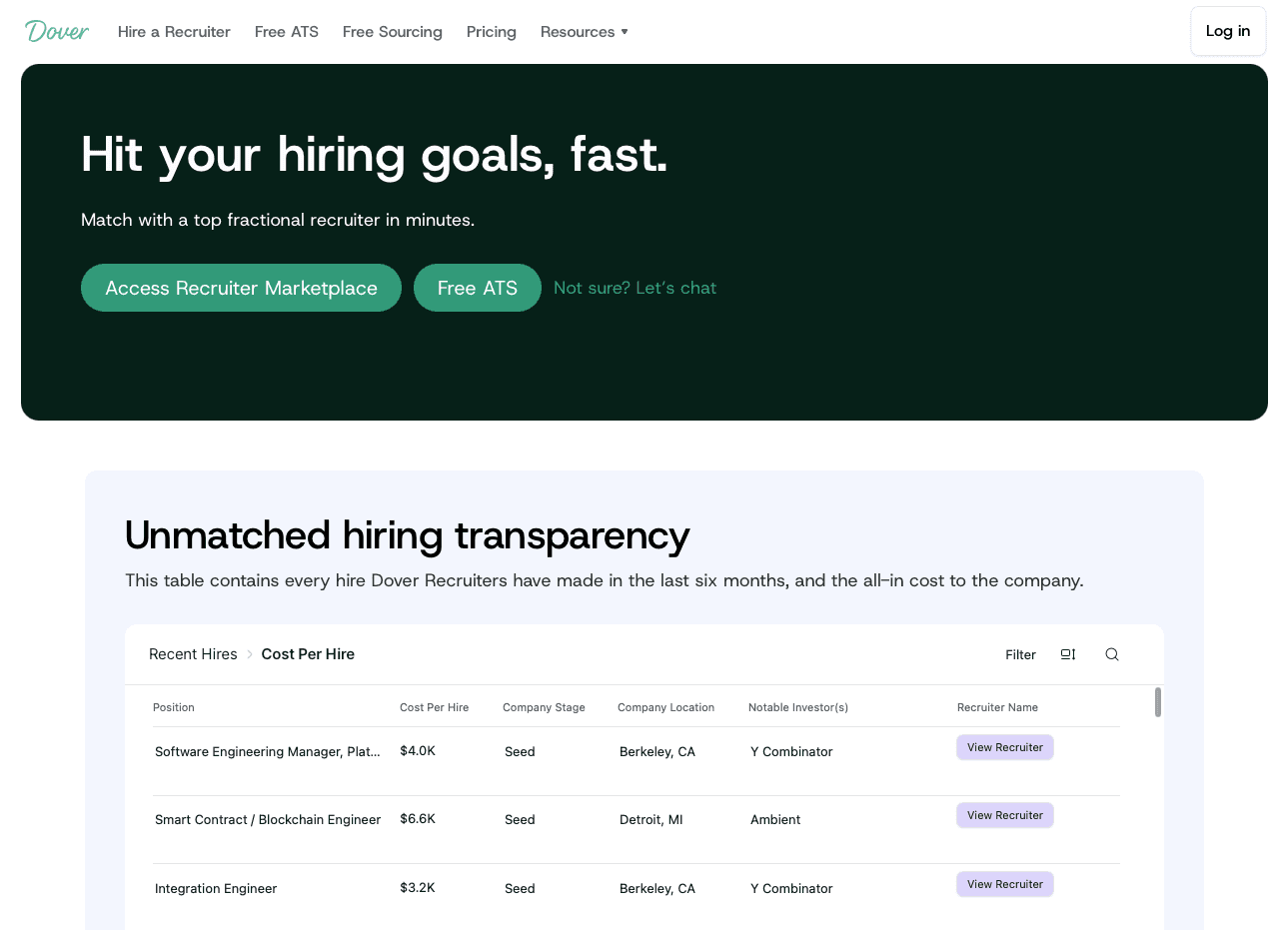
Dover's fractional recruiting model works differently. You're typically investing $2K-$7K per hire, depending on the role difficulty and time investment. Dover's fractional recruiters bill at hourly rates ranging from $75-$125/hour, and many standard roles can be filled within 20 hours across 3-4 weeks. For example, 20 hours at $100/hour costs around $2,000.
Here's where it gets interesting.
Paraform's marketplace model makes multiple recruiters compete for your role, but only one gets paid. That sounds great in theory, but those recruiters need to make up for all the unpaid work. Guess who ends up funding that through higher fees? While the "only pay for success" model sounds appealing, the successful hires carry the financial burden.
Cost Factor | Paraform | Dover |
|---|---|---|
Typical fee per hire | $22,500-$37,500 (for $150K role) | $2,000-$7,000 |
Payment structure | Success-based contingency | Hourly fractional work |
Multiple hires discount | Limited | Scales with relationship |
With Dover's transparent pricing model, you know exactly what you're paying upfront. No surprises, no percentage calculations based on salary negotiations.
Recruiting providers often promote guarantees. For example, some offer a 90-day refund or money-back guarantee if a hire doesn’t work out.
Reassuring, replacement guarantees often fail to account for the real functional costs of a bad hire.
Your startup has to bear the cost if the hire doesn't work out. Weeks of time spent onboarding and training are wasted. The replacement process starts from scratch, new candidate sourcing, interviews, and onboarding. Meanwhile, your existing team starts to suffer.
Dover's approach focuses on getting the right hire from the start instead of relying on replacement guarantees. When fractional recruiters are paid for their time and expertise instead of just successful placements, they have every incentive to be thorough from the start.
Contingency recruiting models can create incentives that focus on speed, since recruiters are only compensated upon placement. When recruiters only get paid on successful placement, there's pressure to fill roles quickly with candidates who meet basic qualifications, instead of finding the best fit.

A recruiter finds someone with the right skills, rushes them through the process, and celebrates the placement. Three months later, the hire isn't meshing with the team culture or isn't as strong technically as their resume suggested.
Dover's fractional model flips this approach. Since recruiters are paid for their time and expertise, they can afford to be thorough. They'll spend time understanding your company culture, focus on candidate experience, create proper hiring rubrics, and make sure candidates are vetted for both skills and fit.
Poor Cultural Fit Costs
One statistic that should give every founder pause: 89% of bad hires fail because of poor cultural fit, not a lack of technical ability.
When someone doesn't fit your culture, the damage spreads like a wildfire. Research shows that low morale becomes the biggest cost associated with bad hires, resulting in lost productivity, less customer-focused behavior, and counterproductive behaviors across the team. The worst part is when potential customers start having poor experiences because that person isn't aligned with your values.
The contingency model can make deep cultural alignment assessment more difficult, especially when recruiters are managing multiple competing roles. Recruiters working on tight timelines with multiple competing roles can't invest the time needed to understand your company culture and assess candidates in-depth.
Dover's fractional recruiters work differently. They work closely with your team, understanding what skills you need and how your company values impact team dynamics. They spot red flags that rushed contingency recruiters miss.
Drawbacks of Multiple Recruiters Competing
Paraform's competitive recruiting model looks good on paper, but it creates serious coordination problems.
Think about this: five different recruiters are all sourcing for your senior engineer role. They're reaching out to the same candidates on LinkedIn, often with different messaging and different understandings of your requirements. Candidates get confused about which recruiter actually represents your company.
The competition model creates a wasteful system where most recruiters perform unpaid work. While only one recruiter wins the placement, all five have invested time in sourcing and initial screening. Companies that do hire end up paying for these costs through higher fees.
This model also doesn't honor accountability. When there are problems during the hiring process, finding the recruiter responsible becomes nearly impossible.
Dover's approach assigns dedicated fractional recruiters to your roles. They become your recruiting partner, update you at every point, and are focused on finding the best candidate. Dover also makes sure both fractional recruiters and internal hiring teams work from the same ATS, providing full visibility into sourcing activity, candidate flow, and recruiting metrics in real-time. This leads to better communication and a professional candidate experience.
Lack of Process Development and Long-Term Strategy
The difference between contingency and fractional recruiting becomes most apparent during process development.
Contingency recruiters are focused on placements. They're not invested in building your long-term hiring capabilities or developing lasting processes. Once they place someone, they move on to the next client.
Fractional recruiters work differently. They're talent acquisition pros who help startups get their hiring game together. If your startup is running around trying to fill positions without any real plan, a fractional recruiter can jump in and set up systems that'll keep working for you down the road.
This includes:
Creating hiring rubrics
Developing interview processes
Building easily accessible talent pipelines
Setting up ATS and sourcing from various platforms
Creating the best hiring practices for your company
Dover's fractional recruiters guide startups toward strategic hiring, helping you build systems that work long-term. With this, instead of paying high contingency fees for every single hire, you're building internal processes that reduce your need for external recruiting altogether.
True ROI Analysis for Startups
When Each Model Makes Sense for a Startup
Why Startups Choose Dover
Frequently Asked Questions
Final Thoughts on the Hidden Costs of Hiring Platforms
Table of contents
Kickstart recruiting with Dover's Recruiting Partners
