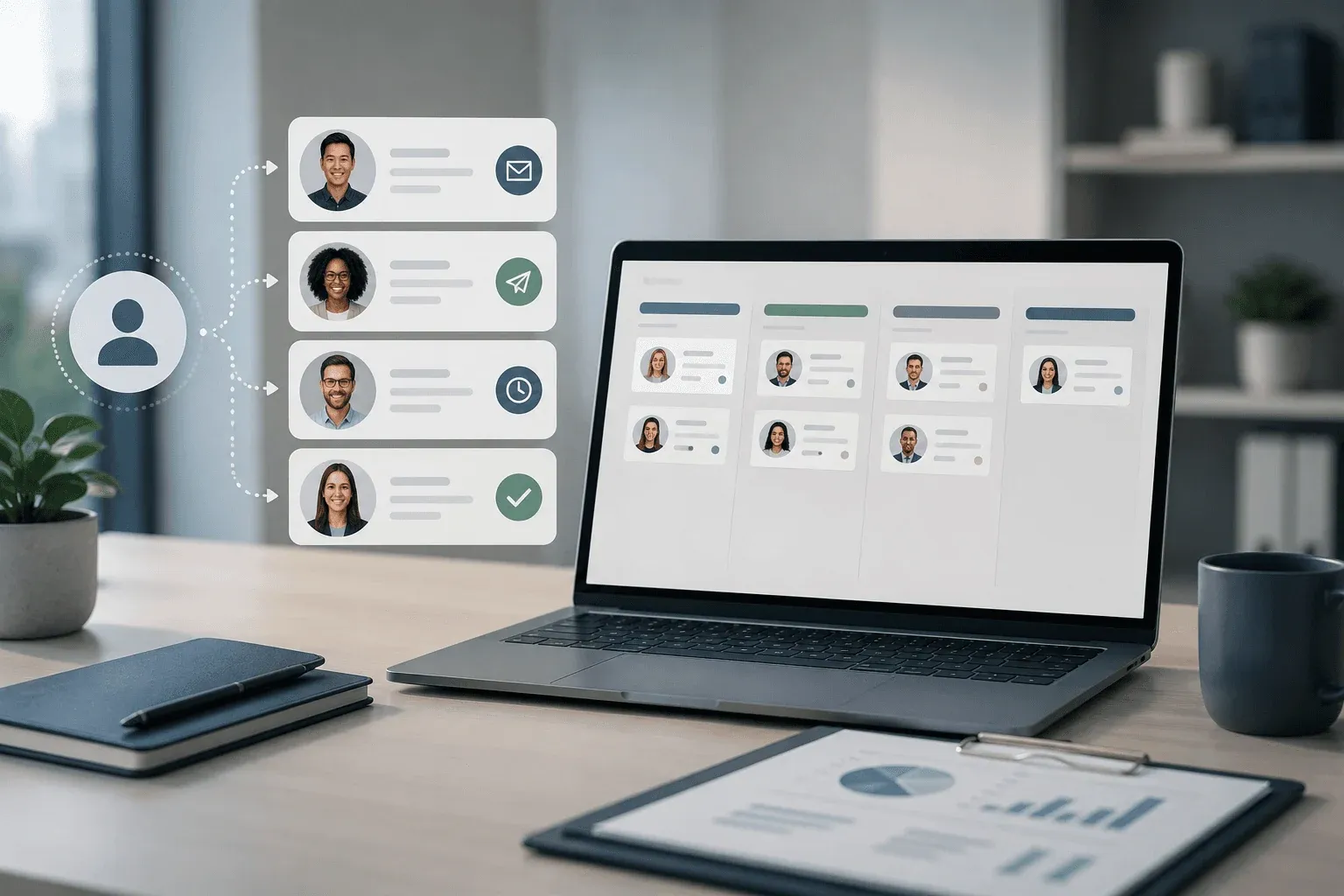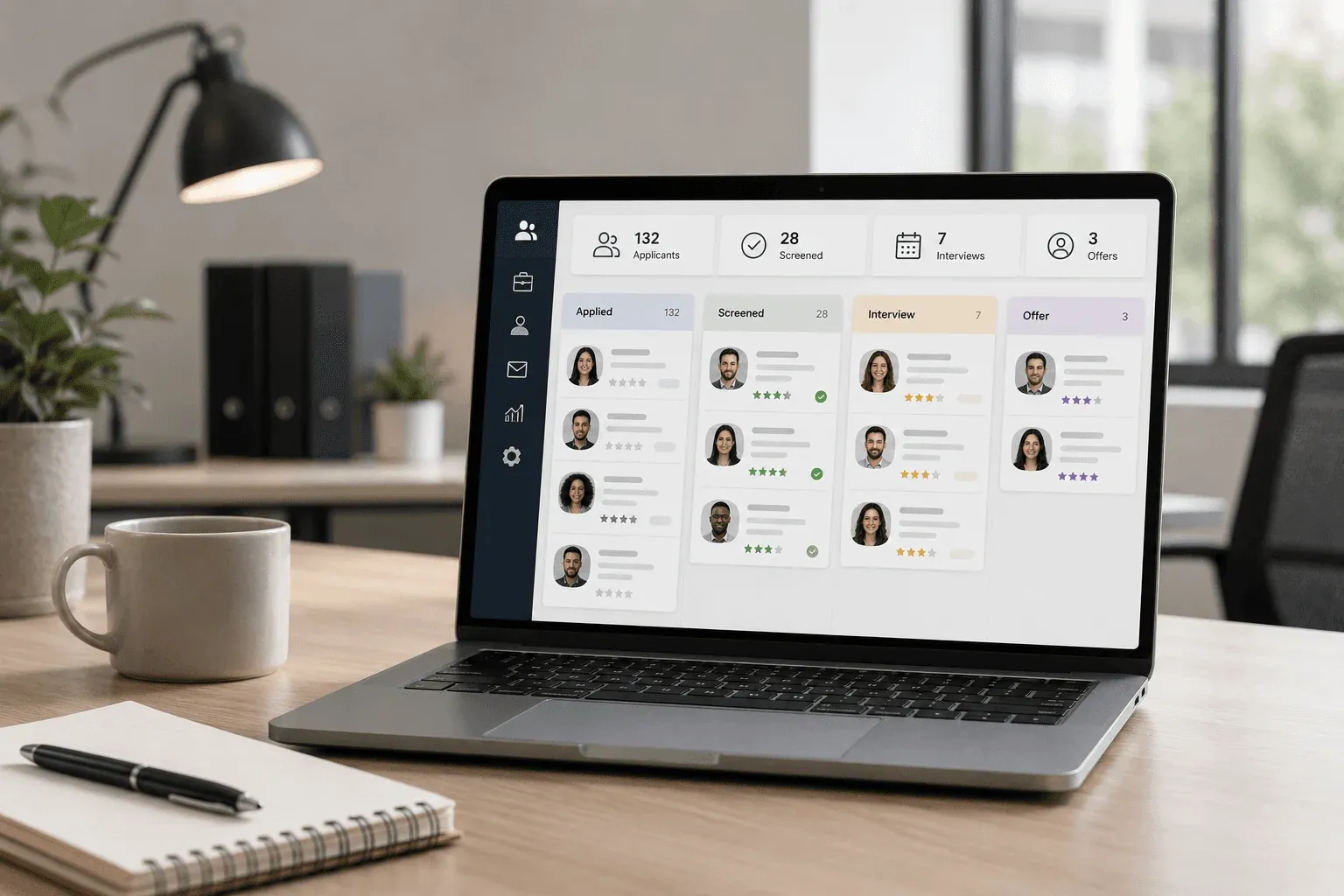
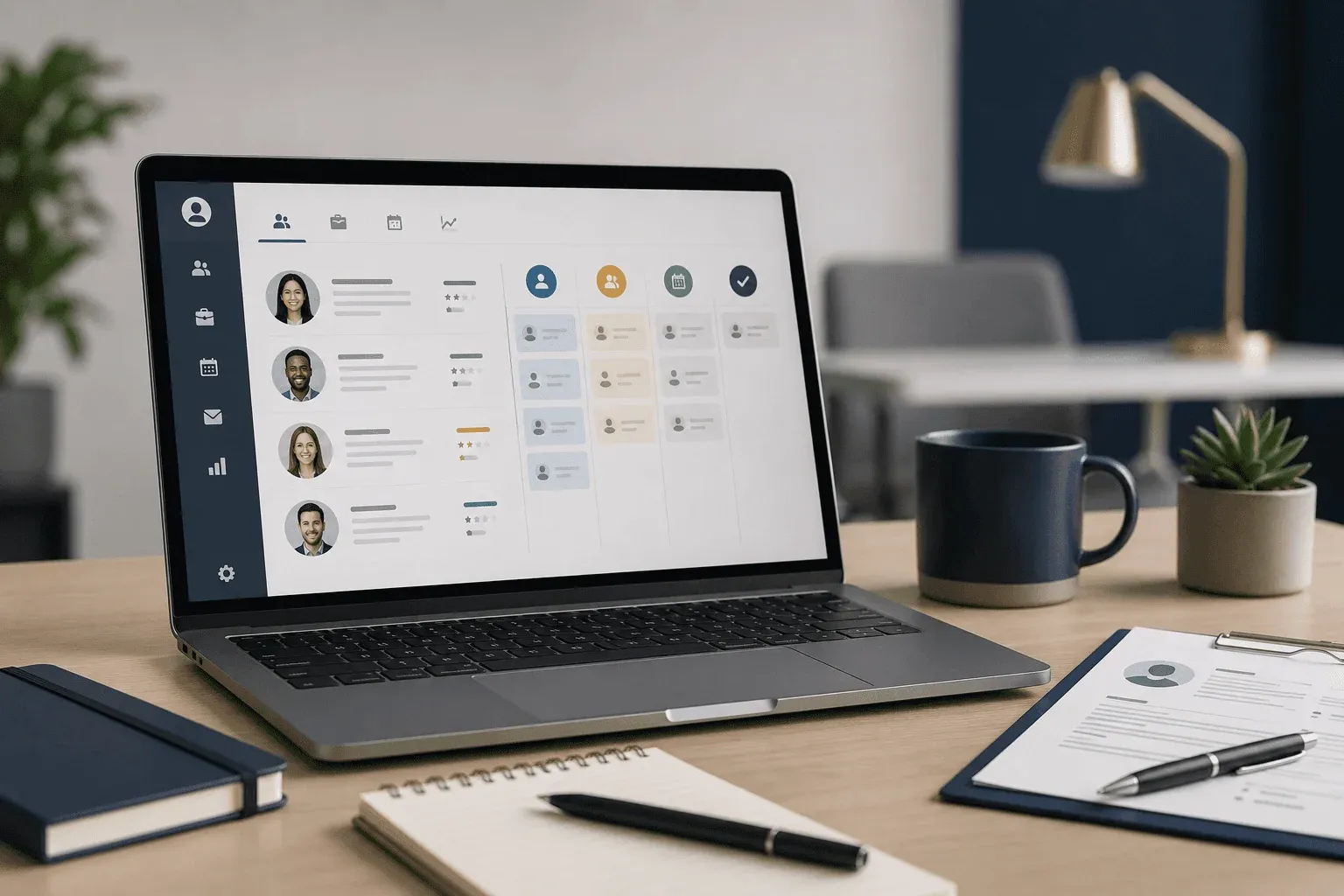
Knowing how to use an ATS to improve candidate experience as a startup can be the difference between closing top hires and losing them to silence and scheduling friction. This article covers what to look for in an ATS, how to configure it for better communication, and when to bring in extra support for searches that need more than automation.
TLDR:
-
An ATS helps startups automate status updates and interview scheduling, preventing communication gaps that lose candidates.
-
Look for tools with automated status updates, self-serve scheduling links, and pipeline visibility to track delays before they cost you offers.
-
Configure your ATS to send timely updates at each stage, keep applications short, and track response time as a KPI to stay competitive.
-
Poor candidate experience leads to declined offers and negative reviews that hurt your employer brand, especially for startups with limited name recognition.
-
Some recruiting tools pair free ATS software with on-demand recruiters at $2,000 to $7,000 per hire for searches that need active relationship management.
Why Startups Use an ATS to Improve Candidate Experience
Hiring at an early-stage startup moves fast, and candidate experience often gets treated as a nice-to-have instead of something worth building deliberately. That instinct is understandable when you’re also writing job descriptions, scheduling interviews, and managing a product roadmap at the same time. But the way candidates experience your hiring process directly shapes whether top people accept offers, refer others, or write off your company entirely. Candidate hiring frustration research from SHRM identifies poor communication and slow timelines as the top two reasons people withdraw, both of which a properly configured ATS is built to solve.
An applicant tracking system gives startups a way to build consistency into the process without adding headcount. When candidates receive timely updates, clear communication, and a process that respects their time, they’re more likely to stay engaged, even if the eventual answer is no.
There are a few structural reasons why startups in particular benefit from using an ATS to manage this:
-
Without a dedicated recruiter, candidate communication tends to fall through the cracks. An ATS can automate status updates and acknowledgment emails, so no applicant sits in silence for weeks.
-
Small teams often rely on ad hoc scheduling, which creates friction. Integrated scheduling tools reduce the back-and-forth that burns candidates’ time and yours.
-
When multiple people are involved in interviews, feedback gets scattered. A shared system keeps evaluations in one place, which speeds up decisions and reduces the chance that a strong candidate goes cold while you’re waiting on notes.
-
A consistent, well-organized process signals that your company is serious, which matters when you’re competing against employers with mature recruiting infrastructure.
What to Look for in an ATS Before You Improve Candidate Experience
Before committing to any configuration work, it’s worth checking whether your ATS can actually support the candidate experience improvements you have in mind. Many tools offer a long feature list, but the ones that matter most for a small hiring team are often buried or missing entirely.
A few capabilities tend to separate tools that genuinely help from ones that just add overhead:
-
Automated status updates that trigger when a candidate moves between stages, so applicants always know where they stand without your team manually sending emails after every decision.
-
Customizable application forms that let you ask only what’s relevant to the role, keeping the process short enough that strong candidates don’t drop off before submitting.
-
Interview scheduling with self-serve calendar links, which removes the back-and-forth that candidates consistently cite as one of the most frustrating parts of the process.
-
A candidate-facing portal or status page, so applicants can check their own progress instead of sending follow-up emails into a void.
-
Pipeline visibility that shows you where delays are actually happening, giving you the data to fix bottlenecks before they damage your reputation with candidates.
How to Improve Candidate Experience Using Your ATS
Your ATS can do more than track applications. With the right setup, it becomes the connective tissue between your hiring process and how candidates actually experience it.

A few practices tend to make the biggest difference:
-
Set up automated status updates at each stage so candidates know where they stand without having to follow up. Silence is one of the fastest ways to lose a strong candidate’s interest, and most ATS tools let you configure these triggers in minutes.
-
Write rejection emails that are specific enough to feel human. A templated note that acknowledges the role and thanks the candidate for their time costs nothing extra and leaves a better impression than a generic pass.
-
Keep your application short. If your ATS shows drop-off data by field, use it. Long applications filter out busy candidates who are often the strongest ones.
-
Use scheduling integrations to let candidates book their own interview slots. Eliminating back-and-forth coordination removes friction at a stage where candidates are already assessing how your team operates.
-
Track response time as a metric. Some ATS tools let you measure average time-to-response by stage. Teams that treat this as a real KPI tend to move faster and lose fewer candidates to competing offers.
| Hiring Stage | Common Breakdown | ATS Fix |
|---|---|---|
| Application received | No acknowledgment for days | Automated confirmation email on submission |
| Screening | Candidates unsure of their status | Stage-trigger status updates |
| Interview scheduling | Long back-and-forth over availability | Self-serve calendar links |
| Post-interview | Silence while the team deliberates | Automated “under review” update after each round |
| Rejection | Generic or no response | Templated, role-specific rejection email |
How Improving Candidate Experience Fits Into Your Full Hiring Pipeline
Candidate experience doesn’t live in a single touchpoint. It accumulates across every interaction a person has with your company from the moment they see your job posting to the moment they receive a decision. For startups keeping pace with startup hiring trends, that means the work you put into your ATS (structured stages, automated updates, clear communication) only pays off when it connects to everything else happening in your hiring process.
Getting your ATS configuration right gives you the foundation, but candidate experience is really a function of how well your whole pipeline holds together. That means your ATS stages need to reflect how your team actually makes decisions (ideally aligned with clear job bands that define role expectations), your communication templates need to match the tone you want to set, and your interviewers need to know what they’re assessing before they get on a call.
For early-stage teams, the strongest candidate experiences come from alignment across everyone involved in hiring, going beyond the person managing the ATS.
When to Bring in a Fractional Recruiter to Support Candidate Experience
Even with a well-configured ATS handling scheduling, status updates, and pipeline tracking, some hiring searches carry enough complexity that the tooling alone won’t close the gap. Roles that require deep domain expertise, tight timelines, or a level of candidate relationship-building that goes beyond automated touchpoints are where fractional recruiting support tends to pay off.
The trigger is usually a combination of factors: the role has been open longer than expected, inbound volume is low or poorly matched, or the hiring manager is spending more time on recruiting logistics than their actual work. At that point, the ATS is doing its job, but the search itself needs more active management.
A fractional recruiter plugs into your existing ATS workflow instead of replacing it. They run sourcing and outreach, manage candidate communication at the points where tone and judgment matter most, and keep the pipeline moving without requiring a full-time hire. The candidate experience benefit is real: responses come faster, follow-ups feel considered, and candidates get the kind of attention that signals the role is worth their time, all backed by Dover’s recruiting model that builds accountability into every search from day one.
The Cost of Getting Candidate Experience Wrong as a Startup
Candidate experience directly affects a startup’s ability to attract and close talent.
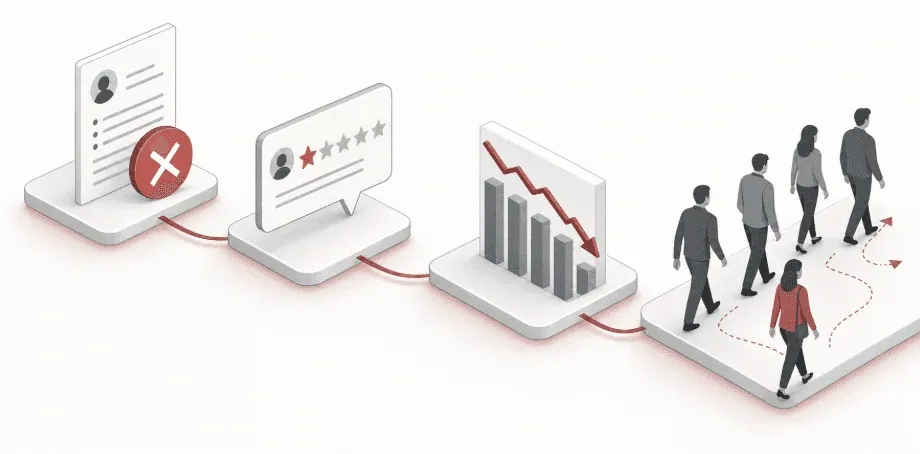
When candidates have a poor experience, they rarely keep it to themselves. Research on candidate experience shows that a majority of job seekers share negative hiring experiences with their networks. Employer branding statistics show that 83 percent of job seekers research company reviews before deciding where to apply, and the downstream effects on your reputation can outlast any single hiring cycle.
There’s also the offer stage to consider. Research on hiring experience impact suggests that a portion of candidates have declined job offers because of a poor experience during the hiring process itself.
Beyond reputation and offer acceptance, there’s the direct cost of a prolonged or failed search. Some estimates put the cost of a mis-hire at a substantial multiple of annual salary, and a process that frustrates candidates or loses top applicants to disorganization accelerates that risk. For early-stage teams operating on tight runway, that’s not an abstract concern.
The structural problem for most startups is that candidate experience tends to break down not because of bad intentions, but because there’s no system holding the process together. Without consistent communication, timely feedback, and clear stage tracking, even well-meaning teams create friction at every step.
How Dover Helps Startups Improve Candidate Experience Without the Overhead
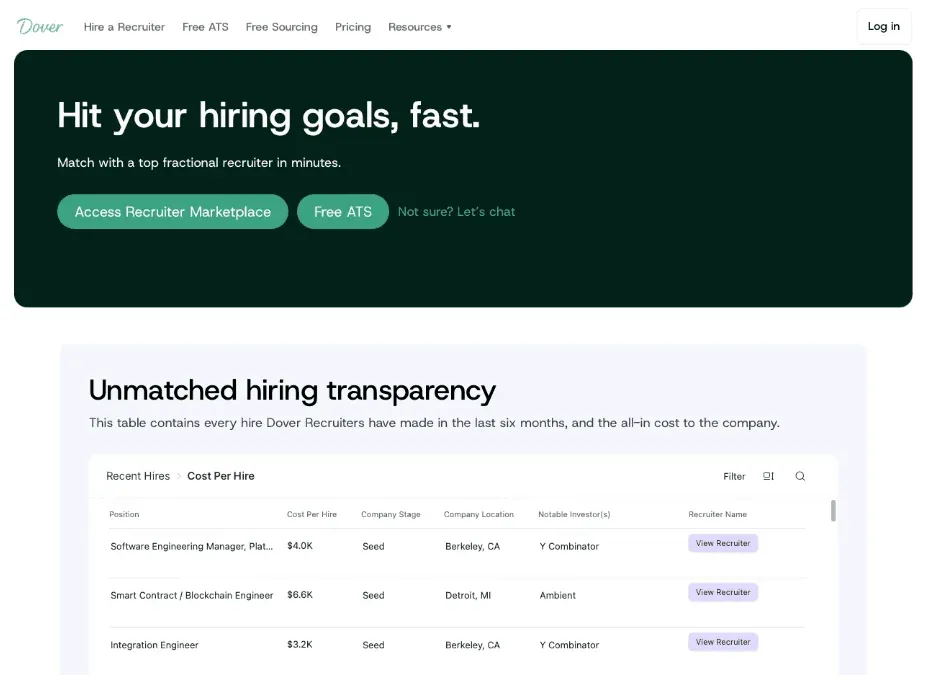
Most early-stage teams face the same challenge when figuring out how to use an ATS to improve candidate experience as a startup: not enough headcount or budget to build a consistent process from scratch. Hiring coordinators are stretched thin, founders are context-switching between product and pipeline, and candidates end up waiting days for a response that should take hours.
Dover’s free ATS is built for exactly that constraint. Setup takes under five minutes, covering application tracking, stage progression, and interview scheduling in one place. Automated status updates go out when a candidate moves through a stage, so candidates hear back faster without manual coordination. For startups hiring across multiple roles, Dover also posts to 100+ job boards from a single submission, meeting candidates where they already are.
When a search gets complex enough that ATS automation alone isn’t enough, Dover’s recruiter marketplace connects teams with experienced recruiters at $2,000 to $7,000 per hire. That option keeps candidate experience high during the roles that carry the most reputational risk, without the overhead of a full-time recruiting hire.
Frequently Asked Questions
Can I build a good candidate experience with just an ATS and no recruiter?
Yes, if you configure the system to handle communication, scheduling, and pipeline visibility. Most candidate experience problems stem from silence and coordination friction, both of which a properly set-up ATS can resolve through automated updates and self-serve scheduling without requiring a recruiter.
What’s the difference between an ATS and full recruitment automation software?
An ATS tracks candidates through your hiring pipeline and manages communication, scheduling, and feedback. Full recruitment automation software adds sourcing, outreach sequencing, and often AI screening on top of those core tracking functions, handling both inbound applications and outbound candidate generation in one system.
How do I know if my ATS is actually improving candidate experience or just tracking better?
Track time-to-response as a metric and ask candidates directly. If your average response time drops and you stop getting “just checking in” emails from applicants, the ATS is working; tracking alone doesn’t reduce candidate frustration, faster communication does.
Final Thoughts on How to Use an ATS to Improve Candidate Experience as a Startup
For early-stage teams, knowing how to use an ATS to improve candidate experience as a startup comes down to consistency more than any individual feature. Candidates don’t expect a white-glove process. They expect to hear back, know where they stand, and not spend a week chasing a calendar link. The tooling to make that happen without adding headcount already exists. Dover’s free ATS is built around that constraint, with automated communication and scheduling that removes most of the coordination work from day one. For searches that need more active management, pairing the ATS with Dover’s recruiter marketplace keeps the candidate experience intact while the team stays focused elsewhere.