

Marketing is best defined as the revenue and brand awareness machine of your company. Through press, blog posts, outreach, company events, social media, and valuable content, your marketing team is (hopefully) creating an image of your brand that is in line with your mission and hard to forget. While there are a wide variety of marketing professionals, the key goals remain consistent: provide a channel to interact with customers, build company reputation, and help drive sales. Here, we’ll help you answer the who, what, where, when, and why about making your first marketing hire at a startup.
TLDR:
-
Your first marketing hire should have a spike in one function: brand, product, communications, or growth.
-
Answer 5 questions about your channels, customers, and competitive position before writing the job description.
-
Seed-stage founders should target senior manager or director-level candidates with 6 to 10 years of experience.
-
Put collaboration, strategic execution, and curiosity ahead of breadth of marketing knowledge.
-
Demand for AI fluency in marketing roles grew over 100% from 2024 to 2025; ask candidates how they use AI tools day-to-day.
How Do We Define Marketers and Marketing Departments?
That’s why startups hire teams under four broad functions that fit under the larger umbrella of “marketing.” They are:
-
Brand marketing: Brand strategy, positioning, naming, messaging, visual identity, experiential, events, community.
-
Product marketing: UX copy, website, email marketing, customer research and segmentation, pricing.
-
Communications (sometimes looped in with Brand): PR and media relations, content marketing, social media, thought leadership, influencer.
-
Growth marketing: Direct response paid acquisition, funnel optimization, retention, lifecycle, engagement, reporting and attribution, word of mouth, referral, SEO, partnerships.
| Function | Core Focus | Hire First When… |
|---|---|---|
| Brand | Positioning, identity, community | Category is crowded and differentiation is the moat |
| Product Marketing | Messaging, website, customer research | You have a product but struggle to explain or sell it |
| Communications | PR, content, thought leadership | Organic credibility and press coverage drive pipeline |
| Growth | Paid acquisition, SEO, retention | You have a repeatable revenue model and need to scale it |
Who Do You Hire First?
Hiring a VP or CMO right away sounds appealing, but consider what their actual day-to-day will look like. A scrappy generalist who experiments across channels and rolls up their sleeves often makes more sense early on. Anyone who excels across every marketing function is a unicorn. Even a VP will have one or two areas they’re exceptionally good at. The interview process is about finding the right spike, not the absence of weakness.
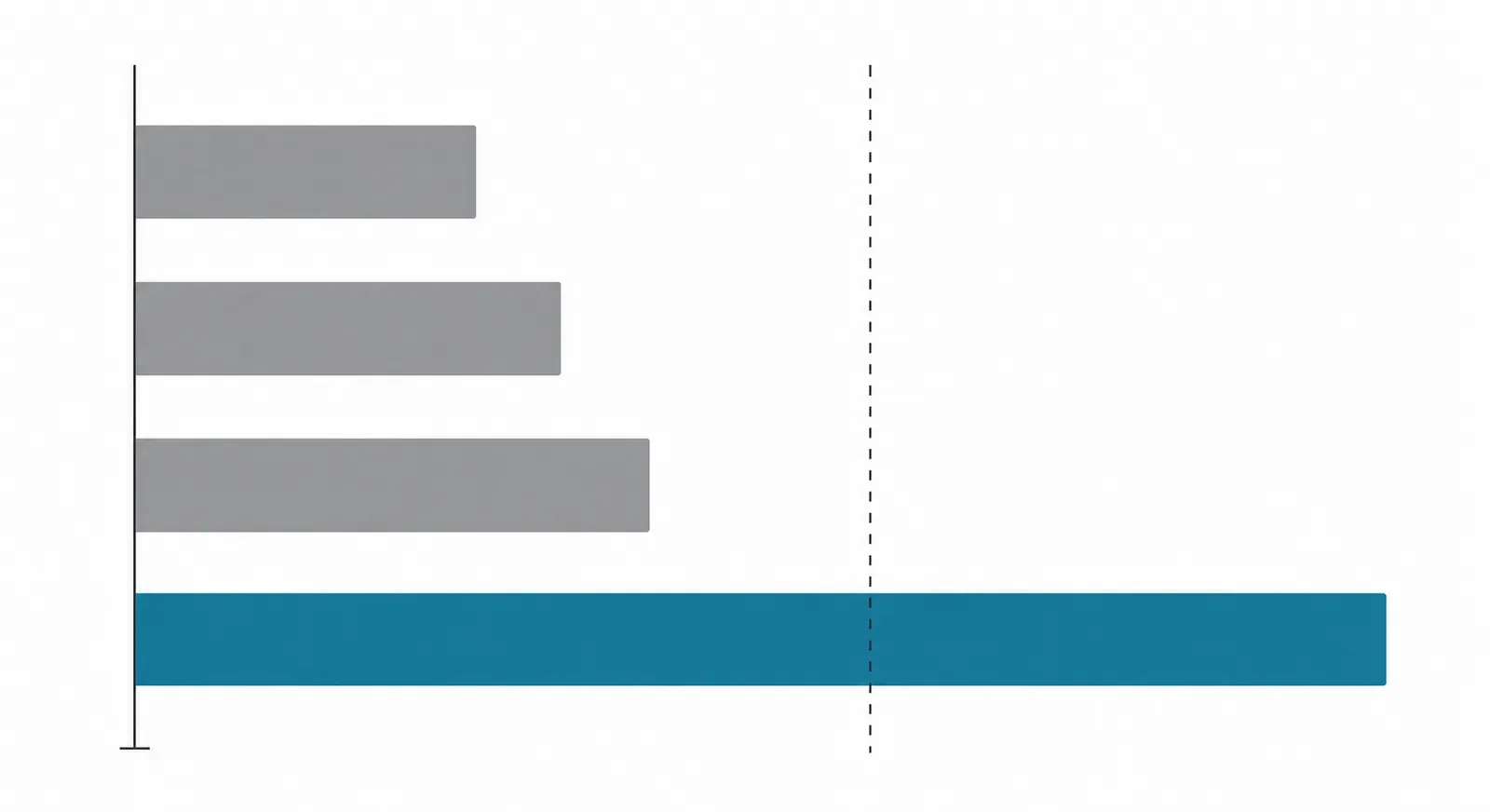
To visualize this, think about this as a graph. The y-axis represents the different areas of marketing, and x-axis represents a strength of someone on your team. The bar represents an ideal state of performance: you have a content machine, your ads are humming along, you’re hitting your revenue targets, etc. If you hire someone with spikes in one area, you raise your bar all around and can find other folks whose spikes meet the bar in their respective categories.
When the search needs more hands-on work than job boards alone can deliver, fractional recruiting agencies are worth a look: experienced recruiters who take on the search end-to-end as a dedicated partner, without the placement fees or exclusivity clauses of a traditional agency. The platform those agencies operate on shapes how much visibility your team keeps during the engagement. Dover is built as that infrastructure layer, a free ATS paired with a marketplace of fractional recruiters who have real, verified reviews, with per-hire cost averaging $2,000 to $7,000 and no long-term contracts required.
This is why a generalist will typically bring deeper expertise in one of the big marketing functions: brand, product, communications or growth. Before making your first marketing hire, you need to figure out which marketing priorities are most urgent and which “persona” is most appropriate for you. First Round Capital’s startup marketer hiring playbook is a useful reference for matching a marketer’s profile to your go-to-market motion.
These 3 questions will help you align your idea of what you’re looking for with who you should hire:
-
Which marketing channels have proven most effective? a. Social b. Influencer c. Paid ads (Adwords, LinkedIn, etc.) d. Content (SEO-focused, thought leadership, gated, blog, video, etc.) e. Events (happy hours, trade shows, webinars/AMAs) f. Email g. Word of mouth
-
Do you know where your target customers hang out? a. Yes b. No
-
Do you have lots of competitors in your category?
How Much Experience Should They Have?
Once you’ve answered these five questions, you should have a pretty good idea of the type of marketer you want. But just how much experience should that person have? Jamie Viggiano, former VP of Marketing at TaskRabbit and now CMO at Chemistry, recommends that seed-stage founders look for “senior manager or director-level candidates at midsized companies.” “At the 6 to 10 year experience level”, she continues, “these candidates’ salaries tend to be more in line with a young company’s budget. Also, at this stage of their career, they tend to be both strategic and tactical. In practice they can level up and think strategically about the business and the marketing function, but they are also happy to get their hands dirty and execute. They will actually get into the Facebook platform and create ads, plan and host an event, or pitch a journalist.”
Not ready to commit to a full-time hire right away? Dover’s guide on hiring a fractional recruiter covers when a part-time model makes sense for early-stage teams.
Once you have a target profile in mind, walking candidates through a structured recruitment process helps you assess them consistently and move faster to an offer.
Where Can I Find Great Marketers to Hire for My Startup?
Job boards give you direct access to candidates. If you’d rather delegate the search, Dover’s marketing recruiters for startups handle sourcing and screening, or a fractional recruiter can own the process for a defined period.
If you’d prefer to work with a fractional recruiting agency directly, Dover’s expert marketing recruiters have real, verified reviews you can read before engaging, which is a useful data point when comparing agencies whose track records can otherwise be hard to assess. For self-service hiring, the job boards below are a solid starting point.
One thing worth considering when you work with a fractional recruiting agency: the ATS the agency operates within determines how much visibility and control your team keeps during the engagement. When the agency runs searches inside your ATS instead of a separate system they own, sourcing activity, candidate notes, and outreach history accumulate in one place. The pipeline data stays with you after the engagement ends, building on itself with each new search instead of starting from zero. Dover is built as that infrastructure layer, the platform fractional recruiting agencies operate within, so your pipeline stays yours regardless of which agency or recruiter runs the search.
Which Skills Should I Care About Most?
Soft skills, such as communication, empathy, and the ability to absorb conflicting feedback, matter as much as channel expertise. Dover’s VP of Marketing, Brian Tecklenburg, has built marketing teams from scratch at four startups and shaped this list.
Excellent Collaborator
Your first marketer will sit at the intersection of product, design, and sales. They need to delegate, compromise, and defend positioning decisions under pressure. A good interview question: Tell me about a time you disagreed with a teammate and how you resolved it.
Strategic Execution
Early-stage marketing is build-from-scratch work, not optimization. Your hire will get projects with little direction and no baseline metric. They need to scope the problem, define success, and then act, not the other way around. Someone who ships fast but skips the thinking is a liability; someone who only thinks and never ships is too. Look for both in equal measure.
One More Filter for 2026: AI Fluency
The four functions and the five questions above still hold. But there is one additional layer worth weighing now: whether your first marketing hire has a working relationship with AI tools, beyond mere awareness of them.
Demand for AI-related skills in marketing job postings grew over 100% from 2024 to 2025, according to Stanford’s AI Index. Separately, BCG research from 2026 found that marketer roles are consolidating from narrow channel specialists into omnichannel generalists who can guide AI-assisted content end-to-end. For a seed-stage team, that shift matters: a single hire who can move across content, email, and paid using AI-assisted workflows covers more ground than one who excels in a single channel by hand.
When you get to the interview loop, ask candidates how they are currently using AI tools in their day-to-day work. Candidates who have no answer or who treat the question as theoretical are likely a step behind in the current environment.
How Dover Fits Into Your First Marketing Hire
Working through the five questions and identifying the right spike narrows the profile. Building the pipeline is the next problem. For seed-stage teams without a dedicated recruiting function, that step often stalls: job boards surface volume, but sourcing and screening the right candidate in a thin marketing talent market takes time that most founders are not positioned to spend.
Fractional recruiting agencies can own that search end-to-end, handling outreach, sourcing, and screening on a per-engagement basis without long-term retainers. The system those agencies work within shapes how much visibility your team keeps during the search. Dover is built as the infrastructure layer fractional recruiting agencies operate on: a free ATS paired with a marketplace of agencies whose work runs inside your pipeline, not a separate system they own. Candidate notes, sourcing activity, and outreach history accumulate in one place, and the data stays with you after the engagement ends, building on each search instead of resetting.
The agencies in Dover’s marketplace carry real, verified reviews, which provides useful context when comparing options whose track records are otherwise difficult to assess. Per-hire cost averages $2,000 to $7,000 with no long-term contracts required. The free ATS handles pipeline tracking regardless of whether you bring in a fractional agency or run the search yourself.
Frequently Asked Questions
Brand marketer vs. growth marketer for an early-stage B2C startup with strong competitors?
When competitors have large budgets and high customer acquisition costs, outbidding them on paid channels burns runway fast. A brand marketer focused on organic channels, such as PR, influencer, and word of mouth, builds distinctive positioning that paid spend alone can’t buy, and tends to be the more durable investment in a crowded category. Signal Fire’s first marketing hire analysis makes a similar case for leading with brand positioning before scaling paid spend in competitive markets.
Should my first marketing hire be a generalist or a specialist?
A generalist with a deep spike in one function, whether brand, product, communications, or growth, is the practical target. Pure generalists who perform equally across all marketing functions are rare enough that hiring for breadth usually means accepting shallower expertise everywhere. Identify your most urgent marketing priority first, then find someone whose spike matches it.
How does AI fluency factor into assessing first marketing hire candidates in 2025 and 2026?
Ask candidates directly how they use AI tools in their day-to-day work, not as a theoretical question but as a practical one. Demand for AI-related skills in marketing job postings grew over 100% from 2024 to 2025, and candidates who integrate AI into content, experimentation, or paid workflows can cover more ground on a small team than those who work entirely by hand.
Final Thoughts on Making Your First Marketing Hire
The five questions and the spike framework give you a hiring filter, not a formula. The right first marketing hire depends on where your company is right now: which channels are working, how much brand clarity you have, and whether you need someone to build the system or operate inside one already taking shape. Dover is one concrete option for running the search: a free ATS to manage the pipeline and a marketplace of fractional recruiting agencies with verified reviews when the search needs more structure behind it. Which spike you hire for first is still the call that matters most.